
Friday, 23 October 2026 • 23:37 Algiers time
Algeria Gate
Share this post

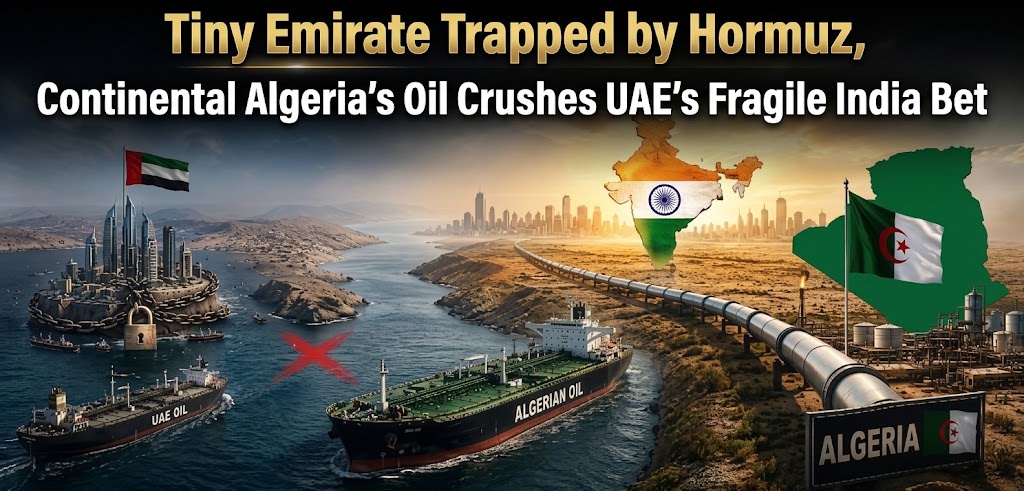
Tiny Emirate Trapped by Hormuz, Continental Algeria’s Oil Crushes UAE’s Fragile India Bet

• Author: Lys Iwannughen • 0 comments • 39 views
Tiny Emirate Trapped by Hormuz, Continental Algeria’s Oil Crushes UAE’s Fragile India Bet

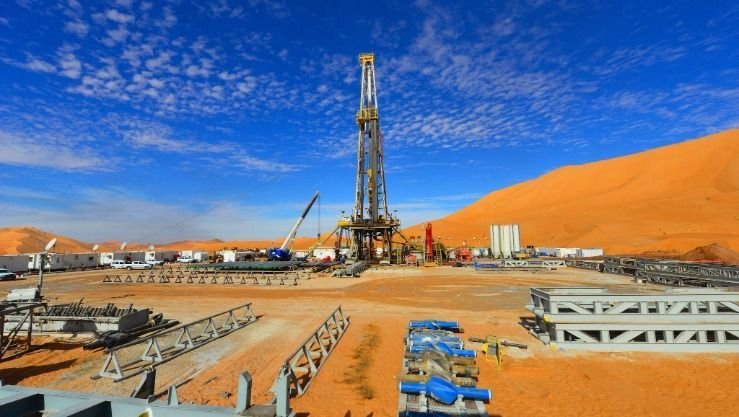
Algeria Gate: With 47 degrees API and just 0.11% sulfur, Algerian “Saharan Blend” ranks among Africa’s top crudes for Indian energy security. Disturbances in the Strait of Hormuz have exposed the limits of reliance on Gulf suppliers, while the UAE’s exit from OPEC has not freed its exports from geography and maritime risks.

A study by the Indian Centre for Defence Research and Studies (September 5th 2026) concluded that African crudes can reduce New Delhi’s exposure to Gulf concentration risks, placing Saharan Blend among the most attractive options for quality and location. This does not signal an official purchase decision or long-term Sonatrach contract, but confirms Algeria’s place in India’s measurable energy-security calculus.
Tiny Emirate Trapped by Hormuz, Continental Algeria’s Oil Crushes UAE’s Fragile India Bet

India’s oil import dependence hit a record 88.7% in fiscal year 2025-2026 (up from 85.5% in 2021-2022), with nearly 5.02 million barrels per day imported in the first half of 2026. Supply regularity, freight, and corridor safety now directly affect inflation, industry, subsidies, and refining margins. Much of the oil from Saudi Arabia, the UAE, Iraq, and Kuwait passes through Hormuz, so buyers weigh maritime risks, insurance, delays, and tanker availability alongside price.
Tiny Emirate Trapped by Hormuz, Continental Algeria’s Oil Crushes UAE’s Fragile India Bet

Algeria offers a different proposition: high-quality crude from Mediterranean ports outside Hormuz, continued OPEC+ membership, and an expansion program for production, reserves, and markets. Saharan Blend (47 API, ≤0.11% sulfur) outperforms Saudi Arab Light (33.4 API, 1.8% sulfur), Iraqi Basra Light (~30.2 API, 2.6%), and Kuwaiti crude (31 API, 2.63%), approaching Nigerian Bonny Light and Angolan Cabinda. Light and sweet, it yields high volumes of naphtha, jet fuel, and diesel with lower desulfurization needs. Reference specs often cite ~45 API and 0.09% sulfur, with approximate yields of 23% naphtha, 13% kerosene/jet, 21% diesel, and 22% heavy gas oil. Quality commands a premium; Sonatrach set February 2026 OSP at $2.50/bbl above Dated Brent, but final economics at the refinery gate (price + transport + yields + margins) decide competitiveness.

The decisive card is geography: cargoes avoid Hormuz. Even if the Suez-Red Sea-Bab el-Mandeb route is disrupted and vessels divert around the Cape, Saharan Blend still provides genuine diversification when Gulf shipping and insurance costs spike.

The Emirati predicament is clear. Abu Dhabi left OPEC on 1 May 2026 to expand production freedom, yet its ports remain inside the Gulf and its tankers still face Hormuz. Greater output does not guarantee delivery when corridors are disrupted. The withdrawal weakened OPEC cohesion without ending geographic dependence.

India is not replacing the UAE with Algeria; Abu Dhabi remains a major producer and partner. But the crisis proved that over-reliance on any Gulf supplier creates exposure. New Delhi therefore spreads risk across Algeria, Nigeria, Angola, and the Americas. Algeria combines ultra-high quality with a non-Hormuz source.

Algeria approaches the market with a broader strategy under President Abdelmadjid Tebboune: raise production, renew reserves, expand partners, and diversify destinations so Asia becomes a stable outlet. A ~$60 billion five-year energy investment program prioritizes exploration and production, with the rest for refining, petrochemicals, and processing. The 2026 Bid Round offered seven blocks after the 2024 round awarded five with ~$606 million in initial investment. Major contracts include Illizi South (~$5.4 billion), Sinopec (~$850 million), and a $380 million production-improvement deal. These tools rebuild capacity, strengthen sovereignty, and attract technology while retaining state control; enabling Asian expansion without diverting volumes from Europe.

Tiny Emirate Trapped by Hormuz, Continental Algeria’s Oil Crushes UAE’s Fragile India Bet

Logistics matter: weather disruptions cut Saharan Blend loadings to ~201,000 b/d in January 2026 from 476,000 b/d in December 2025, underscoring the need for reliable delivery.

Existing ties provide a base. Bilateral trade reached $1.71 billion in Indian FY 2024-2025. June 2026 Indian imports included ~$113 million of Algerian crude, $207 million of fertilizers, and $7.83 million of fertilizer raw materials. Algeria rapidly scaled LPG exports to ~110,000 tons in August 2026; Sonatrach and Indian Oil are negotiating monthly 45,000–55,000-ton propane/butane cargoes for 2027 (potentially 540,000–660,000 tons annually), often priced below the Saudi reference. Success in LPG builds networks that can expand to crude, LNG, urea, methanol, and phosphate—and opens doors for Indian investment (ONGC Videsh, Indian Oil, Bharat Petroleum) in exploration, production, storage, and services.

Converting the advantage into a lasting share requires cargo availability, loading regularity, competitive pricing that absorbs distance, and multi-year contracts. Algeria thus differs from the post-OPEC UAE: Abu Dhabi gained pumping freedom but remains trapped by Hormuz, while Algeria retains producer-system influence, ports outside the chokepoint, and technically superior crude.

The Indian reference to Saharan Blend is not mere praise of a known grade; it reflects a post-Hormuz shift. New Delhi now seeks barrels that arrive on time, cut processing costs, and come from a country with independent energy policy and a clear production-growth strategy. Algeria is steadily entering that equation through long-term investment and a vision to expand global presence—while Emirati tankers stay captive to the strait.


#Algeria#India#Oil#UAE
Author
Lys Iwannughen
View my articles

Leave a comment

Your email address will not be published. Required fields are marked *

Algeria
Share this post

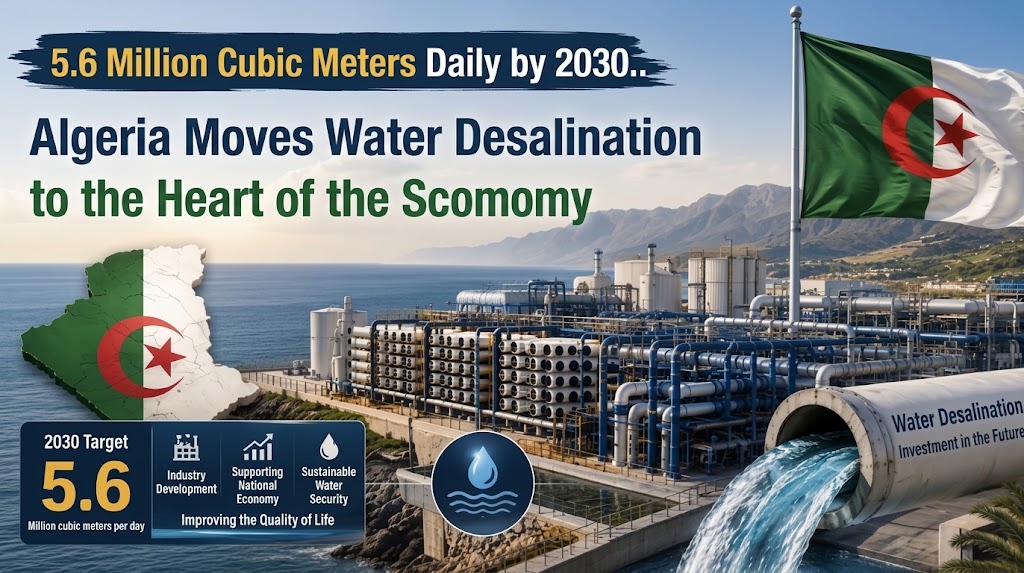
5.6 Million Cubic Meters per Day by 2030… Algeria Moves Desalination to the Heart of the Economy

5.6 Million Cubic Meters per Day by 2030… Algeria Moves Desalination to the Heart of the Economy

Algeria Gate: Algeria aims to produce about 5.6 million cubic meters of desalinated seawater per day by 2030, compared with a current capacity estimated at 3.76 million cubic meters, raising desalination from a means of securing drinking water to an economic investment that directly affects gas and electricity consumption, subsidy expenditures, the distribution of dam water, and the cost of industrial and agricultural activity.

5.6 Million Cubic Meters per Day by 2030… Algeria Moves Desalination to the Heart of the Economy

Algeria currently operates 19 major plants with an annual capacity of approximately 1.37 billion cubic meters, in addition to 21 small single-block units with a total capacity of 57,500 cubic meters per day. This system supplies about 40% to 42% of drinking water needs, according to the date of calculation of the capacities that have actually entered service.

These figures mean that of every ten liters distributed for domestic consumption, more than four liters come from seawater after treatment. Coastal urban supplies are therefore no longer entirely dependent on dam stocks and rainfall cycles.

The National Land Planning Scheme issued in 2010 had targeted reaching 15 plants with a capacity of 938 million cubic meters per year by 2025. However, current capacity has exceeded that estimate by about 432 million cubic meters per year, or approximately 46%.

Investments have also moved from limited plants built at the beginning of the millennium to large programs executed by Algerian companies. According to previous statements by the CEO of the Algerian Energy Company to Reuters, the country has invested about $2.1 billion in this activity, with plans to inject another $2.4 billion to implement the program extending to 2030.

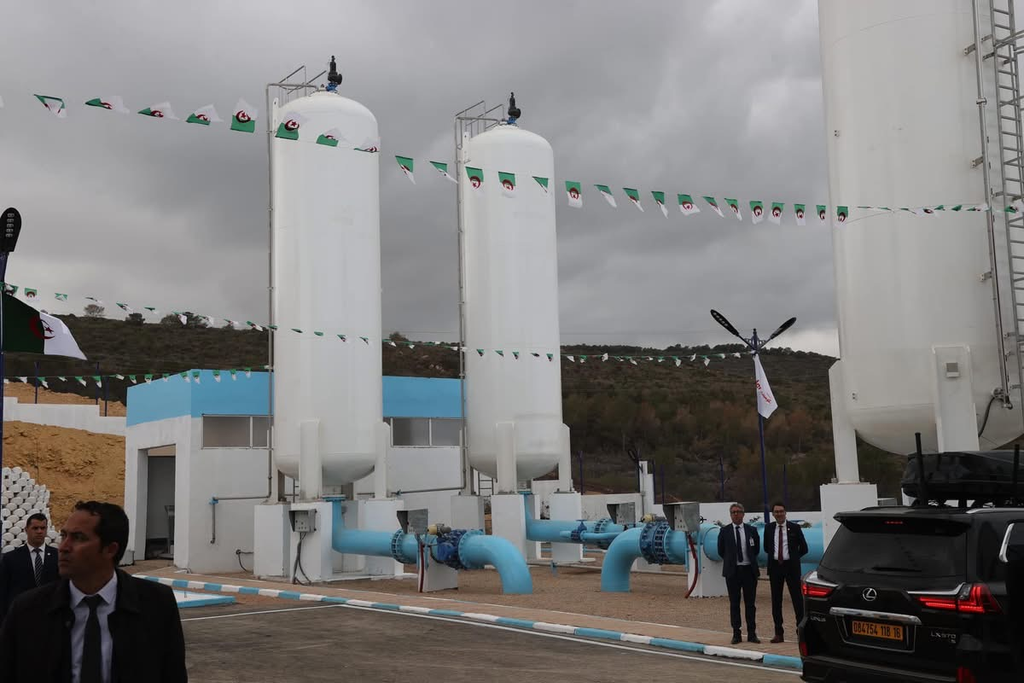
The ongoing program adds three major plants in Tlemcen, Chlef, and Mostaganem, each with a capacity of 300,000 cubic meters per day. Their operation will add 900,000 cubic meters per day, or 328.5 million cubic meters per year, to the production system.

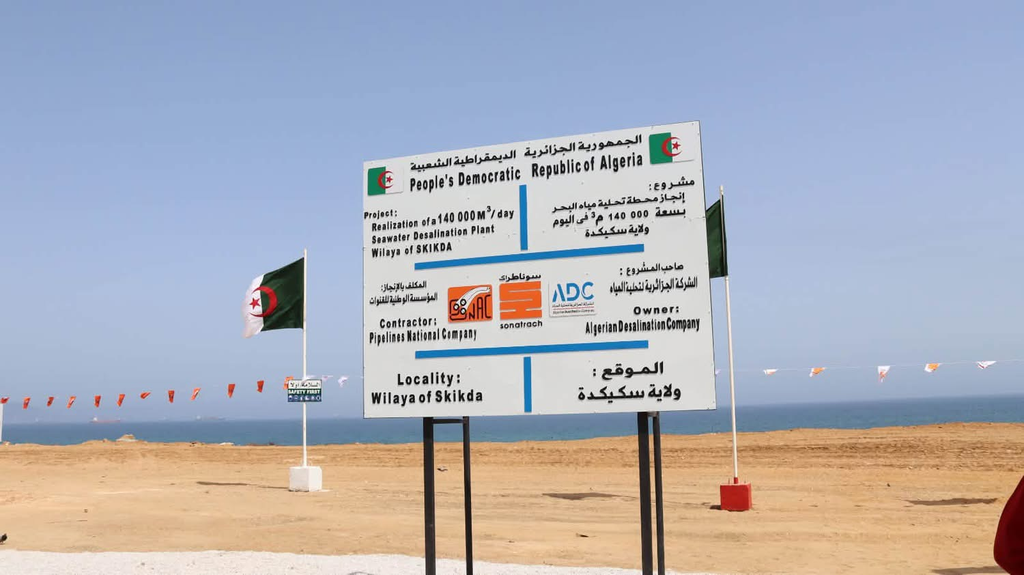
Work began on the Ain Ajroud plant in Mersa Ben M’hidi in Tlemcen in November 2025, then on the El Marsa plant in Chlef in December, in parallel with the completion of procedures for the Mostaganem plant. Sonatrach also launched in July 2026 the Ben M’hidi plant project in Skikda with a capacity of 140,000 cubic meters per day, of which 100,000 are for drinking water and 40,000 for the industrial sector.

However, adding the three plants to current capacity raises theoretical capacity to only about 4.66 million cubic meters per day. Reaching the target of 5.6 million cubic meters therefore requires providing another 940,000 cubic meters through new facilities or expansion of existing plants and increased productivity.

Nominal capacity alone is not a sufficient measure of water security, because the water produced needs pumping lines, reservoirs, lifting stations, and connection to distribution networks. Cost also rises the farther water is transported or the higher the areas above coastal level.

The World Bank estimates that transporting water horizontally over a distance of 100 kilometers or lifting it vertically by about 100 meters adds roughly $0.05 to $0.06 to the cost of a cubic meter. Expanding the supply of desalinated water from coastal wilayas to areas 150 kilometers, then 250 kilometers away therefore requires additional investments in pipes, pumping, energy, and maintenance.

The cost of producing a cubic meter at the desalination plant outlet is estimated at between $0.55 and $0.9, depending on technology, plant size, electricity price, membrane life, and maintenance expenses. When final transport, treatment, storage, and distribution are included, the cost may rise to between $1 and $1.5 when the water reaches the consumer.

Calculating the operation of current capacity of 3.76 million cubic meters per day, the theoretical production value at the plant outlets ranges between $2.07 and $3.38 million per day, equivalent to between $755 million and $1.24 billion per year.

After the three plants with a total capacity of 900,000 cubic meters per day come into operation, the theoretical annual cost of producing 4.66 million cubic meters per day may rise to a range of between $936 million and $1.53 billion, before accounting for the costs of delivering water to consumer networks.

These calculations do not reflect announced government spending, because they assume plants operating at full capacity and constant production costs throughout the year. They do, however, reveal that the coming challenge is not only related to financing construction, but also to providing the resources needed for maintenance, electricity, membranes, and chemicals over the life of the plants.

They also show that water pricing will become one of the central economic files. Continuing to sell water at low administrative prices means that the Treasury and public institutions bear the cost difference, while a uniform increase in tariffs could pressure purchasing power.

The solution requires separating basic domestic consumption, which needs social support, from high consumption and industrial and commercial uses. It also requires accurate measurement of quantities, actual billing, and reduction of illegal connections and commercial losses.

This is directly linked to the state of distribution networks. Every cubic meter produced with energy and imported materials that then leaks before reaching the consumer represents a double loss of water and money. Repairing networks in some areas may therefore be less costly than adding new production capacity of the same volume.

5.6 Million Cubic Meters per Day by 2030… Algeria Moves Desalination to the Heart of the Economy

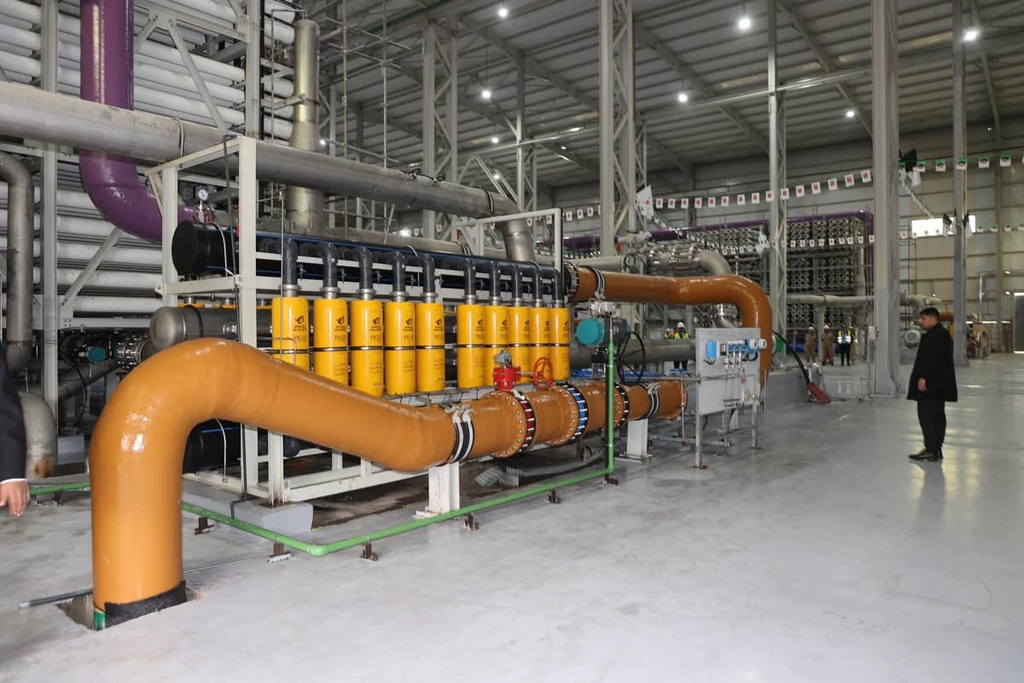
Energy represents one of the largest operating items of the plants. The reverse-osmosis technology used mainly in Algeria consumes about 2.5 to 3.5 kilowatt-hours per cubic meter, depending on plant efficiency and seawater quality.

Adopting an average of three kilowatt-hours per cubic meter, current capacity requires approximately 11.28 gigawatt-hours per day, or about 4.12 terawatt-hours per year. The requirement rises to about 6.13 terawatt-hours per year when the target of 5.6 million cubic meters per day is reached.

The difference between the current situation and the 2030 target is about two million additional cubic meters per day, requiring approximately 2.2 terawatt-hours of electricity per year under the same assumption. The desalination program therefore also becomes an energy program that needs generation and transmission capacity and continuous operation guarantees.

Integrating solar and wind energy offers an opportunity to reduce the gas used in electricity production. Every quantity of gas not burned to operate the plants can be directed to export or processing industries, creating an indirect economic return from investment in renewable electricity.

However, the round-the-clock operation of plants prevents total reliance on an intermittent source. The model therefore needs a mix of the electricity grid, renewable energies, and storage systems, with long-term electricity purchase contracts and guarantees of frequency and supply stability.

5.6 Million Cubic Meters per Day by 2030… Algeria Moves Desalination to the Heart of the Economy

This is consistent with Algeria’s updated climate contribution deposited with the United Nations in June 2026, which targets a 14% reduction in greenhouse gas emissions by 2035 with national resources, and up to 31% if international financing is available.

On the other hand, the economic impact of desalination is not limited to drinking water. Replacing dam water inside coastal cities allows a portion of traditional resources to be redirected toward agricultural perimeters, providing an indirect channel to support the production of cereals, vegetables, fruit trees, and industrial crops.

This approach avoids the direct use of desalinated water in agriculture, where most crops cannot bear its cost. Instead, cities obtain stable water from the sea, while dams gradually recover their irrigation function.

This transfer does not occur automatically; it requires irrigation networks, maintenance of storage facilities, and the determination of measurable quotas, as well as directing water toward products with the highest economic and food return. The quantity of agricultural production achieved per cubic meter should also be calculated, not just the irrigated area.

At the same time, the expansion of desalination raises an environmental challenge related to the brine produced by salt separation. International data indicate that the production of 95.37 million cubic meters of desalinated water per day generated about 141.5 million cubic meters of brine, or roughly 1.5 cubic meters of waste per cubic meter produced on average.

The actual volume of waste varies according to the water recovery rate, plant technology, and source salinity. Increasing Algerian capacity means higher quantities discharged into the sea, requiring monitoring of salinity, temperature, and chemicals at discharge points.

On June 15th 2026, the Algerian Desalination Company signed three agreements with the National Observatory for the Environment and Sustainable Development, the Directorate General for Scientific Research and Technological Development, and Kasdi Merbah University in Ouargla (not Biskra as stated in the original French text).

The agreements cover environmental monitoring, applied research, and the development of techniques for valorizing salts and mineral materials resulting from desalination. This path could open activities linked to the extraction of salt, magnesium, potassium, and other compounds, provided their viability is proven compared with the cost of separation, energy, and transport.

Signing research agreements does not mean that Algeria has begun commercial production of minerals from brine; the transition to industry remains linked to studies, experiments, and the determination of technologies and target markets. It does, however, move waste treatment from an environmental item to a potential field of research and investment.

5.6 Million Cubic Meters per Day by 2030… Algeria Moves Desalination to the Heart of the Economy

Thus, the economic value of the 2030 plan is determined by the ability to control five interconnected variables: the cost of producing a cubic meter, electricity consumption, distribution network losses, the volume of dam water freed for agriculture, and the cost of treating brine.

Raising production to 5.6 million cubic meters per day remains a necessary target but is insufficient on its own. The actual result will be measured by the quantity of water that reaches the consumer, the cost of each billed cubic meter, the stability of supply, and the volume of traditional water redirected to the productive economy.

#Algeria#Economy
Author
Lys Iwannughen
View my articles
Algeria
Share this post

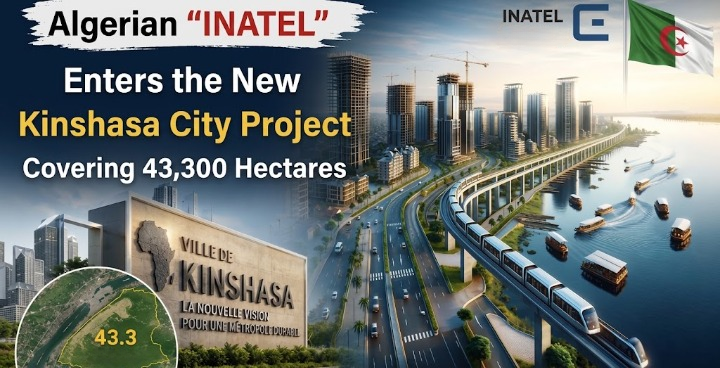
Algerian “INATEL” Enters the New Kinshasa City Project Covering 43,300 Hectares

Algerian “INATEL” Enters the New Kinshasa City Project Covering 43,300 Hectares

Algeria Gate: Algerian public company INATEL (based in Tlemcen) has joined the “Kinshasa Kia Mona” project, spanning over 43,300 hectares (433 km²) in the Democratic Republic of Congo’s Maluku municipality, as part of an African consortium with Senegal’s PGS Africa and DABYAN. The consortium will establish a local unit for assembling and producing digital equipment under the “Made in the Democratic Republic of Congo” label, plus a center for innovation, technological excellence, training, skills transfer, maintenance, engineering, and R&D in electronics, telecommunications, cybersecurity, payment systems, and applied artificial intelligence.

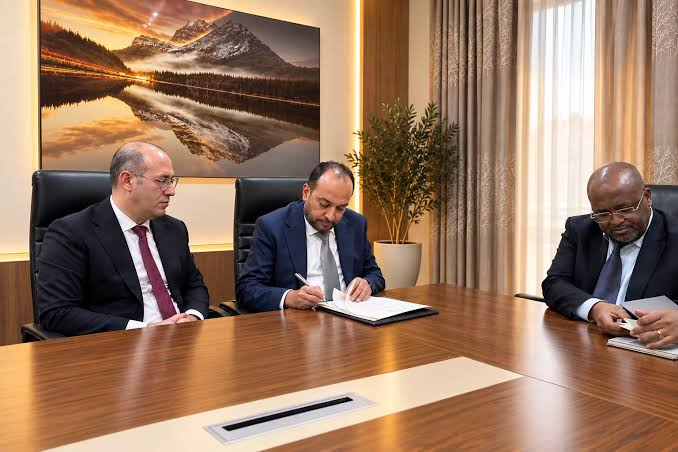
On August 30th 2026, the permanent coordination of the Strategic Supervisory Committee for the Kinshasa City Expansion Project signed a memorandum of understanding with the consortium in the presence of Algerian Ambassador Nassim Gouaoui. The agreement was announced on 1 September as part of Congo’s effort to link the new city to industrial and digital infrastructure rather than limiting it to urban and residential growth.

The document is only a memorandum of understanding, not a final implementation contract. Investment value, ownership shares, plant capacity, financing sources, and construction/entry-into-service timetable have not been announced. Technical and economic studies are still required to define the equipment to be produced locally, integration rates, component sources, and expected demand from government institutions, banks, telecom companies, and the private market. The MoU provides a negotiation framework but does not launch works or create final capital commitments.

Algerian “INATEL” Enters the New Kinshasa City Project Covering 43,300 Hectares

The production unit will cover electronic payment devices, automated dispensers, computers, and communication/networking equipment, with installation, maintenance, and technical support. It aims to cut Congo’s reliance on imported ready-made digital products by localizing assembly, manufacturing, and maintenance, and could foster a local subcontracting network in plastic/metal components, packaging, transport, logistics, and software if clear local-integration rates are set.

The excellence center will train skills in IT, electronics, telecoms, cybersecurity, payment systems, and AI, while supporting financial institutions, telecom firms, and public administrations in transaction security, data protection, and network operations—areas of rising demand. It addresses Africa’s shortage of local skills for operating, maintaining, and updating equipment, reducing permanent dependence on foreign expertise.

PGS Africa handles digital infrastructure and tech solutions; DABYAN covers payment systems, banking technology, software, and human resources. INATEL contributes industrial and engineering expertise in telecom equipment, professional electronics, and security/control systems, plus studies, installation, and maintenance. Implementation could open markets for INATEL in assembly lines, components, systems, engineering, supervision, training, and maintenance. Algeria’s economic return will depend on INATEL’s work share, exported products/services value, number of Algerian experts involved, and the share of equipment manufactured or prepared in Algeria.

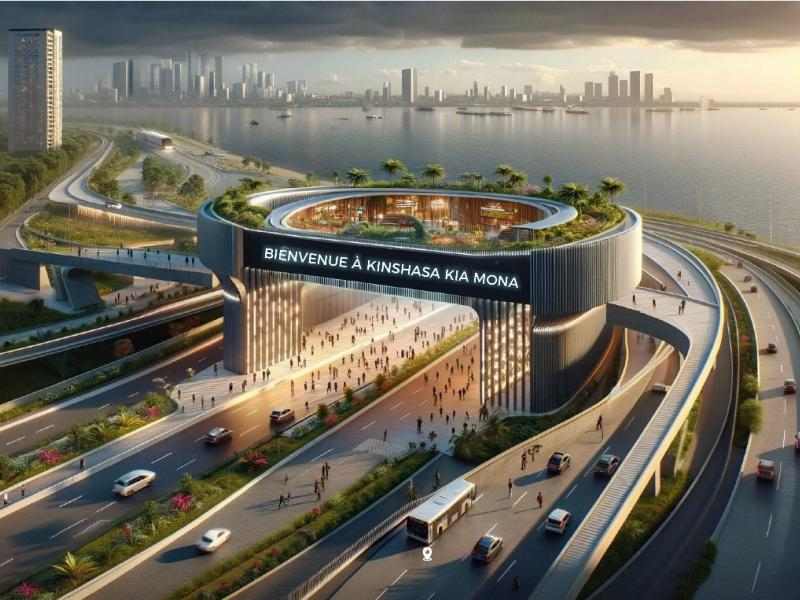
The full project allocates 19,511 ha to urban expansion, 9,200 ha to industry, 8,660 ha to agriculture, and 3,000 ha to green spaces. It seeks to ease pressure on Kinshasa (population ~20 million and still growing) by creating a new economic-urban pole that could house ~5 million people, develop up to 1,000 MW of electricity capacity, attract up to 2,500 factories, and generate about 1 million direct and indirect jobs long-term via industrial, real-estate, agricultural, technological, and service activities. These targets apply to the overall project, not the INATEL agreement specifically, and depend on mobilizing investments and completing roads, energy, water, telecoms, and public facilities.

The 9,200-ha industrial zone is one of the largest components, intended to host diverse factories and link local production to Kinshasa and other Congolese provinces. The agricultural allocation aims to combine urban growth with food production amid Kinshasa’s heavy reliance on distant or imported foodstuffs. Digital factories will need stable power, high-speed communications, logistics, and efficient payment systems, tying their success to basic infrastructure progress.

Related MoUs include one with France’s Dassault Systèmes (23 February 2026) for 3D modeling and digital-twin tools in planning and management, and one with Vietnam’s Vingroup (11 August 2026) to explore participation in infrastructure, real estate, industry, and technology. Congolese reports estimate the full project could cost up to $50 billion across all components and stages; this is not a finalized financed contract and is unrelated to the INATEL consortium’s investment. Key upcoming indicators will be specific implementation contracts, package values, financing sources, and related guarantees.

INATEL’s involvement differs from simple device exports by combining manufacturing, engineering, training, maintenance, and knowledge transfer, enabling recurring revenues from technical services rather than one-time equipment sales. It opens access to the Central African market, given Congo’s location, population, and growing demand for telecoms, digital finance, payment devices, and IT equipment. Other Algerian firms could join via subcontracting or supply of components, software, and engineering services if final contracts include them. Training itself is exportable, requiring programs, trainers, platforms, labs, equipment, and curricula. Success could give INATEL an external reference for similar African tenders.

Algerian “INATEL” Enters the New Kinshasa City Project Covering 43,300 Hectares

External expansion requires managing risks around financing, transfers, exchange rates, payment guarantees, and transport/equipment costs. Ownership models must be defined: capital shareholder (share of profits but long-term financing), technology/equipment supplier, engineering/equipment contractor, or operator/maintenance-and-training provider (each with different risk-return profiles). Confirmed demand via purchase contracts with banks, telecoms, administrations, and local institutions is needed before finalizing production-line sizes. Local integration levels will shape impact: full assembly of imported components yields limited industrial effect, while gradual increases build supplier networks, transfer knowledge, and create more sustainable jobs.

Algerian “INATEL” Enters the New Kinshasa City Project Covering 43,300 Hectares

For Algeria, returns will be measured by equipment and service export value, INATEL’s project share, participating Algerian institutions, and follow-on contracts in Congo and the region; not by signed agreements alone. The deal reflects a broader shift of Algerian firms in Africa from pure trade to investment, services, and industry, leveraging national expertise in telecoms, electronics, works, and engineering. Converting this into financial flows requires converting the MoU into contracts specifying investment value, capacity, financing, timetable, ownership, local content, and purchase guarantees. The next phase will decide whether INATEL secures a long-term industrial foothold in Central Africa’s technology market or remains at a preliminary stage needing more time before execution.

Algerian “INATEL” Enters the New Kinshasa City Project Covering 43,300 Hectares
#Algeria#INATEL
Author
Lys Iwannughen
View my articles
Algeria
Share this post

From VIP Glitter on Screens… to the Dark Shadows of Drug Networks!

From VIP Glitter on Screens… to the Dark Shadows of Drug Networks!

Algeria Gate: Luxury cars, continuous travel, planes, luxury hotels, and a life that seems without financial limits… This is how some “influencer” accounts create an image of wealth on social media, turning display into content that attracts millions of views and creates the impression that quick money and sudden luxury have become a normal lifestyle.

From VIP Glitter on Screens… to the Dark Shadows of Drug Networks!

But behind this shiny image, heavy criminal cases have begun to impose a more embarrassing question: does everything we see of displays of wealth on social platforms really reflect clear and legitimate sources of money?

https://twitter.com/algatedz/status/2095804894624031036?s=20

The case of the network involving 228 kilograms of cocaine seized in Oran brings this question forcefully back to the forefront, after the case was linked to names and personalities known on social media, including the influencer Hammadi Chahrazed, known by the nickname “Chouchou.”

From VIP Glitter on Screens… to the Dark Shadows of Drug Networks!

While the truth of any link to the criminal acts remains the competence of investigations and justice, the case has again highlighted the shocking gap between the image of luxury presented to the public and the reality that investigations may reveal in some files.

In this regard, information technology and artificial intelligence consultant Mohamed Cherif Zaidi said to “Algeria Gate” that the algorithms of social platforms such as TikTok do not judge whether content is good or bad, and do not necessarily know whether the wealth displayed by a person is real or artificial and fake, explaining that their work is based primarily on the logic of interaction.

From VIP Glitter on Screens… to the Dark Shadows of Drug Networks!

Zaidi said the algorithm measures indicators such as video viewing time, whether the user completed it or not, rewatching, comments, sharing, and interaction with it, stressing that “the algorithm does not understand and has no emotion; it understands numbers.”

From VIP Glitter on Screens… to the Dark Shadows of Drug Networks!

He added that the danger lies in the fact that content displaying a very luxurious life; cars, money, travel, and rapid and unusual success, arouses curiosity, comparison, and even controversy, and therefore obtains high viewing time and interaction. He noted that the more these signals increase, the more the algorithm may understand that the content is desirable and expand its reach.

Zaidi explained that the algorithm “is not built on what exists,” but on views and sharing, adding that the algorithm “does not ask the video owner: where did you get this money from?” but poses a technical question: “Is this video capable of keeping the user on the screen?”

He pointed out that content creators know what is called “value,” i.e., whether the content makes the viewer complete the video or not, considering that the matter can turn into a real social influence, especially on the youth category.

He said that young people’s daily exposure to dozens of models that link success to quick money, appearances, and sudden wealth “can, over time, reshape the hierarchy of values and social expectations,” so that studying, working, and building a project gradually; seen as a slow path; appear not to bring results, while rapid enrichment becomes the norm.

Regarding the description of the phenomenon as a “soft war,” Zaidi called for precise use of the term, stressing that “technically, we cannot consider every ostentatious piece of content as part of an organized war.”

However, he clarified that if it is established that there is organized and deliberate use of networks of accounts aimed at influencing public opinion, normalizing criminal behaviors, or luring young people into illegal activities, then the matter shifts, in his view, “from a mere social phenomenon to an issue related to digital security and even societal security.”

He added that if official investigations or judicial rulings prove that some owners of these accounts are linked to criminal networks, the problem becomes more serious, because the platform may have granted them; automatically or unintentionally, reach and influence over hundreds of thousands or millions of users.

On the legal and institutional side, Zaidi affirmed that there are already legal and institutional tools to deal with crimes committed using information and communication technologies, pointing to the existence of several laws related to the prevention and combating of crimes connected to information and communication technologies, in addition to the National Authority for the Prevention and Combating of these crimes, as well as the specialized national criminal hub for crimes related to information and communication technologies.

He also noted that the law includes provisions concerning the deliberate publication of false and malicious news and reports when the aim is to undermine public security or public order.

Yet Zaidi stressed that acting after the content has spread is no longer sufficient, saying: “We are in urgent need here of a shift to smart, risk-based monitoring, not comprehensive surveillance of users.”

From VIP Glitter on Screens… to the Dark Shadows of Drug Networks!

He explained that this means developing early detection systems, affirming that Algeria has the capacities to implement these ideas and innovations, which can detect coordinated campaigns, networks that republish the same messages, and accounts that use fraudulent patterns and suspicious links, especially suspicious links, through the use of artificial intelligence and network analysis.

He also emphasized the need for mechanisms of legal coordination with the platforms, with the aim of preserving digital evidence, stopping the spread, and removing content when there are legal grounds for doing so.

Zaidi believes that one of the points that must be developed in the future is dealing with accounts that have large mass influence differently from ordinary accounts, particularly when it involves commercial or financial activity, through greater transparency regarding advertisements, commercial partnerships, and the sources of the offers being promoted, in addition to strengthening identity verification and combating fake accounts and networks.

In concluding his statement, Zaidi affirmed that “the battle is not only technical,” because the best algorithms alone cannot protect society, stressing the need for “law, detection technologies, cooperation with platforms, and professional media that is quick in verifying information.”

He added that the most important element is “digital education that makes young people understand that what they see on the screen is not necessarily a true reflection of its owner’s life.”

From VIP Glitter on Screens… to the Dark Shadows of Drug Networks!

He concluded by saying that “the challenge today is not to ban social media, but to prevent the power of the algorithm from being turned from a tool of discovery,” clarifying that he means the discovery of content “into a tool exploited by misleaders, fraudsters, or criminal networks to reach young people and influence them.”

Author
Lys Iwannughen
View my articles