Tuesday, 6 October 2026 • 09:41 Algiers time
Algeria Gate
News Room
NAPEC 2026 in Oran: Algeria at the Heart of Africa’s and the Mediterranean’s New Energy Landscape Pegasus Files: Amnesty Uncovers Morocco’s Espionage Against Spain President Tebboune Orders Salary Increases in Algeria’s 2027 Budget, Rules Out New Taxes on Citizens Algeria Emerges as a Trusted Power for Regional Peace and Stability Prison of Tanezrouft: When the French Right Meddles in Algerian Affairs European Union: Algeria is a reliable partner in the gas sector and has strong potential to become a key partner in energy projects! Raw materials: Algeria benefits from the energy shock, Morocco’s trade deficit soars Hana Mansour denounces the use of her image by Le Point to illustrate an article by Kamel Daoud President Tebboune’s warning: why Algeria sent combat aircraft to Niger Algerian Diplomat: UAE Has Built a Military and Logistical Network Stretching from the Red Sea to Tigray
Share this post

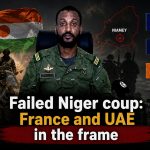
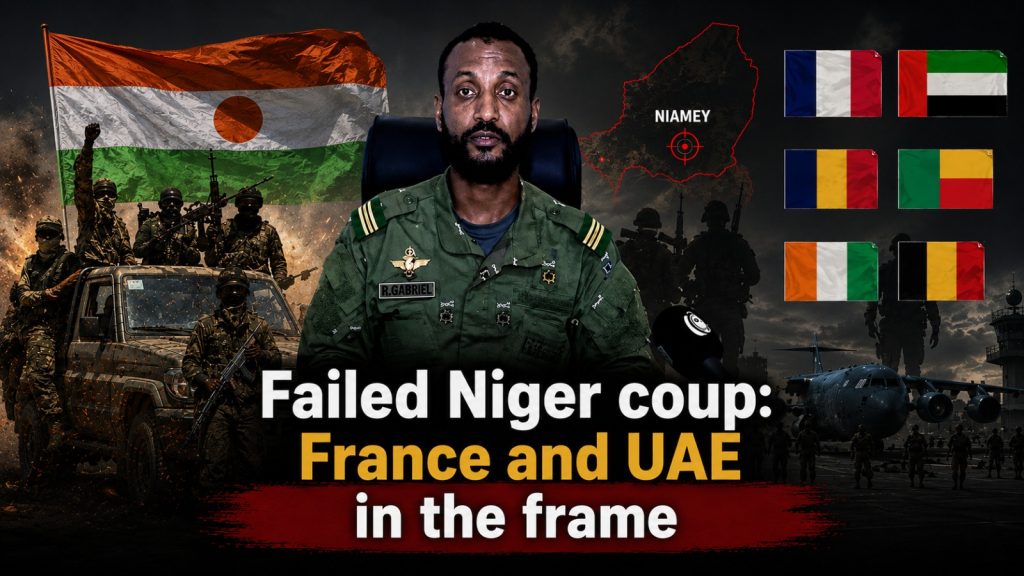
Failed Niger coup: France and UAE in the frame

• Author: Lys Iwannughen • 0 comments • 285 views
Failed Niger coup: France and UAE in the frame

Algeria Gate: Nigerien authorities have unveiled new and explosive details about the military rebellion that shook the capital Niamey on the night of 28–29 August 2026. According to official accounts, both internal and external actors were behind the failed attempt to destabilise the country.

In a televised address on Tuesday evening, Captain Roger Gabriel, commander of Niamey’s 1st Parachute Battalion, named several officers he accused of leading the mutiny. He also claimed that members of the army’s Security and Intelligence Unit (BSR) took part in the operation.

https://twitter.com/algatedzEng/status/2094935294541770931?s=20

Gabriel widened the scope of the accusations. He implicated figures close to former president Mohamed Bazoum, as well as officers from France, Chad, Benin and Ivory Coast. The captain further stated that he had received phone calls from Belgium and Dubai urging his unit to join the rebels.

In the most serious claim, Gabriel alleged that plans were under way to deploy French special forces to Niamey airport in support of the mutineers, placing France firmly at the centre of Niger’s official narrative.

These revelations go far beyond a simple barracks revolt. They suggest a calculated effort to exploit internal rifts and reassert foreign influence in Niger, following the profound geopolitical and military realignments the country has undergone in recent years.

The message from Niamey is unambiguous. For the authorities, the struggle is no longer confined to a handful of mutineers. It is a broader confrontation with what they describe as an external network seeking to regain a foothold through local proxies.

#France#Niger#UAE
Author
Lys Iwannughen

Leave a comment

Your email address will not be published. Required fields are marked *

African coast
Share this post

Paris’s “Sudanese scenario” in Niger foiled as Algeria activates air deterrence

Paris’s “Sudanese scenario” in Niger foiled as Algeria activates air deterrence

Algeria Gate: Following the recent failed coup attempt in Niger, Nigerian media revealed an attempt to exploit security tensions in order to push for a “Sudanese scenario” on Algeria’s borders. According to Nigerian authorities, the operation aimed to prevent Niger from redirecting its economic and strategic partnerships toward neighboring countries and other powers, and to derail its break with France, which seeks to regain lost influence in Africa.

Niamey’s decision to expel French forces and close several foreign military bases, including Air Base 201 in Agadez (a key American drone facility) and Base 101 in Niamey previously run by French troops, displeased decision-makers in Paris. Nigerian authorities directly accused France and President Emmanuel Macron of backing the failed coup in Niamey. The government of President Abdourahamane Tiani described it as a foreign-supported destabilization operation amid the deep rupture with France.

According to Nigerian authorities, soldiers from Base 100 near Diori Hamani International Airport took part. Official television showed dozens of arrested soldiers.

Algeria activates air deterrence and thwarts the plot to set its borders ablaze

Hours after a high-level Nigerian delegation visited Algeria; where bilateral ties are gaining strong momentum, with efforts to expand partnerships and accelerate strategic projects such as the Trans-Saharan Gas Pipeline, a military rebellion erupted in Niamey. Authorities quickly foiled it and restored security.

https://twitter.com/algatedzEng/status/2094162153884237839?s=20

In line with instructions from President Abdelmadjid Tebboune, Supreme Commander of the Armed Forces and Minister of National Defence, aimed at strengthening strategic cooperation with Niger, particularly in the military field, and in response to a request from the Nigerian leadership following the events in Niamey, Army General Saïd Chanegriha ordered the dispatch of two Sukhoi Su-30 combat aircraft patrols (four aircraft) to support the Nigerian army against the destabilization attempt.

This Algerian air force mission, made possible by the 2020 Constitution allowing deployment of People’s National Army units abroad, reaffirms Algeria’s commitment to regional security and stability. It also sends a clear deterrence message: Algeria will not allow its borders to become a threat to its national security.

Uranium at the heart of the rupture between Niger and France

Control of uranium resources has deepened the break between Niger and France as Niamey moves to reclaim sovereignty over a sector long tied to French interests. Authorities have begun taking back control of French group Orano’s activities, notably at the Imouraren site and Somaïr mine in the north, while recalling Cominak’s historic role in supplying France’s nuclear industry.

Niamey places the latest coup attempt within a broader French strategy of destabilization. After two deadly attacks on Niamey airport in January and June attributed to Islamic State, President Tiani accused France and Emmanuel Macron of financing, arming, supporting and training terrorist groups in camps linked to French intelligence in neighboring Benin.

#Algeria#France#Niger
Author
Lys Iwannughen
African coast
Share this post

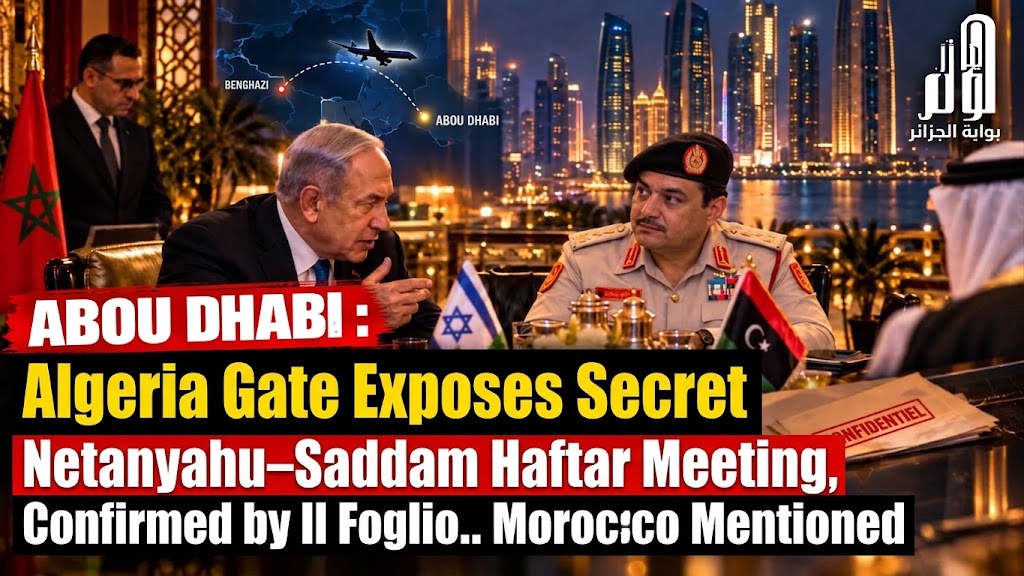
France, UAE, Morocco Axis: Deep State Sabotage of Trans-Saharan Gas Pipeline Project!

France, UAE, Morocco Axis: Deep State Sabotage of Trans-Saharan Gas Pipeline Project!

Algeria Gate: Only a few hours after a high-level delegation from the Republic of Niger left Algeria, the hornet’s nest stirred. Algeria has taken concrete steps toward the Trans-Saharan Gas Pipeline, which will carry Nigerian gas through Niger to Algerian territory and then to Europe. This project marks a major victory for Algeria: it strengthens the country’s energy security and supports regional economic integration and continental cooperation. Those who stirred the nest are trying in vain to scramble the pieces, redraw the regional map, and disrupt this strategic continental project.

The peak of the unprecedented strategic rapprochement and economic dynamism along the Niamey–Algiers axis appears to have caused unusual confusion and irritation within the France–Morocco–UAE axis. This axis does not see the project merely as an economic competitor, but as a geopolitical shift that threatens entrenched interests. Foremost among them are the illusory Atlantic alternative route led by Rabat with Emirati support, and the eroding French influence in the Sahel following the rupture with Niger.

What occurred in Niamey cannot be read as an isolated security incident. Explosions in the early hours of Saturday morning in several areas of the capital Niamey, in a failed attempt to target sensitive sites in Niger, raise many questions given their timing, which coincides with the striking acceleration of Algerian–Nigerien cooperation. Every tangible advance along this axis is liable to activate forces harmed by the reordering of the balance of power in the region.

Completing the Trans-Saharan Gas Pipeline project will turn it into a sovereign African energy corridor—the very core of the battle that the forces of evil seek to win and obstruct before the project is completed and becomes entrenched as a new strategic reality in the region.

The authorities in Niger have explicitly held Paris responsible for standing behind the failed coup attempt, which they describe as an operation aimed at destabilizing the country and weakening its security and stability.

According to observers, the mounting pressures facing Algeria; stemming from its Mediterranean location, its reach into Africa, and its independent foreign policy, are part of a larger contest for control of the Sahel, key trade and energy routes, and regional influence. Algeria has emerged as a pivotal player in any effort to reshape the maps of commerce and power in the area, especially given its resolve to turn its geography into an asset: converting what was once merely a dividing line between North Africa and the Sahel into a strategic bridge linking Africa to the Mediterranean through infrastructure, roads, ports, and trans-Saharan energy and trade corridors.

On the other hand, the Moroccan project; which was aborted before completion, has intensified Rabat’s determination to target the Algerian project by every means, especially since the Trans-Saharan Gas Pipeline is advancing with practical steps while the Moroccan–Nigerian project faces increasing obstacles and challenges.

Nigerian energy expert Dan Conley had previously warned Nigerian President Bola Tinubu of the risks associated with the Nigeria–Morocco gas pipeline project, calling for the suspension of any additional commitments regarding the project, estimated at around $25 billion, before it turns into an “economic disaster.”

Conley also warned that the Nigerian–Moroccan gas pipeline project faces major challenges, noting that the Trans-Saharan Gas Pipeline differs from it in structure; it involves only three countries: Nigeria, Niger, and Algeria. Whereas the Atlantic African gas pipeline project passes through or links more than a dozen West African countries, each with different regulatory systems, financial regimes, political landscapes, and interests.

Thus the battle is not merely about a gas pipeline, but about a broader struggle over who holds the keys to energy, trade, and the corridors linking Africa to the Mediterranean, and who possesses the capacity to turn geographic position into long-term economic and sovereign influence.

#Algeria#France#Morocco#Niger#Nigeria#UAE
Author
Lys Iwannughen
African coast
Share this post

Failed coup attempt in Niger… Authorities regain control of Niamey

Failed coup attempt in Niger… Authorities regain control of Niamey

Algeria Gate: The Nigerien capital, Niamey, witnessed an armed military movement inside Base 101, which included the detention of personnel and gunfire targeting sensitive sites in the capital, before defense and security forces intervened to contain the movement.

In an official statement, the Nigerien Ministry of National Defense explained that a group of soldiers “violated military order and discipline,” detained a number of their colleagues inside the Base 101 barracks, and opened fire on some sensitive sites in Niamey.

The ministry confirmed that the rapid response of the defense and security forces made it possible to surround the movement and gradually regain control of the targeted sites, calling on the population to maintain calm and continue their activities normally.

These developments come hours after gunfire and explosions around military and security sites in the capital, including the vicinity of the presidential palace and Diori Hamani Airport, amid a deployment of security forces. State television RTN also suspended broadcasting for a period during the disturbances before resuming transmission.

Thus, the attempt to seize power in Niger failed after the rebel group was unable to take control of the presidential palace or state institutions, while Nigerien security and defense forces continued to secure the capital and pursue those involved in the rebellion.

#Niger
Author
Lys Iwannughen