
Sunday, 6 September 2026 12:20 Algiers time
Algeria Gate
News Room
$50B Revival: Algeria Spearheads Africa’s Economic Awakening Tiny Emirate Trapped by Hormuz, Continental Algeria’s Oil Crushes UAE’s Fragile India Bet 5.6 Million Cubic Meters per Day by 2030… Algeria Moves Desalination to the Heart of the Economy Algerian “INATEL” Enters the New Kinshasa City Project Covering 43,300 Hectares From VIP Glitter on Screens… to the Dark Shadows of Drug Networks! Tiny Companies, Astronomical Figures: AI Exposes $130 Billion Import Scam in Algeria Algeria Declares War on Cartels: Cutting Supply Lines and Choking Cash Flow After Algeria… Morocco tries to flood Spain with 3 tons of cocaine! Emirati fixer in Spain on a last-ditch bid to rescue Ayoub Aissiou! UAE falls into the trap… Algerian retaliation is coming hard! Algeria-Qatar’s Baladna project pumps $1.2 billion into the treasury every year… and buries the French import lobby!
Share this post

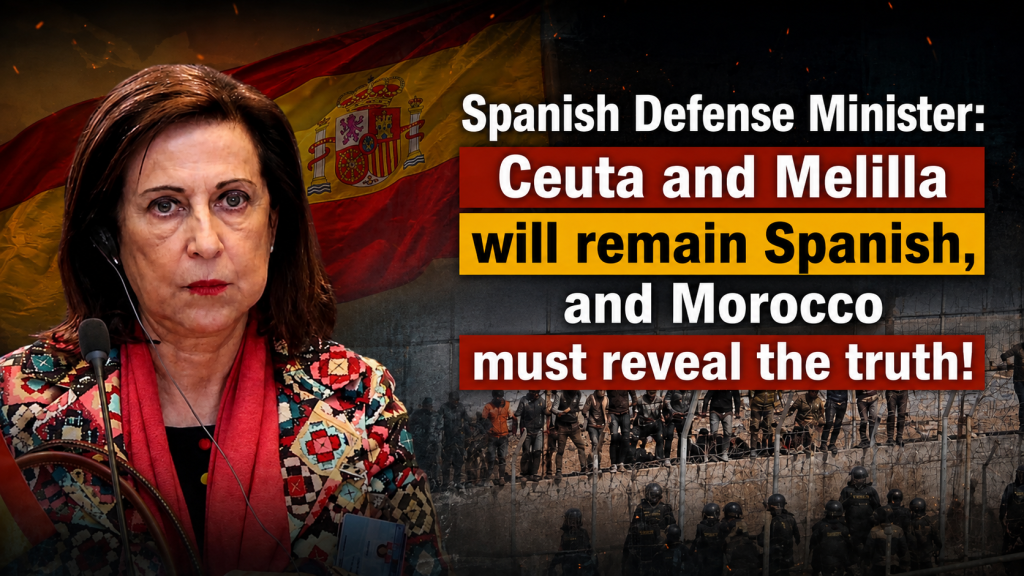
Spanish Defense Minister: Ceuta and Melilla will remain Spanish, and Morocco must reveal the truth!

Author: Lys Iwannughen 0 comments 48 views
Spanish Defense Minister: Ceuta and Melilla will remain Spanish, and Morocco must reveal the truth!

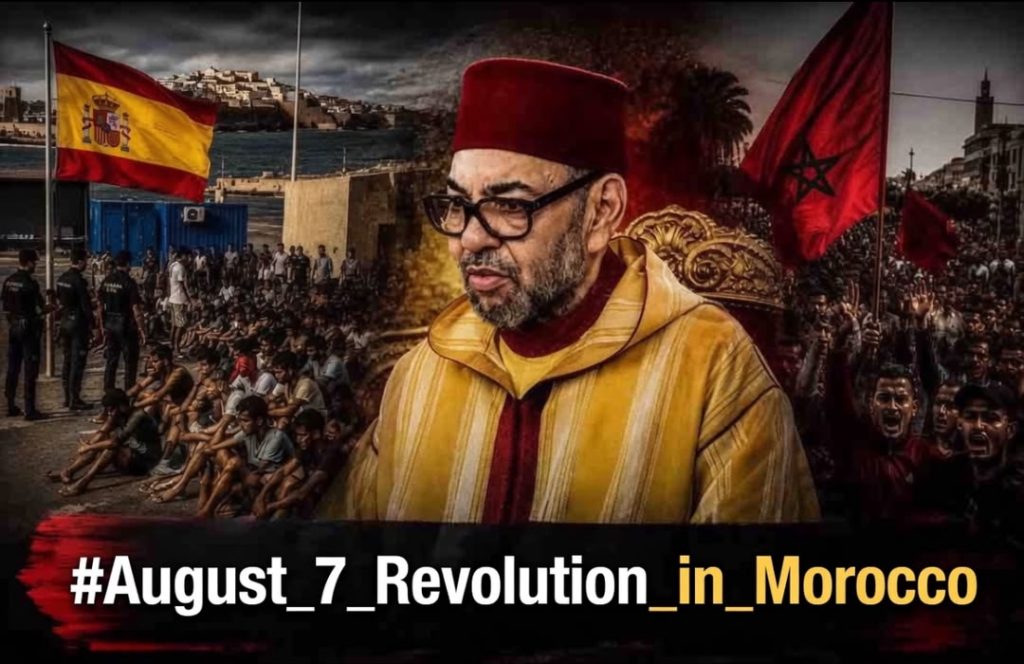
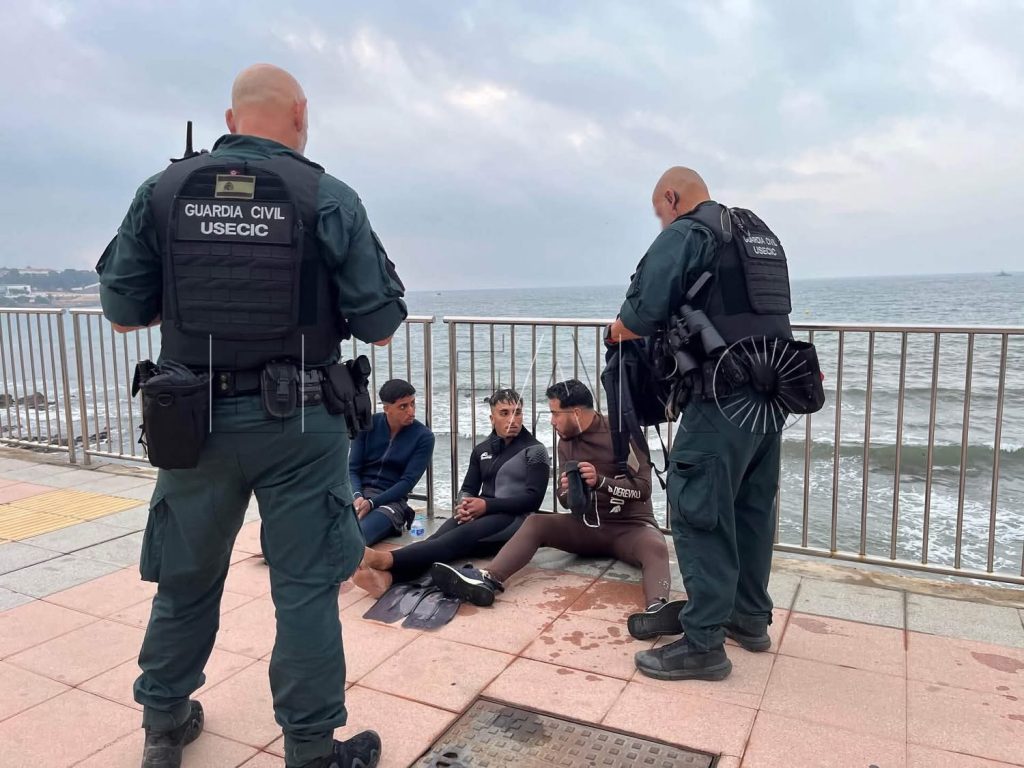
Algeria Gate: Spanish Defense Minister Margarita Robles called on the Moroccan Makhzen regime to open a thorough investigation to uncover all the circumstances surrounding the events that took place in the city of Ceuta, which, according to circulating data, resulted in around one hundred victim; a figure that contradicts the toll announced by the Moroccan Interior Ministry.

Robles stressed that establishing the truth of what occurred is essential, considering that the scale of the human losses requires precise and responsible clarifications regarding the circumstances of this tragedy.

She also expressed her regret over the victims and human suffering caused by the events, noting that the repercussions of the incident demand serious action from all parties concerned.

In this regard, the Spanish official emphasized the importance of fully revealing the truth and determining responsibilities, affirming that such events must be handled with transparency and respect for human rights.

On the other hand, the Spanish Defense Minister confirmed that the Spanish armed forces will continue to carry out their missions in accordance with the powers entrusted to them. She reiterated Madrid’s adherence to what she described as Spain’s sovereignty over the cities of Ceuta and Melilla, clarifying that the Spanish government considers the integrity of its territory and its sovereignty non-negotiable and inviolable.

#Morocco#Spain
Author
Lys Iwannughen

Leave a comment

Your email address will not be published. Required fields are marked *

African coast
Share this post

Official Morocco Speaks of Security. Real Morocco Drowns in Fnideq.”

Official Morocco Speaks of Security. Real Morocco Drowns in Fnideq.”

Just twenty four hours. That’s the gap that exposed the real distance between official rhetoric and lived reality in Morocco. On the evening of July 29, King Mohammed VI delivered his 27th Throne Day speech, touting 4.9% economic growth, a “good” agricultural season that reinforced “water and food security,” and a kingdom “admired by the world” for its “security, stability, and institutional efficiency.” Before the ink on that speech had dried, thousands of Moroccan families were fleeing on foot and swimming toward occupied Ceuta, escaping the very country just described as a rising model.

A Contradiction That Needs No Interpretation

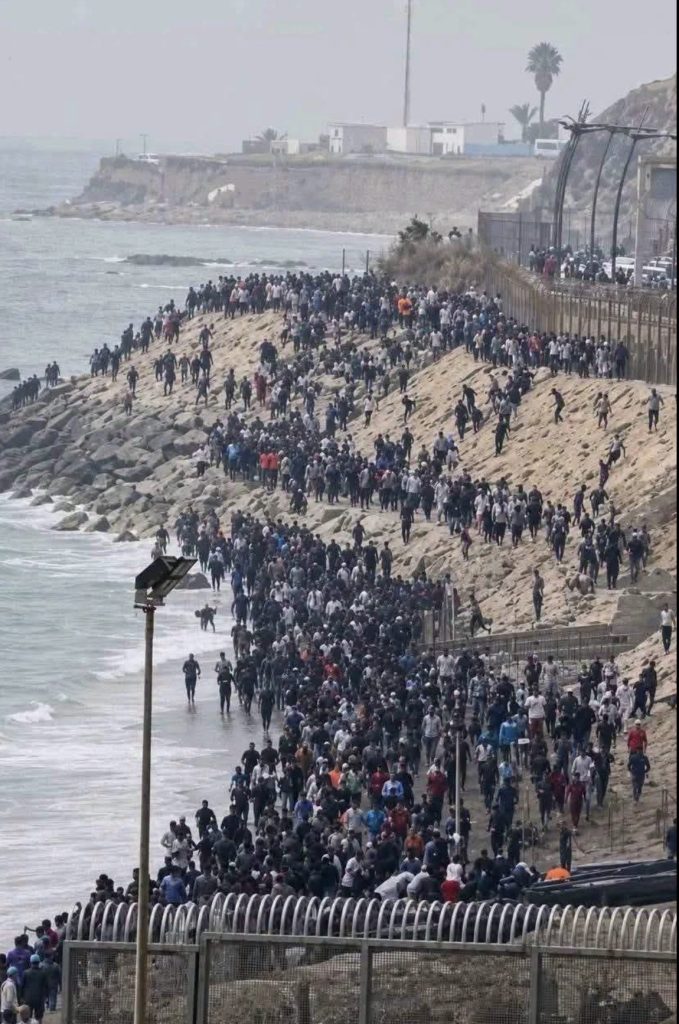
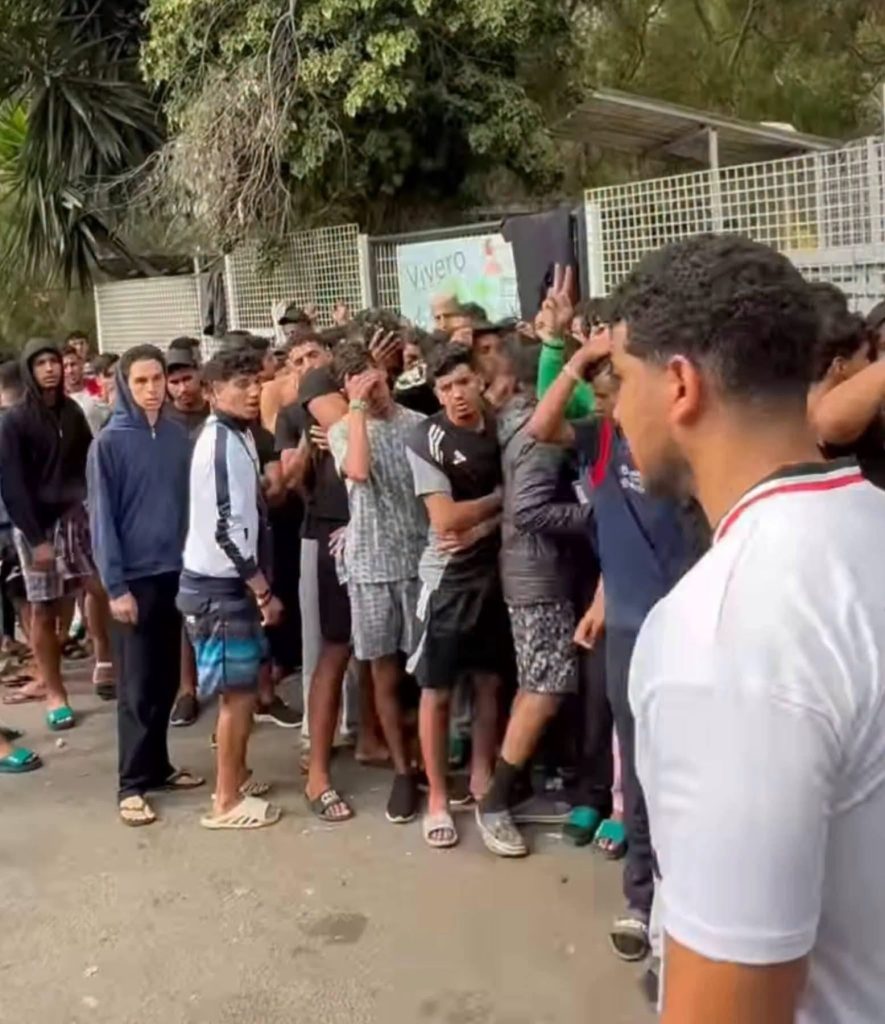
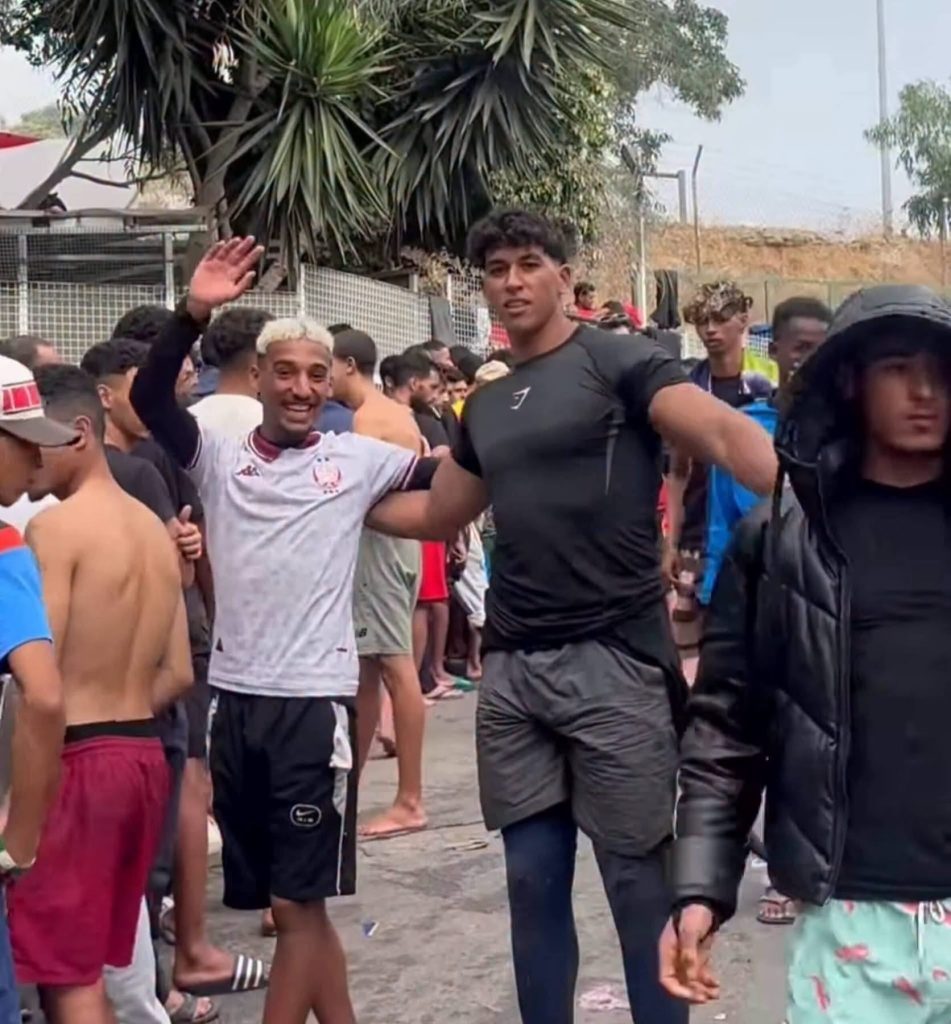
The Throne speech spoke of a “trajectory of economic ascent,” “reinforcing national sovereignty,” and “strong capacity to confront disasters and crises.” But the real crisis that exploded in the state’s face hours later was not a natural flood requiring “proactive management” it was a human flood of despair: between 50,000 and 60,000 people crossed into Ceuta in under a day, including thousands of minors and families, amid a death toll approaching ninety according to Spanish sources, with Moroccan authorities still failing to issue a unified official count as of this writing.

https://twitter.com/algatedzEng/status/2083514107458687009?s=20

Where? is the “food security” the speech spoke of, in scenes of young men abandoning their motorbikes on Fnideq’s beaches, choosing the risk of drowning over staying? Where is “institutional efficiency” in an outright failure to even count the dead and missing days after the disaster? The royal speech spoke of growth nearing 5%, yet that growth did not translate into a horizon real enough to stop tens of thousands of Moroccans from choosing the sea over the homeland.

https://twitter.com/algatedzEng/status/2082826522780410317?s=20

At the same time, despite the speech’s praise for the “excellent organization of continental and international events” that “stirred envy among some,” renewed popular calls are hitting the streets under the banner “No to corruption, no to high prices, yes to change” revealing that the “envy” the speech speaks of is not necessarily admiration, but sometimes a question about the point of investing billions in an international façade while the interior burns.

Legitimay Isn’t Manufactured Through Speeches

The deeper paradox is that the speech itself framed “security and stability” as the foundation of “economic ascent.” But what stability is this, that drives broad segments of youth into collective, mortal risk-taking, while pushing others into the streets demanding change? When temporary graves in Tetouan and Fnideq intersect with voices chanting against high prices and corruption, the gap between the official narrative and lived reality can no longer be dressed up with macroeconomic figures.

https://twitter.com/algatedzEng/status/2084025367665238298?s=20

Ultimately

Official Morocco delivers speeches about ascent, while street-level Morocco drowns and protests. As long as the state keeps reading the crisis through the lens of grand achievements instead of acknowledging the depth of despair driving its children to flee or take to the streets, what is unfolding is not a passing crisis that another ceremonial speech can contain it is a marker of an accelerating collapse of a social contract that has already lost its power to persuade.
Author
yasmine ouazib
Algeria
Share this post

LNG Gives Sonatrach a New Boost Toward Regional Leadership

LNG Gives Sonatrach a New Boost Toward Regional Leadership

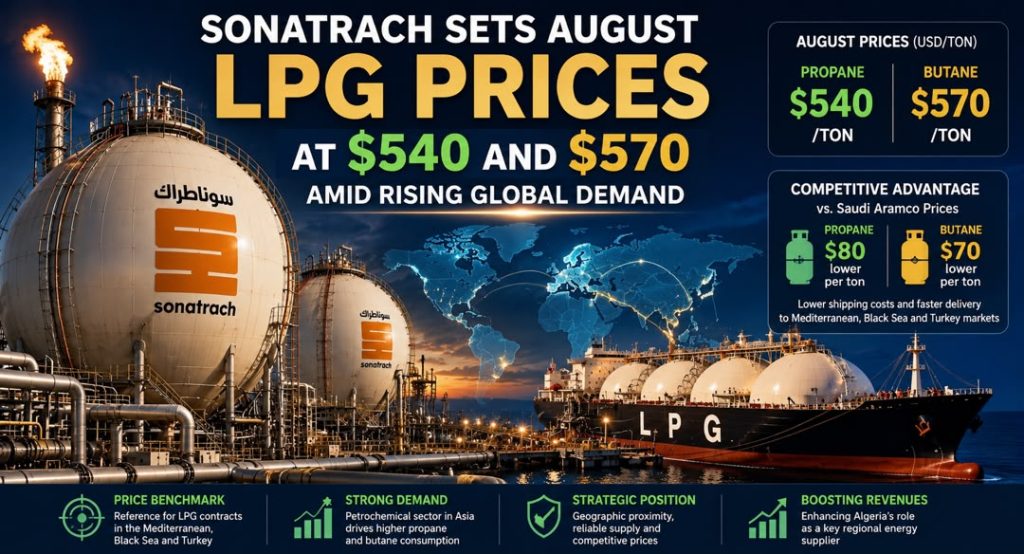
Sonatrach is once again asserting its influence in the liquefied petroleum gas (LPG) market after announcing its August pricing, strengthening the competitiveness of Algerian exports and giving the company a clear advantage over major suppliers, particularly Saudi Aramco, across the Mediterranean, Black Sea, and Turkish markets.
The Algerian energy giant set August propane prices at $540 per metric ton and butane at $570 per metric ton, compared with Saudi Aramco’s official contract prices of $620 and $640 per metric ton, respectively. This leaves Algerian propane priced about $80 lower than its Saudi counterpart and butane $70 lower, making Algerian cargoes increasingly attractive to regional buyers.

The price gap becomes even more significant when transportation costs are taken into account. Algeria’s geographic proximity to Southern Europe, Turkey, and the Black Sea reduces freight expenses and shortens delivery times, providing Sonatrach with a logistical advantage over suppliers shipping from or other distant regions.

Sonatrach’s influence extends well beyond its export volumes. Its official monthly LPG prices serve as the benchmark for contracts across the Mediterranean, Black Sea, and Turkish markets, while Saudi Aramco’s prices remain the primary reference for Asia-Pacific trade. This gives the Algerian company a strategic role in shaping regional pricing and influencing negotiations between traders, distributors, and importers.

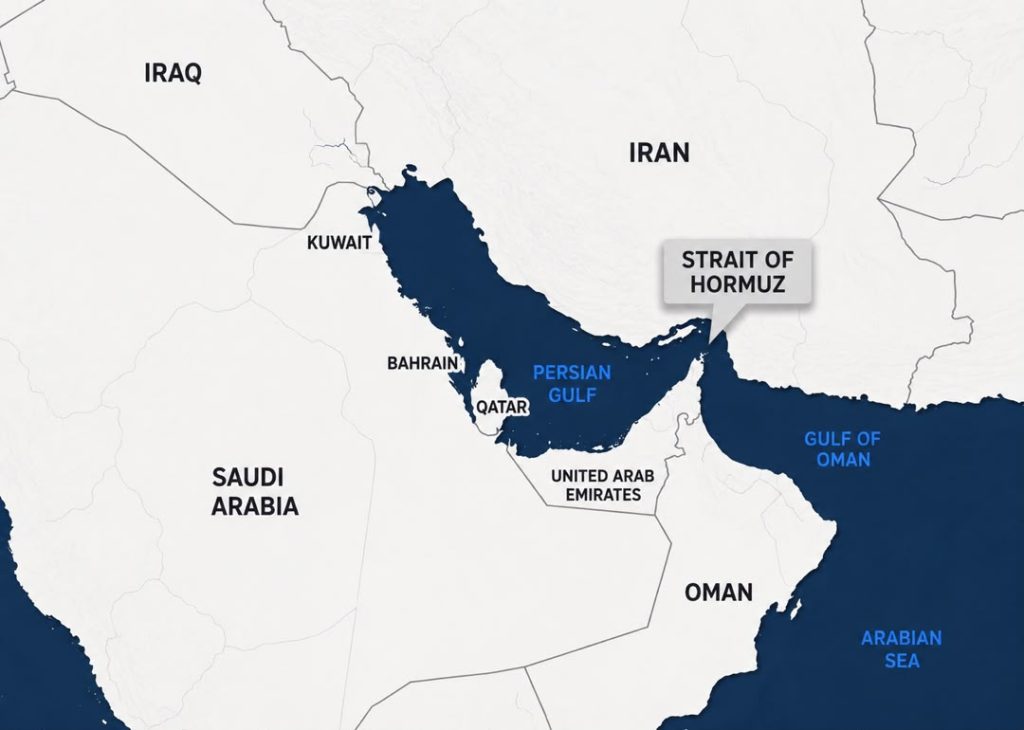
The latest pricing decision comes after a highly volatile year for global LPG markets. In April 2026, the conflict in the Middle East and the closure of the Strait of Hormuz disrupted shipments from the Gulf, sending prices sharply higher. Sonatrach raised propane to $850 per ton and butane to $900 per ton, while Aramco increased its prices to $750 and $800, respectively.

As supplies gradually recovered, Sonatrach adjusted its pricing strategy, reducing propane and butane prices in May and June before reaching $518 and $600 per ton in July. The August revision reflects the company’s ability to respond quickly to changing market conditions while preserving its competitive edge.

Demand fundamentals have also improved, particularly in Asia’s petrochemical sector. Steam crackers are expected to consume 442,000 tons of LPG during August, including 289,000 tons of propane and 153,000 tons of butane, marking the highest planned monthly consumption since December 2025. Propane remains an attractive alternative to naphtha for olefin production whenever price spreads favor LPG, while butane demand continues to be supported by gasoline blending, heating, and residential consumption.

Despite improving demand, market uncertainty persists. Supply risks in the Middle East continue to weigh on global trade, while longer shipping distances and higher freight costs limit the ability of U.S. exporters to fully replace Gulf supplies. The disruption earlier this year also highlighted the heavy dependence of major importers such as India on Middle Eastern LPG, encouraging countries to diversify their supply sources.

Against this backdrop, Algeria is benefiting from three major strategic advantages: its proximity to key importing markets, well-established production and export infrastructure for propane and butane, and Sonatrach’s position as the regional pricing benchmark for the Mediterranean basin

The new August pricing also positions Sonatrach to generate stronger returns without sacrificing market share. By maintaining prices below the Saudi benchmark while responding to improving demand, the company has reinforced its commercial competitiveness and strengthened Algeria’s role as a reliable regional energy supplier.

As global demand for LPG continues to expand across transportation, residential heating, and petrochemical industries, Sonatrach appears well positioned to increase both its revenues and regional influence. More importantly, its pricing strategy underscores Algeria’s growing role in shaping energy trade across the Mediterranean at a time when global supply chains remain under pressure and competition among exporters is intensifying.

Author
yasmine ouazib
Europe
Share this post

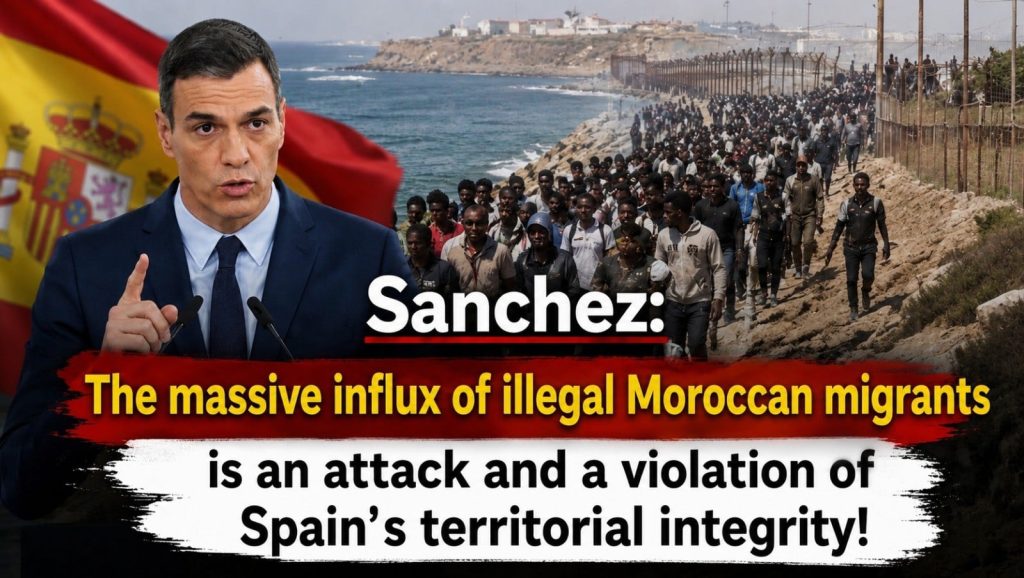
Sanchez: The massive influx of illegal Moroccan migrants is an attack and a violation of Spain’s territorial integrity!

Sanchez: The massive influx of illegal Moroccan migrants is an attack and a violation of Spain’s territorial integrity!

Algeria Gate / Agencies: In his first official comments on the unprecedented surge of illegal Moroccan migration into Spanish cities, Spanish Prime Minister Pedro Sanchez declared, Friday from Ceuta, that the massive influx of irregular migrants from Morocco over the past 24 hours amounts to “an attack and a violation of Spain’s territorial integrity.” He vowed the government would take every necessary step to restore control and secure the borders.

According to Spanish media reports, Sanchez’s remarks came during a field visit he made to the Spanish city of Ceuta to follow developments in the crisis. This coincided with the Spanish Interior Ministry announcing that its estimates indicate that around 49,000 migrants crossed from Morocco into the city over the last 24 hours, amid the escalating wave of illegal immigration and mounting pressure on the Spanish authorities.

Sanchez emphasized that the Spanish government will guarantee the security and safety of the city of Ceuta as part of Spain, affirming that the executive authority will deploy all available means to achieve this and ensure the city’s security and the peace of mind of its residents.

In this regard, he said: “The safety of Ceuta, as part of our nation, and its security and the peace of mind of our citizens and residents there, are guaranteed thanks to the actions of the Government of Spain, whatever the circumstances required to achieve that, and by all available means.”

The Spanish Prime Minister held human trafficking networks responsible for the wave of illegal immigration, considering that they had exploited the current situation to push thousands of migrants to attempt to cross toward the Spanish enclave.

Sanchez linked the rise in crossing attempts to what he described as a “malicious” interpretation by smuggling networks of a ruling issued by the Spanish Supreme Court three weeks ago, which stipulates that immediate returns are not permitted for migrants who arrive by swimming to Ceuta and Melilla, while immediate returns remain possible for those who attempt to cross the border fences.

#Morocco#Spain
Author
Lys Iwannughen