Sunday, 18 October 2026 • 17:27 Algiers time
Algeria Gate
News Room
Cameron Hudson: UAE is virtually the sole backer of the RSF..without its support the war in Sudan would not continue Algeria-Niger: Official launch of Trans-Saharan fibre optic link Five minutes of lament over Algeria: Amar Belani exposes CNEWS’s real obsession Algerian courts hand down first death sentences under new drugs law Ségolène Royal’s masterclass on Algeria against an ignorant and demagogic journalist President Tebboune and senior officials receive the remains of Boualem Boualem in Algiers NAPEC 2026 in Oran: Algeria at the Heart of Africa’s and the Mediterranean’s New Energy Landscape Pegasus Files: Amnesty Uncovers Morocco’s Espionage Against Spain President Tebboune Orders Salary Increases in Algeria’s 2027 Budget, Rules Out New Taxes on Citizens Algeria Emerges as a Trusted Power for Regional Peace and Stability
Share this post

Cameron Hudson: UAE is virtually the sole backer of the RSF..without its support the war in Sudan would not continue

• Author: Lys Iwannughen • 0 comments • 12 views
Cameron Hudson: UAE is virtually the sole backer of the RSF..without its support the war in Sudan would not continue

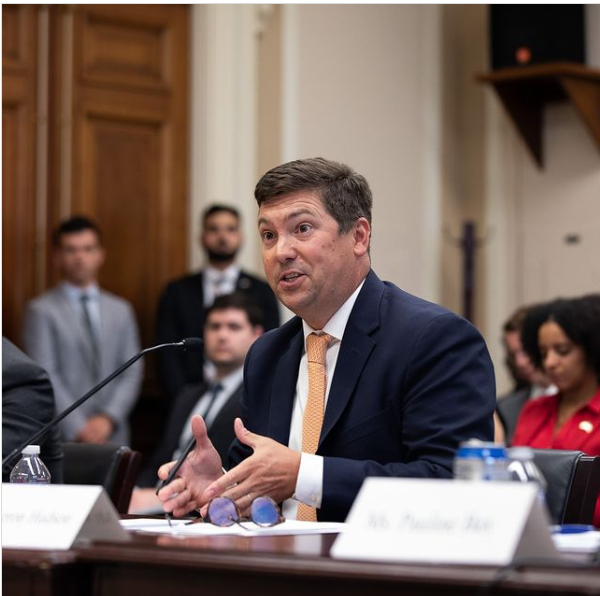
Algeria Gate: In an interview with Ryan Grim on Drop Site News, Cameron Hudson; former CIA analyst, former NSC Africa director under George W. Bush, and former head of the U.S. special envoys office on Sudan, stated that the United Arab Emirates is essentially the only external supporter of the Rapid Support Forces (RSF).
Cameron Hudson: UAE is virtually the sole backer of the RSF..without its support the war in Sudan would not continue

Abu Dhabi has supplied almost all the militia’s military aid, Colombian mercenaries and a massive air bridge. The RSF has committed multiple waves of genocide; without Emirati support the war would not have continued.

Washington prioritises Gaza, the Houthis and Iran. Blocking Abdel Fattah al-Burhan from the United Nations angered Saudi Arabia, Egypt and Qatar while pleasing the UAE, which denies the army’s right to represent Sudan. The U.S. has adopted the same discourse.

The UAE now supplies the RSF through Ethiopia, turning Blue Nile State into the most contested front. Each time its role is exposed it relocates: from Chad to Libya, then to Ethiopia. Pressure on the Strait of Hormuz has raised the value of a Red Sea foothold. The UAE has poured tens of billions into Ethiopia; financing Abiy Ahmed’s palace complex and new capital, selling arms and encouraging a military Red Sea outlet, as part of building “client states.”

On the 90-day truce proposal led by Massad Boulos, Washington demands unconditional acceptance. The RSF quickly declared readiness but lacks the capacity or intention to implement it. The Sudanese army has raised basic questions on force assembly and withdrawal lines. Momentum has shifted to the army, which now controls roughly two-thirds of the country, including Khartoum. The RSF still holds most of Darfur.


#Sudan#UAE
Author
Lys Iwannughen
View my articles

Leave a comment

Your email address will not be published. Required fields are marked *

Algeria
Share this post

Five minutes of lament over Algeria: Amar Belani exposes CNEWS’s real obsession

Five minutes of lament over Algeria: Amar Belani exposes CNEWS’s real obsession

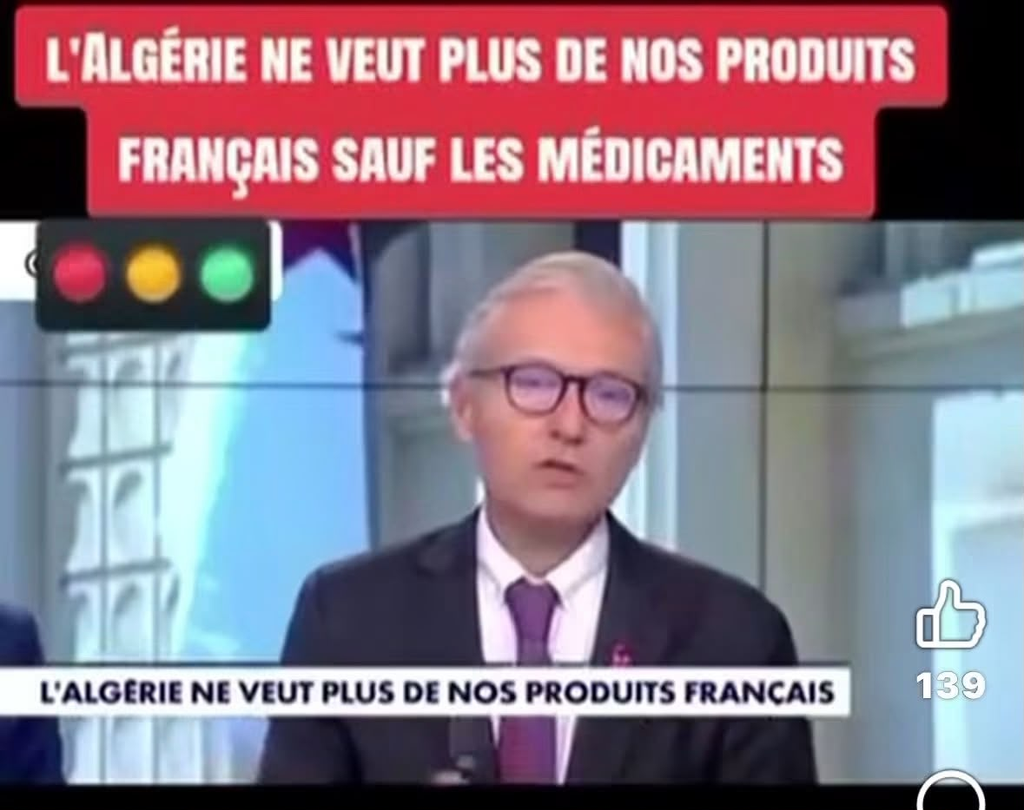
Algeria Gate – Editorial by Amar Belani: After five full minutes of complaining that Algeria no longer buys French products (except medicines), a CNEWS commentator ended his lament with a line as grotesque as it is revealing: “Algerians boycott France, but Algerian nationals in France do not boycott social benefits.”

Five minutes of lament over Algeria: Amar Belani exposes CNEWS’s real obsession

Beyond its sheer stupidity, the remark is a concentrated dose of resentment and contempt. Analysis of a commercial relationship has been abandoned in favour of an old repertoire of stigmatisation, with Algeria as scarecrow and Algerians as scapegoats.

Five minutes of lament over Algeria: Amar Belani exposes CNEWS’s real obsession

This is where a certain Bolloré-branded press has arrived: less information, more resentment; less analysis, more provocation; and the same pathological obsession with turning every Franco-Algerian issue into a trial of Algerians. By scraping the bottom of public debate, CNEWS — a principal vector of the far-right sphere — confuses journalism with hateful score-settling. In doing so, it helps prepare the ideological ground on which the extreme right hopes to prosper ahead of the April 2027 presidential election.

#Amar Belani#France
Author
Lys Iwannughen
View my articles
Algeria
Share this post

Ségolène Royal’s masterclass on Algeria against an ignorant and demagogic journalist

Ségolène Royal’s masterclass on Algeria against an ignorant and demagogic journalist

Algeria Gate: The sequence is unlikely to please those in France who view Algeria solely through the prism of authoritarianism. Invited on France Inter, Ségolène Royal refused to label the Algerian regime “authoritarian,” redirected the discussion toward French realities and called for a reset with Algiers.

Pressed repeatedly by journalist Benjamin Duhamel, she replied: “No, I cannot say that… It is up to the Algerian people to define themselves.” She acknowledged certain problems in Algeria but rejected a blanket characterisation, contrasting with much of the French media’s persistently negative framing.

https://twitter.com/algatedzEng/status/2107209209318170743?s=20

Turning the mirror on France, she asked: “And France… what is France?” citing recent tensions around school protests and police interventions. France, she noted, also faces its own problems; it is difficult under those conditions to act as permanent judge of others.

On the cases of Boualem Sansal and French journalist Christophe Gleizes, she maintained her refusal to describe the regime as authoritarian and criticised the detention of an Algerian consular agent by France as unwise. Challenging the systematically negative image of Algeria, she asked whether the Pope would have visited the country if it were as portrayed, and whether the violence seen in the streets of Paris itself is not “barbaric.”

https://twitter.com/algatedzEng/status/2107215055058354351?s=20

Beyond the controversy, Royal advocated a pragmatic approach: restoring diplomatic relations would be “intelligent,” particularly to strengthen energy cooperation and allow France access to Algerian gas. She also highlighted green hydrogen and urged Europeans to work more closely with their Maghreb neighbours and Africa more broadly; a discourse that stands in clear contrast to the moralising tone of certain French commentators.

#Algeria#France
Author
Lys Iwannughen
View my articles
Europe
Share this post

Pegasus Files: Amnesty Uncovers Morocco’s Espionage Against Spain

Pegasus Files: Amnesty Uncovers Morocco’s Espionage Against Spain

Algeria Gate: Did Morocco use its intelligence services to monitor people on Spanish soil? A new Amnesty International report sheds fresh light on the issue.

The 126-page document details what the organization calls Morocco’s “surveillance machine.” It documents the use of the Pegasus spyware against journalists, activists, lawyers and political figures, including targets outside Morocco.

Spanish daily El Mundo highlighted the Spanish dimension of the findings and the role of Morocco’s Directorate General of Territorial Surveillance (DGST).

Amnesty identified a cross-border campaign that targeted Moroccans living in Europe as well as foreign personalities. Spain emerged as one of the main theatres of these operations.

The first Spanish phone identified belonged to Sahrawi human-rights activist Aminatou Haidar. Investigators say it was infected on May 11th, 2018.

In 2019 the list expanded to include Moroccan journalist based in Spain Hussein Majdoubi and Spanish journalist Ignacio Cembrero, known for his reporting on Morocco.

Amnesty further states that Pegasus was used in 2021 against the phones of Spain’s defence, interior and agriculture ministers.

Some infections relied on “zero-click” techniques that require no action from the victim. Technical links between attacks allowed investigators to attribute the operations to a single operator.

The report concludes that the DGST deployed Pegasus in Morocco between 2017 and 2021, with possible later use. Journalists and human-rights defenders were among the primary targets from the outset.

These revelations gain added weight against the backdrop of the 2021 diplomatic crisis between Spain and Morocco, triggered by the hospitalisation in Spain of Polisario Front leader Brahim Ghali.

Amnesty International calls for independent investigations and the suspension of surveillance technology transfers to Morocco until adequate human-rights safeguards are in place.

The findings, supported by both Amnesty’s technical analysis and Spanish media coverage, place Moroccan surveillance practices firmly at the centre of European concerns.

#Morocco#Pegasus#Spain
Author
Lys Iwannughen
View my articles