Friday, 6 November 2026 • 10:22 Algiers time
Algeria Gate
Share this post

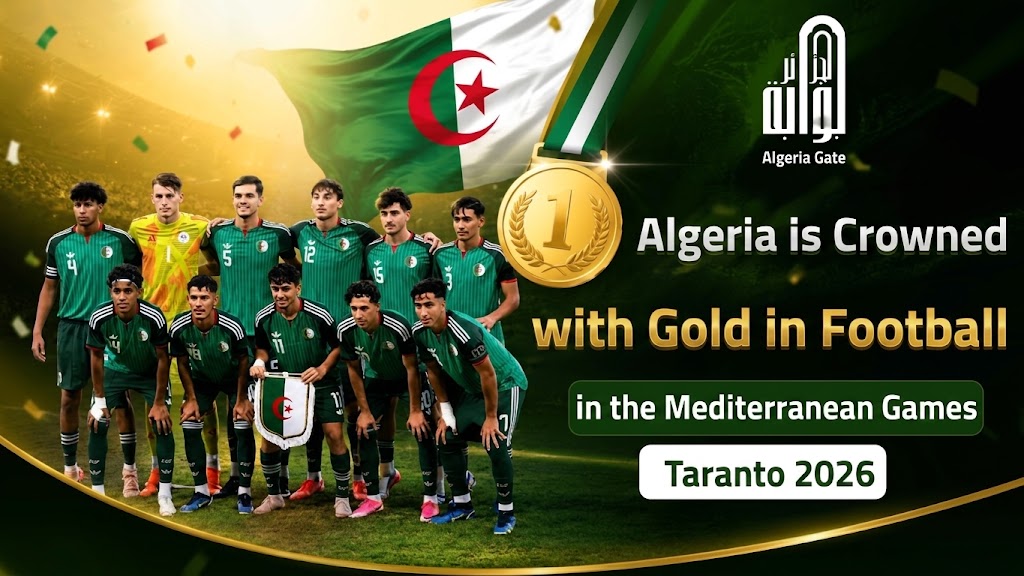
Algeria wins gold in football at the Mediterranean Games Taranto 2026

• Author: Lys Iwannughen • 0 comments • 72 views
Algeria wins gold in football at the Mediterranean Games Taranto 2026

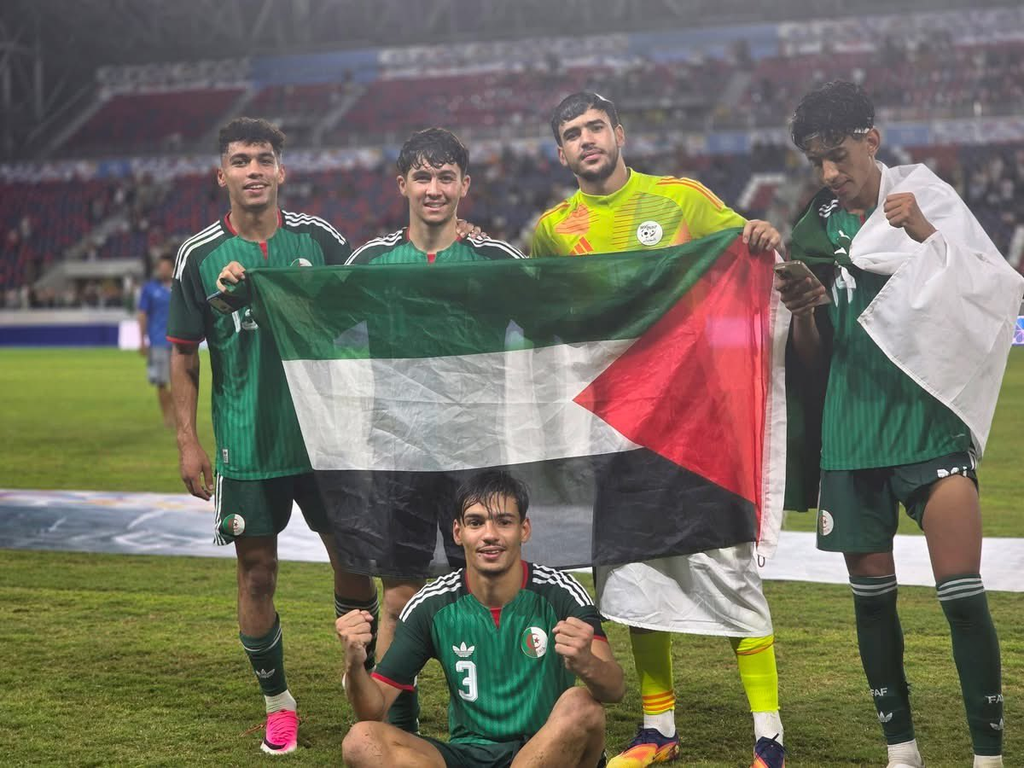
Algeria Gate: The Algerian national under-21 team was crowned with the gold medal in the football competitions of the Mediterranean Games “Taranto 2026,” after a deserved 2-0 victory over Tunisia in the final.
Algeria wins gold in football at the Mediterranean Games Taranto 2026

This title is Algeria’s third gold medal at the Games and adds a new achievement to the record of Algerian sport in this Mediterranean event.

https://twitter.com/algatedzEng/status/2094172994293670332?s=20

The victory also carries special significance, coming 51 years after the last gold medal won by an Algerian team in football at the Mediterranean Games, which dates back to 1975.

Author
Lys Iwannughen
View my articles

Leave a comment

Your email address will not be published. Required fields are marked *

Algeria
Share this post

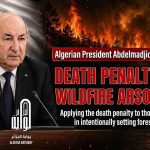
President Tebboune orders the death penalty for those who deliberately set fires

President Tebboune orders the death penalty for those who deliberately set fires

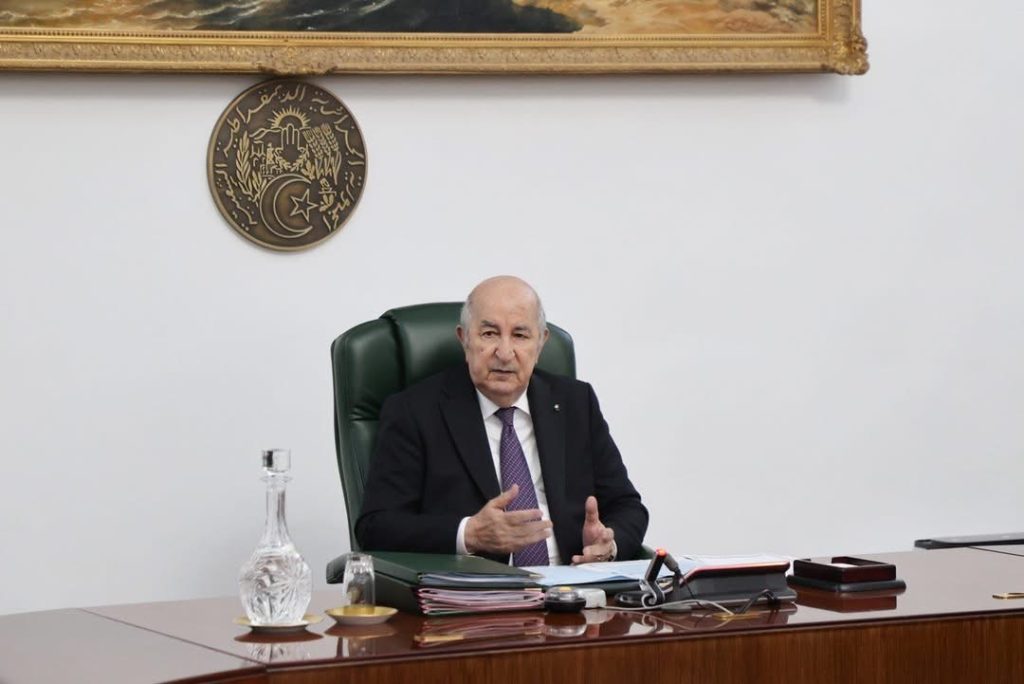
Algeria Gate: President of the Republic, Abdelmadjid Tebboune ordered the execution of the death penalty to those who deliberately set fires. He made the decision while chairing a meeting today, Sunday, dedicated to taking the necessary measures to deal with the aftermath and effects of the recent fires that affected a number of provinces in Algeria.

During the meeting, attended by senior civilian and military officials of the state, heads of security agencies, and some governors (walis), the President ordered amendments to the criminal code before September, 15th. The amendments aim to impose the death penalty on those who deliberately set fires.

President Tebboune also ordered that compensation for those affected must be 100 percent, affirming that all losses they suffered will be fully covered.

#Algeria#President tebboune
Author
Lys Iwannughen
View my articles
Algeria
Share this post

President Tebboune Chairs Meeting to Address the Damage and Impact of Recent Fires

President Tebboune Chairs Meeting to Address the Damage and Impact of Recent Fires

Algeria Gate: President of the Republic, Abdelmadjid Tebboune, chaired a meeting today, Sunday, dedicated to taking the necessary measures to handle the aftermath and impact of the recent fires that affected a number of provinces (wilayas).

https://twitter.com/algatedzEng/status/2094084968058110194?s=20
#Algeria#President tebboune
Author
Lys Iwannughen
View my articles
African coast
Share this post

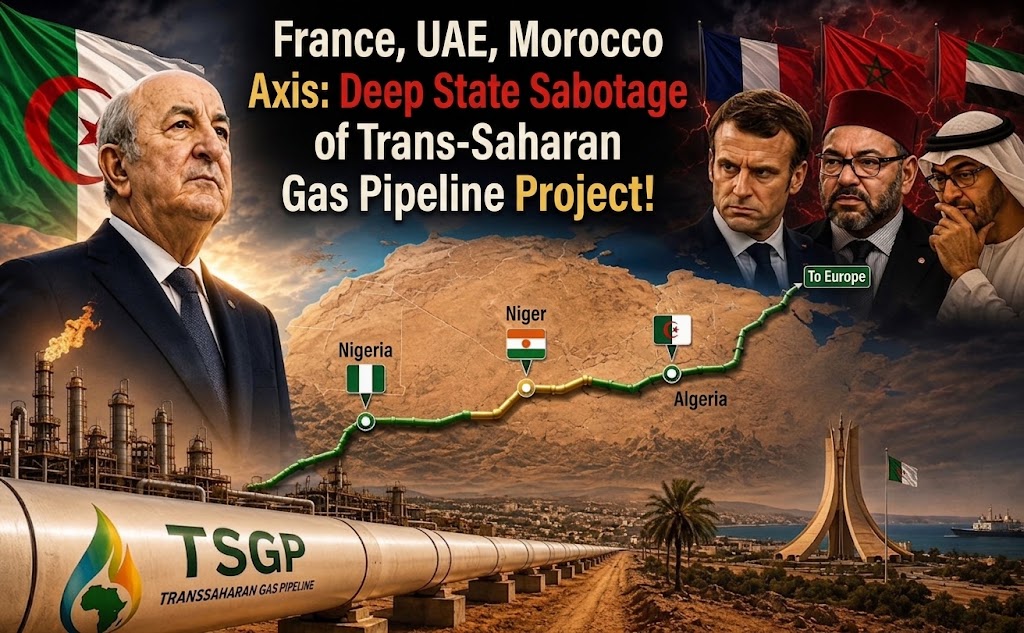
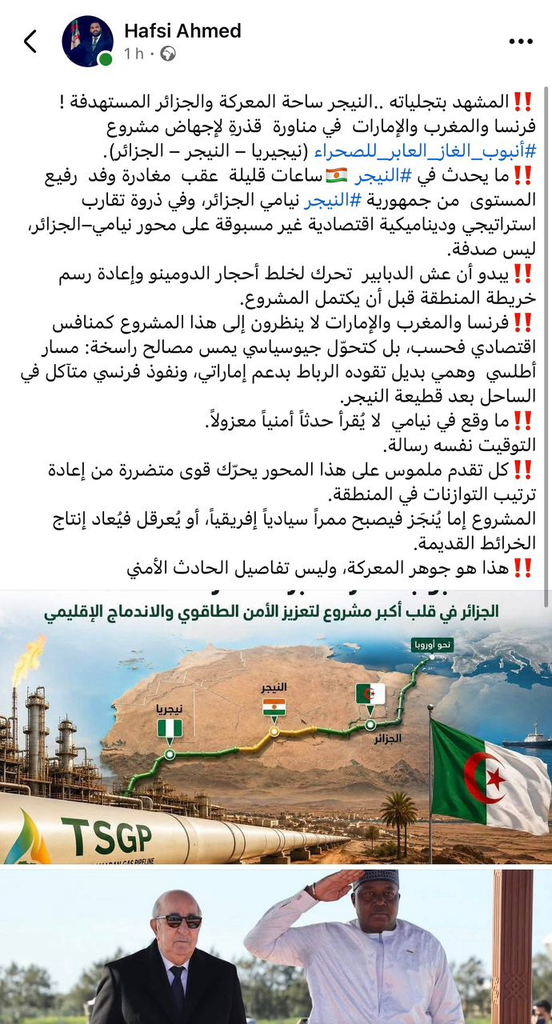
France, UAE, Morocco Axis: Deep State Sabotage of Trans-Saharan Gas Pipeline Project!

France, UAE, Morocco Axis: Deep State Sabotage of Trans-Saharan Gas Pipeline Project!

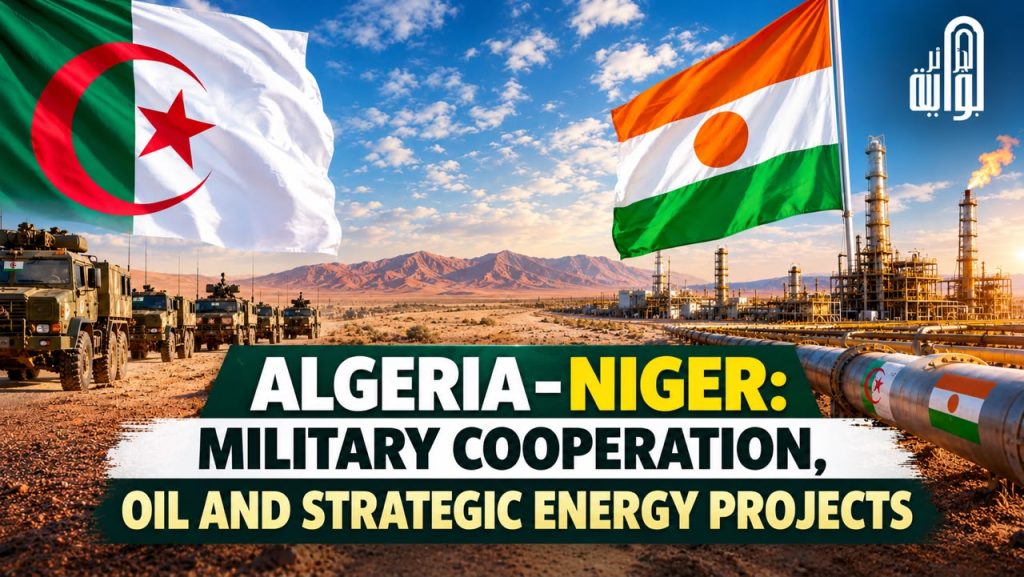
Algeria Gate: Only a few hours after a high-level delegation from the Republic of Niger left Algeria, the hornet’s nest stirred. Algeria has taken concrete steps toward the Trans-Saharan Gas Pipeline, which will carry Nigerian gas through Niger to Algerian territory and then to Europe. This project marks a major victory for Algeria: it strengthens the country’s energy security and supports regional economic integration and continental cooperation. Those who stirred the nest are trying in vain to scramble the pieces, redraw the regional map, and disrupt this strategic continental project.

France, UAE, Morocco Axis: Deep State Sabotage of Trans-Saharan Gas Pipeline Project!

The peak of the unprecedented strategic rapprochement and economic dynamism along the Niamey–Algiers axis appears to have caused unusual confusion and irritation within the France–Morocco–UAE axis. This axis does not see the project merely as an economic competitor, but as a geopolitical shift that threatens entrenched interests. Foremost among them are the illusory Atlantic alternative route led by Rabat with Emirati support, and the eroding French influence in the Sahel following the rupture with Niger.

What occurred in Niamey cannot be read as an isolated security incident. Explosions in the early hours of Saturday morning in several areas of the capital Niamey, in a failed attempt to target sensitive sites in Niger, raise many questions given their timing, which coincides with the striking acceleration of Algerian–Nigerien cooperation. Every tangible advance along this axis is liable to activate forces harmed by the reordering of the balance of power in the region.

Completing the Trans-Saharan Gas Pipeline project will turn it into a sovereign African energy corridor—the very core of the battle that the forces of evil seek to win and obstruct before the project is completed and becomes entrenched as a new strategic reality in the region.

The authorities in Niger have explicitly held Paris responsible for standing behind the failed coup attempt, which they describe as an operation aimed at destabilizing the country and weakening its security and stability.

According to observers, the mounting pressures facing Algeria; stemming from its Mediterranean location, its reach into Africa, and its independent foreign policy, are part of a larger contest for control of the Sahel, key trade and energy routes, and regional influence. Algeria has emerged as a pivotal player in any effort to reshape the maps of commerce and power in the area, especially given its resolve to turn its geography into an asset: converting what was once merely a dividing line between North Africa and the Sahel into a strategic bridge linking Africa to the Mediterranean through infrastructure, roads, ports, and trans-Saharan energy and trade corridors.

On the other hand, the Moroccan project; which was aborted before completion, has intensified Rabat’s determination to target the Algerian project by every means, especially since the Trans-Saharan Gas Pipeline is advancing with practical steps while the Moroccan–Nigerian project faces increasing obstacles and challenges.

Nigerian energy expert Dan Conley had previously warned Nigerian President Bola Tinubu of the risks associated with the Nigeria–Morocco gas pipeline project, calling for the suspension of any additional commitments regarding the project, estimated at around $25 billion, before it turns into an “economic disaster.”

Conley also warned that the Nigerian–Moroccan gas pipeline project faces major challenges, noting that the Trans-Saharan Gas Pipeline differs from it in structure; it involves only three countries: Nigeria, Niger, and Algeria. Whereas the Atlantic African gas pipeline project passes through or links more than a dozen West African countries, each with different regulatory systems, financial regimes, political landscapes, and interests.

Thus the battle is not merely about a gas pipeline, but about a broader struggle over who holds the keys to energy, trade, and the corridors linking Africa to the Mediterranean, and who possesses the capacity to turn geographic position into long-term economic and sovereign influence.

#Algeria#France#Morocco#Niger#Nigeria#UAE
Author
Lys Iwannughen
View my articles