


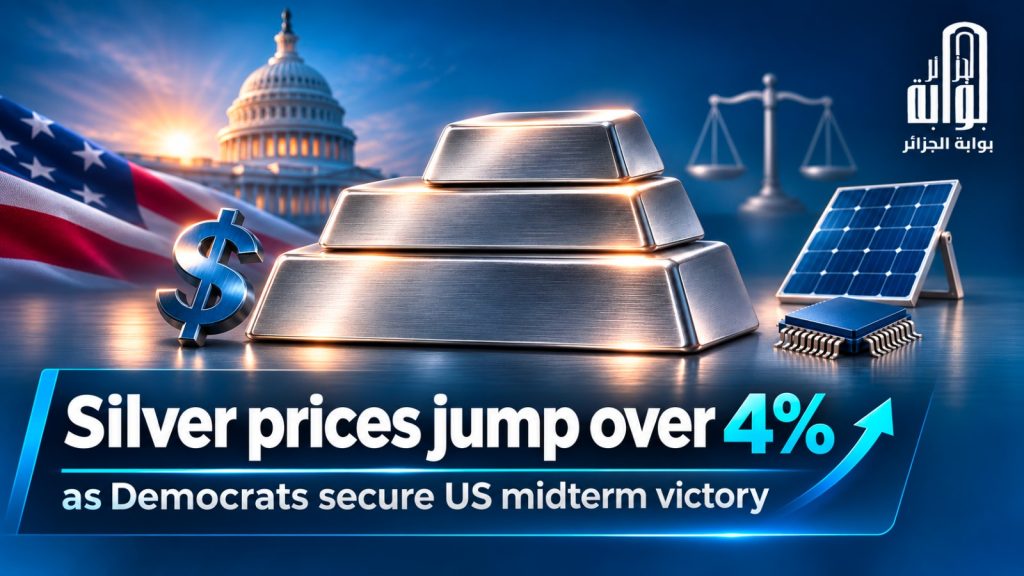
Algeria Gate: Silver climbed more than 4% during trading on Wednesday, November 4, as Democrats secure US midterm victory, reclaiming $51 per troy ounce after a sharp sell-off. The Economic Times reported that the metal had fallen to an 11-month low earlier in the week, making the recovery a welcome shift for a market under pressure. These were intranet prices, rather than a final closing figure.
The rebound coincided with a major political shift. The Associated Press reported that Democrats won control of both the House of Representatives and the Senate, reshaping the outlook for President Donald Trump’s remaining term.
For silver, the immediate significance lies in how investors price that change. Expectations about government spending, borrowing and economic growth can move currencies and bonds well before new legislation takes effect. Wednesday’s trading suggests investors were already adjusting to that prospect.
Why a weaker dollar and falling yields matter
The market’s initial interpretation centred on the possibility of legislative gridlock. A Democratic-controlled Congress could make it harder for the administration to advance further fiscal expansion. The Economic Times linked that expectation to declines in the dollar and Treasury yields, both of which supported precious metals.A weaker dollar can make dollar-priced silver cheaper for buyers using other currencies. Lower bond yields can also reduce the opportunity cost of holding a metal that pays no interest. Together, these changes can encourage investors to reconsider precious metals after a period of selling.
The connection is conditional: disputes over budgets could produce different outcomes, while inflation could keep monetary policy restrictive. CME Group’s recent analysis identified the shift toward expectations of higher interest rates as a major contributor to the earlier precious-metals downturn. That remains an important counterweight to the election-driven rebound.
Industrial demand gives silver a more complicated outlook
Silver’s investment appeal is only one part of its story. CME Group describes a market influenced by both industrial conditions and demand for a financial haven, with historically greater volatility than gold. That combination helps explain why changes in economic expectations can produce sharp price swings.
The industrial picture is mixed. The Silver Institute’s World Silver Survey 2026 reported that industrial demand declined 3% in 2025 to 657.4 million ounces. Growth in artificial intelligence infrastructure, automotive applications and electricity grids was offset by weaker solar-sector consumption as manufacturers reduced silver use and adopted substitutes.In its April outlook, the institute forecast another 3% decline in industrial demand during 2026. It also projected flat mine production and a market deficit of 46.3 million ounces. Those forecasts suggest that constrained supply can coexist with weakening consumption. An annual deficit alone does not establish how prices will move next.
What will determine whether the rally lasts?
The next stage depends on whether currency and bond-market conditions continue to support silver. Inflation figures, employment reports and Federal Reserve signals will help determine whether investors retain expectations of tighter monetary policy. A renewed rise in yields or a stronger dollar could undermine the forces behind Wednesday’s advance. The Economic Times also reported HSBC’s mildly positive outlook, alongside its assessment that silver was trading close to levels justified by fundamentals. The bank expected weaker industrial and jewellery demand to limit gains, while institutional buying could provide support.
Continued dollar weakness and sustained investment demand could help extend the recovery; restrictive interest rates and softer manufacturing activity could hold it back. Reclaiming $51 marks a substantial rebound. Establishing a durable recovery will require support beyond the immediate election reaction.