

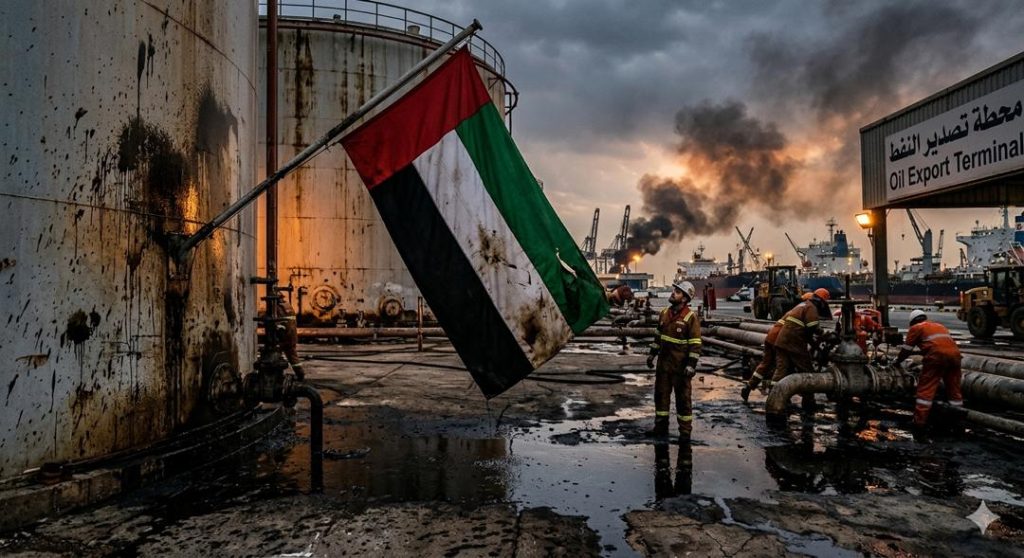
The UAE’s announcement of its withdrawal from OPEC and OPEC+ starting May 1, 2026 cannot be treated as a technical adjustment or a routine shift in oil policy. At its core, it is a major move by a state of the UAE’s scale an important global energy player that now appears to be gambling with its tools of influence rather than reinforcing them.
Exiting OPEC+ effectively means stepping away from one of the most important collective frameworks in the oil market, in favor of a fully exposed individual path subject to global price volatility and major alliances. In the energy world, size alone is not enough it is how that size is managed that determines whether it translates into influence or vulnerability.
The message sent to markets is not neutral
a major supplier choosing to break from a collective framework when conditions shift. This is not only read as flexibility, but also as unpredictability in decision-making behavior. In a market built on long-term trust, such signals can trigger serious reassessments from importers.
In this context, the move can be interpreted as a “last pressure card” in a complex regional environment. However, the problem is that this card is being played at a time when strategic room for maneuver is narrowing rather than expanding.
Over the medium term, the risk is not limited to immediate reactions, but to the cumulative perception effect. Decisions that are increasingly seen as abrupt or unilateral may gradually shape a broader narrative about the country’s economic policy behavior. Over time, such perceptions can directly affect trust, investment confidence, and positioning within the global energy market.
Geopolitically, the Strait of Hormuz remains a permanent pressure point that cannot be ignored. While Article 38 of the UN Convention on the Law of the Sea (UNCLOS) guarantees the theoretical right of transit passage, realities in the Gulf are governed more by power dynamics than legal texts.
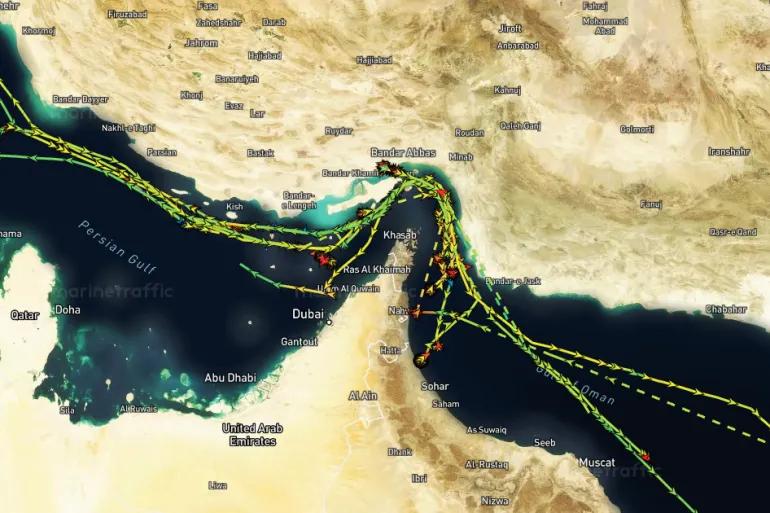
Iran, in multiple crises, has demonstrated its ability to use the Strait as leverage through threats or the seizure of tankers, reinforcing the idea that “risk neutralization” in the region is largely theoretical rather than practical.
Within the Gulf itself, withdrawing from OPEC+ also implies a recalibration of coordination with Saudi Arabia, a central pillar of oil market stability. This is not a minor policy divergence, but a sensitive shift in the balance of roles within one of the world’s most important energy-producing regions
Ultimately, between the discourse of “sovereignty” and the realities of geography and markets, the UAE appears to be entering a phase of high-risk decision-making one that may offer short-term leverage but could carry long-term consequences for trust, stability perception, and strategic positioning in global energy markets.