

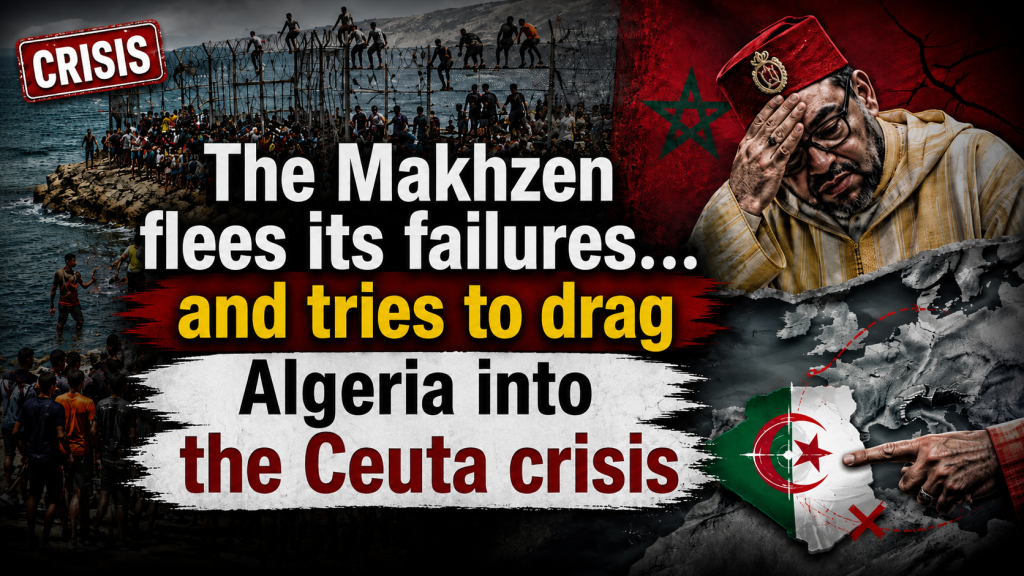
Algeria Gate: Whenever it faces failure, the Makhzen flees from confronting the real causes and instead rushes to invoke “Algeria” as a ready-made scapegoat to justify its crises and setbacks. Rather than presenting the facts honestly to public opinion, its loyal media weaves a recurring narrative whose constant refrain is to blame Algeria for every reverse.
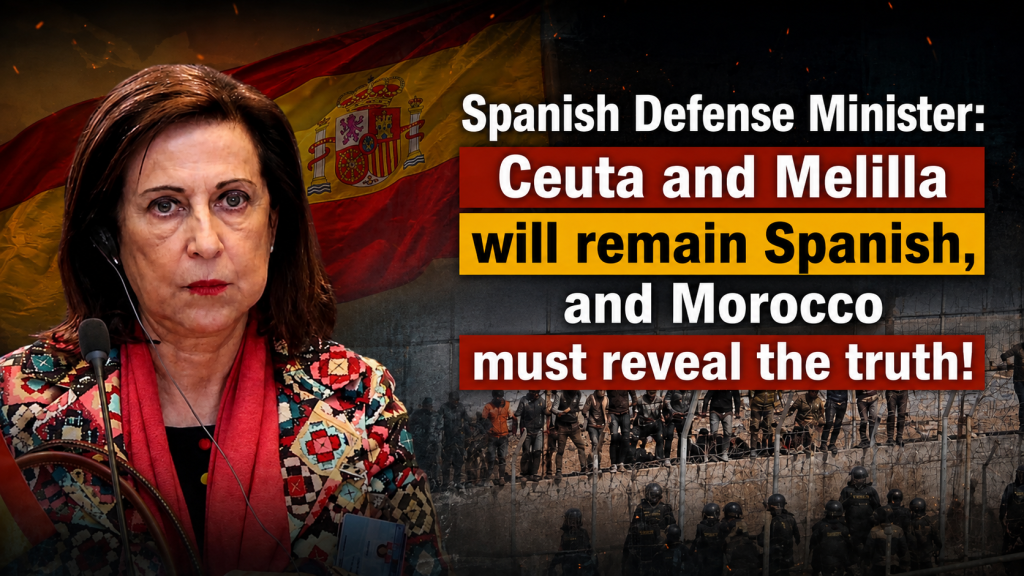
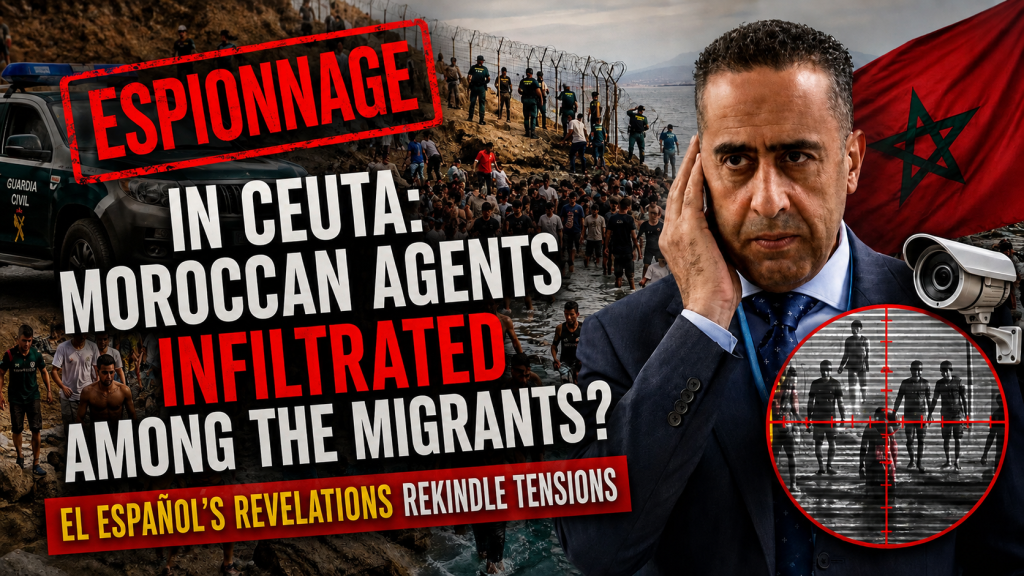
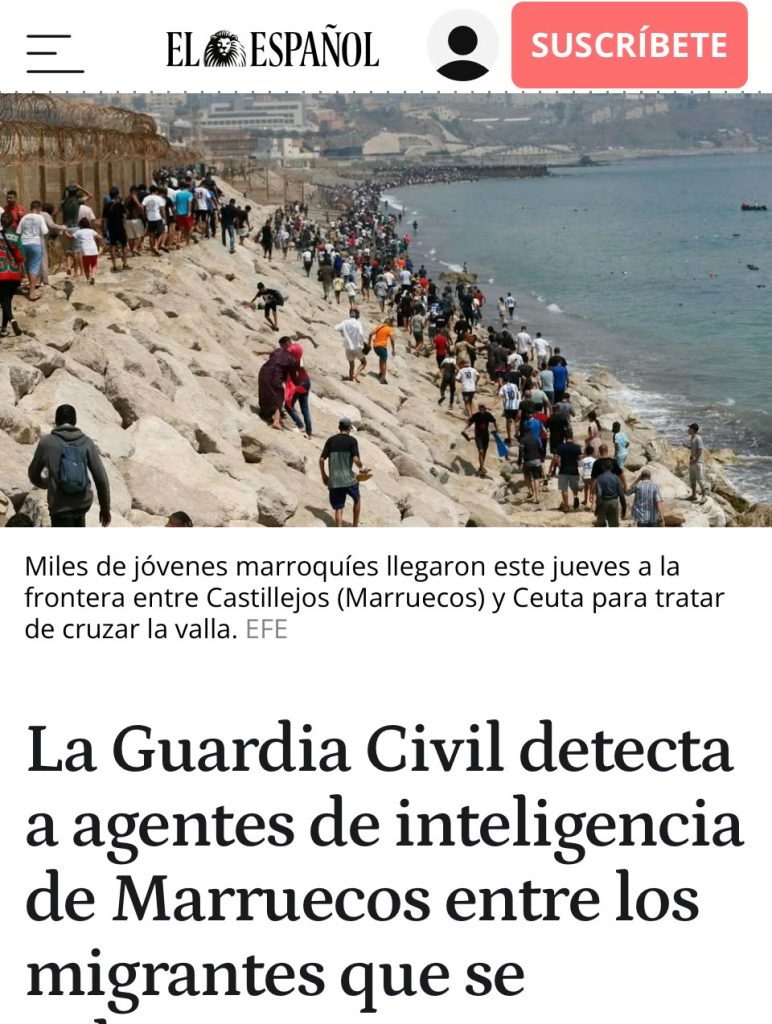
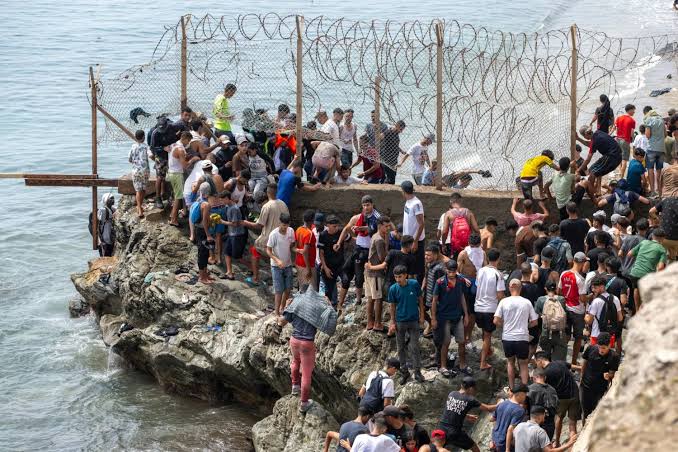
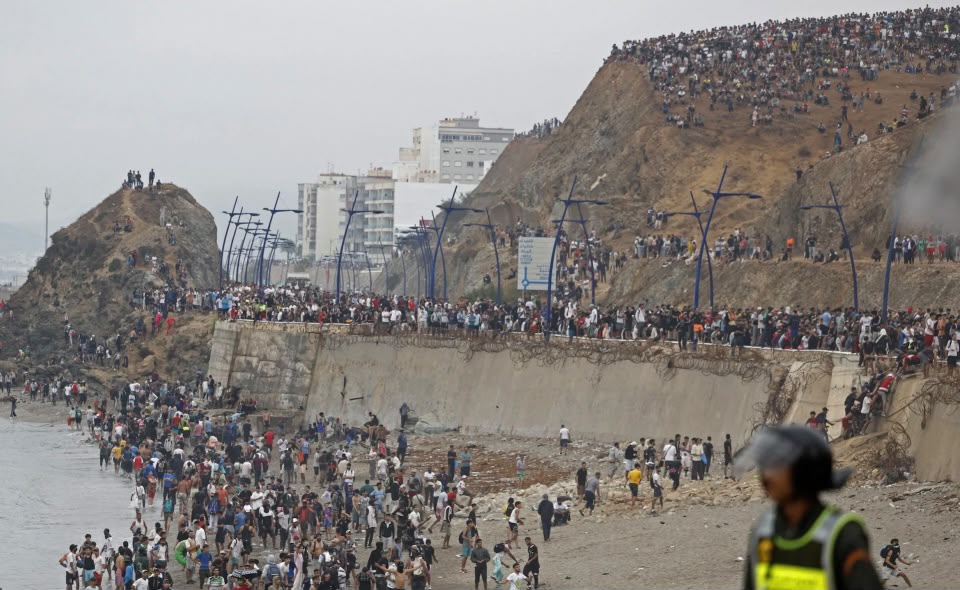
This approach has resurfaced after the mass crossings into the Spanish city of Ceuta. Makhzen media quickly seized on a Spanish report and used it selectively. They tried to drag Algeria into a crisis, even though the report itself places no responsibility on Algeria. At the same time, they ignored the parts of the report that rule out any official or judicial condemnation of the Algerian state.
The Spanish report, prepared by security, intelligence and international terrorism analyst Chema Gil, did not accuse the Algerian state, made no mention of any involvement by its institutions, and presented no evidence officially linking Algeria to the Ceuta events.
Nevertheless, Moroccan media outlets chose to jump directly to political conclusions that do not exist in the report, in a blatant attempt to divert attention from the real reasons that pushed hundreds of people to risk their lives to reach Spanish territory.
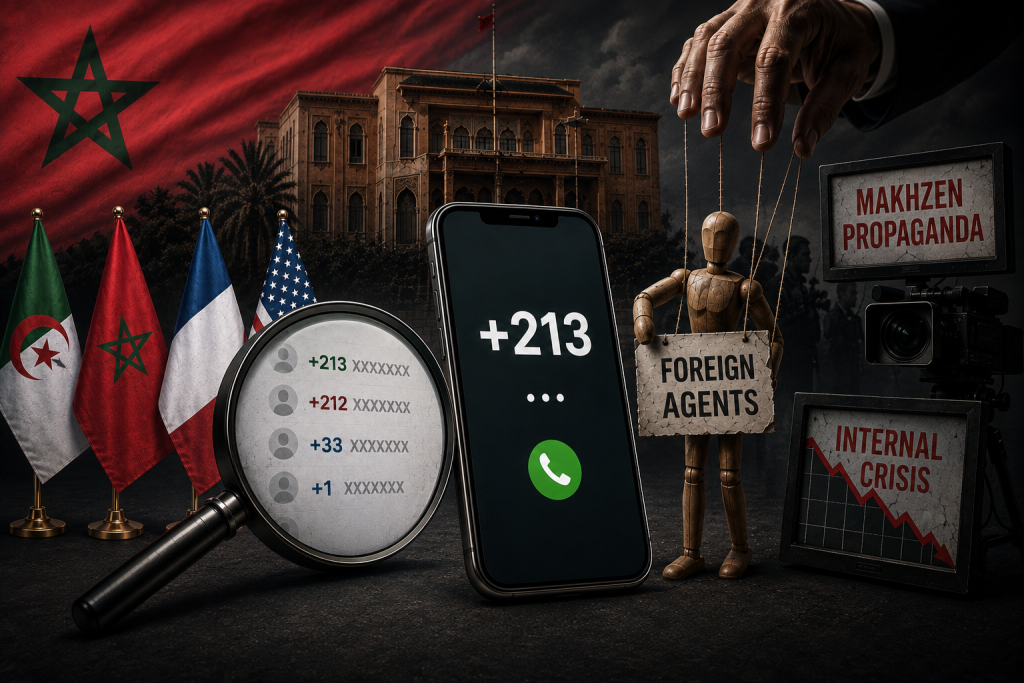
The report clearly indicated digital activity involving accounts from several countries, and also noted accounts linked to numbers beginning with the Algerian international code (+213). But turning a mere telephone prefix into “proof of guilt” for an entire state is nothing more than a selective reading that lacks the minimum of professionalism and logic.
If the appearance of numbers beginning with (+213) were evidence of Algeria’s involvement, would the existence of accounts from Morocco, France, or the United States mean that all these countries are behind the events? The same logic destroys the narrative that Makhzen media is trying to impose and reveals that the goal is not to seek the truth, but to manufacture an external enemy whenever Rabat faces an internal crisis.
Even more significantly, the report itself explicitly states that no judicial rulings exist establishing the responsibility of any specific individuals or entities for managing the digital campaign, and that no official positions confirm those conclusions. Yet this crucial passage was completely omitted from Moroccan headlines, simply because it does not serve the pre-prepared narrative.
What happened in Ceuta is not an isolated event, but comes in the context of a recurring crisis related to irregular migration and the social and economic pressures that Morocco has been experiencing for years. Instead of opening a serious discussion about the causes of this phenomenon, Makhzen media chose to return to the Algeria scapegoat, in an attempt to export internal failures and reproduce a discourse based more on provocation than on facts.
Once again, Makhzen media has fallen into the trap of exaggeration and political instrumentalization, turning an analytical document into propaganda material. Yet the truth remains clear: the report did not condemn Algeria, and the facts do not support what some Moroccan outlets tried to claim. This is simply another attempt to avoid confronting the real causes of the crisis by exporting them abroad and dragging Algeria into a matter that has nothing to do with it.