Sunday, 18 October 2026 • 20:57 Algiers time
Algeria Gate
News Room
Cameron Hudson: UAE is virtually the sole backer of the RSF..without its support the war in Sudan would not continue Algeria-Niger: Official launch of Trans-Saharan fibre optic link Five minutes of lament over Algeria: Amar Belani exposes CNEWS’s real obsession Algerian courts hand down first death sentences under new drugs law Ségolène Royal’s masterclass on Algeria against an ignorant and demagogic journalist President Tebboune and senior officials receive the remains of Boualem Boualem in Algiers NAPEC 2026 in Oran: Algeria at the Heart of Africa’s and the Mediterranean’s New Energy Landscape Pegasus Files: Amnesty Uncovers Morocco’s Espionage Against Spain President Tebboune Orders Salary Increases in Algeria’s 2027 Budget, Rules Out New Taxes on Citizens Algeria Emerges as a Trusted Power for Regional Peace and Stability
Share this post

Niger thanks Algeria before the world… What its Prime Minister said from the United Nations podium!

• Author: Lys Iwannughen • 0 comments • 7 views
Niger thanks Algeria before the world… What its Prime Minister said from the United Nations podium!

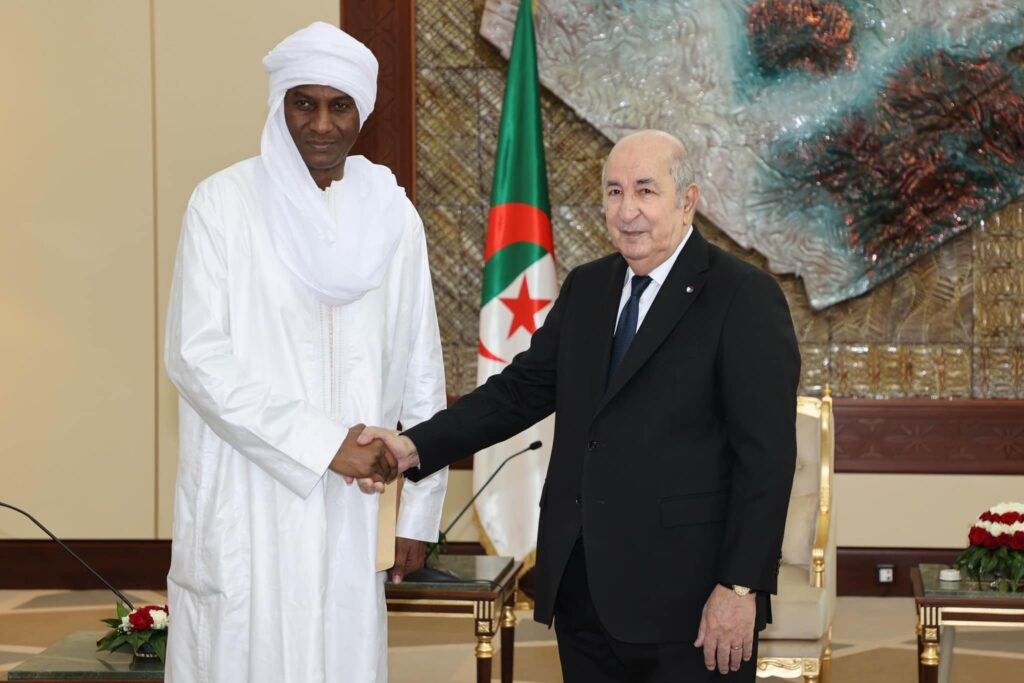
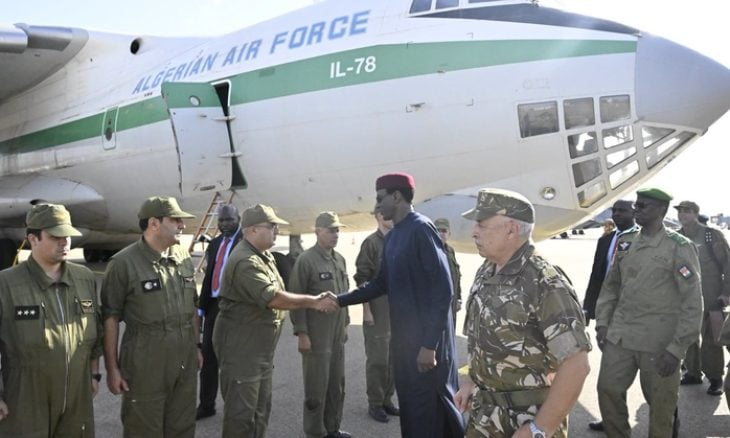
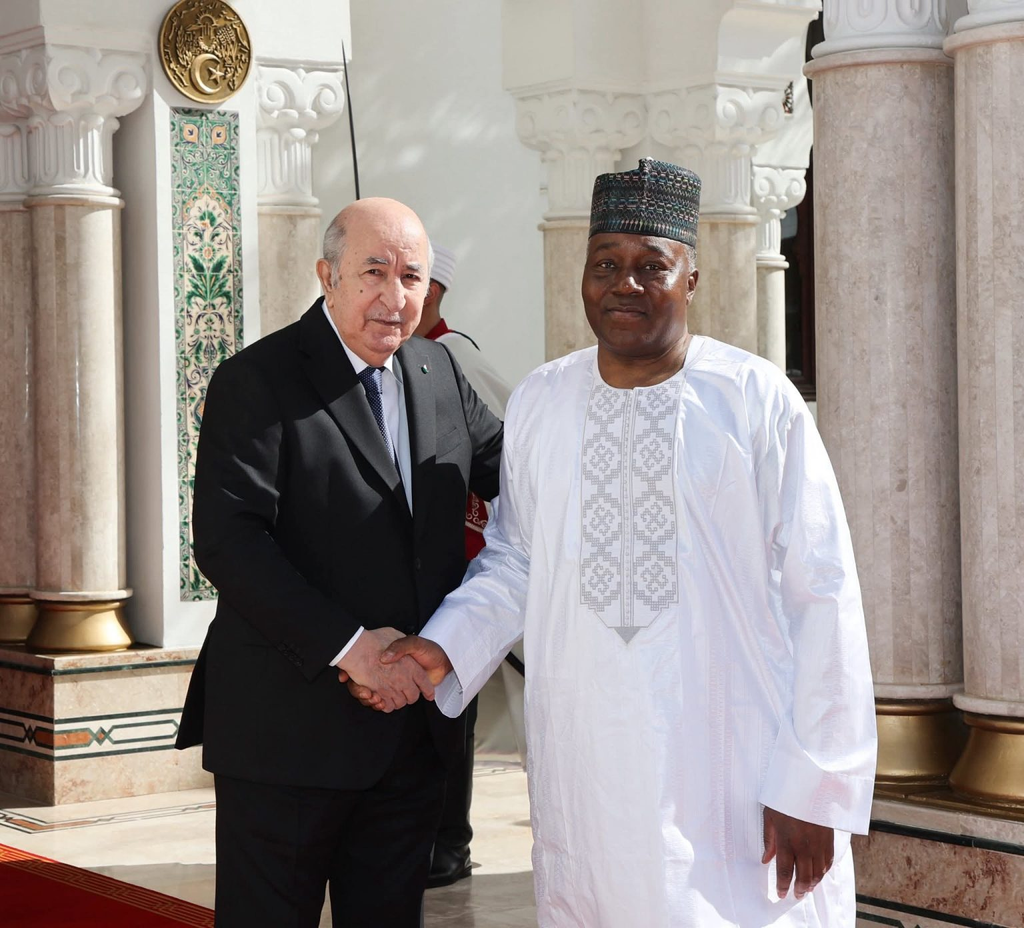
Algeria Gate: In a historic statement from the United Nations podium, the Prime Minister of the Republic of Niger, Ali Mahamane Lamine Zeine, said that his country has remained resilient thanks to its people and thanks to Algeria, which he described as a neighboring and brotherly country that chose to accompany Niger on its development path by supporting it in the exploitation of its natural resources.
Niger thanks Algeria before the world… What its Prime Minister said from the United Nations podium!

In his speech during the general debate of the High-Level Week of the 81st session of the United Nations General Assembly, the Nigerian official added that his country had been able to withstand various challenges thanks to the sacrifices of its sons, the solidarity existing among the Sahel countries, and the accompaniment provided by Algeria to Niger.
Niger thanks Algeria before the world… What its Prime Minister said from the United Nations podium!

Three years ago, Lamine Zeine said, some expected Niger to collapse under the weight of sanctions and isolation. Today, however, Niger is standing on its feet.

https://twitter.com/algatedzEng/status/2103790432081838086?s=20

Niger is standing because its people refused to bow, and because it found within the framework of the Confederation of Sahel States a family and solidarity — a family in every sense of the word in the African context.
Niger thanks Algeria before the world… What its Prime Minister said from the United Nations podium!

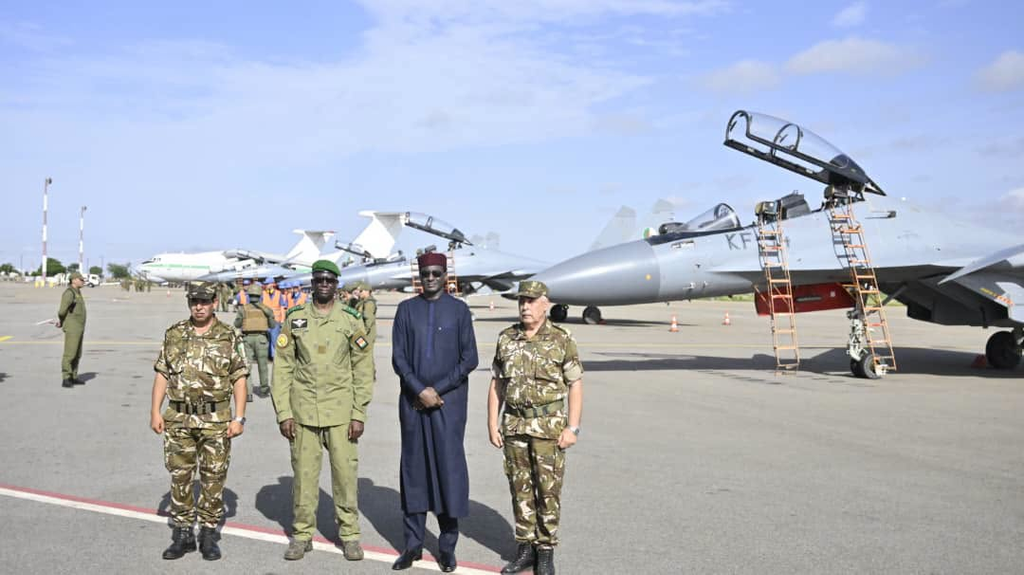
The same official continued that Niger is standing today because the People’s Democratic Republic of Algeria, the brotherly and neighboring country, chose to accompany it through significant investment in the exploitation of its natural resources and through continuous support for its defense system.
Niger thanks Algeria before the world… What its Prime Minister said from the United Nations podium!

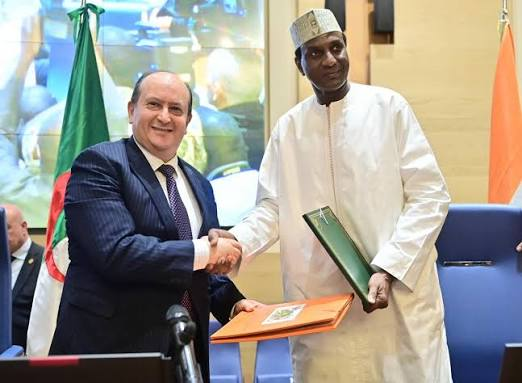
The Nigerian Prime Minister also stated that his country is working with Algeria to develop dynamic cooperation in the fields of health, education, energy, water resources, and agriculture. Added to this are a number of major structuring projects, such as the tripartite gas pipeline and the Trans-Saharan Highway.
Niger thanks Algeria before the world… What its Prime Minister said from the United Nations podium!

He concluded his remarks about Algeria by saying that Algeria has contributed to strengthening Niger’s energy infrastructure through the construction of a 40-megawatt power plant in the capital Niamey, in addition to cooperation in the exploitation of oil resources, particularly through the “Kafra” project in northern Niger, where Algeria and Niger launched exploratory drilling works last August for the “Kafra Southeast 1” well.

#Algeria#Niger#United Nations
Author
Lys Iwannughen
View my articles

Leave a comment

Your email address will not be published. Required fields are marked *

African coast
Share this post

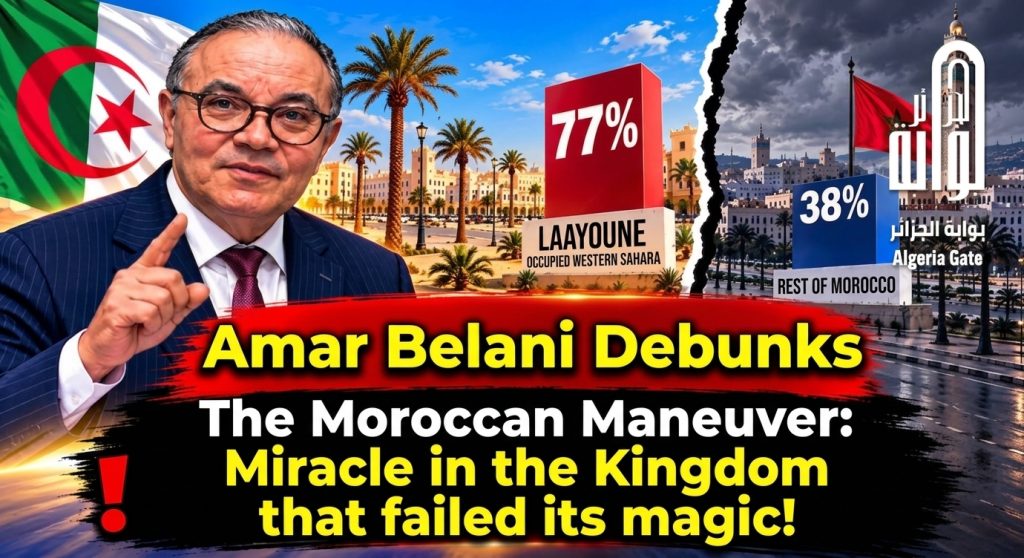
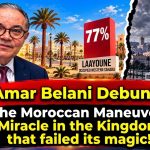
Amar Belani demolishes the Moroccan maneuver: A miracle in a kingdom whose magic has faded!

Amar Belani demolishes the Moroccan maneuver: A miracle in a kingdom whose magic has faded!

Opinion article by: former Algerian diplomat Amar Belani
The results of the legislative elections in Morocco still hold surprises

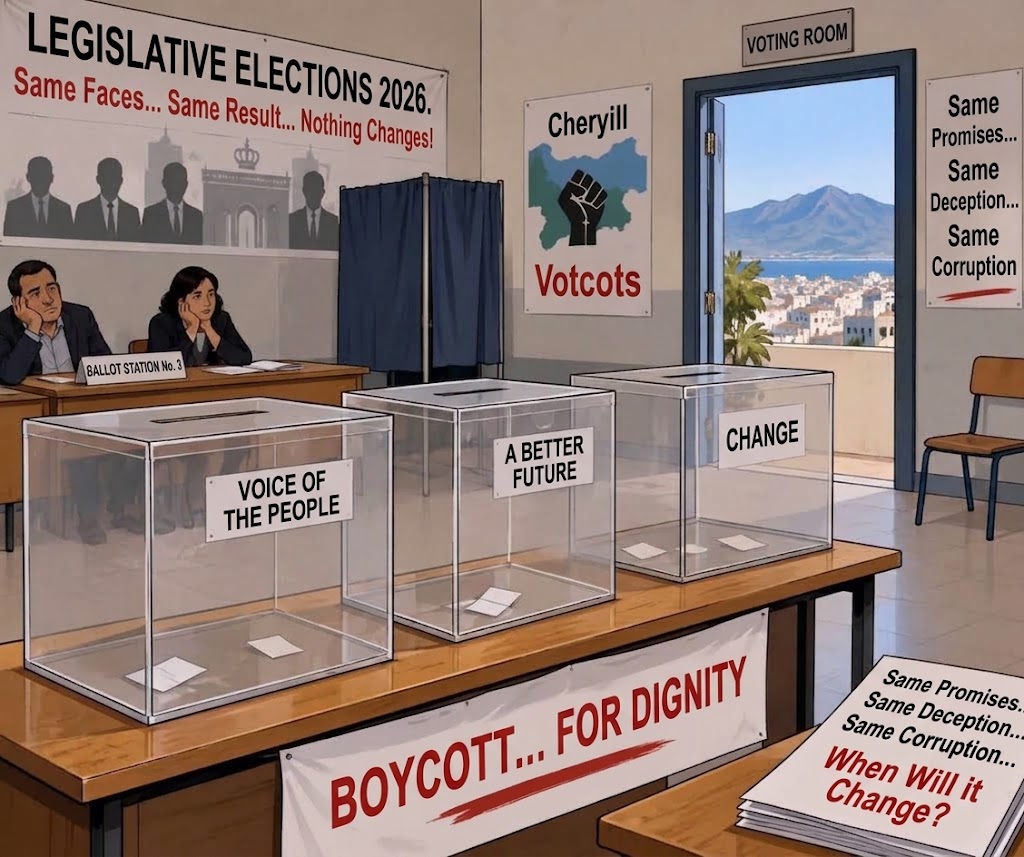
Algeria Gate: In the occupied Western Sahara, democracy took a quantum leap, while the rest of Morocco stayed where it was, committed to silence and calm. 77% turnout in Laayoune versus 38% in the kingdom! Statistically, this is closer to a ritual miracle than to an election.

Amar Belani demolishes the Moroccan maneuver: A miracle in a kingdom whose magic has faded!

This achievement is presented to us as proof of a spontaneous love for the ballot box, in a region where merely uttering the word “referendum” has made the United Nations cough since 1975.

Strange, this electoral enthusiasm precisely in the place where the real question has never been allowed to be put to a popular vote: “To whom does ownership of this territory belong?”

This perfected trick has become a ready-made recipe. Take an electorate shaped over decades by declared settler colonialism, add a sprinkle of carefully invited “international observers,” then decorate the scene with eight “Sahrawi” female deputies displayed as prizes for progressive virtue, and the vote is thus transformed into a certificate of sovereignty, stamped with a diplomatic visa.

Amar Belani demolishes the Moroccan maneuver: A miracle in a kingdom whose magic has faded!

But the high point of the show remains this contradiction: while Rabat and Casablanca shrug their shoulders at the ballot boxes, Laayoune races to the polling stations with the enthusiasm of a last-minute conversion.

A great deal of naivety is required not to see in this anything other than a polished production in which the record turnout is used not so much to elect deputies as to silence, once again, the issue of the occupied Western Sahara with blows of fictitious percentages.

Amar Belani demolishes the Moroccan maneuver: A miracle in a kingdom whose magic has faded!

The sincerity of a vote is not measured by the number of hands raised when you have carefully chosen who is allowed inside the hall.

So be it! Organize a self-determination referendum.

#Amar Belani#Morocco
Author
Lys Iwannughen
View my articles
African coast
Share this post

Dakhla–Nouakchott Route: Moroccan Pressure, Mauritanian Ambiguity and Emirati Financing

Dakhla–Nouakchott Route: Moroccan Pressure, Mauritanian Ambiguity and Emirati Financing

By Amar Belani

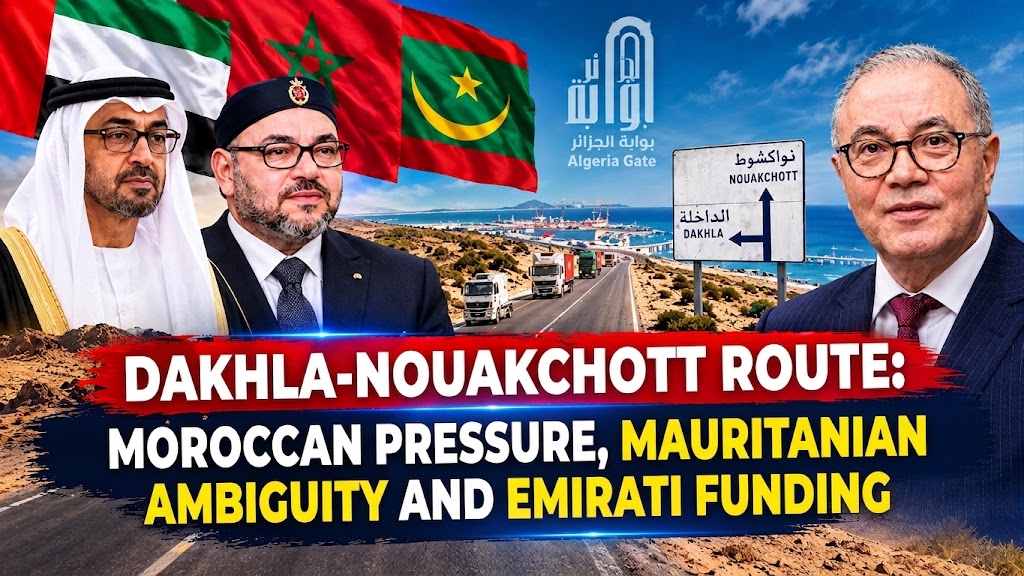
Algeria Gate: While work is underway on the first section of the Tindouf–Zouérate road, Morocco and Mauritania signed a framework agreement in Rabat on September 21 to rehabilitate and widen Mauritania’s National Road No. 4. Officially presented as a project to facilitate traffic between Nouakchott and Nouadhibou, the agreement carries a far broader strategic significance.

The road does not end at Nouadhibou. It extends north toward PK55, opposite Guerguerat, creating a continuous land route toward Dakhla. Moroccan Equipment Minister Nizar Baraka has himself publicly referred to the Nouakchott–Dakhla link via PK55. The agreement covers some 480 kilometers of the Mauritanian road network.

This is therefore about much more than improving bilateral trade.

Faced with Algeria’s plans to develop a southern corridor toward West Africa, Rabat is accelerating efforts to capture future commercial flows toward Mauritania, the Sahel and West Africa. The objective is to consolidate the Dakhla–Guerguerat–Nouadhibou–Nouakchott axis as the terrestrial backbone of Morocco’s westward economic projection.

Dakhla as the gateway

The future Dakhla Atlantic Port, estimated to cost close to $1 billion and expected to enter service in 2028, is intended to provide this strategy with its maritime outlet.

It is one of the instruments of Morocco’s so-called Atlantic Initiative, officially designed to provide landlocked Sahel countries with access to the Atlantic. But this initiative is not developing in an empty space.

Dakhla–Nouakchott Route: Moroccan Pressure, Mauritanian Ambiguity and Emirati Financing

Mauritania already possesses a major road corridor linking Nouakchott with Bamako, stretching roughly 1,350 kilometers. That route already provides Mali with a natural Atlantic outlet.

The strategic question for Rabat is therefore how to make Dakhla and the Dakhla–Nouakchott axis the northern extension of this commercial depth into the Sahel.

Morocco and Mauritania’s September 21 agreement reinforces precisely this north-south connectivity, linking the Mauritanian RN4 with the wider road network toward Guerguerat and, beyond it, Dakhla.

Mauritania caught between two corridors

Mauritania now finds itself at the intersection of two competing corridor strategies.

It can, of course, capitalize on this position to attract investment, infrastructure and commercial flows. That is legitimate economic statecraft.

Dakhla–Nouakchott Route: Moroccan Pressure, Mauritanian Ambiguity and Emirati Financing

But this central position also puts its proclaimed policy of “constructive neutrality” on Western Sahara to the test.

Western Sahara remains on the United Nations list of Non-Self-Governing Territories, while the Sahrawi people’s right to self-determination remains a central issue under the UN framework.

Yet Nouakchott is simultaneously participating in the consolidation of an economic axis connecting its territory to Guerguerat and Dakhla.

This raises an unavoidable political question: how far can diplomatic neutrality be maintained while economic integration with Morocco’s southern network continues to deepen?

The same ambiguity can be seen in the Nigeria–Morocco Atlantic African Gas Pipeline. Mauritania is among the countries involved in the project and would need to conclude the necessary agreements with Morocco for its implementation. Moroccan hydrocarbons authorities have also conducted offshore studies in the Dakhla area.

Road, port and gas pipeline are therefore gradually forming a single strategic architecture: turning Dakhla into an economic gateway toward West Africa and the Sahel, with Mauritania as the indispensable transit territory.

The Emirati dimension

There is, however, a third actor whose role cannot be overlooked: the United Arab Emirates.

As I have already pointed out in my previous analysis, “Mauritania at the Heart of the Moroccan-Emirati Offensive,” the UAE is deeply involved in a broader strategy that intersects with Morocco’s ambitions in West Africa and the Sahel.

Dakhla–Nouakchott Route: Moroccan Pressure, Mauritanian Ambiguity and Emirati Financing

In this reading, the objective is not simply to support infrastructure development. It is also to strengthen Emirati influence in a region where Morocco is seeking to expand its economic and strategic footprint, while drawing Mauritania further away from Algeria and closer to the countries aligned with the Abraham Accords.

The Emirati presence in Mauritania is not new. In 2020, Abu Dhabi announced around $2 billion in investment and development projects, alongside concessional financing. The Abu Dhabi Fund for Development has also financed infrastructure projects in Mauritania.

But Abu Dhabi is pursuing its own agenda as well — one that increasingly overlaps with Moroccan interests: expanding its influence over African ports, trade corridors and logistics chains.

This strategy extends far beyond Mauritania. Through AD Ports Group and DP World, the UAE has built a broad network of port concessions, logistics investments and commercial corridors connecting African markets with the Gulf, Asia and Europe.

Mauritania is particularly valuable within this architecture.

Its geographic position between the Maghreb, the Atlantic and West Africa makes it a natural transit point for regional trade. This is precisely where Moroccan and Emirati interests converge.

Rabat seeks to build the Dakhla–Guerguerat–Mauritania corridor toward West Africa. Abu Dhabi has the capital, port operators and logistics companies capable of investing in the infrastructure that can extend such corridors.

A battle over corridors, ports and influence

Mauritania is therefore sitting at the crossroads of two strategic projects.

Dakhla–Nouakchott Route: Moroccan Pressure, Mauritanian Ambiguity and Emirati Financing

For Morocco, it is the indispensable passageway for extending the Dakhla project toward West Africa and the Sahel.

For the UAE, it represents another node in a much broader port and logistics strategy spanning Africa and the wider maritime routes connecting the continent to the Gulf and beyond.

The road linking Dakhla, Guerguerat, Nouadhibou and Nouakchott must therefore be viewed in this wider context.

What is taking shape is not merely a road rehabilitation project. It is a broader contest over corridors, ports, energy infrastructure and the future movement of goods between the Maghreb, the Sahel and West Africa.

And, in my view, this dynamic is unfolding at the expense of the Sahrawi people and their internationally recognized right to self-determination.

#Amar Belani#Mauritania#Morocco#UAE#Western Sahara
Author
Lys Iwannughen
View my articles
African coast
Share this post

Algeria Ranks 4th in Africa for Seaborne Crude Oil Exports

Algeria Ranks 4th in Africa for Seaborne Crude Oil Exports

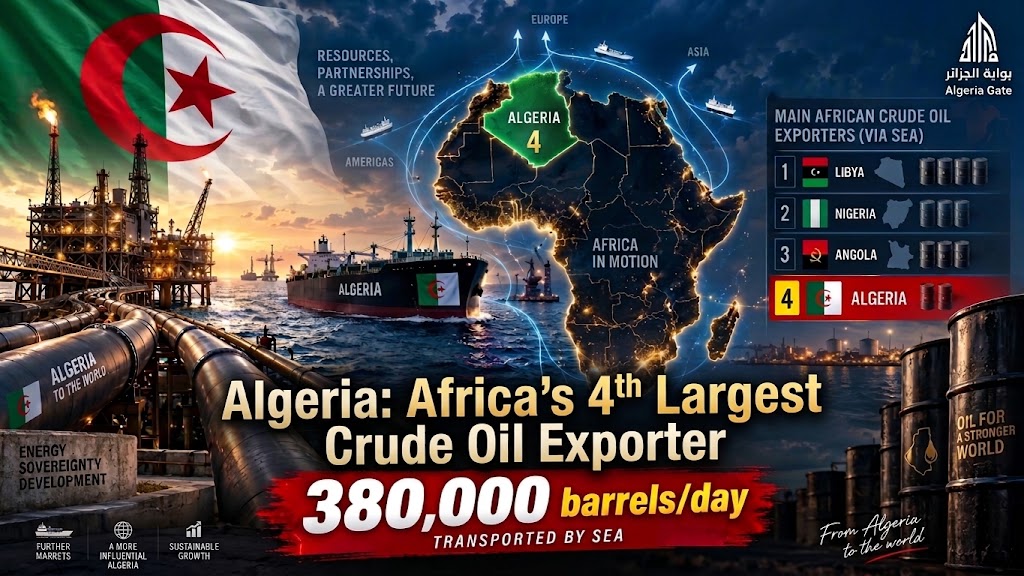
Algeria Gate: Algeria is confirming its weight on the African energy market. According to data from the Energy Research Unit, the country ranked as the fourth African exporter of crude oil transported by sea, with an average of 380,000 barrels per day between March and August 2026.

Over this period, Algeria came behind Libya, Nigeria and Angola, three other major producers on the continent. This ranking underlines the important place occupied by Algerian oil in international energy exchanges, notably thanks to the country’s port infrastructure and export capacities.

Rising production

This performance comes in a context marked by an increase in national production. During the second quarter of 2026, Algerian crude oil production reached approximately 980,000 barrels per day. Including other petroleum liquids, the country’s total production rose to nearly 1.45 million barrels per day. These volumes enable Algeria to maintain a significant presence on the African and Mediterranean oil markets while meeting part of the demand from its foreign partners.

380,000 barrels exported every day by sea

Between March and August 2026, Algerian crude exports transported by ship therefore averaged 380,000 barrels daily. This figure is particularly important since maritime transport constitutes one of the main means of shipping crude oil to international markets. With this fourth place in Africa, Algeria positions itself among the continent’s main crude suppliers, alongside the major oil powers that are Nigeria, Libya and Angola.

https://twitter.com/algatedz/status/2102031001861927067?ref_src=twsrc%5Etfw%7Ctwcamp%5Etweetembed%7Ctwterm%5E2102031001861927067%7Ctwgr%5E54529275c242f135ee6a7b835658abafaf2694cf%7Ctwcon%5Es1_c10&ref_url=https%3A%2F%2Falgatedz.dz%2Ffr%2Flalgerie-se-hisse-au-4e-rang-africain-des-exportateurs-de-petrole-brut-par-voie-maritime%2F

Energy remains a strategic sector for Algeria

Hydrocarbons continue to play a central role in the Algerian economy and in the country’s commercial exchanges. The production increase observed in 2026 could allow Algeria to consolidate its export capacities, in an international context where the security of energy supplies remains a major issue.

The ranking of maritime exports also highlights the competition between the main African producers, as several countries seek to increase their production and attract more investment in the energy sector.

For Algeria, the challenge will now be to maintain its production levels, strengthen its export capacities and continue investments in the oil sector, while in parallel developing natural gas and new energy pathways.

#Algeria#Economy
Author
Lys Iwannughen
View my articles