Sunday, 18 October 2026 • 17:28 Algiers time
Algeria Gate
News Room
Cameron Hudson: UAE is virtually the sole backer of the RSF..without its support the war in Sudan would not continue Algeria-Niger: Official launch of Trans-Saharan fibre optic link Five minutes of lament over Algeria: Amar Belani exposes CNEWS’s real obsession Algerian courts hand down first death sentences under new drugs law Ségolène Royal’s masterclass on Algeria against an ignorant and demagogic journalist President Tebboune and senior officials receive the remains of Boualem Boualem in Algiers NAPEC 2026 in Oran: Algeria at the Heart of Africa’s and the Mediterranean’s New Energy Landscape Pegasus Files: Amnesty Uncovers Morocco’s Espionage Against Spain President Tebboune Orders Salary Increases in Algeria’s 2027 Budget, Rules Out New Taxes on Citizens Algeria Emerges as a Trusted Power for Regional Peace and Stability
Share this post

Unjust Representation for 81 years… Why is Africa still outside permanent membership of the Security Council?

• Author: Lys Iwannughen • 0 comments • 3 views
Unjust Representation for 81 years… Why is Africa still outside permanent membership of the Security Council?

Algeria Gate: Political analyst and international relations expert Ayoub Arfi said that the demand for permanent and equitable African representation on the Security Council, which Algeria has reaffirmed in the highest UN forums, goes beyond being a temporary continental demand and raises a fundamental question about the legitimacy of the structure of the international system itself.

Arfi explained that the Security Council, in its current composition dating back to 1945, still reflects the balance of power that followed the Second World War, at a time when the map of the world has changed radically since then. He considered that the continued absence of Africa from permanent membership constitutes a historical and institutional anomaly that cannot be justified by contemporary political or legal logic.

He stressed that the African demand cannot be regarded as a mere symbolic aspiration, but represents a real stake capable of redrawing the balances of representation within the most important international institution. He pointed out that any modification of the composition of permanent membership would open the door to a deeper review of the decision-making mechanism, including the veto right, which he described as remaining the greatest obstacle to any fundamental reform.

Arfi believes that the African demand, although it appears on the surface to be a representational demand, is in essence a real test of the willingness of the current permanent powers to accept an actual sharing of power within the UN system.

In explaining the reasons for Africa’s continued exclusion from the circle of permanent membership, despite its demographic, geographical, and political weight, Arfi attributed this primarily to a historical legacy that reflects the structure of colonial power on the basis of which the UN system was formulated at its founding, when most African countries were still under occupation and had no voice in shaping the international system.

He added that this founding legacy was not subsequently corrected despite the independence of the continent, due to the resistance of the permanent powers to any real expansion that would affect the balances of their influence within the Council.

The international relations expert pointed to a current political factor consisting of the absence of collective international will on the part of some major parties to carry out genuine reform that touches the core of their privileges. He explained that these parties often content themselves with formally supportive discourse regarding African representation, without translating it into actual initiatives within the corridors of the United Nations.

He noted that the African continent remains one of the regions most linked to the Security Council’s agenda, as the majority of the files listed on its agenda are African files. This highlights, in his view, a clear contradiction: the continent whose crises and conflicts are managed by Council decisions: from peacekeeping operations to sanctions, remains absent from the table where those decisions are made.

Arfi considered that this situation enshrines the logic of “decision without participation” and fundamentally contradicts the principles of representative justice on which any democratic UN institution is supposed to be based.

Regarding the repercussions of Africa obtaining permanent seats with full powers, including the veto right, Arfi explained that this would bring about a qualitative shift in the way African files are handled within the Security Council. Decisions relating to conflicts and peacekeeping operations on the continent would no longer be formulated exclusively according to the calculations of external major powers, but would take into account the African continent’s own vision of crises, based on the principle of “African solutions to African problems.”

He believes that this presence would enhance the chances of finding more sustainable settlements closer to the reality of the peoples concerned, in addition to contributing to the rebalancing of broader files that go beyond the continent, such as issues of disarmament, international economic reform, and climate change.

He clarified that a permanent and effective African presence would enable the continent to defend the interests of the countries of the South in general with a stronger voice and with real powers, instead of being content with the role of “observer” on issues of international peace and security, despite being the party most affected by them.

In this context, Arfi put forward Algeria as a natural and qualified candidate to represent the African continent in the event of the establishment of a permanent seat, based on its accumulated diplomatic record over decades of involvement in peace and security issues, support for liberation movements and paths of decolonization, as well as its current role in mediation and de-escalation in the Sahel and Libya files.

He also pointed to Algeria’s repeated presence as a non-permanent member of the Security Council, considering that it has demonstrated its ability to defend collective African positions with steadfastness and responsibility.

He added that Algeria’s commitment to the principles of sovereignty, non-interference, and the peaceful settlement of disputes gives it, in his estimation, additional credibility as a balanced voice capable of defending the interests of the continent without aligning itself with any international axis, which qualifies it to be among the African voices most agreed upon to assume this historic responsibility.

#Africa
Author
Lys Iwannughen
View my articles

Leave a comment

Your email address will not be published. Required fields are marked *

African coast
Share this post

Amar Belani Strikes Hard: Four Statements by Massad Boulos That Have Rabat Shaken

Amar Belani Strikes Hard: Four Statements by Massad Boulos That Have Rabat Shaken

By Amar Belani, former Algerian Ambassador

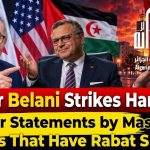
Algeria Gate: The interview given by Massad Boulos, senior advisor to US President, Donald Trump, on Arab and African affairs, to France 24 this week was no polite diplomatic exercise. In four clear statements, Washington’s envoy dismantled the triumphalist narrative Morocco has relentlessly pushed for the past year.

First statement: Recognition of a temporary deadlock while Rabat proclaimed victory

“There is, at the moment, no solution that you can see or touch.”

Morocco built its entire communications strategy on a simple fiction: that Security Council Resolution 2797 had settled the Western Sahara question, leaving only the task of collecting the spoils. Boulos’s words cut through that claim. After three rounds of talks, the dossier remains stalled. Reality has overtaken propaganda.

Second statement: The patience that embarrasses those demanding an ultimatum

Boulos is waiting for the Polisario Front’s response. No deadline. No ultimatum.

While Rabat called for a more aggressive American approach and counted on Washington’s impatience to force the pace, the United States has chosen to wait. Moroccan diplomacy’s calculations have been exposed.

Third statement: Algeria praised, not singled out

For years, Rabat has insisted that Algeria is the real obstacle that must be isolated to unblock negotiations. Boulos chose this precise moment to do the opposite. He highlighted a constructive partnership and publicly thanked the Algerian authorities.

Fourth statement: Algeria cannot impose a solution

This is the line that will echo longest in Rabat. Boulos stated clearly that Algeria cannot impose a solution on Western Sahara, yet it can encourage the process—and, according to Washington, it has done so.

This position directly contradicts Morocco’s long-standing attempt to portray Algeria as the principal party to the conflict. Under the United Nations framework, the two parties remain Morocco and the Polisario Front. Algeria and Mauritania are neighboring countries invited to cooperate. Nothing more, nothing less.

What Rabat refuses to see

These four statements deliver a single message: the American administration never handed Morocco a blank cheque.

In its feverish and poorly calculated triumphalism, Morocco treated Resolution 2797 as an accomplished Algerian surrender. The US official has just reminded everyone that it was only a framework for negotiations.

A framework produces no result by itself. An agreement must still be reached, and above all the Polisario Front must give its clear and freely expressed consent. That remains the only condition for a mutually acceptable solution.

#Algeria#Amar Belani#Massad Boulos#Morocco#USA
Author
Lys Iwannughen
View my articles
African coast
Share this post

Niger thanks Algeria before the world… What its Prime Minister said from the United Nations podium!

Niger thanks Algeria before the world… What its Prime Minister said from the United Nations podium!

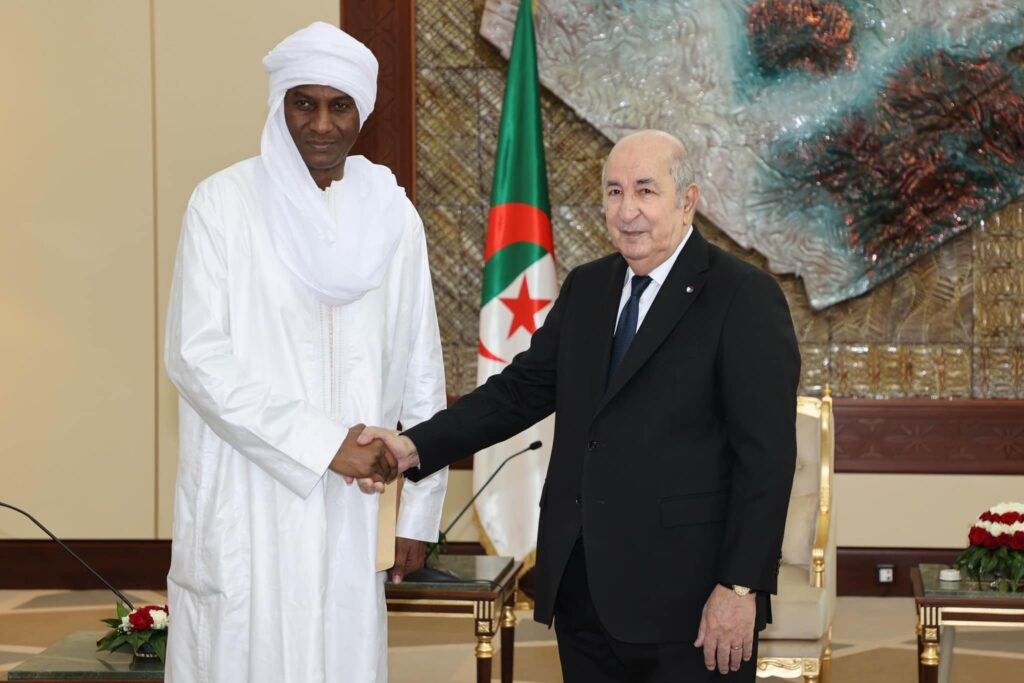
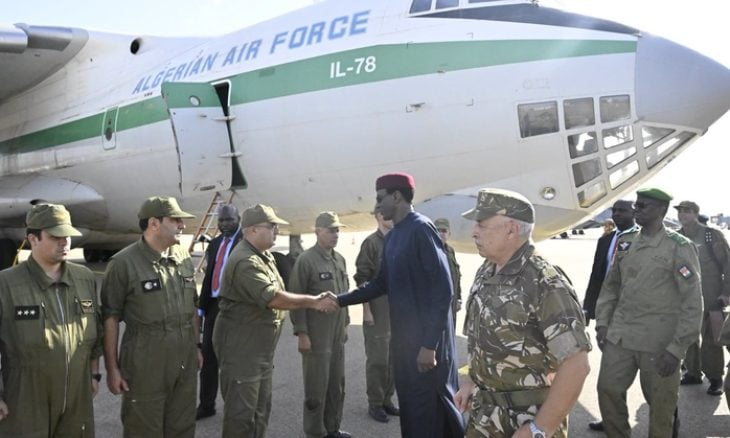
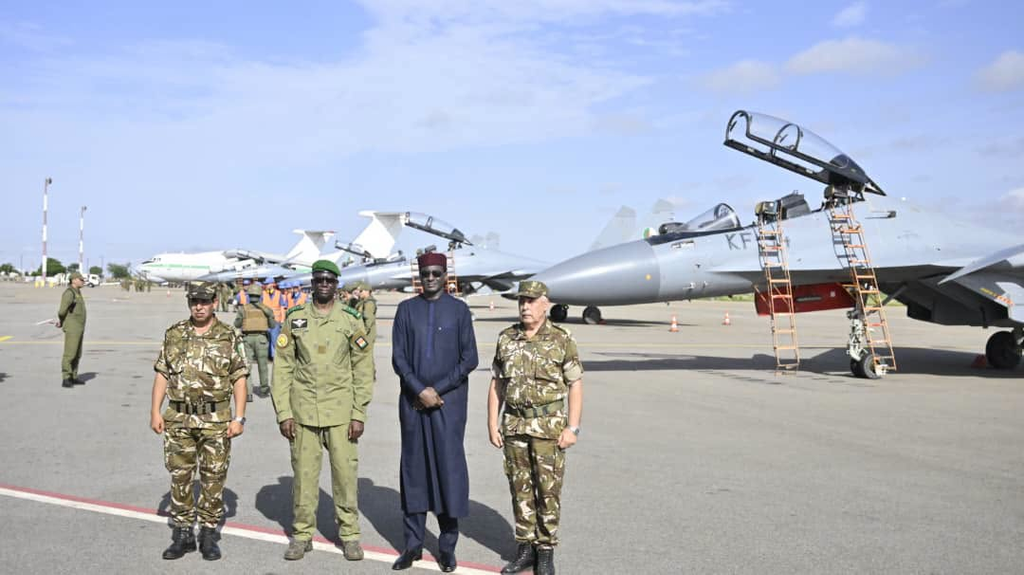
Algeria Gate: In a historic statement from the United Nations podium, the Prime Minister of the Republic of Niger, Ali Mahamane Lamine Zeine, said that his country has remained resilient thanks to its people and thanks to Algeria, which he described as a neighboring and brotherly country that chose to accompany Niger on its development path by supporting it in the exploitation of its natural resources.

Niger thanks Algeria before the world… What its Prime Minister said from the United Nations podium!

In his speech during the general debate of the High-Level Week of the 81st session of the United Nations General Assembly, the Nigerian official added that his country had been able to withstand various challenges thanks to the sacrifices of its sons, the solidarity existing among the Sahel countries, and the accompaniment provided by Algeria to Niger.

Niger thanks Algeria before the world… What its Prime Minister said from the United Nations podium!

Three years ago, Lamine Zeine said, some expected Niger to collapse under the weight of sanctions and isolation. Today, however, Niger is standing on its feet.

https://twitter.com/algatedzEng/status/2103790432081838086?s=20

Niger is standing because its people refused to bow, and because it found within the framework of the Confederation of Sahel States a family and solidarity — a family in every sense of the word in the African context.

Niger thanks Algeria before the world… What its Prime Minister said from the United Nations podium!

The same official continued that Niger is standing today because the People’s Democratic Republic of Algeria, the brotherly and neighboring country, chose to accompany it through significant investment in the exploitation of its natural resources and through continuous support for its defense system.

Niger thanks Algeria before the world… What its Prime Minister said from the United Nations podium!

The Nigerian Prime Minister also stated that his country is working with Algeria to develop dynamic cooperation in the fields of health, education, energy, water resources, and agriculture. Added to this are a number of major structuring projects, such as the tripartite gas pipeline and the Trans-Saharan Highway.

Niger thanks Algeria before the world… What its Prime Minister said from the United Nations podium!

He concluded his remarks about Algeria by saying that Algeria has contributed to strengthening Niger’s energy infrastructure through the construction of a 40-megawatt power plant in the capital Niamey, in addition to cooperation in the exploitation of oil resources, particularly through the “Kafra” project in northern Niger, where Algeria and Niger launched exploratory drilling works last August for the “Kafra Southeast 1” well.

#Algeria#Niger#United Nations
Author
Lys Iwannughen
View my articles
African coast
Share this post

Amar Belani demolishes the Moroccan maneuver: A miracle in a kingdom whose magic has faded!

Amar Belani demolishes the Moroccan maneuver: A miracle in a kingdom whose magic has faded!

Opinion article by: former Algerian diplomat Amar Belani
The results of the legislative elections in Morocco still hold surprises

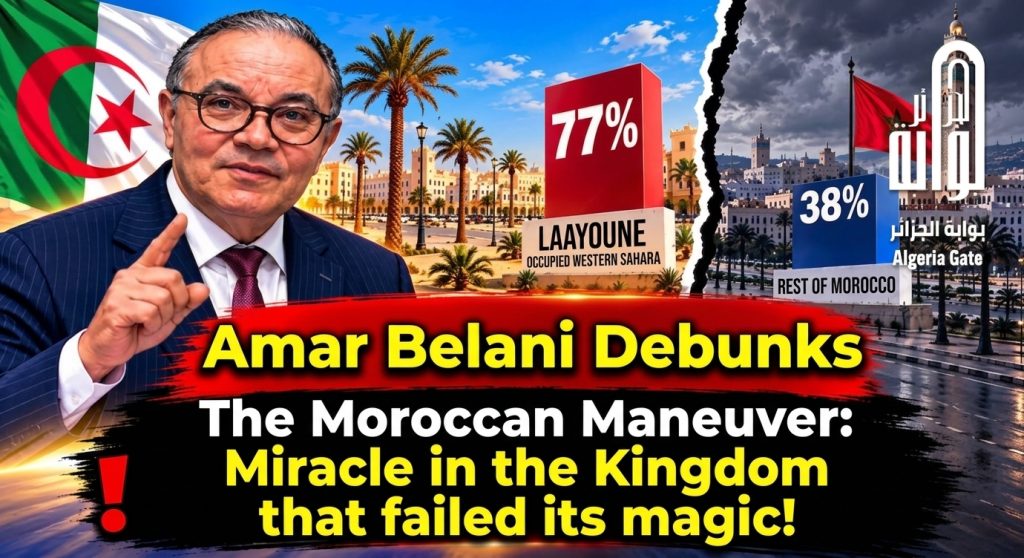
Algeria Gate: In the occupied Western Sahara, democracy took a quantum leap, while the rest of Morocco stayed where it was, committed to silence and calm. 77% turnout in Laayoune versus 38% in the kingdom! Statistically, this is closer to a ritual miracle than to an election.

Amar Belani demolishes the Moroccan maneuver: A miracle in a kingdom whose magic has faded!

This achievement is presented to us as proof of a spontaneous love for the ballot box, in a region where merely uttering the word “referendum” has made the United Nations cough since 1975.

Strange, this electoral enthusiasm precisely in the place where the real question has never been allowed to be put to a popular vote: “To whom does ownership of this territory belong?”

This perfected trick has become a ready-made recipe. Take an electorate shaped over decades by declared settler colonialism, add a sprinkle of carefully invited “international observers,” then decorate the scene with eight “Sahrawi” female deputies displayed as prizes for progressive virtue, and the vote is thus transformed into a certificate of sovereignty, stamped with a diplomatic visa.

Amar Belani demolishes the Moroccan maneuver: A miracle in a kingdom whose magic has faded!

But the high point of the show remains this contradiction: while Rabat and Casablanca shrug their shoulders at the ballot boxes, Laayoune races to the polling stations with the enthusiasm of a last-minute conversion.

A great deal of naivety is required not to see in this anything other than a polished production in which the record turnout is used not so much to elect deputies as to silence, once again, the issue of the occupied Western Sahara with blows of fictitious percentages.

Amar Belani demolishes the Moroccan maneuver: A miracle in a kingdom whose magic has faded!

The sincerity of a vote is not measured by the number of hands raised when you have carefully chosen who is allowed inside the hall.

So be it! Organize a self-determination referendum.

#Amar Belani#Morocco
Author
Lys Iwannughen
View my articles