Sunday, 18 October 2026 • 17:28 Algiers time
Algeria Gate
News Room
Cameron Hudson: UAE is virtually the sole backer of the RSF..without its support the war in Sudan would not continue Algeria-Niger: Official launch of Trans-Saharan fibre optic link Five minutes of lament over Algeria: Amar Belani exposes CNEWS’s real obsession Algerian courts hand down first death sentences under new drugs law Ségolène Royal’s masterclass on Algeria against an ignorant and demagogic journalist President Tebboune and senior officials receive the remains of Boualem Boualem in Algiers NAPEC 2026 in Oran: Algeria at the Heart of Africa’s and the Mediterranean’s New Energy Landscape Pegasus Files: Amnesty Uncovers Morocco’s Espionage Against Spain President Tebboune Orders Salary Increases in Algeria’s 2027 Budget, Rules Out New Taxes on Citizens Algeria Emerges as a Trusted Power for Regional Peace and Stability
Share this post

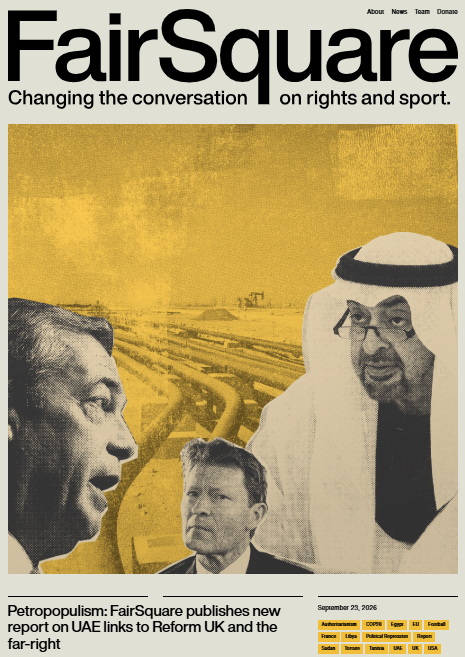
UAE Fuels Islamophobia by Funding Terrorist Groups and Far-Right Alliances in Europe

• Author: Lys Iwannughen • 0 comments • 11 views
UAE Fuels Islamophobia by Funding Terrorist Groups and Far-Right Alliances in Europe

Algeria Gate/Agencies: Multiple international journalistic investigations and European reports have exposed the United Arab Emirates’ systematic role in fuelling Islamophobia. Through the financing of terrorist groups and the orchestration of hostile campaigns against Islam and Muslims in the West, Abu Dhabi seeks to pressure European governments into adopting stricter policies toward Muslim communities while positioning itself as the only acceptable model of “moderate Islam.”

FairSquare Report Reveals UAE Links to Reform UK and Western Far-Right Parties

A recent report by the human rights organisation FairSquare highlights how the UAE, in its campaign against Islam and movements advocating political Islam, supports terrorist groups and maintains dubious relations with Europe’s most radical far-right parties.
UAE Fuels Islamophobia by Funding Terrorist Groups and Far-Right Alliances in Europe

Authored by FairSquare research director Alex Carlin and titled The Reform Party and the United Arab Emirates: A Threat to British Politics, the report examines the growing ties between Abu Dhabi and the British far-right party Reform UK. It places these connections within a broader Emirati strategy of forging alliances with the Western far right and influencing the policies of democratic nations.

The report notes a clear political convergence between the UAE and Reform UK. Party leader Nigel Farage had previously criticised the Emirates in 2023 as “an absolute monarchy with a deplorable human rights record.” At the same time, several senior figures from the movement have settled in the UAE.

Emirati Media Influence and Destabilising Tactics in Britain

The FairSquare report also exposes the role of British media outlets and public figures in promoting Emirati narratives. It cites GB News as an example of a media organisation that has shown strong willingness to disseminate these messages. According to the findings, the UAE has combined coercive diplomacy with illicit and destabilising tactics inside Britain to advance its political objectives.

Secret Support for Far-Right Leaders Across Europe

The same strategy extends beyond the United Kingdom. In France, Abu Dhabi provided clandestine support to Marine Le Pen—known for her hostility toward Islam—through secret meetings.

Following their normalisation with the Zionist occupation under the Abraham Accords, the UAE has exploited Western fears to claim that Islamic political movements constitute a form of ideological extremism rooted in Islam itself.

Promoting Islamophobia Through Influence Networks and Targeting Muslim Scholars

British researcher Andreas Krieg has documented how the UAE systematically associates Islam with terrorism in Europe and actively promotes Islamophobia through its influence networks. He has criticised what he describes as Emirati interference in spreading anti-Islamic discourse within European circles.

The UAE has further advanced this agenda by casting doubt on imams and Muslim scholars. On 9 March 2015, the then Crown Prince of Abu Dhabi declared that “German society must remain vigilant about the people who preach in mosques and about their teachings.”

Intelligence Operations and the Alp Services Scandal

European investigations have revealed coordination between the Swiss company Alp Services and Emirati intelligence services. According to leaked information, UAE intelligence paid more than €5.5 million to the firm to compile dossiers on over 1,000 individuals across Europe and to illegally transmit the names of activists to Emirati agencies. The goal was to discredit these individuals and brand them as terrorists by linking them to extremist groups, thereby fostering widespread distrust of Muslims and Islam.

UAE Lobbying Campaigns to Distort the Image of Muslim Communities

A previous report by European Eye revealed that the UAE finances lobbying groups across Europe to shape policies and improve its own image. The report accused Abu Dhabi—one of the world’s biggest spenders on lobbying—of launching a multilingual website designed to obstruct and distort the image of Muslim communities in Europe.

Through these interconnected efforts—financing, media influence, far-right alliances, intelligence operations and lobbying—the United Arab Emirates continues to exacerbate Islamophobia while presenting itself as a partner of the West in the fight against extremism.

#Europe#UAE
Author
Lys Iwannughen
View my articles

Leave a comment

Your email address will not be published. Required fields are marked *

Europe
Share this post

Ayoub Aissiou, cocaine and Moroccan spies: the explosive trio that embarrasses Madrid

Ayoub Aissiou, cocaine and Moroccan spies: the explosive trio that embarrasses Madrid

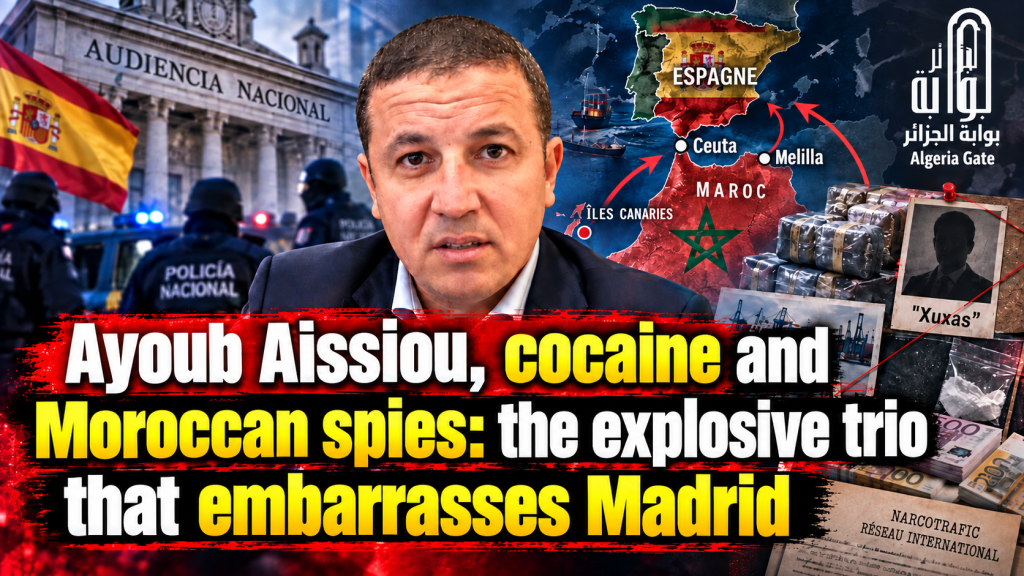
Algeria Gate: The Ayoub Aissiou case has taken a new turn in Spain. According to the Spanish daily El Debate, the Algerian businessman is named in a complaint linking him to an alleged drug-trafficking network between South America, Morocco and Europe.

The document reportedly refers to a drug trafficking operation originating in Brazil and Guinea-Bissau, with transit points through Morocco, Algeciras, Ceuta, Melilla and the Canary Islands. It also names the Portuguese drug trafficker Rúben Oliveira, known as “Xuxas,” as well as individuals presented as members of the Moroccan intelligence services. These elements remain, at this stage, accusations contained in a complaint and do not constitute a conviction for drug trafficking.

Aissiou had been arrested in Spain in connection with an extradition request filed by Algeria, which is seeking him in particular on charges of forgery, criminal organisation and money laundering. Provisionally released in early September under judicial supervision, he remains barred from leaving Spanish territory.

In Algeria, he has already been sentenced in several financial cases to a total of 55 years in prison, notably for embezzlement, money laundering and the illegal transfer of capital.

#Ayoub Aissiou#Morocco#Spain
Author
Lys Iwannughen
View my articles
Europe
Share this post

Spanish Police Dismantle Major “Dubai Bank” Money-Laundering Network Tied to European Cocaine Trafficking

Spanish Police Dismantle Major “Dubai Bank” Money-Laundering Network Tied to European Cocaine Trafficking

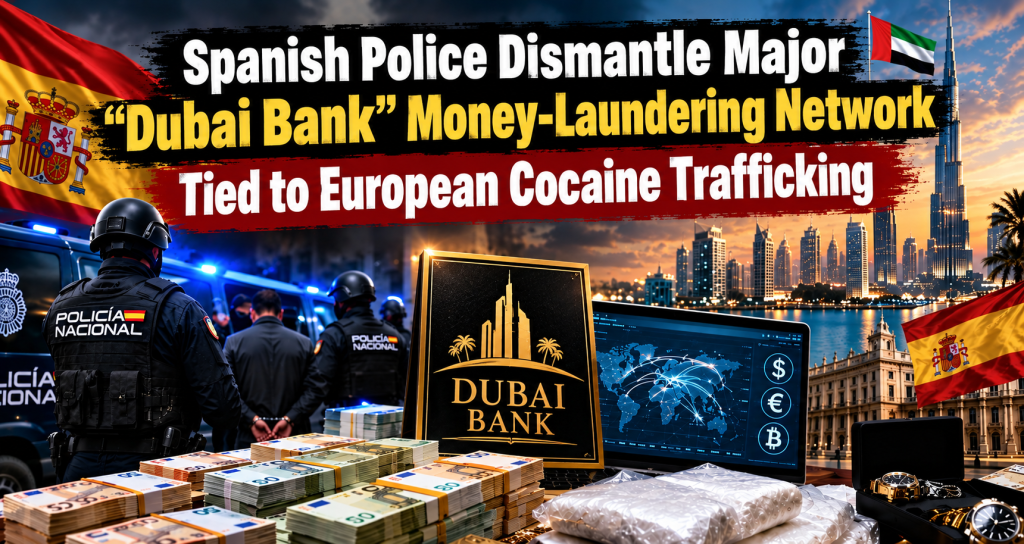
Algeria Gate: Spanish authorities have dismantled one of the largest money-laundering networks operating in Europe, a criminal structure known as the “Dubai Bank” or “Drug Bank” that provided financial services to some of the continent’s top cocaine traffickers. The operation led to the arrest of 21 people across several countries and the seizure of assets valued at approximately €20 million.

According to Spanish police, the network specialized in financing cocaine shipments, moving funds internationally outside the formal banking system, and using cryptocurrencies to settle transactions and launder proceeds. The investigation was coordinated by the Special Anti-Drug Prosecutor’s Office of Spain’s National Court and targeted individuals regarded as key figures in international cocaine-trafficking networks. Among them was a man known as “the Tiger,” who allegedly managed the network, along with other prominent members of organized crime operating from Dubai.

Encarnación Ortega, head of Spain’s money-laundering inspectors, underscored the network’s critical role: “Without this financing, it would not have been possible to move these shipments from one country to another, and drug trafficking on this scale could not have taken place.”

Of the 21 arrested, 14 were detained in Spain and seven in other countries. Twelve additional suspects remain at large.

The probe originated from the 2021 seizure of 1.84 tonnes of cocaine aboard the vessel Niher. Police later determined that the ship was deliberately sunk in the port of Gijón in northern Spain in an attempt to conceal a second shipment of 1.65 tonnes.

Authorities confiscated 121 bank accounts containing €2.3 million, 48 properties valued at more than €14 million, luxury vehicles worth over €1.6 million, and additional assets.

Investigators highlighted Dubai’s role as a central financial hub for drug traffickers. The emirate served both as a primary base for consolidating drug proceeds and as a command centre for coordinating logistical operations with maritime clans involved in cocaine trafficking.

The operation represents a significant blow to the financial infrastructure supporting large-scale cocaine trafficking into Europe.

#Spain#UAE
Author
Lys Iwannughen
View my articles
Algeria
Share this post

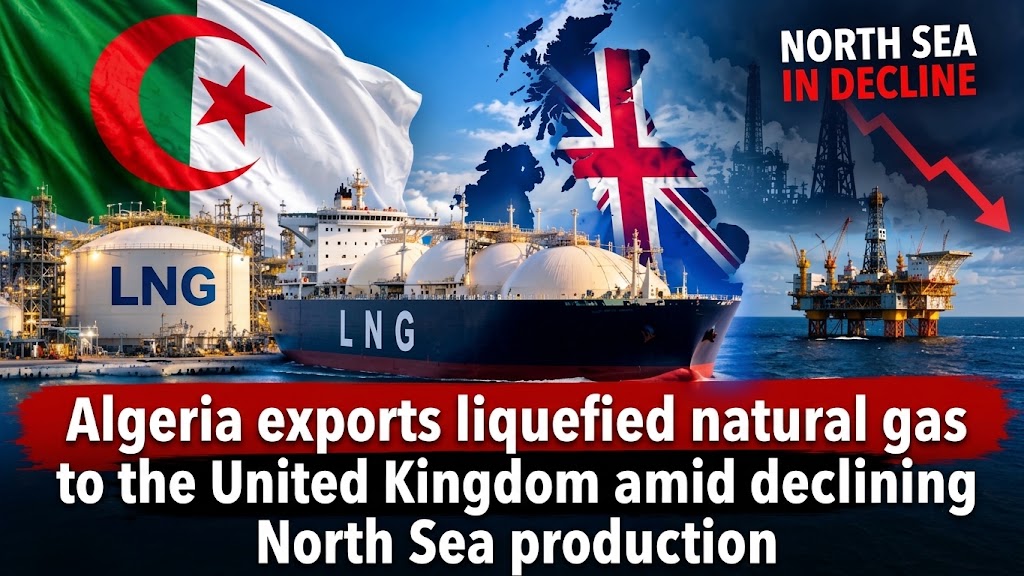
Algeria exports liquefied natural gas to the United Kingdom amid declining North Sea production

Algeria exports liquefied natural gas to the United Kingdom amid declining North Sea production

Algeria Gate: Algeria is establishing itself as one of the suppliers of liquefied natural gas (LNG) to the United Kingdom at a time when North Sea gas production is experiencing a clear decline, pushing London to strengthen its dependence on imports to cover its energy needs.

A marked decline in British production

According to data reported by the website of the Algerian daily Echorouk, British North Sea gas production stood at around 28 billion cubic meters in 2025, covering nearly 41% of the country’s needs. However, this production is expected to fall to 14 billion cubic meters over the next four years, before dropping to only 6 billion cubic meters by 2035.

Growing dependence on imports

This structural decline in national production should mechanically increase British dependence on gas imports. According to the same forecasts, the share of imports in covering the United Kingdom’s gas needs should exceed 70% by 2030, before rising to 85% by 2035.

Faced with this announced decline in domestic production, recourse to liquefied natural gas appears to be an unavoidable solution to bridge the growing gap between local supply and the country’s energy demand.

Algeria, an increasingly present supplier on the British market

It is in this context that Algeria has emerged among the United Kingdom’s LNG suppliers. The country, which has significant liquefaction capacities through its historic gas complexes, notably at Arzew and Skikda, as well as the Medgaz pipeline directly linking Algeria to Spain, is seeking to diversify its export outlets in a European energy market that has been undergoing major recomposition for several years.

This development illustrates how the progressive decline of certain historic production basins, such as the North Sea, is opening new opportunities for gas-producing countries capable of responding rapidly to demand, such as Algeria, regularly cited among Europe’s main gas suppliers.

#Algeria#UK
Author
Lys Iwannughen
View my articles