Sunday, 18 October 2026 • 17:27 Algiers time
Algeria Gate
News Room
Cameron Hudson: UAE is virtually the sole backer of the RSF..without its support the war in Sudan would not continue Algeria-Niger: Official launch of Trans-Saharan fibre optic link Five minutes of lament over Algeria: Amar Belani exposes CNEWS’s real obsession Algerian courts hand down first death sentences under new drugs law Ségolène Royal’s masterclass on Algeria against an ignorant and demagogic journalist President Tebboune and senior officials receive the remains of Boualem Boualem in Algiers NAPEC 2026 in Oran: Algeria at the Heart of Africa’s and the Mediterranean’s New Energy Landscape Pegasus Files: Amnesty Uncovers Morocco’s Espionage Against Spain President Tebboune Orders Salary Increases in Algeria’s 2027 Budget, Rules Out New Taxes on Citizens Algeria Emerges as a Trusted Power for Regional Peace and Stability
Share this post

Ayoub Aissiou, cocaine and Moroccan spies: the explosive trio that embarrasses Madrid

• Author: Lys Iwannughen • 0 comments • 16 views
Ayoub Aissiou, cocaine and Moroccan spies: the explosive trio that embarrasses Madrid

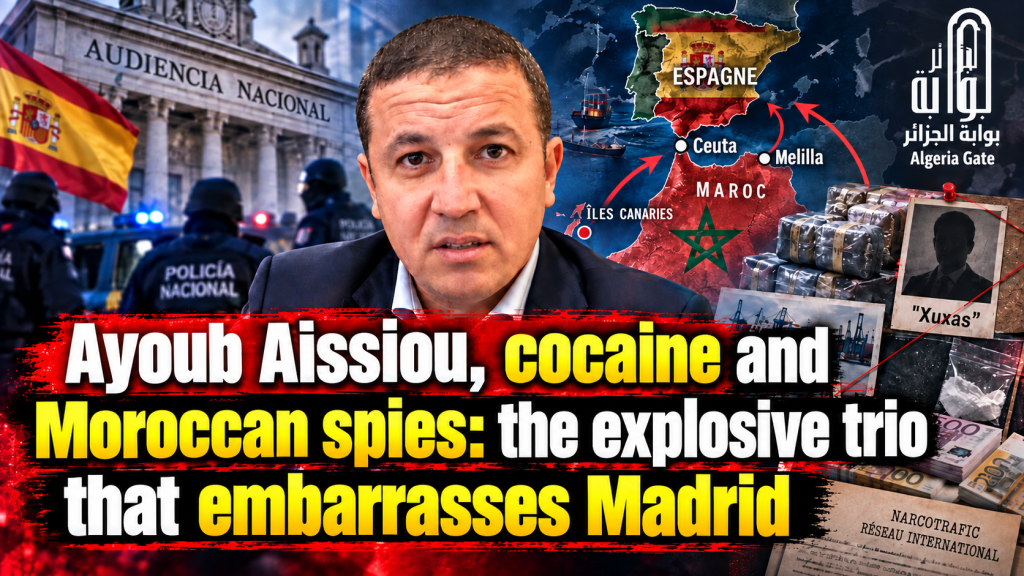
Algeria Gate: The Ayoub Aissiou case has taken a new turn in Spain. According to the Spanish daily El Debate, the Algerian businessman is named in a complaint linking him to an alleged drug-trafficking network between South America, Morocco and Europe.

The document reportedly refers to a drug trafficking operation originating in Brazil and Guinea-Bissau, with transit points through Morocco, Algeciras, Ceuta, Melilla and the Canary Islands. It also names the Portuguese drug trafficker Rúben Oliveira, known as “Xuxas,” as well as individuals presented as members of the Moroccan intelligence services. These elements remain, at this stage, accusations contained in a complaint and do not constitute a conviction for drug trafficking.

Aissiou had been arrested in Spain in connection with an extradition request filed by Algeria, which is seeking him in particular on charges of forgery, criminal organisation and money laundering. Provisionally released in early September under judicial supervision, he remains barred from leaving Spanish territory.

In Algeria, he has already been sentenced in several financial cases to a total of 55 years in prison, notably for embezzlement, money laundering and the illegal transfer of capital.


#Ayoub Aissiou#Morocco#Spain
Author
Lys Iwannughen
View my articles

Leave a comment

Your email address will not be published. Required fields are marked *

Europe
Share this post

Spanish Police Dismantle Major “Dubai Bank” Money-Laundering Network Tied to European Cocaine Trafficking

Spanish Police Dismantle Major “Dubai Bank” Money-Laundering Network Tied to European Cocaine Trafficking

Algeria Gate: Spanish authorities have dismantled one of the largest money-laundering networks operating in Europe, a criminal structure known as the “Dubai Bank” or “Drug Bank” that provided financial services to some of the continent’s top cocaine traffickers. The operation led to the arrest of 21 people across several countries and the seizure of assets valued at approximately €20 million.

According to Spanish police, the network specialized in financing cocaine shipments, moving funds internationally outside the formal banking system, and using cryptocurrencies to settle transactions and launder proceeds. The investigation was coordinated by the Special Anti-Drug Prosecutor’s Office of Spain’s National Court and targeted individuals regarded as key figures in international cocaine-trafficking networks. Among them was a man known as “the Tiger,” who allegedly managed the network, along with other prominent members of organized crime operating from Dubai.

Encarnación Ortega, head of Spain’s money-laundering inspectors, underscored the network’s critical role: “Without this financing, it would not have been possible to move these shipments from one country to another, and drug trafficking on this scale could not have taken place.”

Of the 21 arrested, 14 were detained in Spain and seven in other countries. Twelve additional suspects remain at large.

The probe originated from the 2021 seizure of 1.84 tonnes of cocaine aboard the vessel Niher. Police later determined that the ship was deliberately sunk in the port of Gijón in northern Spain in an attempt to conceal a second shipment of 1.65 tonnes.

Authorities confiscated 121 bank accounts containing €2.3 million, 48 properties valued at more than €14 million, luxury vehicles worth over €1.6 million, and additional assets.

Investigators highlighted Dubai’s role as a central financial hub for drug traffickers. The emirate served both as a primary base for consolidating drug proceeds and as a command centre for coordinating logistical operations with maritime clans involved in cocaine trafficking.

The operation represents a significant blow to the financial infrastructure supporting large-scale cocaine trafficking into Europe.

#Spain#UAE
Author
Lys Iwannughen
View my articles
Algeria
Share this post

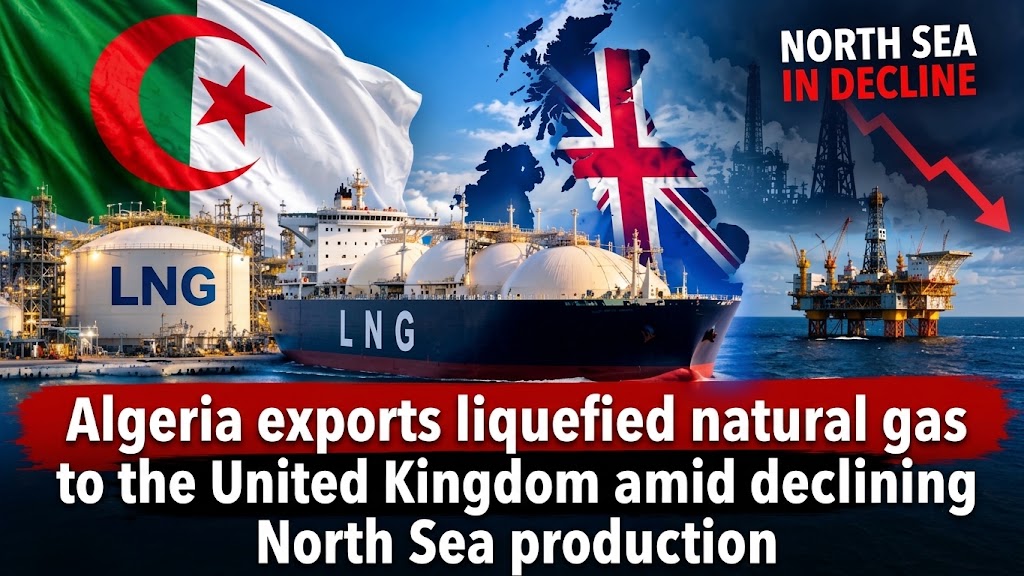
Algeria exports liquefied natural gas to the United Kingdom amid declining North Sea production

Algeria exports liquefied natural gas to the United Kingdom amid declining North Sea production

Algeria Gate: Algeria is establishing itself as one of the suppliers of liquefied natural gas (LNG) to the United Kingdom at a time when North Sea gas production is experiencing a clear decline, pushing London to strengthen its dependence on imports to cover its energy needs.

A marked decline in British production

According to data reported by the website of the Algerian daily Echorouk, British North Sea gas production stood at around 28 billion cubic meters in 2025, covering nearly 41% of the country’s needs. However, this production is expected to fall to 14 billion cubic meters over the next four years, before dropping to only 6 billion cubic meters by 2035.

Growing dependence on imports

This structural decline in national production should mechanically increase British dependence on gas imports. According to the same forecasts, the share of imports in covering the United Kingdom’s gas needs should exceed 70% by 2030, before rising to 85% by 2035.

Faced with this announced decline in domestic production, recourse to liquefied natural gas appears to be an unavoidable solution to bridge the growing gap between local supply and the country’s energy demand.

Algeria, an increasingly present supplier on the British market

It is in this context that Algeria has emerged among the United Kingdom’s LNG suppliers. The country, which has significant liquefaction capacities through its historic gas complexes, notably at Arzew and Skikda, as well as the Medgaz pipeline directly linking Algeria to Spain, is seeking to diversify its export outlets in a European energy market that has been undergoing major recomposition for several years.

This development illustrates how the progressive decline of certain historic production basins, such as the North Sea, is opening new opportunities for gas-producing countries capable of responding rapidly to demand, such as Algeria, regularly cited among Europe’s main gas suppliers.

#Algeria#UK
Author
Lys Iwannughen
View my articles
Europe
Share this post

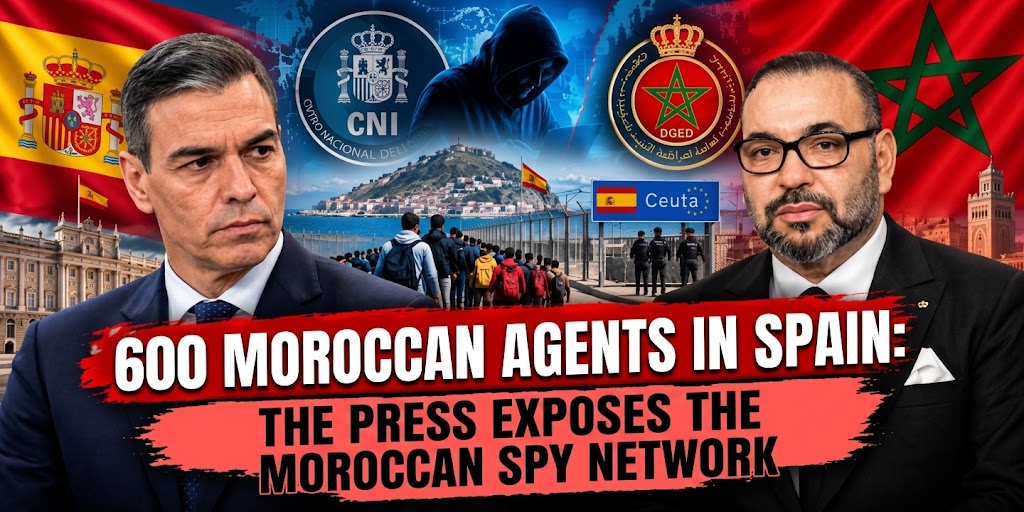
600 Moroccan agents in Spain: The press exposes the Moroccan spy network

600 Moroccan agents in Spain: The press exposes the Moroccan spy network

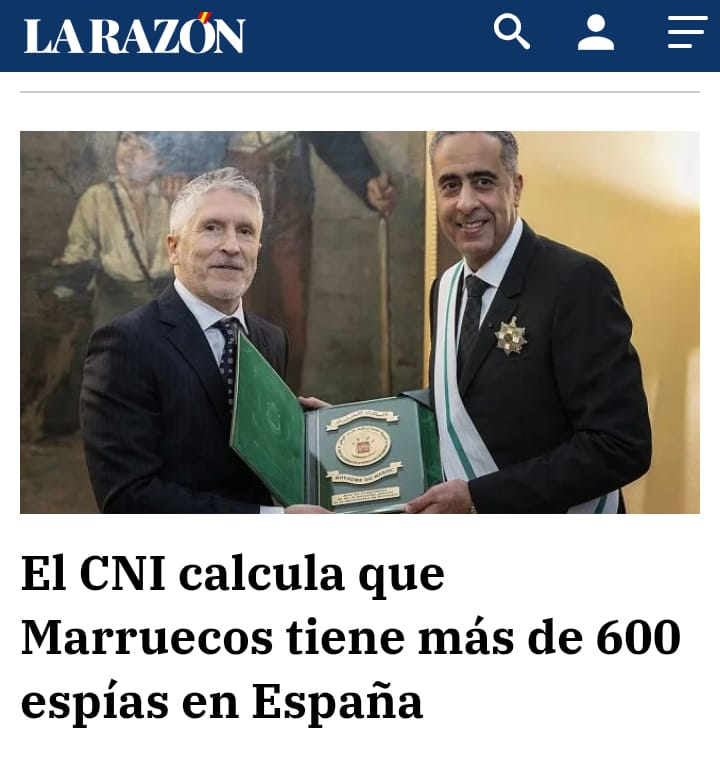
Algeria Gate: In a resounding media revelation, the Spanish press exploded a spying scandal that shook the capital Madrid, after publishing reports based on documents from the Spanish National Intelligence Center (CNI) that expose the scale of the Moroccan spy network operating on its territory.

600 Moroccan agents in Spain: The press exposes the Moroccan spy network

Moroccan intelligence activity in Spain is no longer merely an “open secret” aimed at tracking sensitive files such as politics, security, regional tensions, and economic relations with the European Union; today, thanks to what Spanish media have revealed, it has become a documented reality with figures and names.

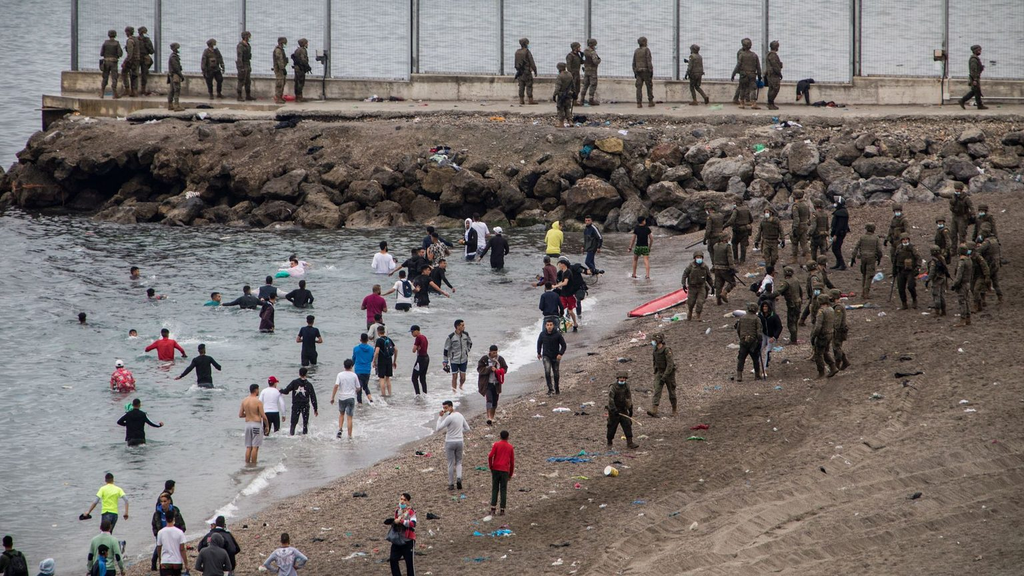
Press and security reports confirmed that Rabat has deployed around 600 agents in Spain in recent years, a figure that jumps to 900 agents during periods of maximum tension between the two countries. These resounding leaks of Moroccan intelligence operations data come after Moroccan agents in civilian clothes were observed coordinating the recent assault operations on the city of Ceuta.

Details of the biggest leak: Hacking Hamouchi’s agencies

According to what Spanish newspapers published, Madrid’s intelligence services prepared a detailed document containing the full names of 600 Moroccan agents with precise monitoring of their movements inside Spain. The roots of this information go back to a massive cyber breach targeting the two Moroccan intelligence agencies last August.

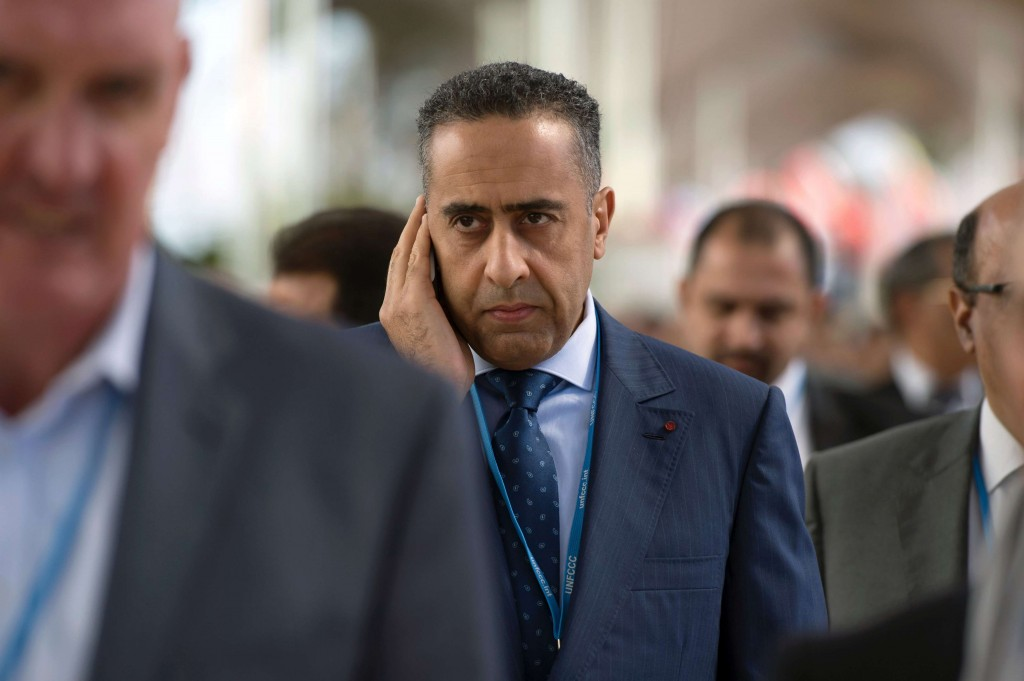
A hacker calling himself “Jabaroot” published four leaked “Excel” files containing 70,381 names believed to belong to members of the General Directorate for Territorial Surveillance (internal intelligence) and the General Directorate for Studies and Documents (external intelligence), both agencies run by Abdelatif Hamouchi.

600 Moroccan agents in Spain: The press exposes the Moroccan spy network

Spanish agents analyzed the data published via the Telegram platform and confirmed its complete credibility. Although the identities of 600 agents were identified, sources indicate that they are not all currently present in Spain; some later became sources of information for Spanish intelligence itself.

Map of deployment and diplomatic cover

The Moroccan intelligence network uses diplomatic cover as a primary façade for its movements; between 15 and 20 names are directly linked to Rabat’s embassy in Madrid, and their identities appear on the list of the consular corps accredited to the Spanish Foreign Ministry.

600 Moroccan agents in Spain: The press exposes the Moroccan spy network

Intelligence presence is not limited to the capital but extends to areas with high concentrations of Moroccan immigrants such as Algeciras, Catalonia, and Valencia, as well as strategic and sensitive points such as Bilbao and Las Palmas. Although the use of embassies and minor attaché posts as cover for movement with diplomatic passports is a common global practice, deploying hundreds of agents in a neighboring country raises sharp questions, especially in light of Spanish diplomatic statements describing Morocco as a “friendly country.”

The Ceuta crisis and the counter-intelligence war

These leaks, extensively covered by the Spanish press, came at the height of the clash between the two countries, specifically after the illegal entry of around 80,000 people into Ceuta via the Tarajal beach border.

The estimates of 600 to 900 Moroccan agents deployed in Spain take on double seriousness after a Spanish National Police report indicated the involvement of gendarmerie elements and Moroccan agents in civilian clothes in coordinating this invasion.

600 Moroccan agents in Spain: The press exposes the Moroccan spy network

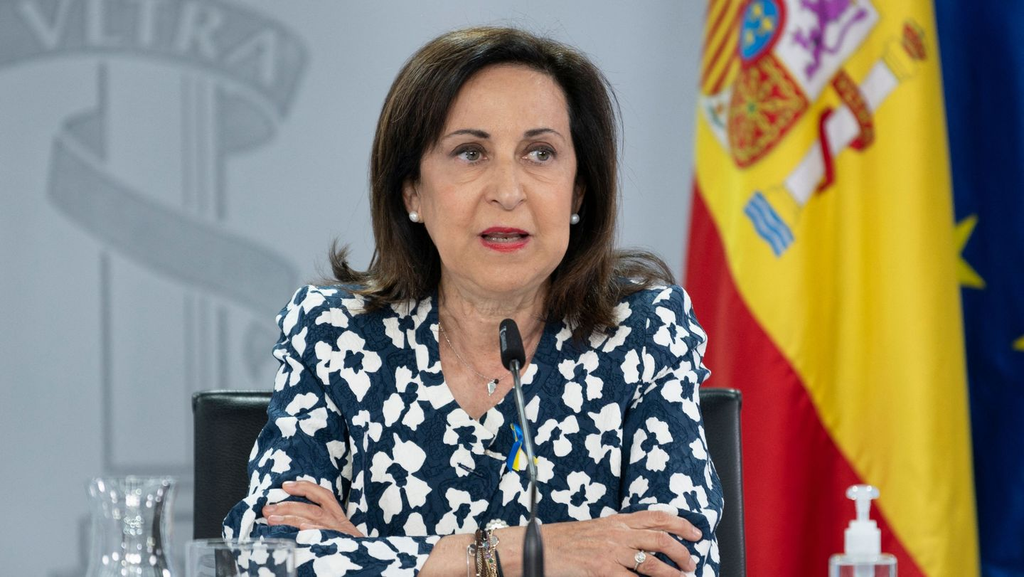
For its part, Spain also maintains elements of the Intelligence Center (CNI) inside Morocco, whose work focuses mainly on combating illegal immigration, drug trafficking, and terrorism. In the context of the Ceuta crisis, Spanish Defense Minister Margarita Robles revealed in late August the presence of 25 Spanish agents in the city, defending their role by saying they had sent prior warnings of a “human invasion” in late July, which contradicted the Spanish government’s official narrative at the time.

The leak of the 70,000 names was accompanied by a message that these data were a “gift” to Spain. While fingers initially pointed toward Algeria, this hypothesis later faded in favor of independent investigations that located “Jabaroot” in Germany.

Intelligence estimates, given the scale and precision of the breach, point to the involvement of former Moroccan agents in the operation. The name of Mehdi El Hajjaoui stands out here; the former number-two man in Moroccan intelligence, who fled his country years ago and settled in Spain.

The story takes on a Hollywood dimension: El Hajjaoui, who also holds German nationality (which explains his link to the August leaks from Germany), is wanted under an Interpol arrest warrant. Although Spanish intelligence located him and began extradition procedures to Morocco, he suddenly disappeared the second time the authorities tried to arrest him.

Today, Morocco is searching for him across half the globe without requesting official Spanish assistance, while his former colleagues, according to what Spanish media have published, believe he is living undercover in one of the towns south of Madrid under the protection of Spanish intelligence.

#Morocco#Spain
Author
Lys Iwannughen
View my articles