Tuesday, 6 October 2026 • 09:33 Algiers time
Algeria Gate
News Room
NAPEC 2026 in Oran: Algeria at the Heart of Africa’s and the Mediterranean’s New Energy Landscape Pegasus Files: Amnesty Uncovers Morocco’s Espionage Against Spain President Tebboune Orders Salary Increases in Algeria’s 2027 Budget, Rules Out New Taxes on Citizens Algeria Emerges as a Trusted Power for Regional Peace and Stability Prison of Tanezrouft: When the French Right Meddles in Algerian Affairs European Union: Algeria is a reliable partner in the gas sector and has strong potential to become a key partner in energy projects! Raw materials: Algeria benefits from the energy shock, Morocco’s trade deficit soars Hana Mansour denounces the use of her image by Le Point to illustrate an article by Kamel Daoud President Tebboune’s warning: why Algeria sent combat aircraft to Niger Algerian Diplomat: UAE Has Built a Military and Logistical Network Stretching from the Red Sea to Tigray
Share this post

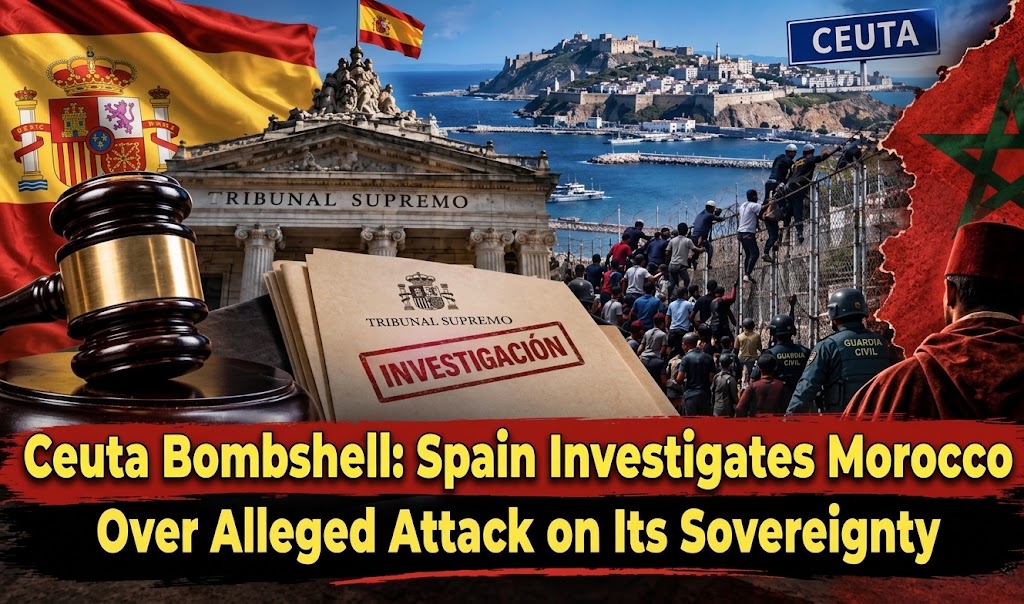
Ceuta Bombshell: Spain Investigates Morocco Over Alleged Attack on Its Sovereignty

• Author: Lys Iwannughen • 0 comments • 23 views
Ceuta Bombshell: Spain Investigates Morocco Over Alleged Attack on Its Sovereignty

Algeria Gate: On Monday, the Spanish judiciary decided to open an investigation into the mass entry into the Spanish city of Ceuta, examining the incident from the perspective of a possible attack on Spain’s territorial integrity.

Spanish Prime Minister Pedro Sánchez had described the mass incursion as an attack on the country’s territorial integrity. Following this, National Court judge María Tardón asked police to investigate those allegedly behind the incident and requested that the Civil Guard prepare a report on the victims.

After receiving both reports, the judge formally opened an investigation to determine whether the Ceuta incursion constituted a serious attack on Spain’s territorial integrity and whether it could have affected the security or independence of the Spanish state.

The judge also ordered a separate judicial case focusing on the sovereignty and political dimensions of the incident, describing the operation as a “collective violation of Spain’s sovereignty with the deliberate aim of attacking the state.”

A Spanish police report issued the previous week had pointed to Morocco’s involvement in the operation.

The most sensitive element, according to the judge and as reported by Europa Press, concerns what she described as clear and indisputable evidence of support for the operation from Moroccan territory. This, she argued, is reflected in the documented conduct of Moroccan security forces, supported by clear photographic evidence.

#Morocco#Spain
Author
Lys Iwannughen

Leave a comment

Your email address will not be published. Required fields are marked *

Europe
Share this post

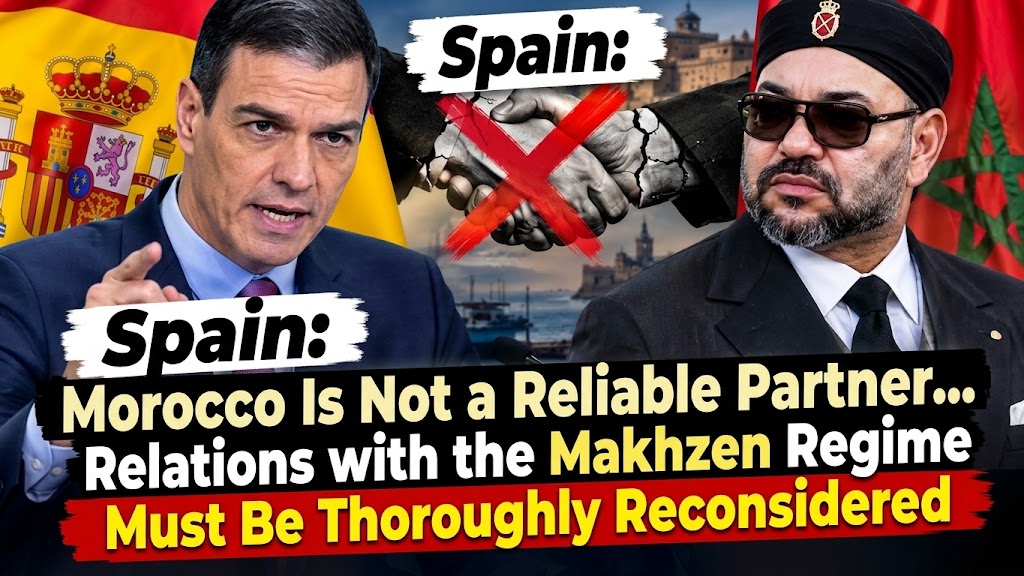
Spain: Morocco Is Not a Reliable Partner… Relations with the Makhzen Regime Must Be Thoroughly Reconsidered

Spain: Morocco Is Not a Reliable Partner… Relations with the Makhzen Regime Must Be Thoroughly Reconsidered

Algeria Gate: European Parliament member Estrella Galán of the Sumar party has stated that Morocco is not a reliable partner, calling for a thorough reassessment of relations with the Makhzen regime, particularly in light of its human rights record and its handling of the migration issue.

In an interview with Spanish daily El HuffPost on Monday, Galán sharply criticized the Moroccan authorities, stressing that Morocco “is not a reliable partner” and calling for a fundamental review of relations with Rabat, given its practices on several issues affecting its relations with its partners.

In this context, she stressed that “cooperation does not mean submission,” arguing that this is precisely what Spain is currently experiencing in its relationship with Morocco. According to Galán, the relationship has gone beyond normal cooperation and increasingly taken the form of pressure and political bargaining.

Her criticism directly concerns the migration issue. Galán argues that Morocco cannot dictate how Spain manages its migration policy, nor use migrant flows as a tool of pressure or blackmail through what she describes as deceptive maneuvers.

The European lawmaker also linked the issue to the Makhzen regime’s human rights record. She stated that Morocco “does not respect human rights, neither those of its own people nor those of migrants,” arguing that such practices are incompatible with any role Morocco might be entrusted with in border control.

She is therefore calling for a profound reassessment of relations with Rabat, with respect for human rights placed at the heart of any future cooperation.

#Morocco#Spain
Author
Lys Iwannughen
Algeria
Share this post

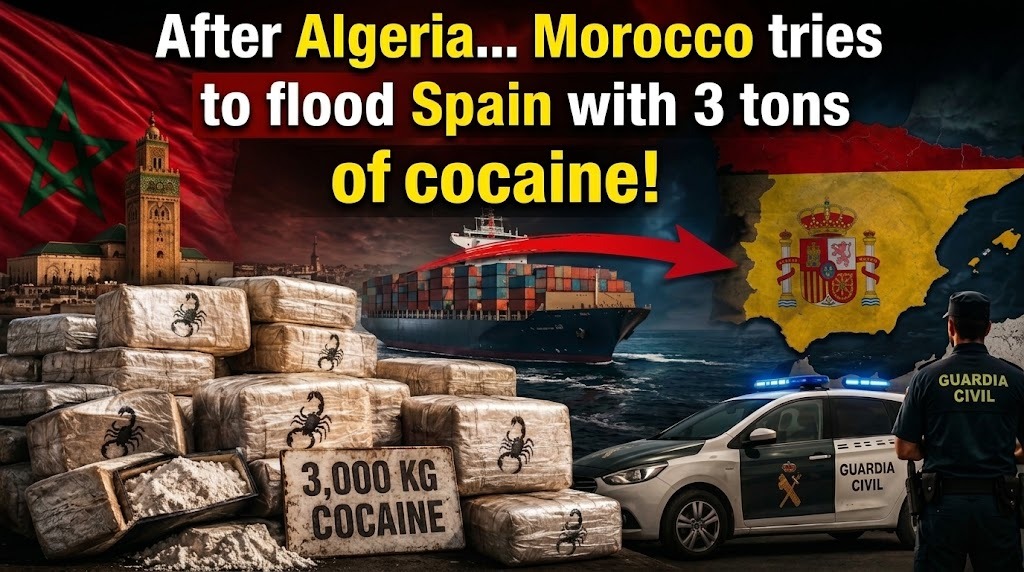
After Algeria… Morocco tries to flood Spain with 3 tons of cocaine!

After Algeria… Morocco tries to flood Spain with 3 tons of cocaine!

Algeria Gate: Just hours after Algerian security forces successfully seized 228 kilograms of cocaine originating from Morocco, Spanish authorities have struck again.

In a major operation south of the island of Gran Canaria, Spanish security forces intercepted a high-speed boat equipped with multiple engines coming from Morocco. On board, they seized three tons of cocaine, equivalent to 3,360 kilograms, along with an arsenal of weapons, and arrested five Moroccan traffickers.

#Algeria#Morocco#Spain
Author
Lys Iwannughen
Europe
Share this post

Spain Speaks Out: Hands Off Ceuta, Melilla, and Our Sovereignty!

Spain Speaks Out: Hands Off Ceuta, Melilla, and Our Sovereignty!

Algeria Gate: Massive popular demonstrations took place in several Spanish cities in denunciation of official Moroccan statements concerning the cities of Ceuta and Melilla, in a scene that reflects the growing rejection within Spain of what sectors of Spanish public opinion regard as a Moroccan attempt to reopen the file of the two cities and place them once again on the agenda of relations between Rabat and Madrid.

These protests followed statements by two Moroccan ministers that triggered a wave of anger in the Spanish street, particularly since the file concerns two cities that Spain considers part of its sovereignty, which led the Moroccan claims to be read in Spain as a direct assault on national sovereignty.

The anger was not confined to the street. Madrid quickly raised the level of its response. The Spanish Foreign Ministry announced its categorical rejection of any different Moroccan position regarding the status of Ceuta and Melilla, affirming that the two cities are fully Spanish and that any threat to them is treated as a threat to Spain.

Spanish Defence Minister Margarita Robles also affirmed that Ceuta and Melilla are “fully Spanish” and that any threat affecting them represents a threat to Spain, in a stance that reflects the transition of the issue from a mere political controversy to a matter directly linked to sovereignty and security.

Amid the escalation, Spanish diplomacy moved directly after official sources reported that Madrid had informed Rabat of its categorical rejection of the Moroccan demands and that the Moroccans must bear responsibility for this escalation.

Spanish Foreign Minister José Manuel Albares also visited Ceuta on August 11th, reiterating the Spanish government’s commitment to Spain’s sovereignty over the two cities and its support for them.

Spanish Prime Minister Pedro Sánchez today denounced the statements of the two Moroccan ministers regarding Ceuta and Melilla, describing them as unacceptable. Speaking before the plenary session of the Spanish Congress of Deputies, Sánchez said that Madrid had categorically rejected the statements attributed to the two Moroccan ministers.

The Spanish official revealed that his government had summoned the Moroccan ambassador in Madrid on August 21st to inform her of its position on the two statements, explaining that the step was taken in the context of an official rejection of what Madrid considered unacceptable positions regarding the two cities. He finally affirmed that Ceuta and Melilla are Spanish cities forever.

These developments come in the wake of the irregular-migration crisis that Ceuta experienced at the end of July, during which tens of thousands of Moroccan migrants crossed into the city, making the Ceuta and Melilla file more sensitive in relations between Madrid and Rabat.

Thus, the statements of the two Moroccan ministers went from an attempt to put the two cities back on the dialogue table to a spark that ignited the Spanish street and pushed the Spanish government to harden its discourse towards Rabat, with a forthcoming visit by the Spanish King Felipe to the cities of Ceuta and Melilla expected.

#Morocco#Spain
Author
Lys Iwannughen