Friday, 6 November 2026 • 15:30 Algiers time
Algeria Gate
Share this post

Algeria Declares War on Cartels: Cutting Supply Lines and Choking Cash Flow

• Author: Lys Iwannughen • 0 comments • 21 views
Algeria Declares War on Cartels: Cutting Supply Lines and Choking Cash Flow

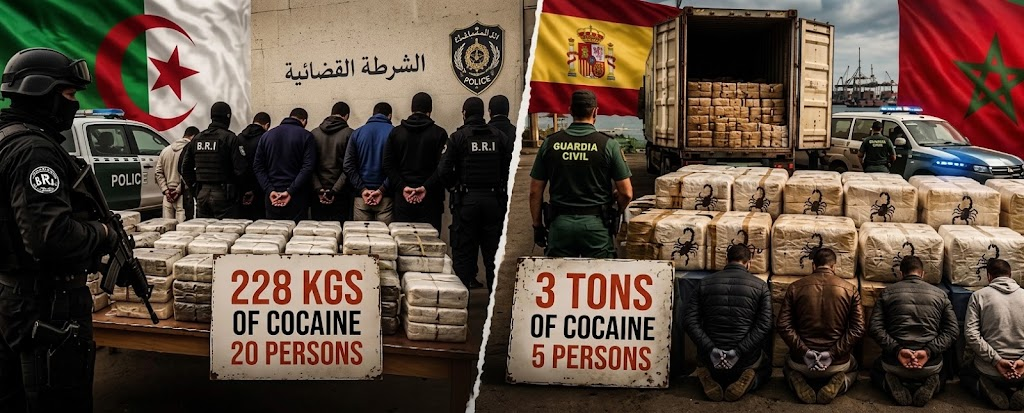
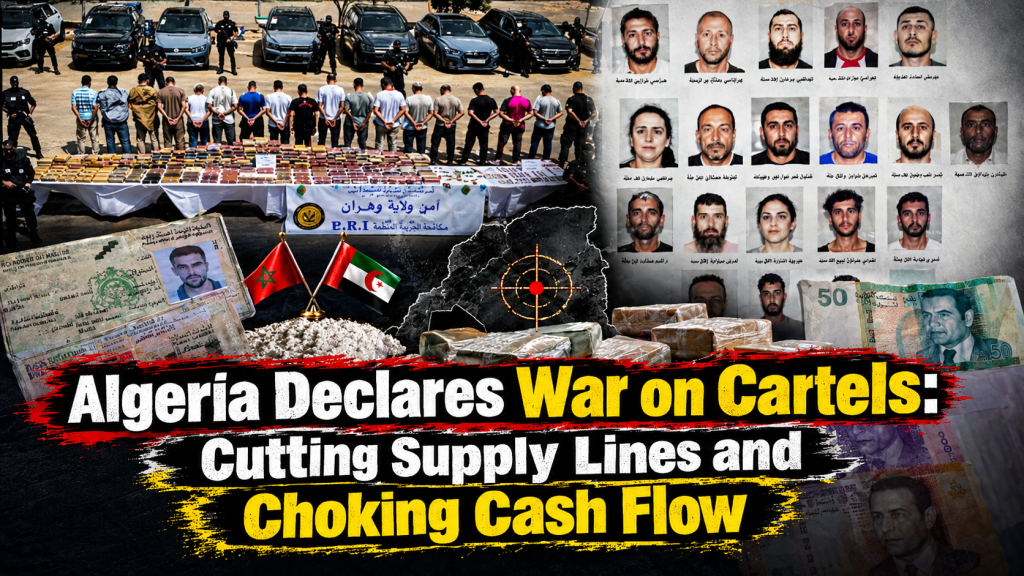
Algeria Gate: International relations researcher Oumnia Bougueras said to “Algeria Gate” that the recent security operation that resulted in the seizure of 228 kg of cocaine and the arrest of 20 people, including a Moroccan, along with the seizure of sums of money in various currencies, does not appear to be merely an operation to seize large quantities of drugs, but rather an indicator of a new and more complex nature of drug-trafficking networks in Algeria.

https://twitter.com/algatedz/status/2095804894624031036?s=20

Bougueras explained that what is striking in the operation is the diversity of the seized currencies, particularly the Moroccan dirham and the Emirati dirham, considering that this reflects the reliance of drug networks on diversifying their sources and cross-border financial channels in order to conceal the origin of the money.

The researcher added that this activity represents a form of transnational organized crime, as well as a new pattern of hybrid warfare targeting Algerian social security and human resources by targeting the youth category.

https://twitter.com/algatedz/status/2096243392355147880?s=20

In confronting this phenomenon, the researcher confirmed that Algeria is adopting a new security approach through activating and tightening border controls, in addition to legal treatment and the renewal of penalties, noting that the recent prison in Tanezrouft reflects the determination of the Algerian authorities to confront this dangerous scourge that targets the Algerian social fabric.

However, Bougueras stressed that the scale of the threat requires societal mobilization and the involvement of various actors, including parties and civil-society associations, in order to ward off this threat facing Algerian social security and affecting its national security.


#Algeria#Morocco
Author
Lys Iwannughen
View my articles

Leave a comment

Your email address will not be published. Required fields are marked *

Algeria
Share this post

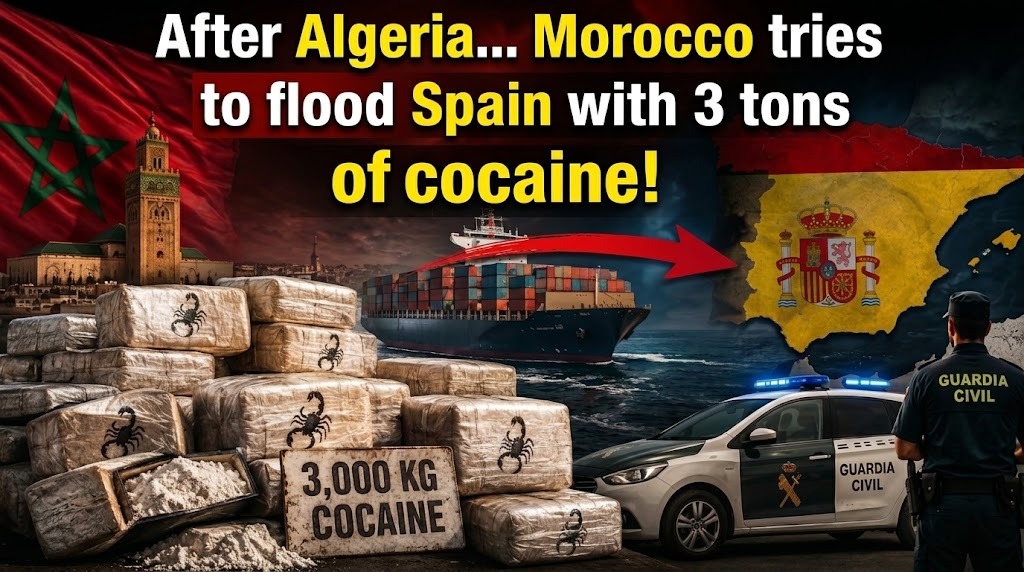
After Algeria… Morocco tries to flood Spain with 3 tons of cocaine!

After Algeria… Morocco tries to flood Spain with 3 tons of cocaine!

Algeria Gate: Just hours after Algerian security forces successfully seized 228 kilograms of cocaine originating from Morocco, Spanish authorities have struck again.

After Algeria… Morocco tries to flood Spain with 3 tons of cocaine!

In a major operation south of the island of Gran Canaria, Spanish security forces intercepted a high-speed boat equipped with multiple engines coming from Morocco. On board, they seized three tons of cocaine, equivalent to 3,360 kilograms, along with an arsenal of weapons, and arrested five Moroccan traffickers.

#Algeria#Morocco#Spain
Author
Lys Iwannughen
View my articles
Algeria
Share this post

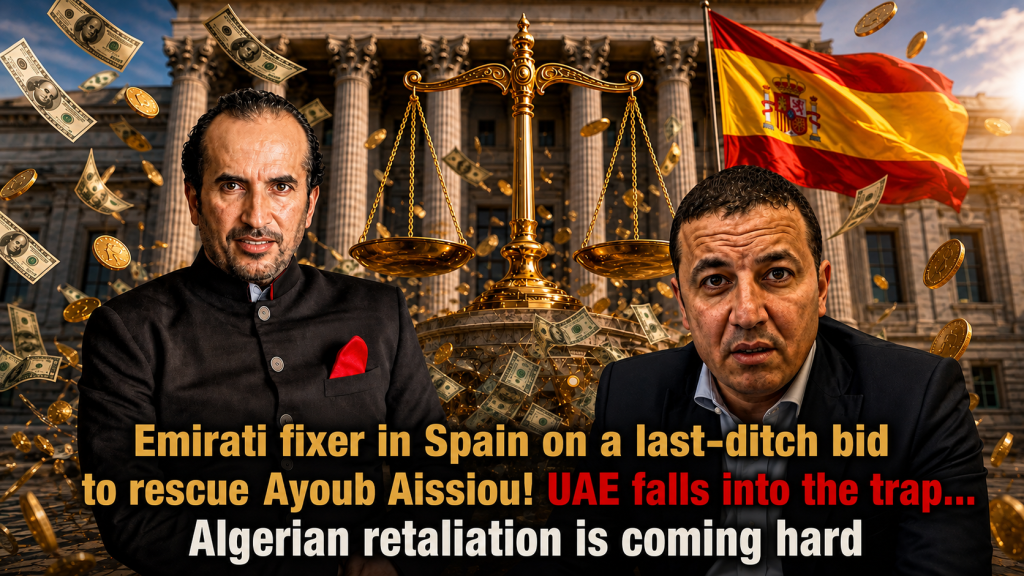
Emirati fixer in Spain on a last-ditch bid to rescue Ayoub Aissiou! UAE falls into the trap… Algerian retaliation is coming hard!

Emirati fixer in Spain on a last-ditch bid to rescue Ayoub Aissiou! UAE falls into the trap… Algerian retaliation is coming hard!

Algeria Gate: With the countdown beginning to sever diplomatic relations with Abu Dhabi, which continues to weave despicable intrigues and plots to strike at Algeria’s stability, the UAE has this time maliciously mobilized its arms in Madrid. It is pressuring the Spanish authorities to prevent the extradition of the fake Algerian businessman Ayoub Aissiou. An Emirati businessman has been tasked with applying strong pressure to stop the handover of the oligarch, who is a fugitive in Spain and one of the most wanted by Algerian justice.

After the rescue by the Franco-Zionist lobby in Paris, it is now the turn of the UAE to mobilize its intermediaries and rally the Emirati lobby in Madrid. The goal is clear: to save a corrupt criminal fleeing Algerian justice and currently on the run outside the country.

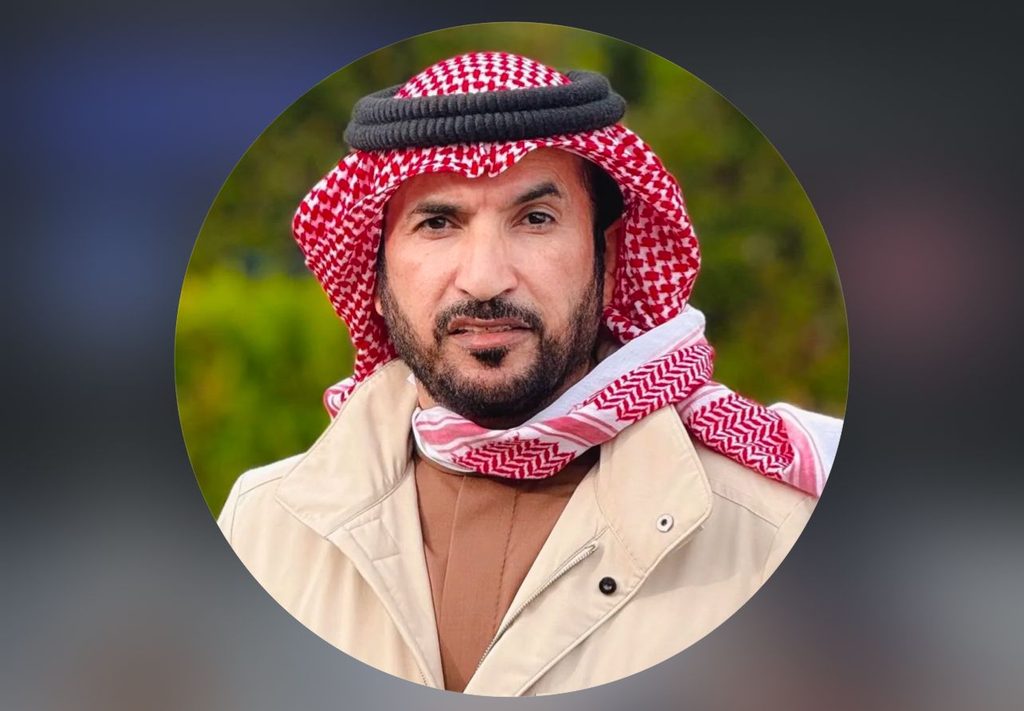
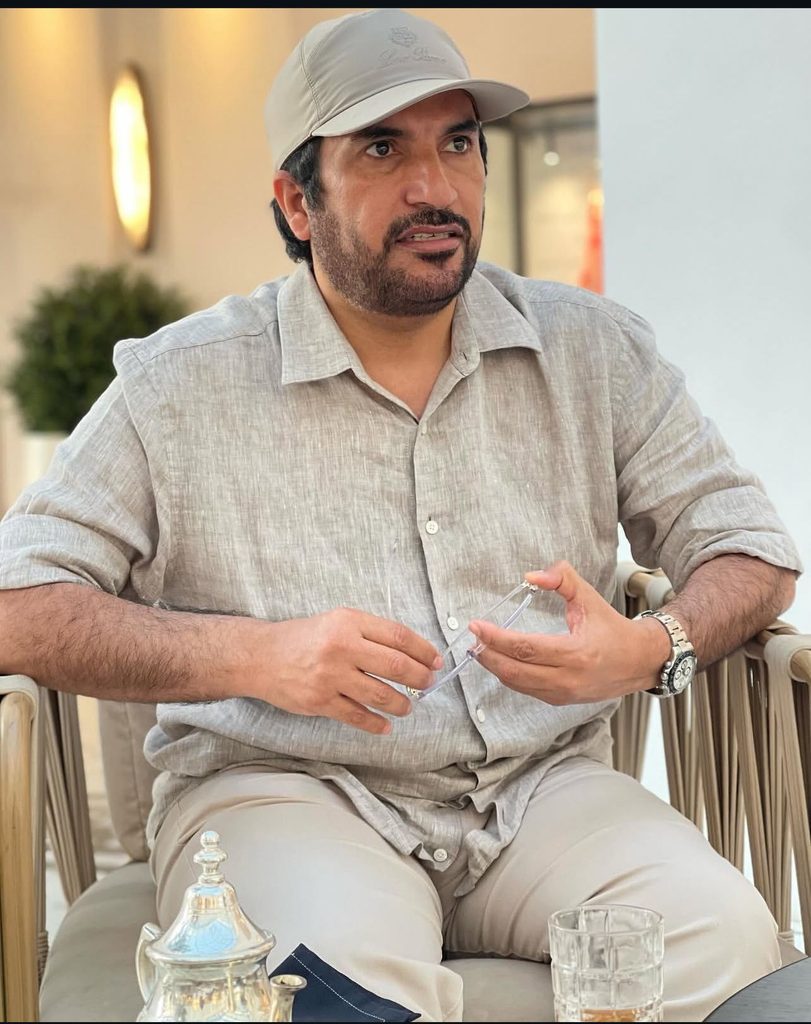
According to Algeria Gate sources, Abu Dhabi has mobilized businessman Nasser bin Thaaloub, close to Tahnoun bin Zayed Al Nahyan, advisor to the UAE National Security Apparatus.

He has been assigned to provide assistance to the former oligarch against whom an international arrest warrant has been issued and who has been sentenced in absentia to 20 years in prison on charges related to serious corruption cases.

His special mission in Spain is to engage in “political, media and financial lobbying” for the release of the so-called Ayoub Aissiou; the fugitive who squandered public Algerian treasury funds and plundered honest citizens through fictitious real estate projects.

The UAE falls into the forbidden and the Algerian response is coming

Algeria will respond forcefully and will not stand as a spectator to the dirty Emirati campaigns.

The clock moving toward a diplomatic break is about to stop. It will announce the severing of relations with the UAE and the imposition of unprecedented economic sanctions on any presence of Emirati companies operating in Algeria.

The same sources confirmed that the UAE’s intervention in the Ayoub Aissiou case “will be an extremely hostile act.”

The UAE’s intervention in the Aissiou case represents a serious escalation in the UAE’s hostile policies toward Algeria.

The same sources warned of retaliation by the Algerian authorities against the UAE, stressing that this blatant intervention “will be a very hostile act committed by the evil emirate against Algeria, and it will not go unanswered.”

According to Algeria Portal sources, Abu Dhabi sent Nasser bin Thaaloub, who resides between Paris and London, to Spain.

He has been tasked with coordinating French-Israeli political and media pressure on Spanish justice to prevent the extradition of Ayoub Aissiou to Algeria. According to the Algerian judiciary, he is involved in cases of corruption, plunder, and the smuggling of Algerians’ money.

According to the same sources, the Emirati intelligence service has established a joint operations room with French and Moroccan lobbies.

It has also commissioned well-known law firms to build a defense for Ayoub Aissiou, while spending more than 5 million euros on a media campaign in the French and Spanish press. The aim is to transform Ayoub Aissiou from a fake businessman fleeing justice into a political opponent.

Ayoub Aissiou was arrested in Spain and detained in Barcelona after arriving from Morocco on July 25 of last year on the basis of an international arrest warrant, before eventually being released on August 21.

Aissiou is being prosecuted before the Algerian judiciary in cases related to financial and commercial violations.

These include breaches of legislation governing the movement of capital to and from abroad, illicit currency transfers, money laundering, and the concealment of proceeds linked to corruption, among other charges.

The Israeli lobby in France, together with controversial French political and media figures, had previously moved to prevent his extradition to Algeria.

Emirati fixer in Spain on a last-ditch bid to rescue Ayoub Aissiou! UAE falls into the trap… Algerian retaliation is coming hard!

This raises many questions about the alleged Algerian businessman’s ties to Israeli and Moroccan intelligence.

Particular attention is drawn to the involvement of the French novelist Pascal Bruckner; known for his strongly pro-Israel positions (described in the original as support for “Nazi Israel”), in the suspicious campaign, alongside Boualem Sansal (convicted in Algeria in cases related to undermining national unity), and the Tunisian imam of Jewish origin who heads an Emirati-backed French Islamic foundation, Hassan Chalghoumi.

A controversial figure who previously visited Israel, Hebrew media at the time circulated photos of him embracing Israeli soldiers in Tel Aviv and claiming that the entity does not oppose Muslims.

In addition, there has been media support from the outlets of French businessman Vincent Bolloré, which have mobilized to prevent Aissiou’s extradition.

The UAE has chosen to cross the red line. Algeria will know how to respond.

#Algeria#Ayoub Aissiou#Spain#UAE
Author
Lys Iwannughen
View my articles
Algeria
Share this post

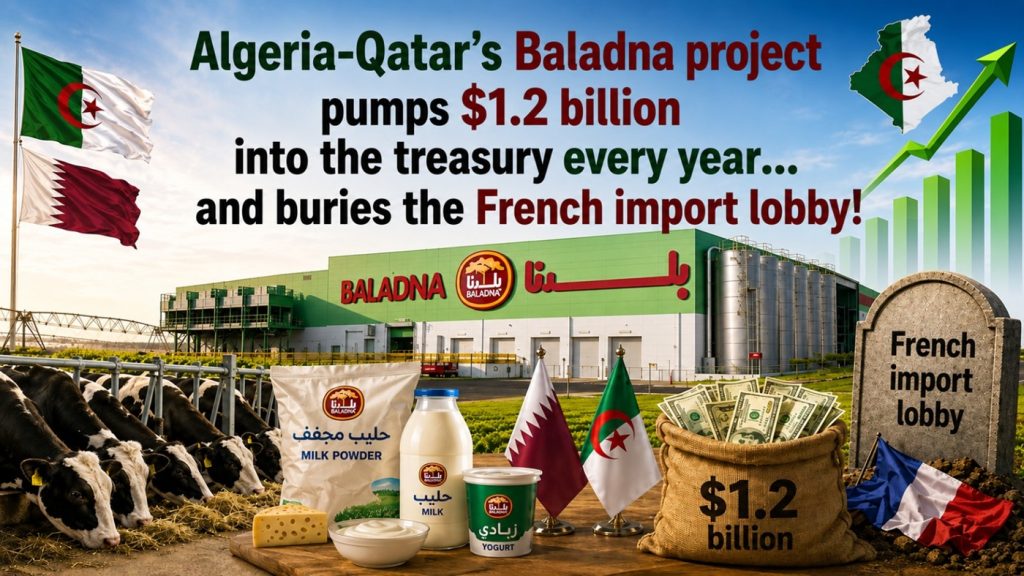
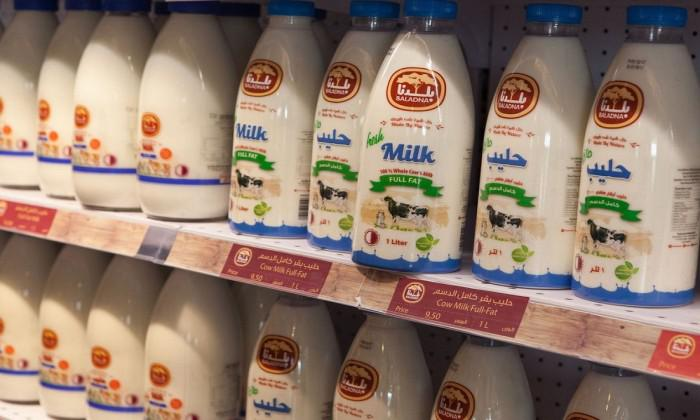
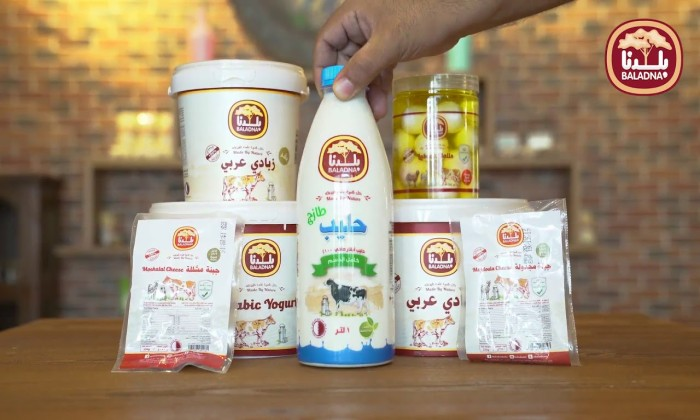
Algeria-Qatar’s Baladna project pumps $1.2 billion into the treasury every year… and buries the French import lobby!

Algeria-Qatar’s Baladna project pumps $1.2 billion into the treasury every year… and buries the French import lobby!

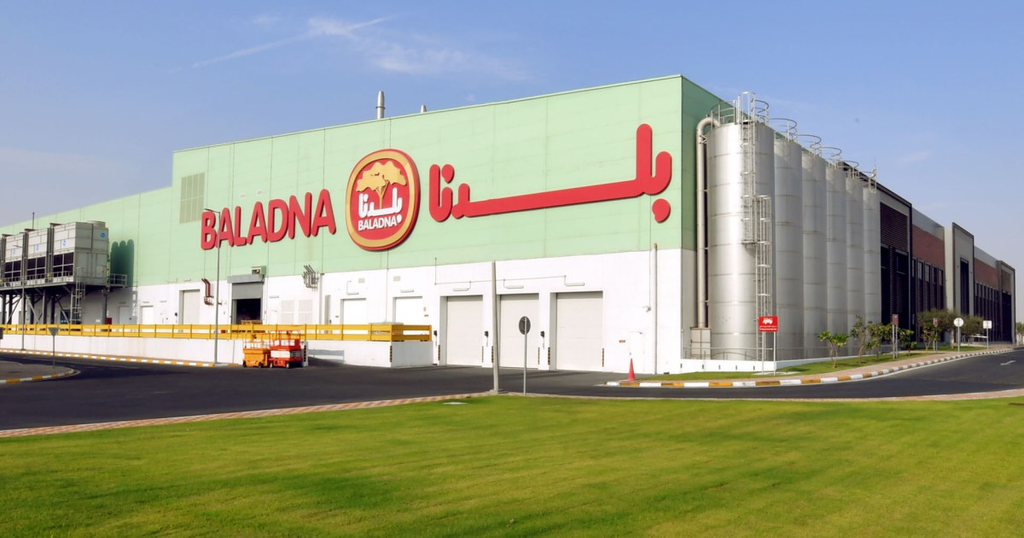
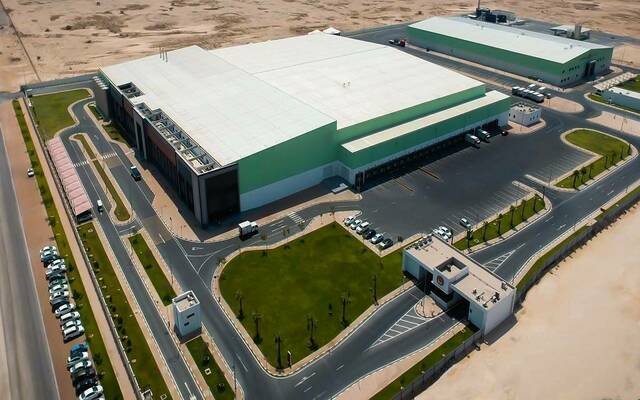
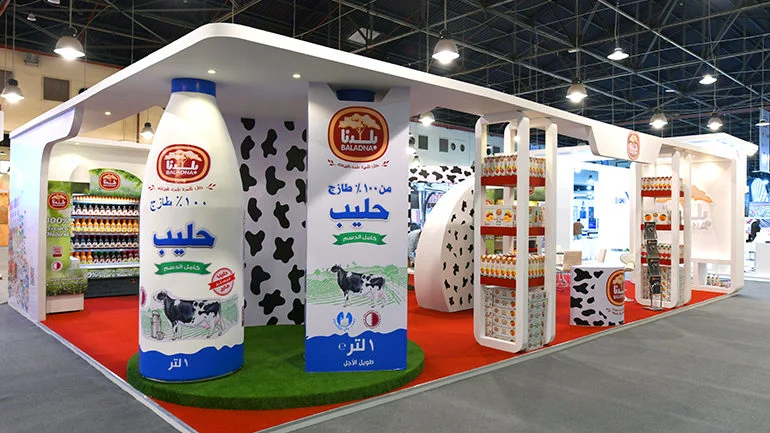
Algeria Gate: The “Baladna Algeria” project for milk and dairy production in Adrar has entered its heavy implementation phase with a total investment of approximately $3.5 billion. It is the largest integrated agricultural and industrial dairy project in Africa and the Arab world, and one of the biggest of its kind globally. Its significance goes far beyond the production of milk powder. It builds a complete national system that starts with forage cultivation and cattle breeding, passes through milking and industrial processing, and extends to cheeses, leben, raib, yoghurt and other value-added products.

The project covers 117,000 hectares in Adrar; an area that dwarfs Baladna’s existing base in Qatar. In herd size alone, the Algerian project aims for around 270,000 cows, compared with roughly 23,000 in the company’s Qatari facilities, nearly twelve times larger. Measured by herd size and agricultural-industrial capacity, the Adrar complex is about ten times bigger than the Doha experience.

Algeria-Qatar’s Baladna project pumps $1.2 billion into the treasury every year… and buries the French import lobby!

These figures show that Algeria is not simply copying Qatar’s self-sufficiency model. It is scaling it up for a market of more than 47 million people with high demand for milk powder and its derivatives. The project is structured around three integrated poles, each combining a farm for grain and forage, a unit for cattle breeding and milk and meat production, and a factory for transforming raw milk into powder and processed products.

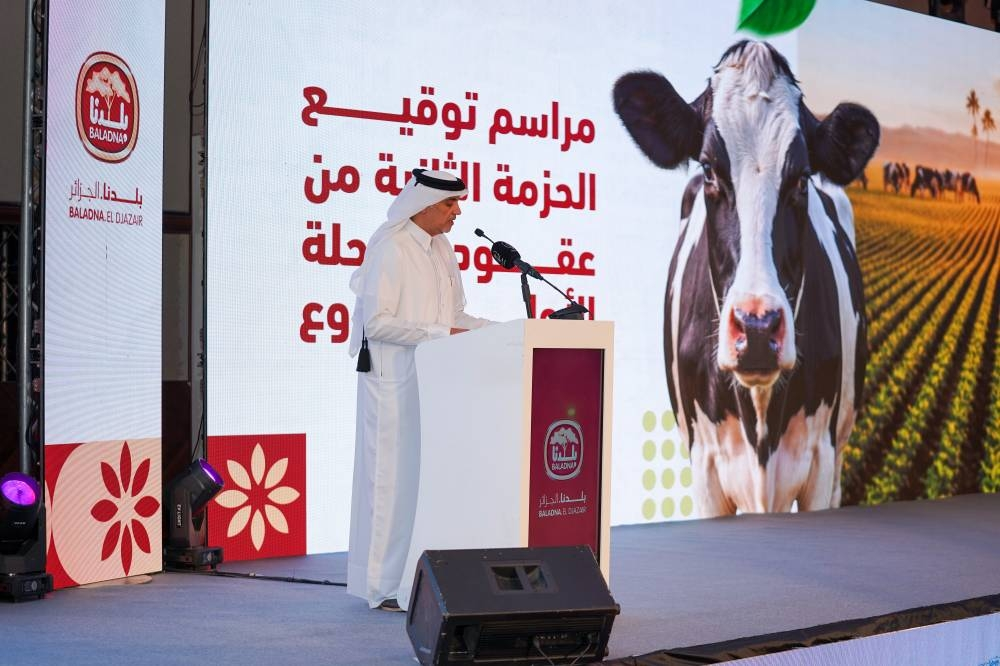
The operation is carried out through “Baladna Algeria”, owned 51% by the Qatari Baladna Group and 49% by the Algerian state through the National Investment Fund. This structure makes Algeria a capital partner, not a passive provider of land and facilities. It places the project firmly under national food-security policy and the drive to cut the import bill.

This model reflects one of the clearest features of the economic openness led by President Abdelmadjid Tebboune: attracting foreign investment that creates productive assets, transfers technology and localises expertise, rather than opening the market to mere import-and-resale operations. The Qatari partner is not coming to market finished products. It is investing billions of dollars in land, water, farms, factories, equipment and livestock, while Algerian companies take part in construction, subcontracting and services.

In this way the relationship with foreign capital shifts from the logic of a consumer market to the logic of a productive base. That transformation is the essence of Algeria’s new investment policy under President Tebboune: privileges, land and facilities are granted only in return for tangible projects, jobs, higher local production and reduced external dependence.

In its latest financial and operational disclosure, Baladna confirmed that works in Adrar advanced during the first half of 2026. Groundwater facilities and irrigation networks were expanded, agricultural activities began in the spring season with the cultivation of fodder maize and Sudanese sorghum, and the first harvests of barley and wheat were completed. Civil works on cattle farms and processing facilities progressed in parallel with design and engineering for the factories and shared services. The project has moved from studies and contracts to the actual formation of its productive base. The land is already producing forage for the herd before the first cows arrive.

Algeria-Qatar’s Baladna project pumps $1.2 billion into the treasury every year… and buries the French import lobby!

The Qatari group classifies the Algeria project as the cornerstone of its international expansion and one of the most important drivers of its long-term growth outside the Qatari market. This status reflects not only the attractiveness of the Algerian market but the success of the authorities in turning food security into a sector capable of attracting global capital and expertise.

The total value of the first two packages of executive contracts exceeded $1.135 billion. The first package, signed in July 2025, surpassed $500 million and covered agricultural and irrigation equipment, well drilling, metal structures, milking and processing systems, as well as engineering, consultancy and project management. The second package, signed in April 2026, exceeded $635 million and included civil works, agricultural facilities, residential infrastructure, concrete plants, land levelling, expansion of irrigation networks, and the programme for purchasing and transporting dairy cows to Algeria.

Algeria-Qatar’s Baladna project pumps $1.2 billion into the treasury every year… and buries the French import lobby!

These contracts show that the project does not rely on a single foreign company that completes the work and leaves. It rests on a network of Algerian and international firms. National companies active in well drilling, public works, land levelling and the construction of structures and housing have been awarded contracts, while other local firms handle subcontracting in electricity, transport, timber, equipment, maintenance and logistics.

This subcontracting spreads the economic impact beyond the joint-venture company. Every farm or factory requires electrical networks, internal roads, storage and refrigeration facilities, transport means, metal and wooden structures, as well as maintenance, monitoring, security, catering and accommodation services. The investment value is thus transformed into orders, wages and contracts that benefit Algerian small and medium-sized enterprises, rather than flowing entirely to equipment suppliers abroad.

The operational phase will generate permanent demand for veterinarians, agricultural engineers, irrigation, milking, refrigeration and food-processing technicians, as well as truck drivers and workers in laboratories, maintenance, packaging and storage. Basic estimates speak of around 5,000 permanent jobs, rising to more than 15,000 when construction, subcontracting, supply-chain and indirect service jobs are included.

The project’s impact is therefore not limited to the number of workers inside the farms and factories. It is building a new local economy in Adrar. The province, long associated with Saharan agriculture and services, is gradually becoming a hub that combines industrial agriculture, cattle breeding, food processing and logistics, thereby increasing demand for housing, transport, training, maintenance and supporting businesses.

In November 2026 the project will begin an air transport programme to bring in 30,000 Holstein Friesian dairy cows from the United States. The animals will be transported on 109 flights over ten months, at a rate of approximately 300 head per flight and about ten flights per month. The herd will come from nine American states: Arizona, New Mexico, Texas, Colorado, Idaho, California, Kansas, Iowa and Indiana. The estimated value of the purchase, transport and logistics programme ranges between $250 and $300 million, underlining the scale and veterinary and logistical complexity of the operation.

Meanwhile, the German company GEA is supplying the core technological link for the milking and processing system under a contract valued at between €140 and €170 million; one of the largest single orders received by several of its divisions in their history. GEA’s equipment includes large automatic milking parlours, separation, filtration and heat-treatment systems, evaporation and spray-drying units, packaging and automation lines, as well as equipment for producing anhydrous milk fat. Technology thus extends from handling milk as soon as it leaves the farm to transforming and packaging it as a final product ready for storage and distribution.

GEA describes the facility as the largest of its kind in the world and has set the end of 2027 as the start date for the first production of milk powder, before volumes are gradually increased. It has estimated the capacity of the industrial unit covered by its contract at around 100,000 tonnes per year, while the full project concepts, across its different poles and stages, target nearly 194,000 tonnes annually.

Algeria-Qatar’s Baladna project pumps $1.2 billion into the treasury every year… and buries the French import lobby!

It is necessary to distinguish between the capacity of the first facility to enter operation and the final capacity of all project components. The figure of 194,000 tonnes will not be achieved as soon as the first factory starts; it will come after the completion of stages, the increase in the number of cows, the expansion of forage production and the entry into service of additional units. The established strategic objective is to cover up to 50% of Algeria’s needs for milk powder.

The milk-powder import bill is estimated, depending on the year, prices and volumes, at between $800 million and more than $1 billion. Imports of certain categories of concentrated and dried milk have exceeded $1.2 billion in years of high prices. Therefore the start-up of the project does not mean that the Treasury will automatically receive $1.2 billion in annual revenue. Rather, once the targeted capacities are reached, Algeria will be able to retain a substantial portion of the foreign currency that was previously spent on purchasing milk powder from abroad. Since the project aims to cover roughly half of demand, the direct savings will be calculated on the basis of the value of imports actually replaced, after deducting operating costs and imported equipment and inputs.

Nevertheless, the economic gain is broader than a simple reduction of the bill. The amount that used to leave the country to buy a finished product will partly be recirculated within the national economy in the form of wages, transport contracts, electricity, maintenance, forage, packaging and services. Permanent agricultural and industrial assets will also be created, instead of consuming hard currency on imports whose value ends once they are distributed.

The project does not stop at milk powder. The integrated structure of the herd and factories opens the way, in later stages, to the production of pasteurised milk, leben, raib, yoghurt, cheeses, butter, cream and other food components. It is also expected to supply the market with red meat and contribute to the development of the national herd.

Algeria-Qatar’s Baladna project pumps $1.2 billion into the treasury every year… and buries the French import lobby!

Expansion into these products represents the higher stage in terms of added value, because producing cheese, yoghurt and other dairy derivatives allows an increase in the return obtained from each litre, the building of local brands, a reduction in imports of other processed products, and the opening of export possibilities to Sahel and West African markets once a competitive surplus is achieved.

Adrar’s location also gives the project a natural outlet toward African markets south of Algeria. If the phase of meeting national demand succeeds and productive efficiency rises, the province can be transformed into a base for exporting milk powder and long-shelf-life products to Sahel countries that themselves depend on imports and suffer from a weak local dairy industry.

As for France, there are no reliable official data allowing the claim that the French government has announced its rejection of the project. However, its commercial effects cannot please traditional European milk exporters, including French companies, because covering half of Algerian demand means the contraction of a large external market that used to absorb hundreds of thousands of tonnes annually.

Algeria is one of the world’s largest markets for milk powder; its imports in recent years have ranged between 350,000 and 440,000 tonnes per year. A report by the US Department of Agriculture showed that the country imported around 419,000 tonnes in 2022 and a similar quantity in 2023, with an annual value estimated by the Ministry of Agriculture at around $800 million before subsequent price surges.

When Algeria moves from importing these quantities to producing a large part of them locally, the loss does not fall on a single supplier but on a whole system of exporters, intermediary companies, transport and insurance. The commercial unease is therefore understandable among those who have long regarded the Algerian market as a permanent outlet for European industrial surpluses.

The strength of the approach led by President Tebboune lies in the fact that the response has not come through slogans or isolated ban decisions, but through the construction of a productive alternative. Algeria is not simply replacing the French supplier with another foreign supplier; it is gradually replacing imported milk with farms, factories, a herd and production on its own soil.

Success nevertheless remains linked to the efficient management of groundwater, the productivity of forage, the health of the herd, the ability of the facilities to operate in Saharan climatic conditions, and control of production costs. It also requires ensuring the integration of Algerian companies in maintenance, manufacturing and packaging, so that dependence does not shift from importing milk powder to permanent importation of equipment, spare parts and technical services.

Algeria-Qatar’s Baladna project pumps $1.2 billion into the treasury every year… and buries the French import lobby!

The path recorded so far shows that the project is advancing according to a clear productive sequence: drilling wells and completing irrigation, then cultivating forage and harvesting the first crops, followed by the construction of farms and factories, before receiving the herd and starting production at the end of 2027. This sequence gives the project a field foundation that is not available in projects that remain for years at the level of memoranda of understanding.

In the final analysis, “Baladna Algeria” is not merely a giant dairy farm. It is a project to restructure the milk market and build a new food industry in the south. It is the largest in Africa and the Arab world in terms of its announced integrated scope, exceeds by several times the parent company’s experience in Qatar, and directs more than $3.5 billion into agriculture, breeding, processing and services.

It also repositions Adrar on the economic map, provides thousands of jobs, opens a wide market for Algerian subcontracting companies in electricity, transport, timber, construction and maintenance, and prepares the transition from milk powder to cheeses, yoghurt, leben, raib and other derivatives.

Most importantly, the project offers a practical translation of President Abdelmadjid Tebboune’s openness to productive foreign investment: a partnership in which the state retains a 49% share, brings in financing and global expertise, builds capacities inside Algeria, and confronts a heavy import bill with a more sustainable tool than administrative restrictions. If the end-2027 deadlines are met and capacities gradually rise to their target levels, Algeria will have transformed one of the largest items of its food dependence into a national industry and deprived traditional suppliers of a market that for years was a stable source of their revenues.

#Algeria#Baladna#QATAR
Author
Lys Iwannughen
View my articles