
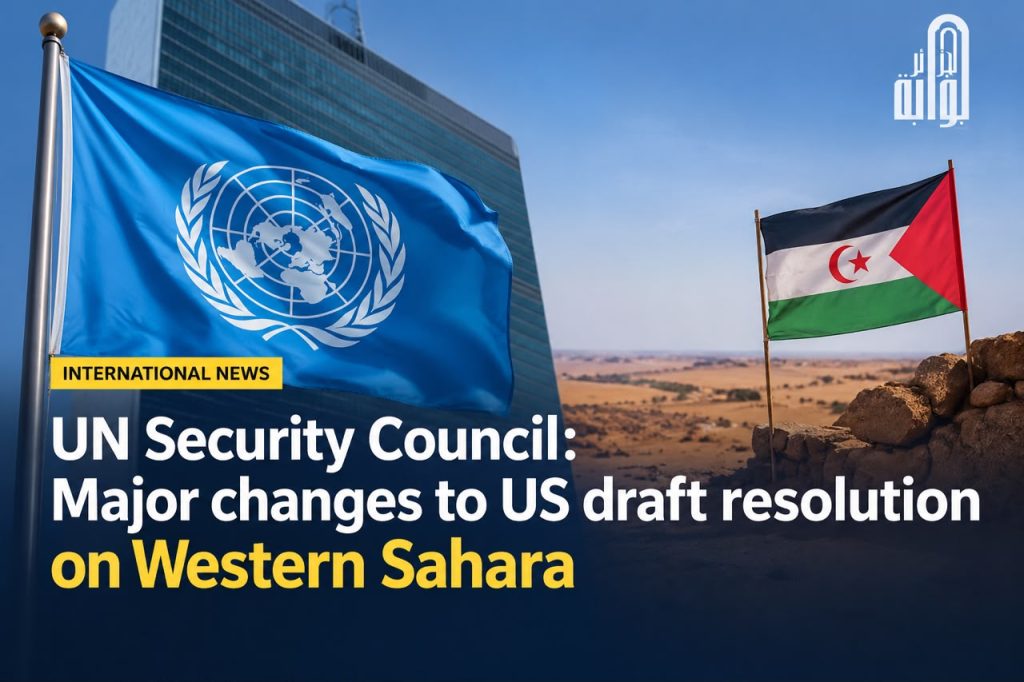
Algeria Gate: The latest version of the US draft resolution on Western Sahara introduces significant changes concerning the political settlement and the future of the United Nations Mission for the Referendum in Western Sahara (MINURSO). The revised text restores explicit reference to the principle of self-determination and drops the description of Morocco’s autonomy proposal as the “only viable solution,” according to the version dated October 24.
Self-determination returns to the forefront
One of the most notable changes concerns the wording used to describe Morocco’s autonomy proposal. The revised draft changes its status from the “only viable solution” to the “most viable solution.”
It also stresses the need for a just, lasting and mutually acceptable political settlement, consistent with the UN Charter and its principles, including the right to self-determination.
The draft calls on the parties to engage actively and constructively in the political process and submit their responses on this basis. This wording distinguishes between using Morocco’s proposal as a basis for negotiations and presenting it as the only possible outcome.
Changes to the future of MINURSO
The revised draft also changes the proposed approach to MINURSO’s future. It removes the initial plan to end the mission’s peacekeeping mandate on April 30, 2027, and transform it into a special political mission starting May 1, 2027.
Instead, the revised text leaves the mission’s future open to a subsequent Security Council decision, taking into account proposals from the UN Secretary-General and progress in the political process.
The draft also requests detailed proposals on the mission’s structure, staffing, resources and operational arrangements by January 30, 2027, giving the Council greater flexibility to assess the available options.
Reference to additional measures removed
Another significant change is the removal of a paragraph indicating that the Security Council could consider additional measures if either party failed to engage constructively in the political process.
The revised text instead emphasizes the continued leadership role of the United Nations, alongside support from the Secretary-General, his Personal Envoy and the United States in facilitating discussions. This differs from the initial draft, which placed particular emphasis on the continuing leadership role of the Personal Envoy.
What do the changes mean?
The amendments represent a retreat from some of the more definitive language in the initial draft, particularly regarding the exclusivity of Morocco’s autonomy proposal and the predetermined restructuring of MINURSO. However, the proposal remains a basis for negotiations.
The changes come amid ongoing consultations within the Security Council and discussions over the positions of the parties to the conflict, including the Polisario Front’s rejection of the initial draft, according to the information reported on the negotiations.
The revised text highlights three key elements of a potential settlement: a just and lasting solution, acceptance by both parties, and consistency with the UN Charter and its principles, including self-determination.
With changes affecting both the political framework and the future of the UN mission, the final version of the draft resolution remains subject to ongoing Security Council consultations. Attention is now focused on the outcome of the negotiations and their implications for the future of Western Sahara.