Saturday, 24 October 2026 • 15:28 Algiers time
Algeria Gate
Share this post

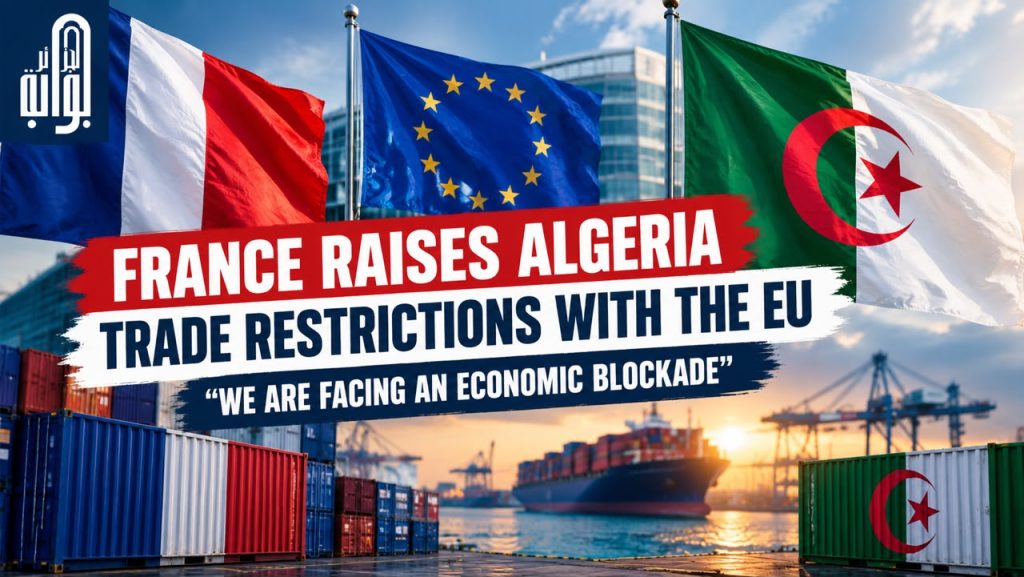
France raises Algeria trade restrictions with the EU as bilateral trade declines

• Author: Y.R • 0 comments • 2 views
France raises Algeria trade restrictions with the EU as bilateral trade declines

Algeria Gate: France has raised concerns over trade restrictions affecting its exports to Algeria with the European Union, as diplomatic tensions between the two countries continue to weigh on bilateral economic relations.

According to two diplomats cited by Reuters, French Foreign Minister Jean-Noël Barrot brought up the issue of restrictions on French goods during a meeting of EU foreign ministers. An EU summary of the October 12 meeting stated that France referred to Algeria in connection with recently adopted trade restrictions on French imports.

The reported move comes amid a continued decline in trade between Paris and Algiers. French customs data show that French exports to Algeria fell by around 12% in 2025, reaching €4.2 billion. Exports then recorded a further year-on-year decline of approximately 12% during the first eight months of 2026.

French imports from Algeria, consisting mainly of oil and gas, also decreased. They fell by 18% in 2025 to approximately €5.1 billion and declined by a further 11% between January and August 2026, according to the same data.

The trade dispute unfolds against a backdrop of strained diplomatic relations, which deteriorated significantly in 2024 following France’s shift on the Western Sahara issue. The disagreement has since affected several areas of bilateral cooperation, including economic exchanges.

Reuters reported that diplomats had described broad restrictions affecting French goods in Algeria. However, the measures have not been formally announced by the Algerian government, and the report noted that Algerian officials had denied the restrictions when questioned by French representatives.

France’s appeal to the European Union highlights the growing economic dimension of the dispute, as both countries face declining trade flows amid continued political tensions.

#Algeria#EU#France#Trade
Author

Leave a comment

Your email address will not be published. Required fields are marked *

Algeria
Share this post

Tamanrasset railway line: International funding, strategic investment

Tamanrasset railway line: International funding, strategic investment

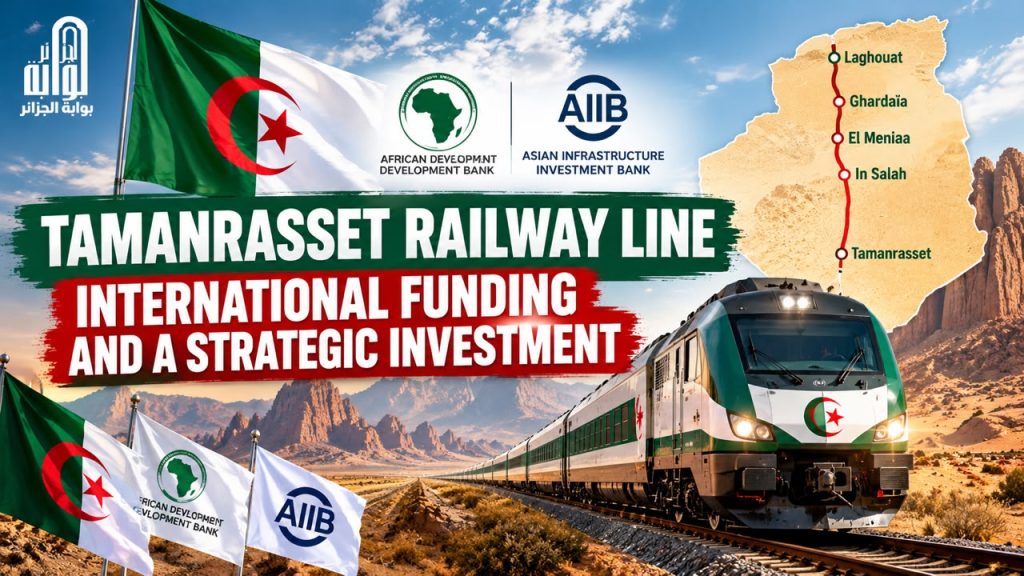
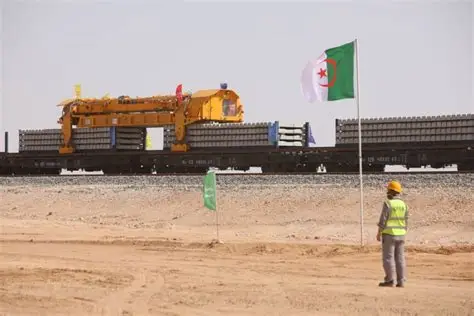
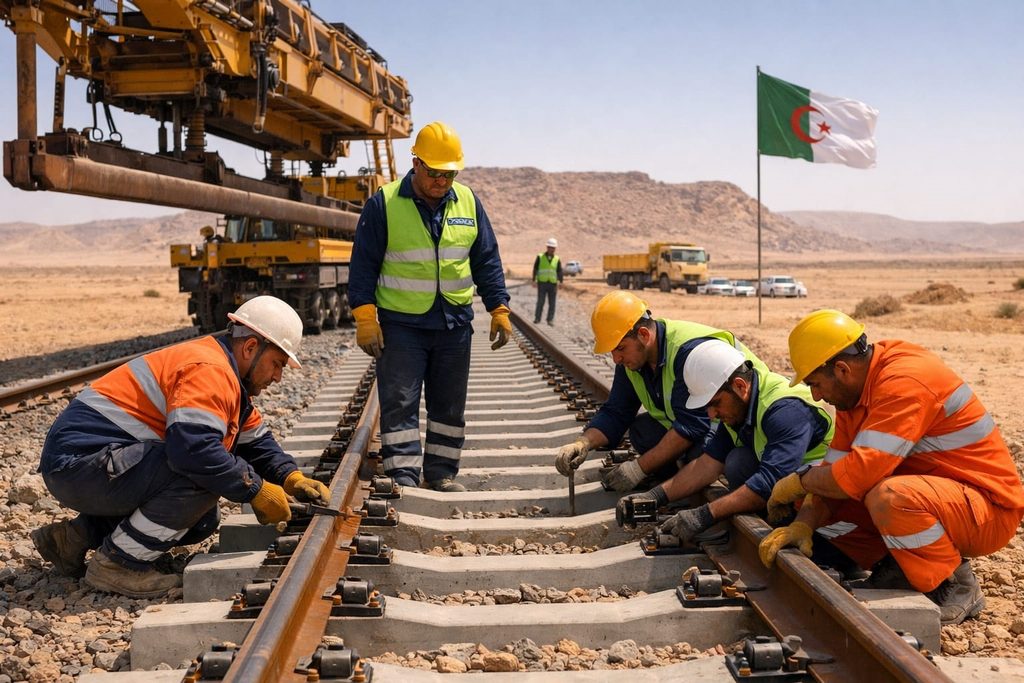
Algeria Gate: Algeria is moving forward with one of the largest infrastructure projects in its history by mobilizing international and national funding to build a railway line linking Laghouat to Tamanrasset. The project reflects the strategic importance the country attaches to developing its transport network and opening up new economic opportunities deep into Africa.

The Ministry of Public Works and Basic Infrastructure has outlined the project’s financing structure, confirming that the African Development Bank (AfDB) and the Asian Infrastructure Investment Bank (AIIB) will jointly finance part of the line, while the Algerian state treasury will cover the remaining costs. The funding arrangement takes into account the nature of the works and the scale of the required investment.

The project involves a railway corridor connecting Laghouat to Ghardaïa, El Meniaa and In Salah, before reaching Tamanrasset. It is intended to strengthen links between northern and southern Algeria and develop a transport network capable of supporting economic and urban expansion in the country’s desert regions.

Tamanrasset railway line: International funding, strategic investment

International financing for the first section

The first section, stretching 495 kilometres from Laghouat to El Meniaa via Ghardaïa, will receive joint funding from the African Development Bank and the Asian Infrastructure Investment Bank.

The Board of Directors of the African Development Bank Group has approved a loan of €747.32 million to support construction of this section, reflecting the interest of multilateral financial institutions in Algerian projects with economic and regional significance.

The second section, extending 1,080 kilometres from El Meniaa to Tamanrasset via In Salah, will be financed entirely by the Algerian state budget. This forms part of continued public investment aimed at developing infrastructure and improving access to remote southern regions.

This funding arrangement reflects Algeria’s approach of combining external financing with public investment to deliver strategic projects, particularly those requiring substantial financial resources and long implementation periods.

Economic opportunities and improved connectivity

The project’s importance goes beyond connecting Algerian cities through a modern railway network. It is also expected to facilitate the transportation of goods and raw materials, reduce logistics costs and improve passenger transport between different parts of the country.

Extending the railway to Tamanrasset could strengthen southern Algeria’s position within transport and trade networks and create opportunities for logistics hubs and industrial and commercial activities linked to freight transport. It could also support economic projects and investment in the southern provinces.

These clarifications follow the circulation of information about the nature of international financial institutions’ commitments to Algeria’s railway projects. The ministry stressed the importance of relying on official statements to ensure the accuracy of information concerning major infrastructure financing.

Tamanrasset railway line: International funding, strategic investment

A strategic corridor linking Algeria to Africa

Through a combination of African and Asian financing and national public investment, Algeria aims to transform the Laghouat–Tamanrasset railway from a transport project into a driver of economic and regional development.

The initiative seeks to strengthen integration between northern and southern Algeria while creating conditions for greater participation in African trade.

Ultimately, the project’s ambitions extend beyond laying railway tracks across the Sahara. It aims to establish a new economic corridor that could reshape transport, trade and investment across Algeria and the wider region.

#Algeria#investment#railway
Author
Economy
Share this post

Algeria and the United States explore new avenues for agricultural cooperation

Algeria and the United States explore new avenues for agricultural cooperation

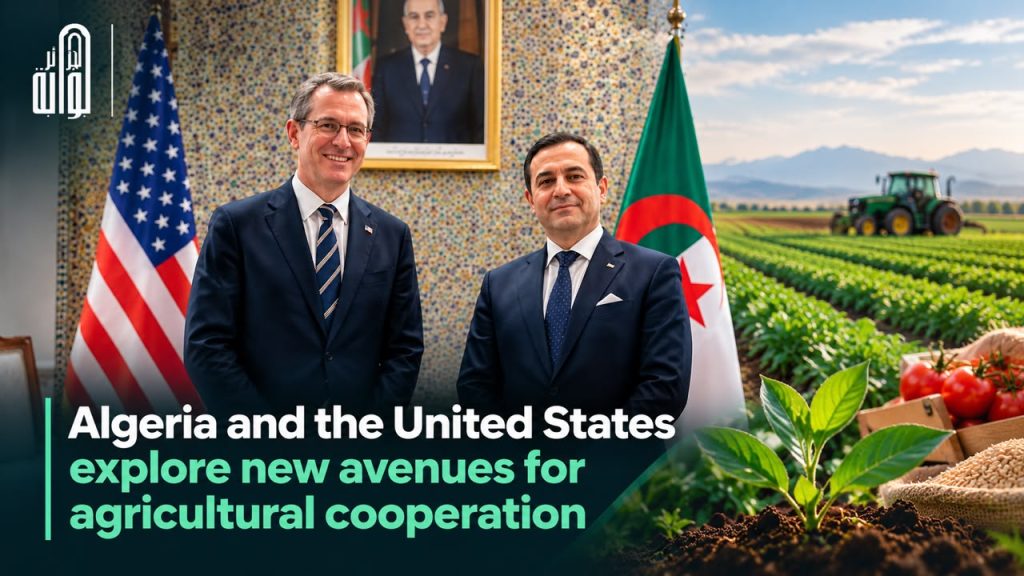
Algeria Gate: Algeria and the United States are exploring opportunities to strengthen agricultural cooperation, with a focus on exchanging expertise, sharing experiences and supporting the development of modern farming practices.

Algerian Minister of Agriculture Sidi Ali Khaldi met with Mark Shapiro, the United States’ chargé d’affaires, to discuss prospects for enhanced cooperation between the two countries in the agricultural sector.

The meeting provided an opportunity to exchange views on shared priorities, pool expertise and explore ways to expand bilateral collaboration in support of agricultural development.

Both sides also discussed opportunities to continue cooperation in the sector, reflecting the two countries’ interest in strengthening their partnership and promoting the exchange of knowledge and experience.

The discussions come as Algeria seeks to advance agricultural development and modernise farming practices through greater expertise-sharing and international cooperation.

#Agriculture#Algeria#Economy#USA
Author
Algeria
Share this post

AADL, LPP… Belaribi details housing plan for 2027

AADL, LPP… Belaribi details housing plan for 2027

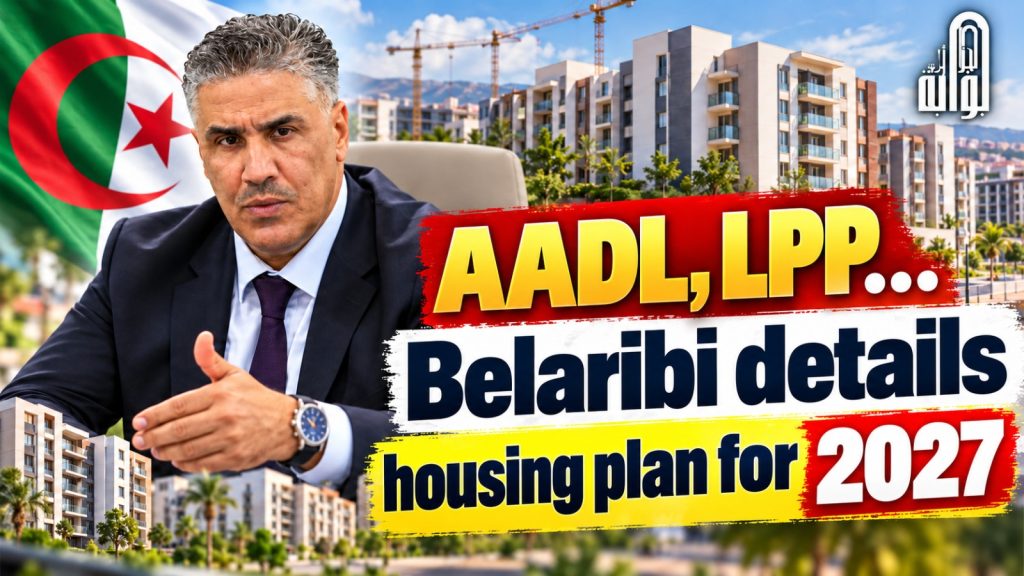
Algeria Gate: Algeria is planning a new housing programme comprising 360,000 units for 2027, with the AADL 3 rent-to-own scheme accounting for the largest share, according to figures presented by Minister of Housing, Urban Planning, the City and Land Use Planning Mohamed Tarek Belaribi.

The minister outlined the programme during a presentation before the Finance Committee of the People’s National Assembly (APN) as part of the review of the 2027 Finance Bill.

The proposed programme covers several housing schemes intended to address different needs across the country, including rent-to-own housing, rural housing assistance and public rental housing.

AADL 3 is set to receive 300,000 units, making it the main component of the planned programme. The allocation reflects the importance attached to the scheme amid strong demand from subscribers across Algeria.

Rural housing and social housing included

The 2027 programme also includes 30,000 rural housing assistance grants to support home construction in rural areas and help stabilise rural populations.

In addition, 20,000 plots of land are planned under the social housing subdivision scheme, while 10,000 public rental housing units will be allocated to eligible households under the social housing programme.

These measures form part of a broader approach aimed at addressing housing needs through different mechanisms, taking into account the circumstances of households and regional requirements.

Housing sector funding and ongoing projects

Belaribi also presented financial figures for the sector. As of September 30, recorded financial commitments had reached 248 billion Algerian dinars, against 317 billion dinars in allocated funding.

The figures highlight the financial scale of the housing programme and the resources committed to ongoing projects.

According to the minister’s presentation, the total number of housing units remaining to be completed stood at 1,061,420 as of December 31, 2025, reflecting the considerable volume of construction work still underway.

The planned 2027 programme is expected to add to this workload, with AADL 3 accounting for the bulk of the new units and other schemes continuing to address rural and social housing needs.

The figures were presented as part of the review of the 2027 Finance Bill before the APN’s Finance Committee.

#Algeria#Economy#Housing#LPP
Author