Monday, 2 November 2026 • 19:41 Algiers time
Algeria Gate
Share this post

Tebboune honours Algeria’s revolutionary martyrs

• Author: Y.R • 0 comments • 2 views
Tebboune honours Algeria’s revolutionary martyrs

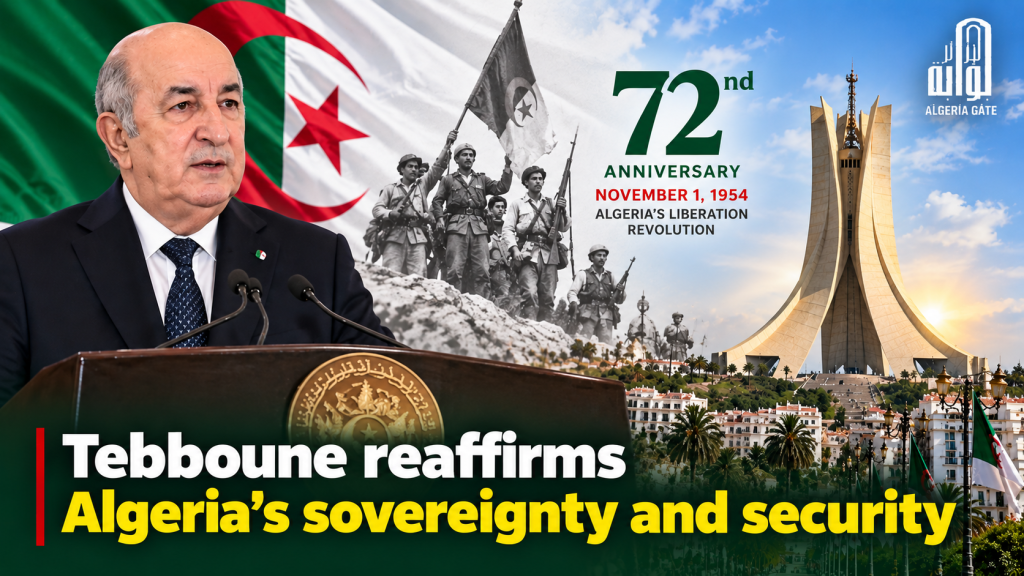
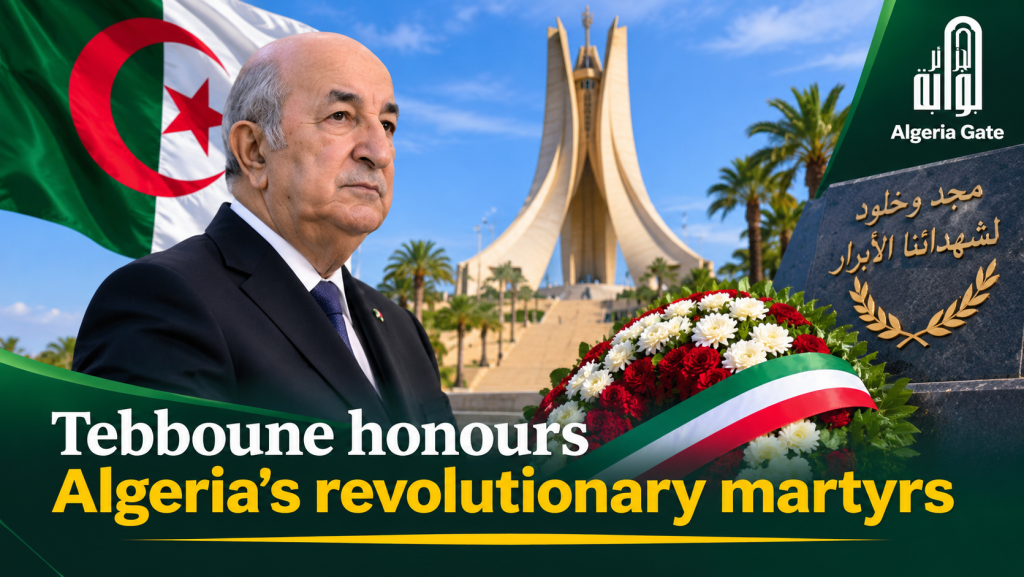
Algeria Gate: Algerian President Abdelmadjid Tebboune paid tribute to the martyrs of the country’s War of Independence on Sunday, 1 November 2026, during a solemn ceremony at the Martyrs’ Memorial (Maqam Echahid) in Algiers, marking the 72nd anniversary of the outbreak of the November 1, 1954 Revolution.

The President laid a wreath of flowers at the memorial dedicated to those who sacrificed their lives during Algeria’s struggle for independence from French colonial rule. He then recited Surah Al-Fatiha in remembrance of the fallen heroes, honouring their sacrifices and their contribution to the establishment of an independent Algerian state.

Algeria commemorates 72 years of revolution

The ceremony formed part of nationwide commemorations marking one of the most significant dates in Algeria’s modern history.

On 1 November 1954, the National Liberation Front (FLN) launched the armed struggle against French colonial rule, beginning a liberation war that would ultimately lead to Algeria’s independence on 5 July 1962.

The anniversary, widely commemorated as Revolution Day, represents a defining moment in the country’s national identity and its struggle for sovereignty.

The Martyrs’ Memorial, overlooking the capital, remains one of Algeria’s most prominent national landmarks. It serves as a symbol of remembrance and a tribute to the men and women who fought for the country’s freedom.

Preserving the legacy of the liberation struggle

President Tebboune’s participation in the commemorative ceremony reflects the importance attached by the Algerian state to preserving the memory of the liberation struggle and honouring those who contributed to national independence.

The annual observance also provides an opportunity to reaffirm the historical significance of the November Revolution and its enduring place in Algeria’s collective memory.

Seventy-two years after the beginning of the independence struggle, the anniversary continues to unite generations of Algerians around the principles of national sovereignty, sacrifice and remembrance.

The President’s tribute at Maqam Echahid underscores the continuing importance of the revolutionary legacy in Algeria’s national commemorations and public life.

#Algeria#President tebboune
Author

Leave a comment

Your email address will not be published. Required fields are marked *

Algeria
Share this post

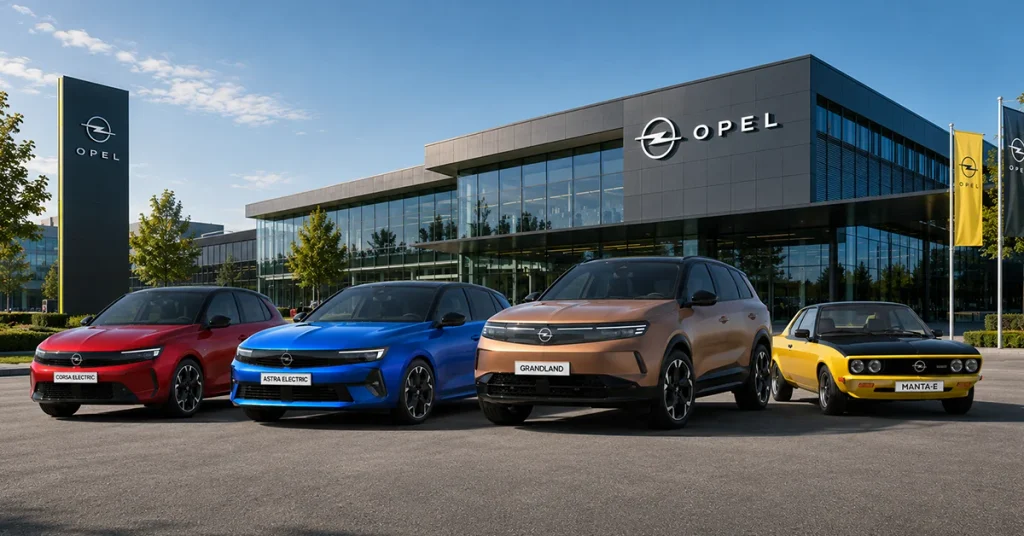
Opel plans major car and engine production in Algeria

Opel plans major car and engine production in Algeria

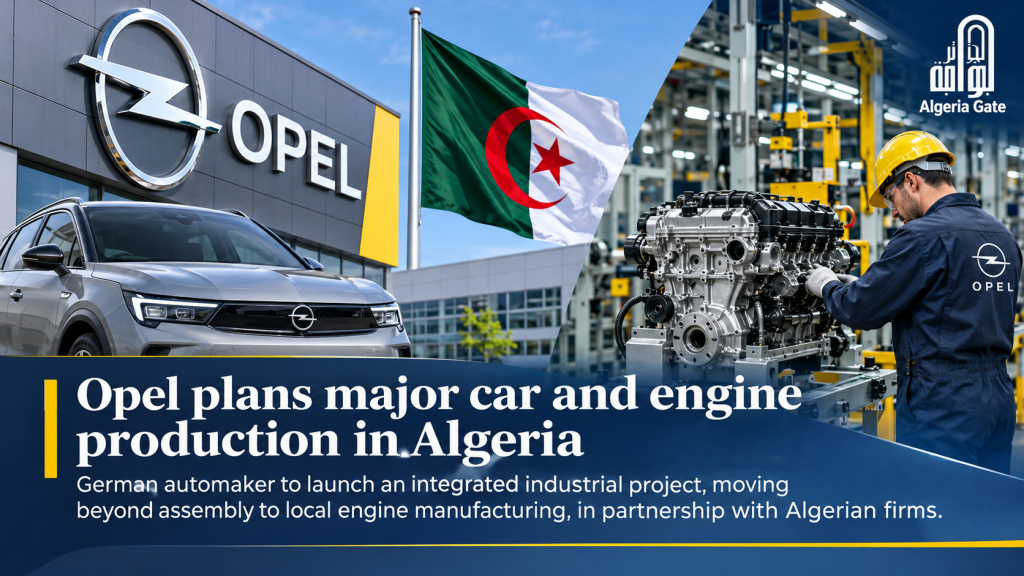
Algeria Gate: German automaker Opel is preparing to launch a major industrial project in Algeria, marking a significant step toward localizing vehicle and engine production. The initiative aims to move beyond traditional vehicle assembly toward manufacturing high-value mechanical components including enhanced modern features, strengthening Algeria’s automotive industry and expanding the European brand’s industrial presence in the country.

Opel CEO Florian Huettl confirmed during a press meeting on the sidelines of the Paris Motor Show in October 2026 that the company is developing an integrated industrial project in Algeria. The initiative includes a vehicle production facility and a dedicated engine manufacturing line, in cooperation with Algerian partners.

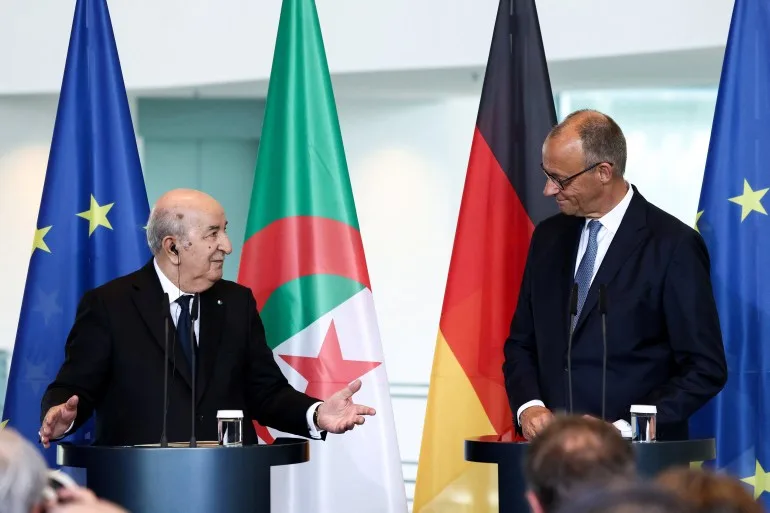
The announcement follows a memorandum of understanding signed on July 17, 2026, in Berlin between Opel Automobile GmbH and Algeria’s AGM Holding Group. The agreement was concluded during the Algerian-German Economic Forum, held alongside President Abdelmadjid Tebboune’s visit to Germany.

Opel plans major car and engine production in Algeria

According to Opel’s official statement cited in the report, the partnership aims to establish local production of the brand’s first engine manufactured in Algeria. This forms part of a broader strategy to develop domestic industrial capabilities, meet national market demand, and attract further investment in automotive manufacturing and component production.

Beyond assembly: Building an integrated automotive industry

The project extends beyond establishing a vehicle assembly plant. Opel intends to develop an industrial ecosystem encompassing engine manufacturing, supplier development, and the transfer of engineering and technical expertise.

These efforts are expected to increase local integration rates and encourage greater participation by Algerian companies in the mechanical manufacturing sector.

Engine production represents a particularly important industrial milestone, as engines are among the most technically complex automotive components. Their manufacturing requires precision equipment, specialized expertise, and rigorous quality-control systems.

Establishing these capabilities locally could create new opportunities for Algerian companies specializing in metalworking, mechanical engineering, and technical components.

The project gained further momentum in October following a visit to Algeria by Falk Zimpel, Opel’s director for the Middle East and Africa.

During his visit, Zimpel held working meetings with AGM Holding officials and technical teams involved in the initiative. Discussions focused on monitoring preparatory work and examining the technical requirements for implementing the partnership, signaling a gradual transition from preliminary agreements toward practical industrial preparations.

Opel plans major car and engine production in Algeria

Algeria seeks greater local automotive production

The initiative comes as Algeria seeks to establish a more integrated automotive industry, prioritizing domestic manufacturing, higher local content, and the development of a national supplier network rather than relying primarily on imported components for assembly.

The Opel project also reflects expanding industrial cooperation between Algeria and Germany, particularly in technology and mechanical engineering.

Through this partnership, Opel aims to capitalize on the potential of the Algerian market while establishing a long-term industrial presence outside Europe.

Regarding production priorities, Huettl explained that the initial phase would focus on meeting demand in the Algerian market. Export opportunities could be considered at a later stage, depending on the development of manufacturing capacity and the availability of suitable conditions.

The vehicle models to be produced locally have not yet been finalized. Opel is evaluating several options, including family cars and higher-segment vehicles, but no definitive decision has been announced.

The company has also not disclosed the total investment value, the expected annual engine production capacity, or a final timetable for the start of commercial manufacturing.

A strategic investment in Algeria’s industrial future

As part of the Stellantis automotive group, Opel aims to establish an industrial base in Algeria capable of supporting vehicle production and developing domestic engine manufacturing.

The initiative could contribute to job creation, technical skills development, and technology transfer while strengthening Algeria’s position within international automotive value chains.

Beyond introducing another automotive brand to the Algerian market, the project offers an opportunity to develop a more comprehensive mechanical manufacturing industry.

Its long-term impact will depend on successfully transforming the proposed engine manufacturing facilities into operational production lines, supported by growing participation from Algerian suppliers and industrial companies.

If implemented successfully, Opel’s investment could mark an important milestone in Algeria’s ambition to become a regional automotive manufacturing hub.

#Algeria#Cars#Germany
Author
Algeria
Share this post

Mobilis launches M-View and announces 35% 5G coverage in Algeria

Mobilis launches M-View and announces 35% 5G coverage in Algeria

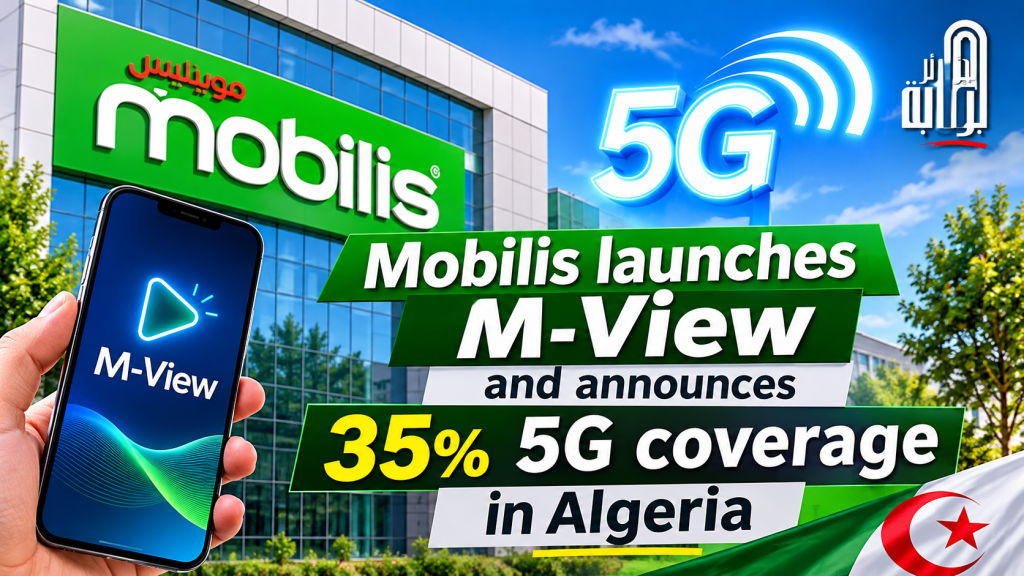
Algeria Gate: Algerian mobile operator Mobilis has launched M-View, a new service that transforms the waiting time before a phone call is answered into an interactive visual experience. The announcement coincides with the expansion of the company’s fifth-generation (5G) network and the development of its digital services.

The launch was announced during a ceremony held at the El Aurassi Hotel in Algiers, under the supervision of Mobilis CEO Chaouki Boukhazani, ahead of the 72nd anniversary of the outbreak of Algeria’s National Liberation Revolution.

M-View introduces a new calling experience

M-View is the main innovation unveiled by Mobilis. The service allows visual content to appear on the caller’s phone screen while waiting for the recipient to answer, offering an alternative to traditional audio ringback tones.

The service targets both individual users and businesses, with different visual content available through its dedicated online platform, mview.mobilis.dz.

The launch marks another step in Mobilis’s strategy to expand value-added services and integrate digital solutions into the telecommunications experience.

Mobilis Unit reaches 2.5 million subscribers

On the commercial front, Mobilis announced that approximately 2.5 million subscribers are using its Mobilis Unit unified credit system, which underpins its Revolution offers.

The system allows customers to use a single credit balance for calls, text messages and internet access. Consumption is calculated at five units per minute of calls, 10 units per SMS and 50 units per gigabyte of data.

The offers also include benefits related to carrying over unused units and renewal bonuses, subject to the applicable conditions.

Mobilis is also continuing to develop its digital services through the Mobilis Care application, which enables subscribers to manage their mobile lines and access various services remotely, reducing the need to visit commercial agencies.

5G coverage reaches 35%

Regarding network infrastructure, Boukhazani announced that Mobilis’s 5G coverage has reached 35%, with 3,800 sites reported as part of the network’s deployment assessment.

He also stated that Mobilis ranked first in the evaluation of bids for licences to establish and operate 5G networks in Algeria, highlighting the frequency resources available to the operator to strengthen its network capacity.

The expansion of 5G remains a key component of Mobilis’s strategy. The technology offers higher data transmission speeds, lower latency and greater capacity to support intensive internet use and digital services.

Beyond improving the smartphone experience, 5G is expected to support businesses’ digital transformation and facilitate the development of new applications across industry, services and the digital economy.

A strategy focused on digital transformation

Addressing the ceremony, Boukhazani linked the significance of the November 1 anniversary to the company’s future ambitions. He reaffirmed Mobilis’s commitment to providing customers with greater freedom of use and technological choice while continuing to improve service quality.

He also stressed the importance of continuously evaluating performance and addressing shortcomings, noting the company’s willingness to identify weaknesses and work to overcome them.

The announcements reflect Mobilis’s efforts to combine improvements to traditional telecommunications services with innovative digital solutions and the expansion of its 5G infrastructure.

Through M-View, the wider adoption of Mobilis Unit and continued 5G deployment, the operator aims to strengthen its position in Algeria’s telecommunications market and respond to the sector’s rapid technological changes.

#Algeria#Mobilis
Author
Algeria
Share this post

Algeria’s Skikda port hits historic container milestone

Algeria’s Skikda port hits historic container milestone

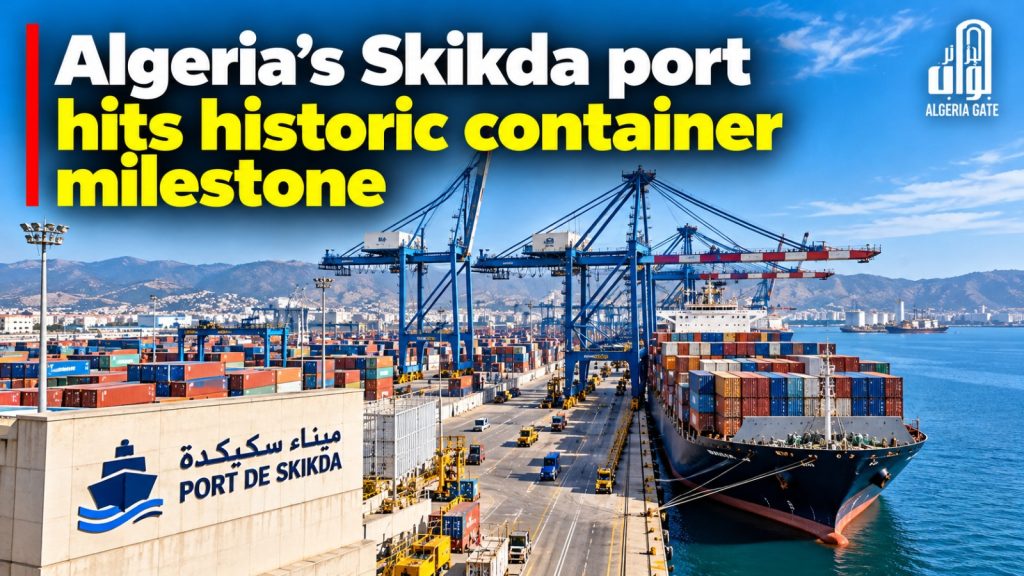
Algeria Gate: Algeria’s Port of Skikda has achieved a historic milestone, handling more than 200,000 twenty-foot equivalent units (TEUs) between January and October 2026, marking the first time the eastern Algerian port has crossed this threshold.

The achievement was announced by the port’s commercial director, Ilyas Manea, according to the Algerian Press Service (APS), highlighting improvements in operational efficiency, cargo handling and logistics capabilities.

The milestone represents a significant development for one of Algeria’s strategic maritime facilities, reinforcing its role in supporting international trade and the country’s broader economic diversification efforts.

A record-breaking performance for Skikda

The port’s latest figures show that container traffic exceeded 200,000 TEUs during the first ten months of 2026, setting a new record in its history.

The TEU, or twenty-foot equivalent unit, is the internationally recognized measurement used to calculate container traffic at seaports.

According to the port’s management, the achievement reflects ongoing efforts to reorganize cargo-handling operations, improve terminal productivity and optimize the use of port infrastructure.

These operational improvements have helped the facility accommodate greater cargo volumes while strengthening its ability to respond to growing commercial demand.

The record also illustrates the importance of modernizing Algeria’s maritime infrastructure to support increasingly complex international supply chains.

A strategic gateway for eastern Algeria

Located on Algeria’s Mediterranean coastline, the Port of Skikda serves as an important commercial gateway for industrial enterprises, manufacturers and economic operators across the country’s eastern regions.

Its activities contribute to the movement of imported goods, industrial materials and Algerian products destined for international markets.

Beyond container handling, the port plays a role in supporting Algeria’s non-hydrocarbon exports, particularly construction materials.

Skikda has handled shipments of cement and clinker to overseas destinations, including Italy and Libya, reflecting efforts to expand Algeria’s export presence beyond traditional energy products.

The growth of these activities is particularly significant as Algeria seeks to diversify its economy and increase the contribution of manufacturing and industrial exports to national trade.

Algeria’s ports gain momentum

Skikda’s achievement comes amid broader efforts to improve the performance of Algeria’s maritime transport sector.

Other national ports have also reported progress in container-handling operations.

The Port of Annaba, another major maritime facility in eastern Algeria, surpassed the 200,000-container threshold in December 2025, highlighting improvements across the country’s port network.

These developments reflect the growing importance of maritime infrastructure in supporting Algeria’s industrial expansion and international commercial ambitions.

Modern ports are essential for reducing transport bottlenecks, facilitating imports and exports, and improving the competitiveness of businesses operating in domestic and international markets.

Boosting trade and logistics efficiency

Higher container-handling capacity can generate important economic benefits, particularly when accompanied by improvements in transportation networks, storage facilities and customs procedures.

More efficient port operations can help reduce vessel waiting times, accelerate cargo movements and lower logistics costs for importers and exporters.

For Algerian companies, these improvements could translate into more reliable supply chains and stronger access to international markets.

However, sustaining this progress will require continued investment in port equipment, digital management systems and connections between maritime facilities and inland transportation networks.

The development of integrated logistics services will also be essential to ensuring that growing container volumes translate into long-term economic gains.

A milestone for Algeria’s maritime ambitions

By surpassing 200,000 TEUs in the first ten months of 2026, the Port of Skikda has strengthened its position within Algeria’s maritime logistics network.

The achievement highlights the potential of improved port management and infrastructure modernization to support higher trade volumes and more efficient commercial operations.

As Algeria continues working to expand non-hydrocarbon exports and strengthen its international trade connections, Skikda’s record represents another step toward developing a more competitive national maritime sector.

The challenge now will be to build on this performance through sustained investment, operational improvements and closer integration between ports, industries and transportation networks.

#Algeria#Economy
Author