Sunday, 25 October 2026 • 19:09 Algiers time
Algeria Gate
Share this post

Ben Zayed Scandal: The Warning He Gave Netanyahu Before the Al-Aqsa Flood

• Author: Lys Iwannughen • 0 comments • 37 views
Ben Zayed Scandal: The Warning He Gave Netanyahu Before the Al-Aqsa Flood

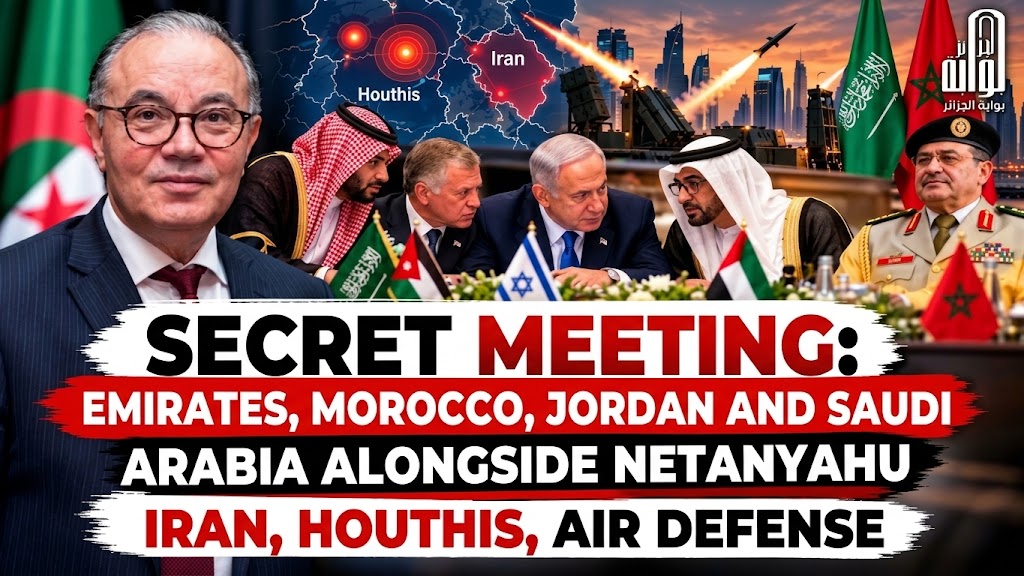
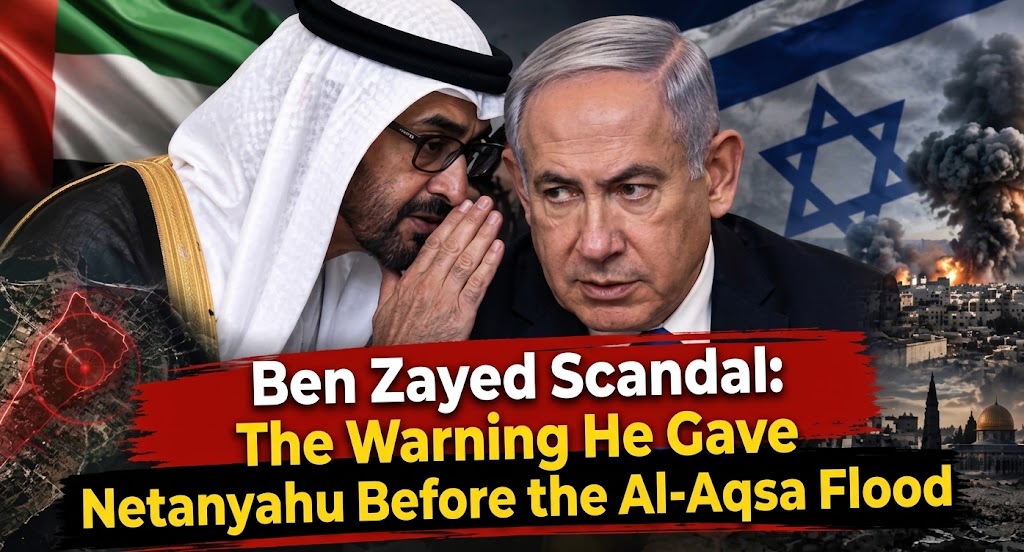
Algeria Gate: The Hebrew newspaper Haaretz revealed this Tuesday that the occupation prime minister, Benjamin Netanyahu, received a warning from UAE President Mohammed bin Zayed a week and a half before the “Al-Aqsa Flood” operation on October 7th 2023.
Ben Zayed Scandal: The Warning He Gave Netanyahu Before the Al-Aqsa Flood

According to details published by the newspaper, in the final days of September 2023; i.e., a week and a half before the operation, Netanyahu received a phone call from Mohammed bin Zayed that lasted 45 minutes. During that call, bin Zayed warned Netanyahu of the intentions of the late Hamas political bureau chief Yahya Sinwar to launch a major operation by Hamas against Israel. The paper said that despite this, “Netanyahu did nothing.” The extensive investigation was conducted for a book titled Hostages (the Israeli captives): 843 days of neglect, which effectively revealed a series of Netanyahu’s failures before the operation occurred.

According to the newspaper, bin Zayed, who has close relations with Isaac Herzog, the Zionist president, spoke in the days preceding the outbreak of the war. According to Herzog: “The UAE president has always conveyed messages that there is a need to calm the situation,” noting that “he sent a special envoy to Israel who met Netanyahu… as if he felt that the region was about to explode.”
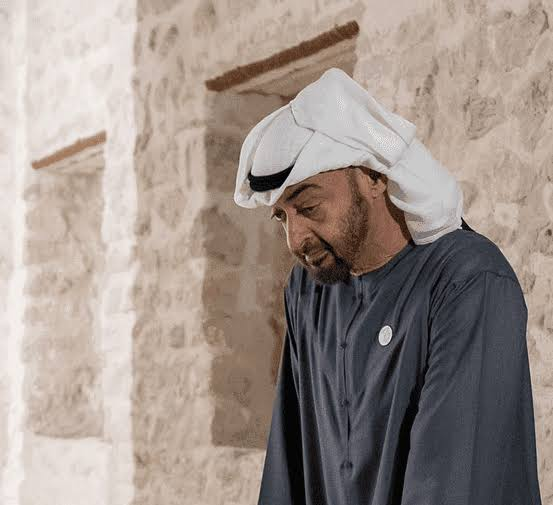
Ben Zayed Scandal: The Warning He Gave Netanyahu Before the Al-Aqsa Flood

The details also state that bin Zayed urged Netanyahu to “take the warning seriously.” However, in a manner that aroused his astonishment, the Zionist prime minister’s response was “relatively calm” upon hearing the information and warnings; he said that “Hamas intends to move in the West Bank” and then “reassured bin Zayed that Israel is prepared for all scenarios.”


#Israel#Palestine#UAE
Author
Lys Iwannughen
View my articles

Leave a comment

Your email address will not be published. Required fields are marked *

Hebrew press
Share this post

Sara Netanyahu insults Moroccans: “You are a neanderthal people!”

Sara Netanyahu insults Moroccans: “You are a neanderthal people!”

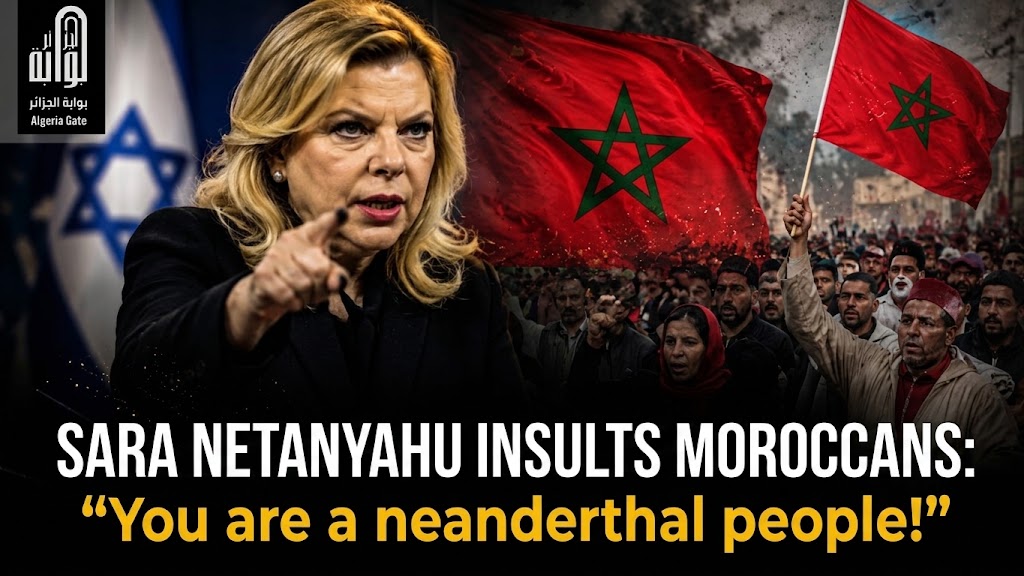
Algeria Gate: The Zionist newspaper Yedioth Ahronoth revealed details of a new lawsuit filed by a domestic worker of Moroccan origin against the Israeli Prime Minister’s Office. He accused Sara Netanyahu, wife of Prime Minister Benjamin Netanyahu, of insulting and mistreating him during his employment in the family home, describing Moroccans as “a neanderthal people.”

According to the lawsuit details, Rami Ben Hamou, who worked for more than ten years in the Israeli Prime Minister’s Office and the Netanyahu family home, filed a lawsuit seeking compensation of 450,000 shekels over what he described as “extremely harsh treatment.”

The lawsuit stated that Ben Hamou worked in the Prime Minister’s home between March 2023 and December 2025. He would start work around 7:30 a.m. and sometimes continue until late at night or even dawn, averaging between 60 and 80 overtime hours per month; a scene that recalls the deeply rooted Moroccan loyalty to the Zionists.

The case file, as reported by the newspaper, also included accusations that Sara Netanyahu directed insulting remarks at the Moroccan worker, including offensive questions about the role of Moroccans and their service to others, as well as remarks that belittled him and his work, such as: “Were Moroccans created to be servants for others? Don’t you know how to do anything except prepare tea?”

This case comes at a time when the Moroccan Makhzen regime is seeking to advance the normalization path it has adopted, without any regard for the Moroccan people, who are subjected to humiliation, displacement, and deprivation of the most basic rights.

#Israel#Morocco
Author
Lys Iwannughen
View my articles
African coast
Share this post

Ceuta Drowns in Humanitarian Crisis While Official Morocco Exports Its Youth Instead of Employing Them

Ceuta Drowns in Humanitarian Crisis While Official Morocco Exports Its Youth Instead of Employing Them

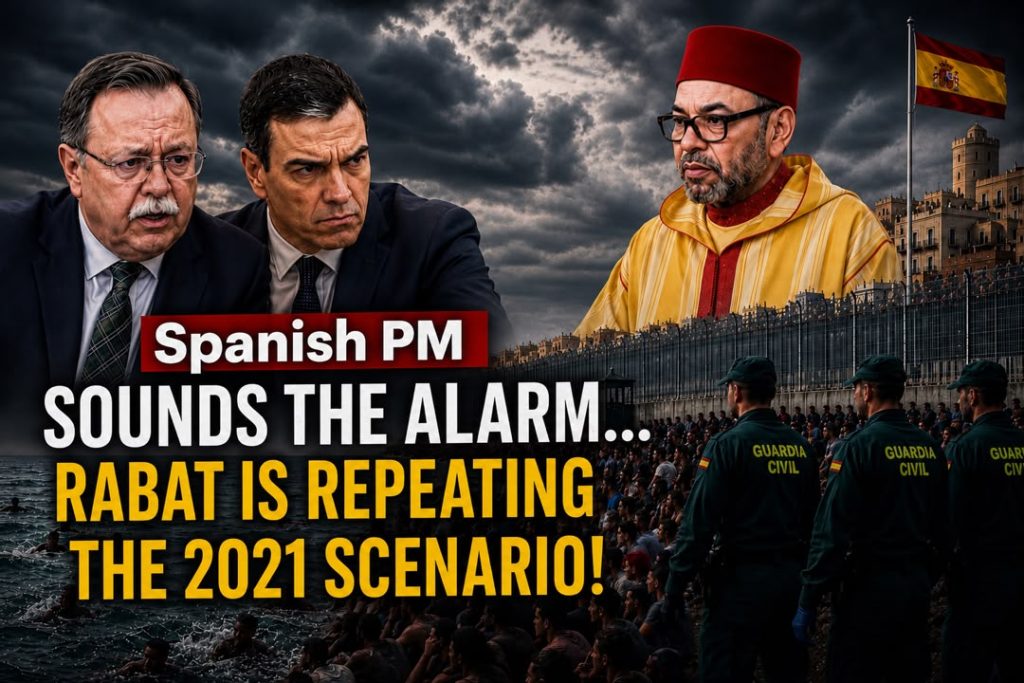
Ceuta is facing unprecedented security alert after more than 1,500 Moroccan migrants swam into the Spanish enclave within just days a scene the city’s governor, Juan Jesús Vivas, bluntly called “a full-blown humanitarian and social emergency.” The official numbers no longer hide one uncomfortable truth: Morocco’s youth are fleeing their country with their bodies before the state can exhaust what’s left of them.

https://twitter.com/algatedzEng/status/2082827309325631671?s=20

Numbers That Leave No Room for Spin

Rights organizations have documented 2,826 arrivals in Ceuta since the start of 2026 alone a 149% surge over the same period last year, with land and sea routes toward Ceuta and Melilla combined jumping 140%. The human toll: between 17 and 26 confirmed drowning deaths this year, according to multiple sources a figure almost certainly lower than reality.

Ceuta’s own governor warned that if the current pace continues, the city risks a repeat of the May 2021 chaos. Reception centers, he said, are “completely overwhelmed and unable to take in more.” Yet Madrid refused Ceuta’s request to declare a national state of emergency, insisting the migrant surge poses no “threat to national security” a statement that exposes a jarring gap between the scale of the humanitarian catastrophe and the scale of the official response.

The Numbers Rabat’s Rhetoric Won’t Confront

While Spain’s Interior Ministry keeps issuing statements praising “ideal cooperation” with Rabat on returns, the essential question goes unanswered: why are thousands of young Moroccans choosing to risk their lives swimming across the Strait of Gibraltar rather than staying home?

https://twitter.com/algatedzEng/status/2082821383499792549?s=20

The answer sits in the Moroccan state’s own statistics agency, the High Commission for Planning. Youth unemployment for ages 15–24 is nearing 40%. Urban unemployment tops 17%. And the most damning figure of all: over 82% of Moroccan households report their living conditions have deteriorated in recent years. These aren’t opposition talking points or hostile propaganda they’re the Moroccan state’s own numbers.

This is the backdrop producing the scenes at Fnideq and Belyounech: minors and young adults abandoning school because there is no job waiting for them, then turning to the sea as the only “exit” from a reality where the state has shut every other door.

A Policy That Manages the Crisis Instead of Fixing Its Roots

Rabat treats migration as a bargaining chip with Madrid and Brussels far more than it treats it as a domestic development failure. Today’s security coordination between Morocco and Spain to return “all migrants who entered Ceuta” addresses the symptom, not the cause it sends these young people straight back into the same economic and social conditions that pushed them to risk their lives in the first place.

While the official establishment celebrates its national milestones, the reality on the streets of Fnideq, Belyounech, and Tetouan remains worlds away from the rhetoric of a “rising Morocco.” The gap between the official poverty and unemployment figures and the state’s narrative of ascent is the exact same gap these young people swim across every week.

The Ceuta crisis is not a passing migration story. It is the invoice for development policies that never reached the margins a bill now being paid in the bodies of young people who would rather risk drowning than face a future with no horizon.

Author
بوابة الجزائر
View my articles
China
Share this post

UAE Withdrawal from OPEC+ A Sovereign Move or a “Last Pressure Card” in a High-Risk Moment?

UAE Withdrawal from OPEC+ A Sovereign Move or a “Last Pressure Card” in a High-Risk Moment?

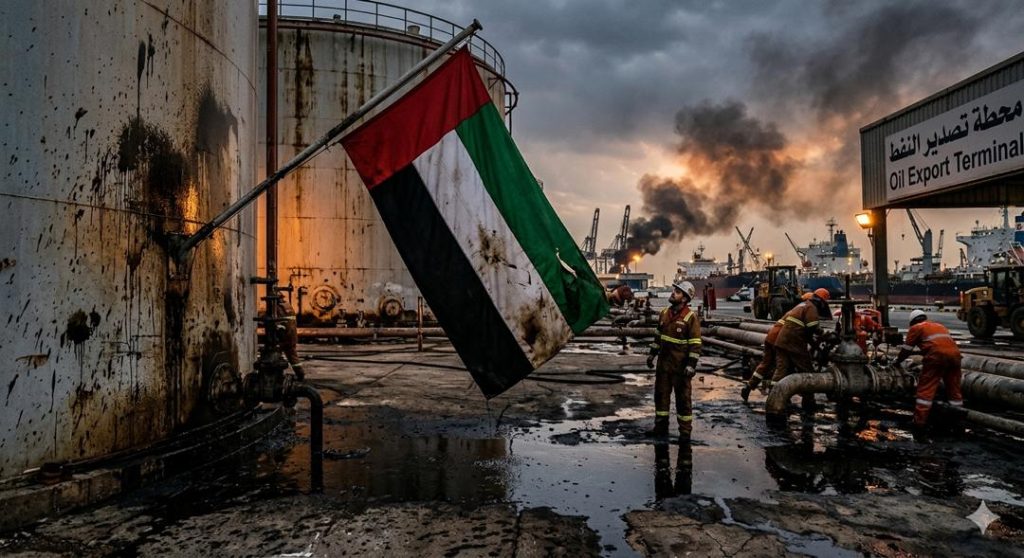
The UAE’s announcement of its withdrawal from OPEC and OPEC+ starting May 1, 2026 cannot be treated as a technical adjustment or a routine shift in oil policy. At its core, it is a major move by a state of the UAE’s scale an important global energy player that now appears to be gambling with its tools of influence rather than reinforcing them.

Exiting OPEC+ effectively means stepping away from one of the most important collective frameworks in the oil market, in favor of a fully exposed individual path subject to global price volatility and major alliances. In the energy world, size alone is not enough it is how that size is managed that determines whether it translates into influence or vulnerability.

The message sent to markets is not neutral
a major supplier choosing to break from a collective framework when conditions shift. This is not only read as flexibility, but also as unpredictability in decision-making behavior. In a market built on long-term trust, such signals can trigger serious reassessments from importers.

In this context, the move can be interpreted as a “last pressure card” in a complex regional environment. However, the problem is that this card is being played at a time when strategic room for maneuver is narrowing rather than expanding.

Over the medium term, the risk is not limited to immediate reactions, but to the cumulative perception effect. Decisions that are increasingly seen as abrupt or unilateral may gradually shape a broader narrative about the country’s economic policy behavior. Over time, such perceptions can directly affect trust, investment confidence, and positioning within the global energy market.

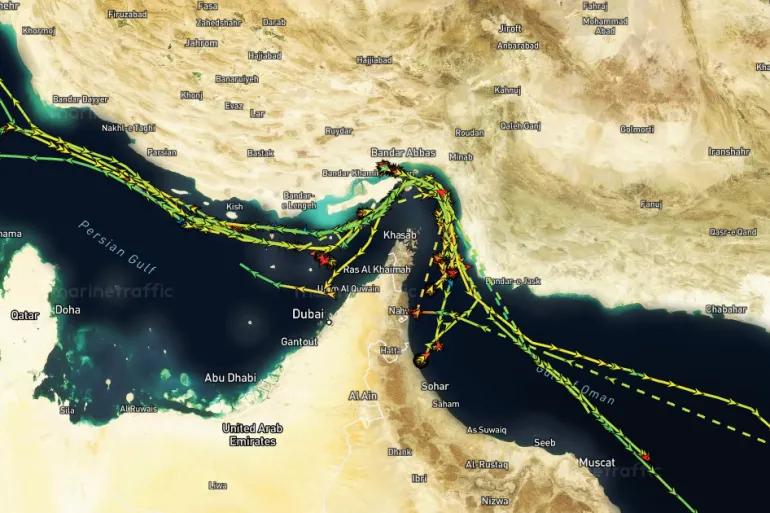
Geopolitically, the Strait of Hormuz remains a permanent pressure point that cannot be ignored. While Article 38 of the UN Convention on the Law of the Sea (UNCLOS) guarantees the theoretical right of transit passage, realities in the Gulf are governed more by power dynamics than legal texts.

UAE Withdrawal from OPEC+ A Sovereign Move or a “Last Pressure Card” in a High-Risk Moment?

Iran, in multiple crises, has demonstrated its ability to use the Strait as leverage through threats or the seizure of tankers, reinforcing the idea that “risk neutralization” in the region is largely theoretical rather than practical.

Within the Gulf itself, withdrawing from OPEC+ also implies a recalibration of coordination with Saudi Arabia, a central pillar of oil market stability. This is not a minor policy divergence, but a sensitive shift in the balance of roles within one of the world’s most important energy-producing regions

Ultimately, between the discourse of “sovereignty” and the realities of geography and markets, the UAE appears to be entering a phase of high-risk decision-making one that may offer short-term leverage but could carry long-term consequences for trust, stability perception, and strategic positioning in global energy markets.

Author
بوابة الجزائر
View my articles