Sunday, 22 November 2026 • 21:06 Algiers time
Algeria Gate
Share this post

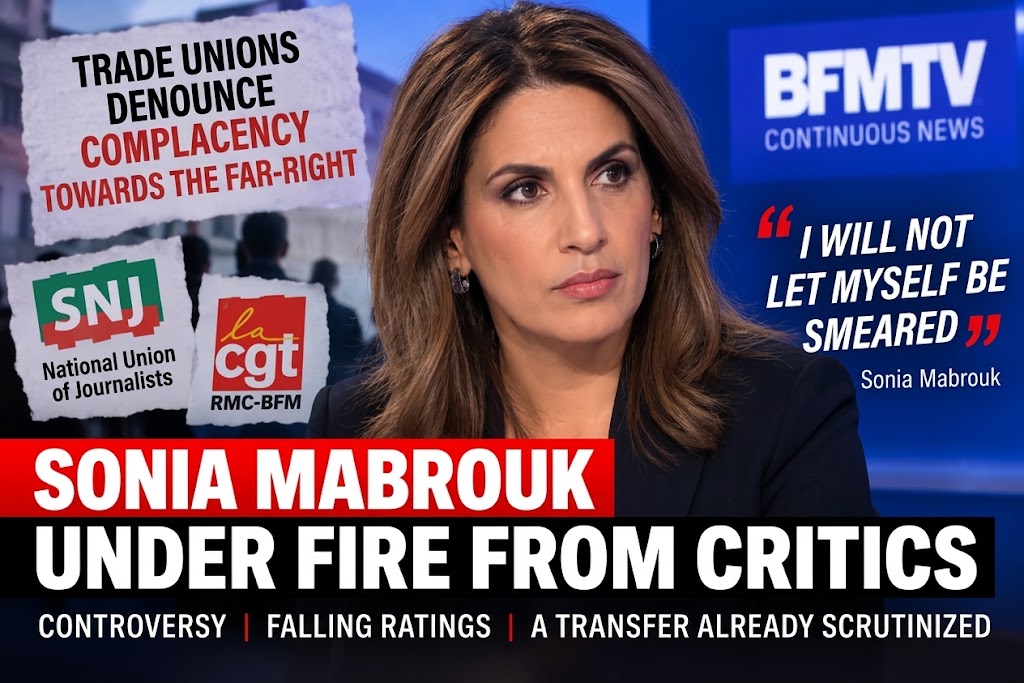
Sonia Mabrouk Strikes Back Amid Backlash: “I Refuse To Be Smeared”

• Author: Lys Iwannughen • 0 comments • 40 views
Sonia Mabrouk Strikes Back Amid Backlash: “I Refuse To Be Smeared”

Algeria Gate: Having arrived at BFM TV on August 24th 2026 from CNews, Sonia Mabrouk already finds herself, less than three weeks after her debut on the channel, at the center of an internal controversy that is taking an increasingly heated turn.

The Unions Accuse Her Program of Complacency Toward the Far Right

In a statement released on Thursday, September 10th, the National Union of Journalists (SNJ) and the CGT of RMC-BFM strongly attacked the journalist and the editorial line of her daily program 100 % Mabrouk. The two organizations particularly reproach her for having allowed MEP Sarah Knafo to develop, without real contradiction, an argument distinguishing “native” French people from “branch” French people during an interview broadcast on 7 September; an expression the unions qualify as racist and far-right, judging that it occupied a disproportionate place within the 45-minute interview.

The SNJ and the CGT more broadly denounce interviews judged too little contradictory, also citing the one granted to Bruno Retailleau, as well as a presence judged too significant of speakers classified as far-right. According to their own count, personalities from this current would represent 25.5 % of the interventions in Sonia Mabrouk’s program between August 28th and September 8th, compared with 11.8 % in the program of Alain Marschall and Olivier Truchot, and 4.6 % in that of Apolline de Malherbe. The unions finally regret the absence of a left-wing columnist who would balance the regular presence of Robert Ménard on the set.

A Direct Riposte from the Journalist

Sonia Mabrouk did not take long to react. On Friday, September 11th, on the social network X, she firmly responded to the accusations, declaring that she would not let herself be smeared. The management of BFM TV for its part took up her defense, affirming that Sonia Mabrouk respected pluralism, while recalling that a continuous news channel adapts permanently to current events and that its programming is liable to evolve.

An Audience That Struggles to Take Off

In terms of audience figures, Sonia Mabrouk’s beginnings in her new slot, between 6:45 p.m. and 9 p.m., remain difficult. Since her arrival at the end of August, her program has stagnated in third place in this time slot, far behind Face à l’info on CNews and its equivalent on LCI, despite heavyweight guests intended to relaunch the dynamic. Competition also remains very strong in access prime time, where Pascal Praud retains his leadership and David Pujadas maintains his position on LCI.

A Transfer Already Closely Scrutinized

This tense climate fits into the continuity of the debates that accompanied, from the announcement of her transfer, the arrival of this former CNews figure on BFM TV. Unions of the channel had already criticized, ahead of her debut, the profile of her first guests, seeing in it a shift of the editorial line of the access slot toward more politically marked personalities.


#France#Sonia Mabrouk
Author
Lys Iwannughen
View my articles

Leave a comment

Your email address will not be published. Required fields are marked *

French press
Share this post

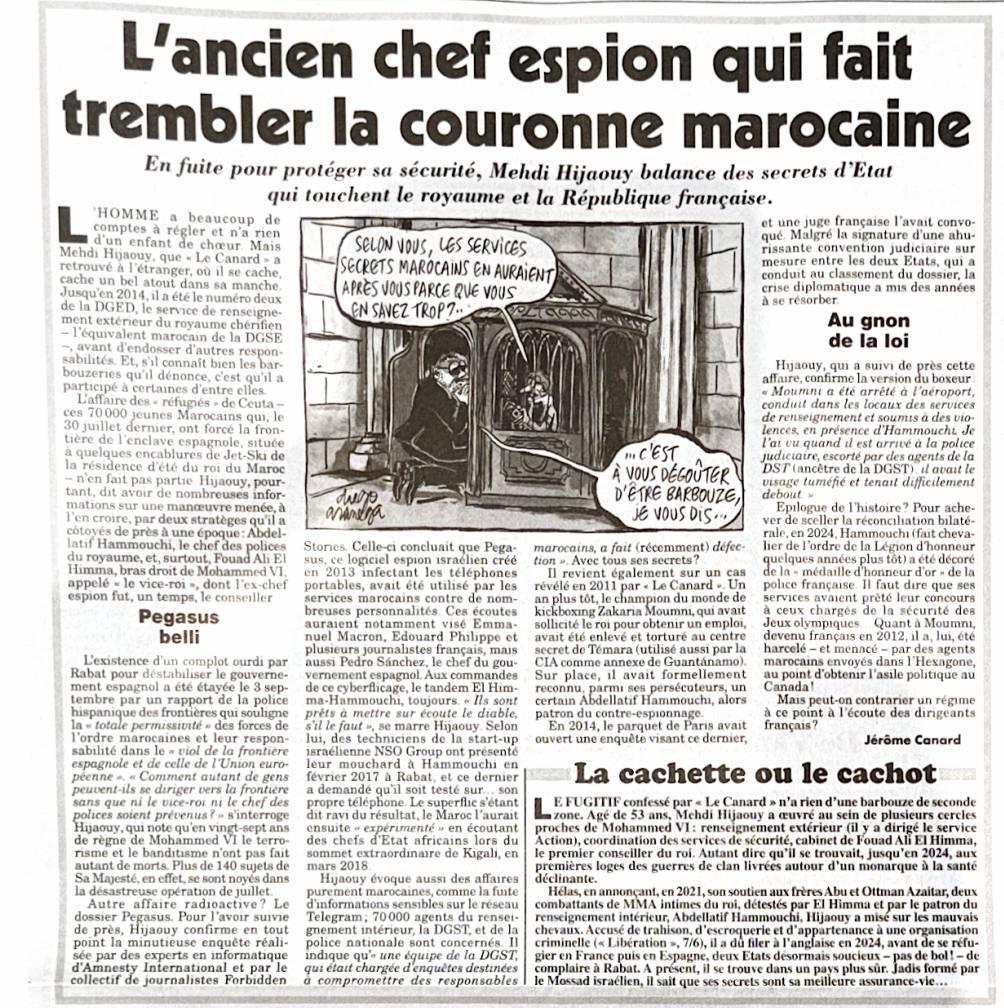
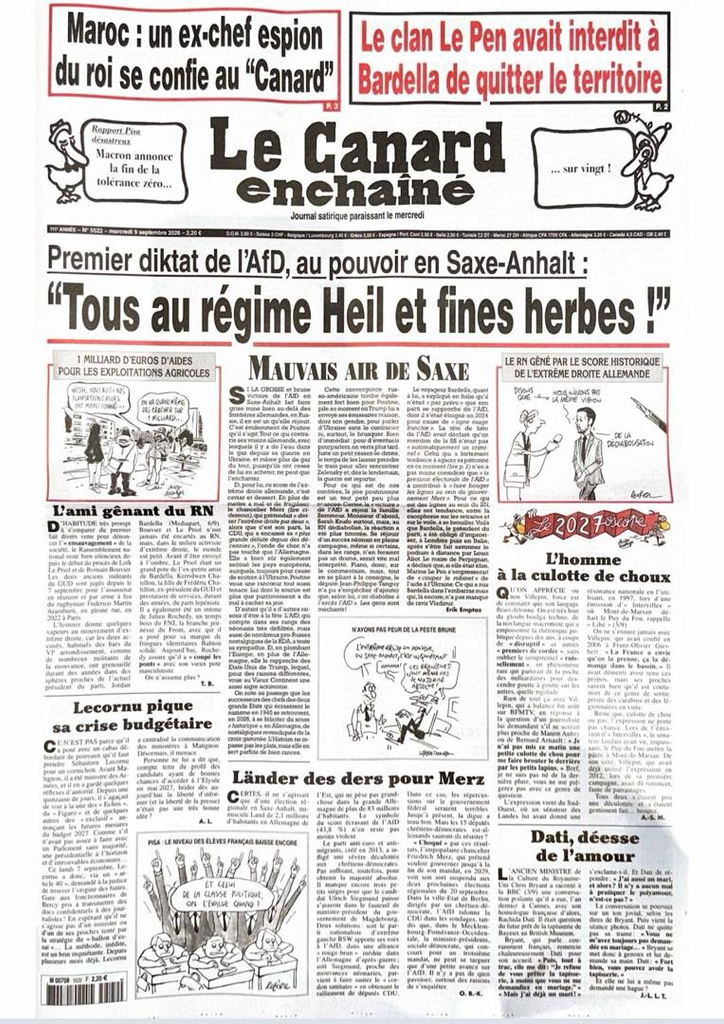
Morocco Spied on Arab and African Presidents! Mehdi El Hajjawi Airs Moroccan Intelligence’s Dirty Laundry

Morocco Spied on Arab and African Presidents! Mehdi El Hajjawi Airs Moroccan Intelligence’s Dirty Laundry

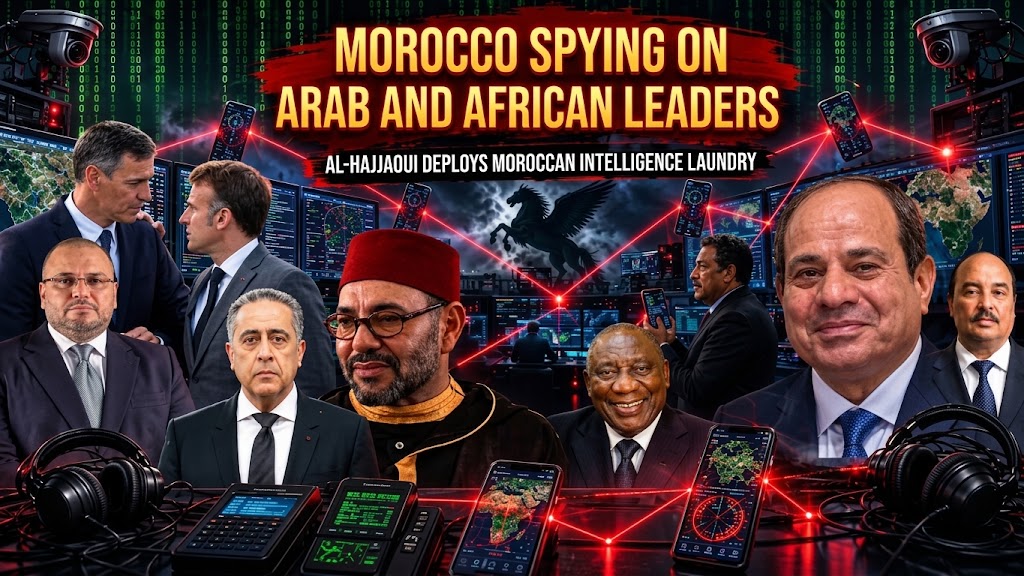
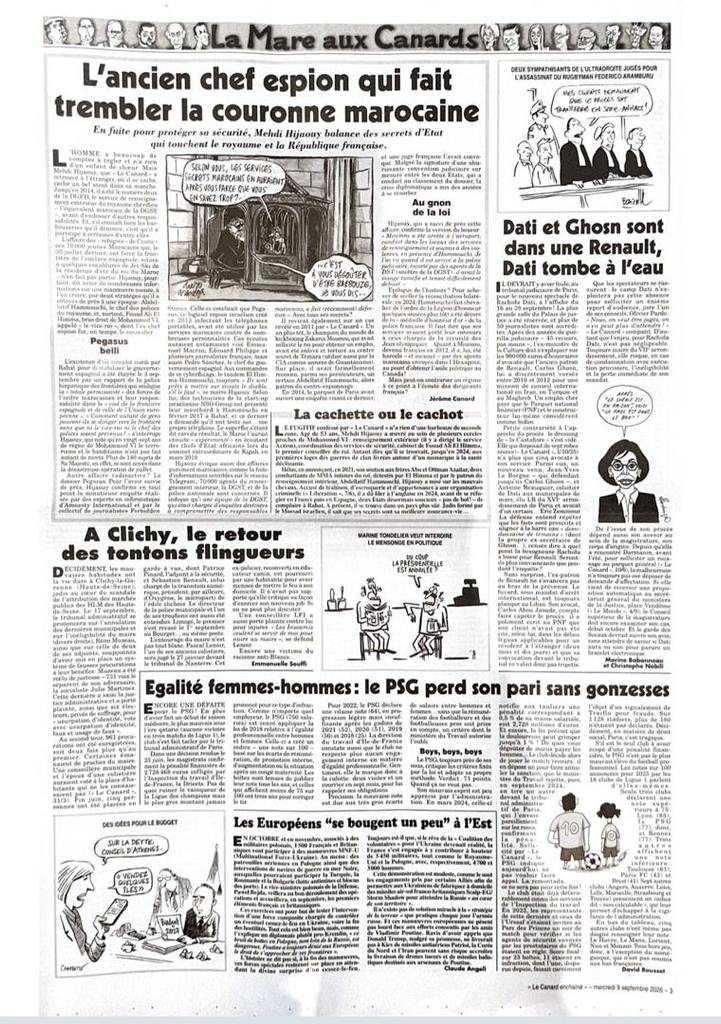
Algeria Gate: The precious catch and vault of Moroccan intelligence secrets is successively revealing the scandals of the black box of the Moroccan Makhzen regime. Through the Israeli Pegasus program, the former number-two man in Moroccan external intelligence, Mehdi El Hajjawi, told the newspaper Le Canard enchaîné that Morocco spied on African heads of state, French President Emmanuel Macron, and Spanish Prime Minister Pedro Sánchez, confirming that Abdellatif Hammouchi was the first to test the Israeli program on his own phone.

The fugitive former spy who shook the throne of the “gang kingdom,” in another serious matter, aired the dirty laundry of the Pegasus file, confirming with precision the investigation conducted by computer experts from Amnesty International and the Forbidden Stories journalists’ group. They concluded that this Israeli spyware program, created in 2013 to infiltrate mobile phones, was used by Moroccan agencies against numerous figures. According to him, these wiretapping operations targeted Emmanuel Macron, Édouard Philippe, and several French journalists, as well as Spanish Prime Minister Pedro Sánchez.
Morocco Spied on Arab and African Presidents! Mehdi El Hajjawi Airs Moroccan Intelligence’s Dirty Laundry

At the head of the cyber-espionage network was always the Hammouchi-El Himma duo, “ready to turn the devil into an angel if the interest required it,” as El Hajjawi puts it.

Morocco Spied on Arab and African Presidents! Mehdi El Hajjawi Airs Moroccan Intelligence’s Dirty Laundry

El Hajjawi says that technicians from the Israeli startup NSO Group personally briefed Hammouchi on the program in February 2017 in Rabat, and the latter then requested to test it… on his own phone. Impressed by the result, Morocco subsequently tested the program by wiretapping some African heads of state on the sidelines of the Kigali summit in March 2018.

Morocco Spied on Arab and African Presidents! Mehdi El Hajjawi Airs Moroccan Intelligence’s Dirty Laundry

El Hajjawi also recalls other espionage cases, including the leakage of sensitive information via the Telegram application: 70,000 members of internal intelligence, the General Directorate of Territorial Surveillance (DGST), and the national police were affected. He notes that “a team assigned to the DGST was tasked with investigating the security breach of Moroccan officials and had recently announced its defection… with all its secrets!”

#Morocco
Author
Lys Iwannughen
View my articles
Algeria
Share this post

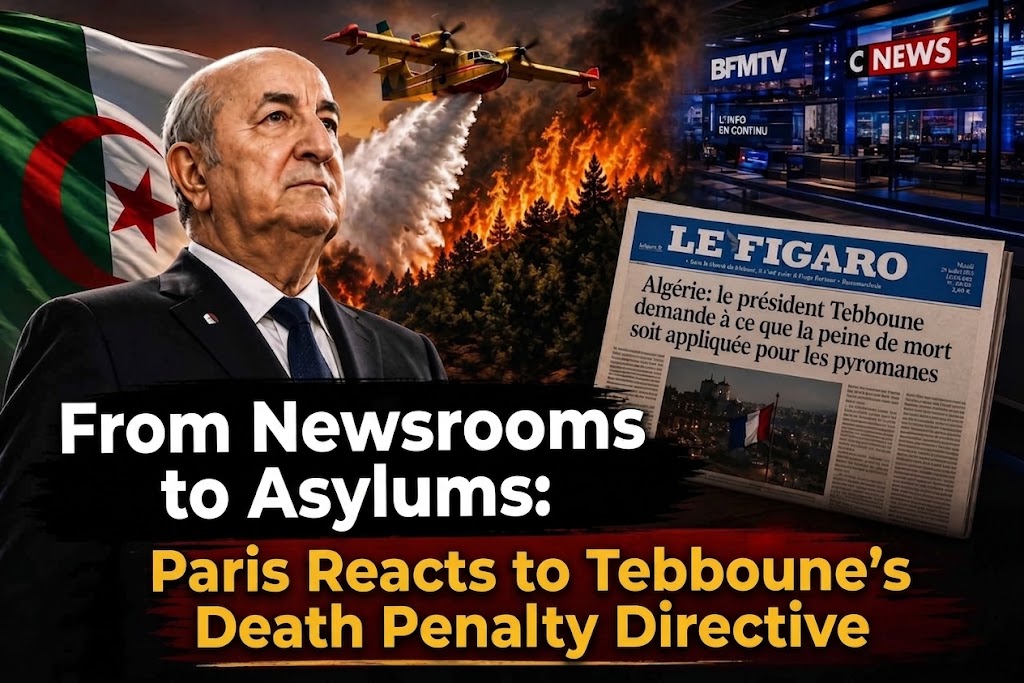
From Newsrooms to Asylums: Paris Reacts to Tebboune’s Death Penalty Directive

From Newsrooms to Asylums: Paris Reacts to Tebboune’s Death Penalty Directive

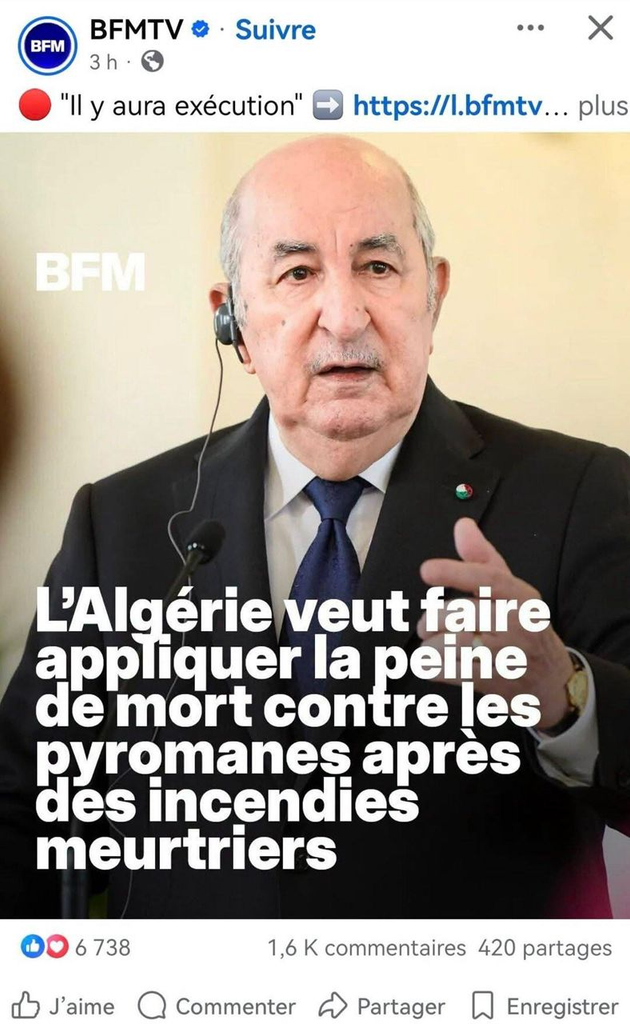
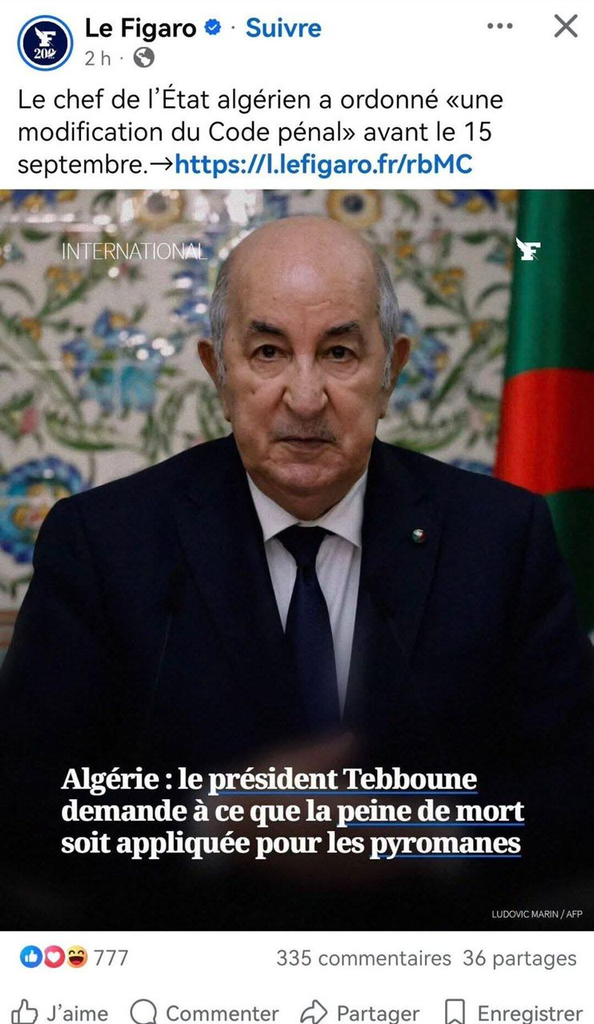
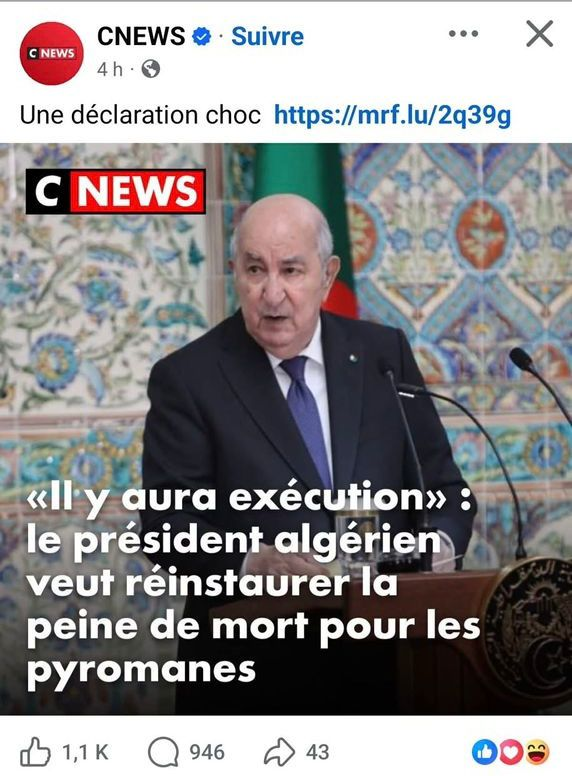
Algeria Gate: Following President of the Republic, Abdelmadjid Tebboune’s announcement that the death penalty would be applied to those who deliberately set fires, the French propaganda machine went into a state of hysteria over a sovereign decision that disrupted the calculations of the forces of evil working to set Algeria ablaze and destabilize it.

French television channels and newspapers agreed to filter their vocabulary and choose a specific description for the perpetrators of these crimes, adopting the word “Pyromane”, which means a person suffering from an obsession or pathological compulsion to start fires, instead of describing them as deliberate criminals or people involved in criminal acts.

So have French media outlets suddenly turned into psychiatric clinics, or is this linguistic choice an attempt to reframe the image of the perpetrator in the mind of the audience and shift the issue from the realm of crime, motive, responsibility and punishment into the realm of illness, sympathy and diminished capacity?

From Newsrooms to Asylums: Paris Reacts to Tebboune’s Death Penalty Directive

It is striking that BFMTV, CNews and Le Figaro all used the same description, which raises serious questions about the background of this media convergence, how innocent these platforms are of deliberately steering the narrative, who stands behind these media mouthpieces, and whether there are political circles in Paris seeking to influence public opinion and reshape its view of what is happening in Algeria.

From Newsrooms to Asylums: Paris Reacts to Tebboune’s Death Penalty Directive

When the description “deliberate arsonist” is replaced by “someone obsessed with starting fires”, it is not merely an innocent linguistic choice; words are not always neutral. They can become tools for reframing the event and changing the position of the perpetrator in the audience’s consciousness: from a criminal who bears responsibility for a deliberate act to a sick person who deserves sympathy and perhaps a lessening of his responsibility.

It is worth noting that Algeria has partially resumed the application of the death penalty after 33 years since the last judicial execution.

From Newsrooms to Asylums: Paris Reacts to Tebboune’s Death Penalty Directive

The Algerian president did not rule out that criminal acts may lie behind the massive fires that broke out in a number of Algerian provinces, affirming that the relevant services are conducting the necessary investigations.  

In the wake of this, Tebboune decided to take unprecedented measures by applying the death penalty to those who deliberately start fires. This was decided during a meeting he chaired last Sunday devoted to taking the necessary measures to deal with the aftermath and effects of the recent fires that affected a number of provinces in Algeria.

#Algeria#France#President tebboune
Author
Lys Iwannughen
View my articles
Algeria
Share this post

French Ambassador’s Visa Pledge Reignites Right-Wing Fury Over Algeria

French Ambassador’s Visa Pledge Reignites Right-Wing Fury Over Algeria

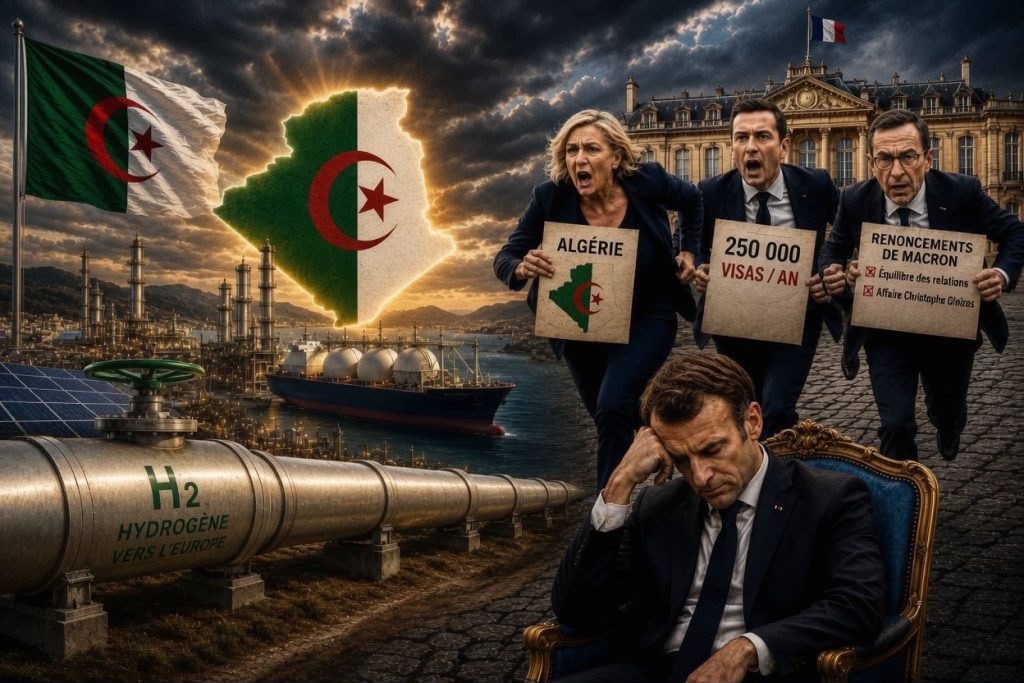
France’s ambassador to Algeria, Stéphane Romatet, has triggered a political storm within the French right after pledging to restore visa issuance for Algerians to pre-crisis levels roughly 250,000 visas a year. The statement came in an interview with Algerian news site TSA, published Wednesday, July 15, in which Romatet insisted that citizens should not be made to pay the price for political disputes between states.

The backlash was immediate. Bruno Retailleau, leader of the Republicans party (LR) and a candidate in France’s presidential race, called it “a tragedy to see our diplomacy forced to bow its head over the president’s concessions to the Algerian regime.” Retailleau leveled three specific accusations at the Élysée: abandoning the push to deport “delinquent Algerians” back to their country, sacrificing the balance of the bilateral relationship, and failing to demand the release of French journalist Christophe Gleizes, imprisoned in Algeria since May 2024 and sentenced to seven years for “glorifying terrorism.”

https://twitter.com/AlgeriaGatePlus/status/2078420431812358586?s=20

Retailleau was not alone. National Rally leader Jordan Bardella joined the attack, branding the move a “capitulation of Macronism to the Algerian regime.” François-Xavier Bellamy also weighed in, listing what he believes the ambassador should have said instead starting with visas.

The French Foreign Ministry pushed back, stating that visa issuance is not part of the ongoing talks with Algeria and that “no numerical target has been set,” an attempt to contain the controversy without abandoning the détente track Macron set in motion when he reinstated Romatet in May, more than a year after recalling him at the height of the diplomatic crisis.

The episode exposes a deeper rift in French politics over Algeria: one camp pushing pragmatic normalization on economic and diplomatic grounds, another an ascendant right casting every gesture of deescalation as surrender. Retailleau, mid-campaign for the presidency, has found in the visa file a fresh opportunity to stake his claim as the voice of the hardline position on Algeria. The Élysée, meanwhile, is betting that gradual thaw remains the only route back to resolving the harder cases still on the table Gleizes’ file chief among them.

Author
بوابة الجزائر
View my articles