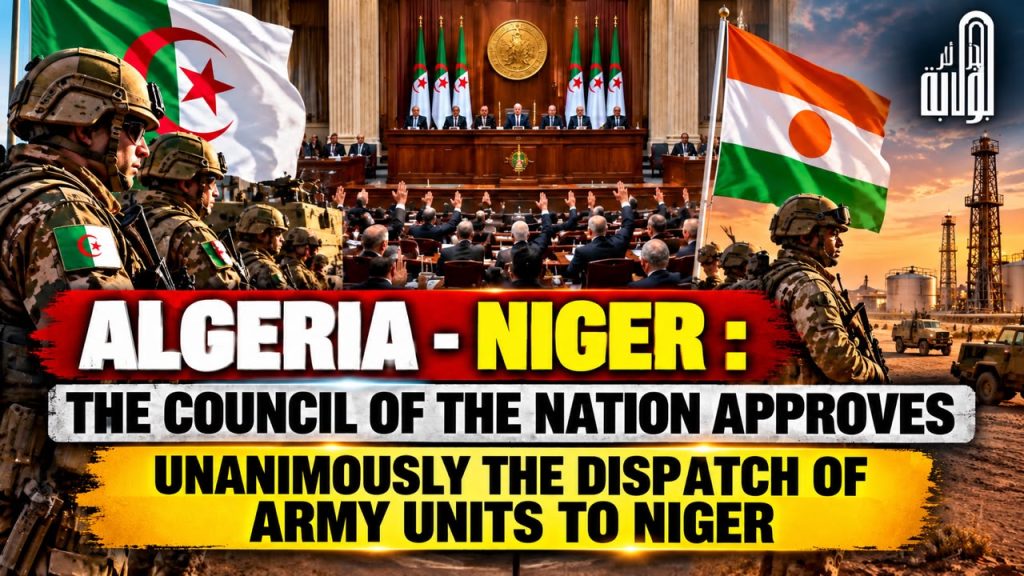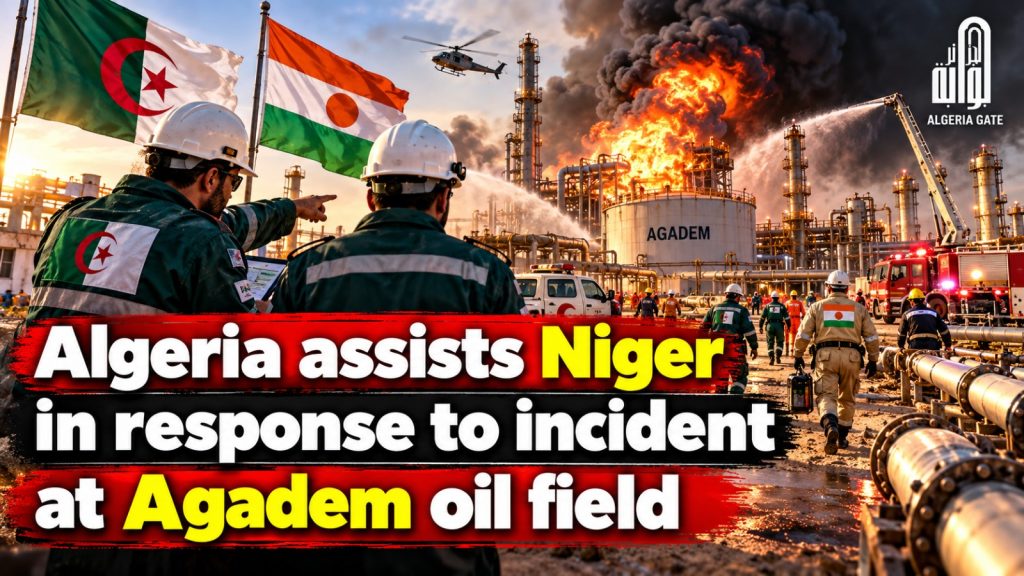


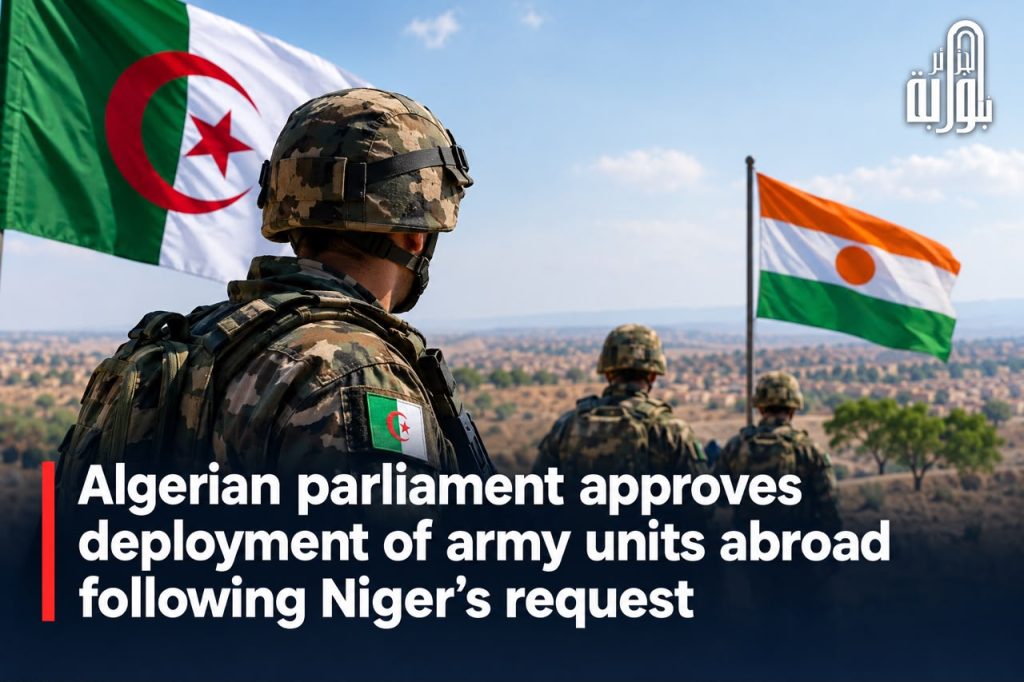
Algeria Gate: Algeria’s parliament has approved the deployment of units of the People’s National Army outside the country in response to an official request from Niger, according to Algeria Gate.
The move marks a potential shift in Algeria’s approach to security in the Sahel, moving beyond traditional diplomatic efforts towards direct field coordination with its southern neighbour. It is presented as part of broader efforts to strengthen border security, counter armed groups and organized crime, and support regional stability.
Political analyst Sultan, speaking to Algeria Gate, said the development represents a significant change in Algeria’s understanding of strategic defence. He argued that national security can no longer rely solely on protecting geographical borders, but also requires addressing threats before they reach Algerian territory.
According to the analyst, direct coordination with Niger could strengthen surveillance, reconnaissance and intelligence-sharing capabilities, restricting the movement of terrorist groups and smuggling networks. However, he stressed that the effectiveness of such an approach would depend on clearly defining the military mission and security coordination arrangements.
Constitutional and legal framework
Sultan said parliamentary approval gives the decision an institutional and constitutional basis, placing the deployment of military units abroad within a formal process linking presidential powers with legislative approval.
He added that this framework strengthens accountability and signals to regional partners that Algeria’s actions are being undertaken within established legal boundaries.
Implications for regional security
The analyst also linked the move to the changing security landscape in Niger, amid political transformations and the reduced presence of traditional Western military forces in the region.
He said Algeria’s approach focuses on direct bilateral cooperation to strengthen its neighbour’s defence capabilities rather than merely responding to crises after they spill across borders. He also cited previous support provided by the Algerian Air Force to Niamey.
However, Sultan cautioned that Algeria’s involvement alone would not be sufficient to address the wider security vacuum across the Sahel, given the region’s interconnected economic and institutional challenges.
He concluded that the move’s main strategic significance lies in protecting Algeria’s national borders and advancing the principle of African-led solutions to regional crises.