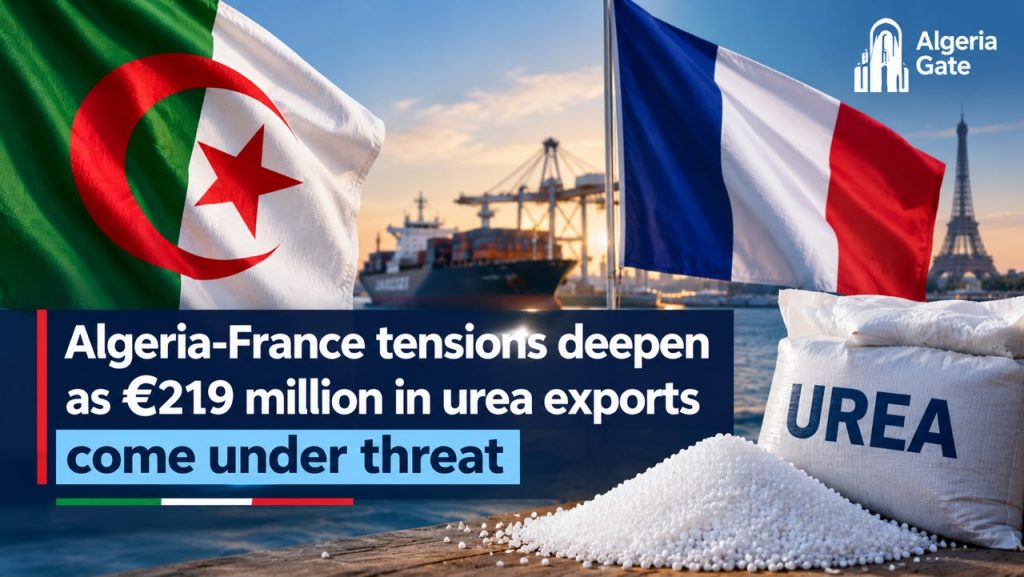
Algeria Gate: France is facing growing economic costs from deteriorating relations with Algeria, as political tensions increasingly affect trade and industrial supply chains. French exports to the Algerian market are declining, while supplies of Algerian urea fertiliser to France could face disruption, adding pressure on importers and the agricultural sector.
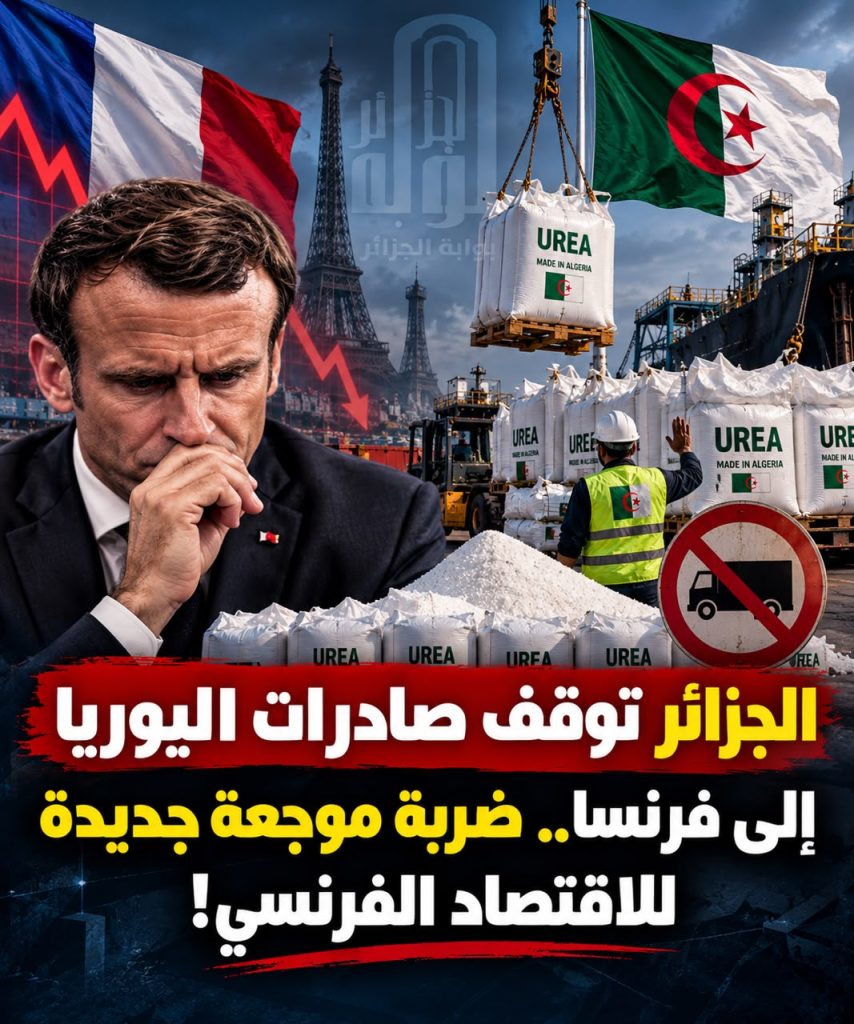
According to a Reuters report published on October 23, 2026, five diplomatic and industry sources said Algeria had instructed urea producers to halt fertiliser exports to France. If implemented and maintained, the measure could disrupt an important supply route for French agriculture.
French exports to Algeria continue to decline
French customs data cited by Reuters show that French exports to Algeria fell by around 12% in 2025, reaching €4.2 billion. They declined by a further 12% year-on-year during the first eight months of 2026.
Diplomatic sources cited by Reuters said Algeria had imposed broad, informal restrictions on French goods imports since late July 2026. However, the Algerian authorities have not published an official decision confirming these measures, and the French Foreign Ministry said it had not received formal notification.
Meanwhile, French imports from Algeria reached €5.1 billion in 2025, following an 18% decline. They fell by a further 11% between January and August 2026 compared with the same period a year earlier.
Although these figures do not establish that political measures caused every decline, they point to a broader contraction in bilateral trade.
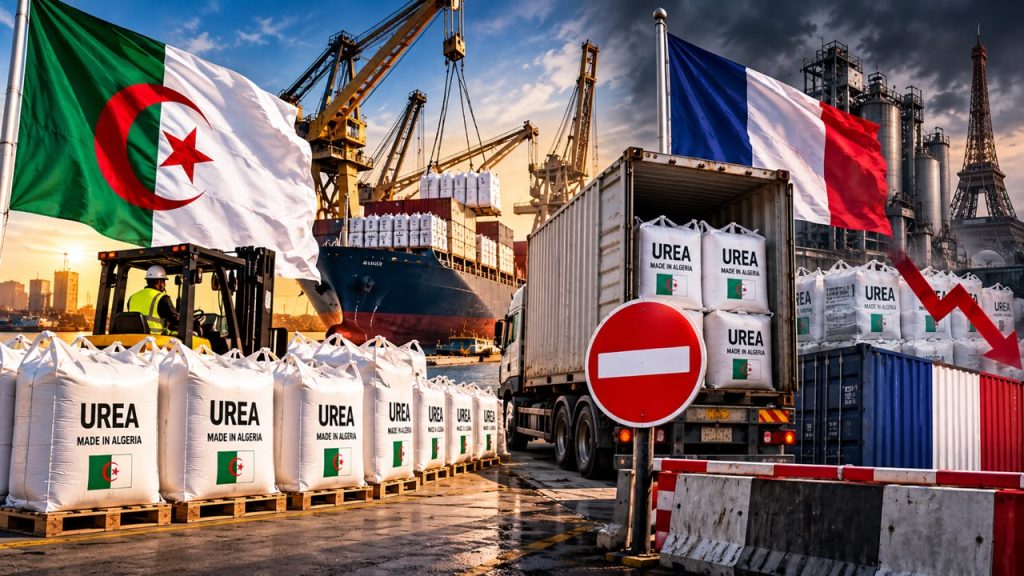
Urea exports worth nearly $219 million
The potential suspension of Algerian urea supplies could have significant implications for France. International trade data for 2025 show that France imported approximately 481,000 tonnes of urea from Algeria, worth around $218.9 million, making Algeria France’s second-largest supplier of the fertiliser after Egypt.
French industry associations estimate that Algerian supplies account for around 30% of France’s urea imports, while trade data measured by value put the share at approximately 26%. The difference reflects variations in data sources and measurement methods.
If these supplies are interrupted, French importers would need to find alternative suppliers in an international market where prices, delivery schedules and transportation costs influence purchasing decisions.
The disruption could also affect fertiliser costs for French farmers as they prepare for the next agricultural season. French representatives from the fertiliser and grain sectors have warned that supply disruptions, combined with higher gas costs, could put additional pressure on agricultural production expenses.
The actual impact will depend on whether the reported suspension is implemented, how long it lasts and how quickly importers can secure alternative supplies.
Political tensions spill into trade
The latest developments reflect a broader deterioration in relations between Algeria and France since 2024, following French President Emmanuel Macron’s support for a plan granting Western Sahara autonomy under Moroccan sovereignty.
France has raised the issue of Algerian trade restrictions during a meeting of European Union foreign ministers, suggesting that Paris is also seeking to address the consequences through European channels. However, the EU’s common trade policy complicates efforts to resolve the dispute through bilateral measures alone.
For France, the economic pressure comes amid declining exports to Algeria and growing uncertainty over access to the Algerian market. For Algeria, trade and industrial supplies represent potential sources of leverage, although the impact on Algerian producers will depend on their ability to redirect exports to alternative markets and maintain revenues.
The dispute is therefore taking on a more direct economic dimension. France is facing a documented decline in exports to Algeria, while the possible suspension of Algerian urea supplies could add further costs for French importers and the agricultural sector.
If the reported measure is confirmed and sustained, the consequences would demonstrate how political tensions between the two countries can extend beyond diplomacy and affect businesses and productive sectors on both sides.