Sunday, 25 October 2026 • 15:13 Algiers time
Algeria Gate
Share this post

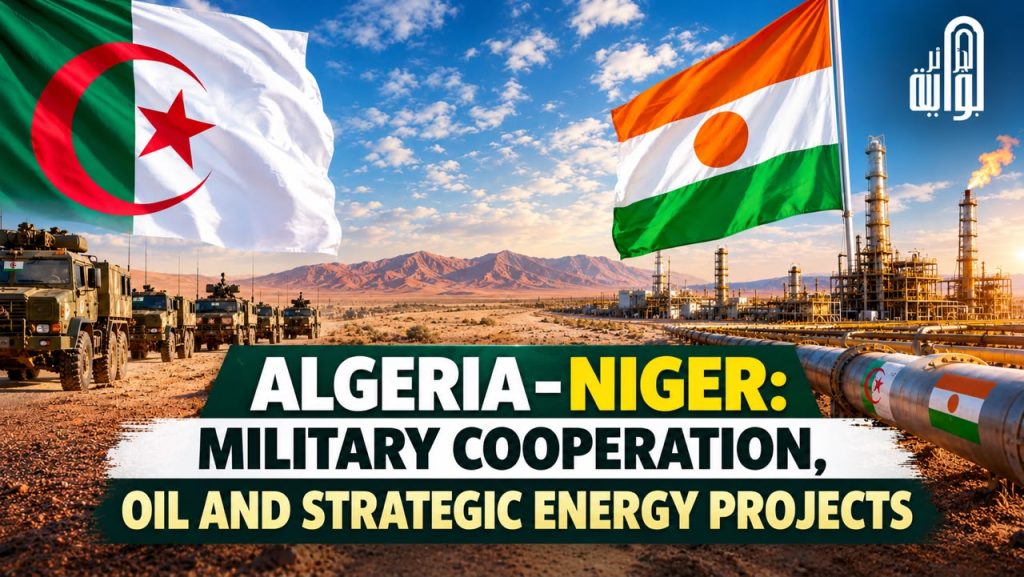
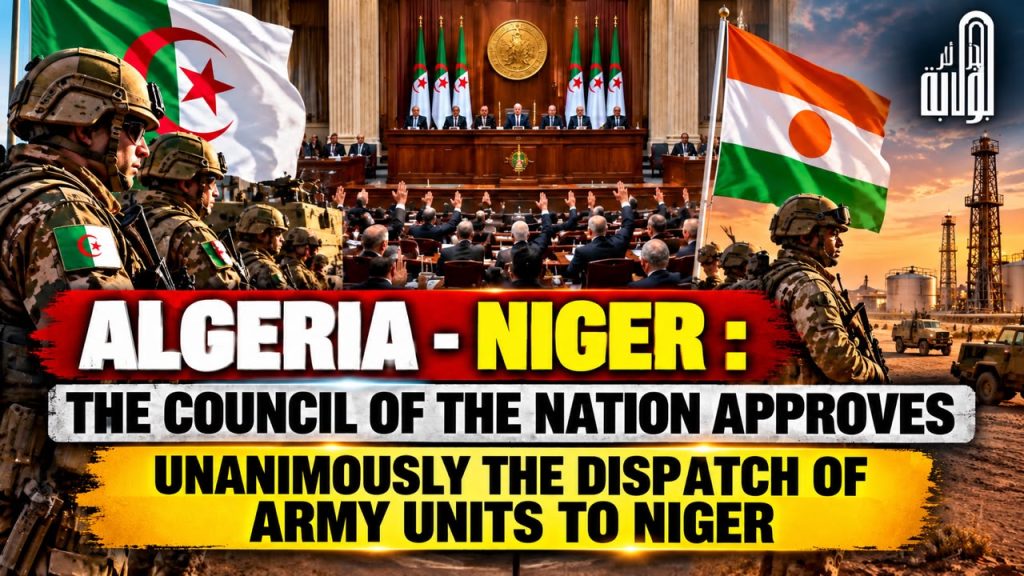
Algeria’s Council of the Nation approves deployment of army units to Niger

• Author: Y.R • 0 comments • 1 views
Algeria’s Council of the Nation approves deployment of army units to Niger

Algeria Gate: Algeria’s Council of the Nation has unanimously approved the dispatch of Algerian Army units to Niger, marking a significant development in relations between the two neighbouring countries.

The decision was approved during a parliamentary session in Algiers, according to the information presented in connection with the vote. The measure concerns the deployment of Algerian military units to Niger.

The move comes amid ongoing regional security challenges in the Sahel, where instability has placed increased pressure on countries seeking to strengthen security and cooperation across their borders.

The decision highlights the importance of Algeria’s relations with Niger, a neighbouring country with which it shares both a border and common regional security concerns.


#Algeria#Army#Niger
Author

Leave a comment

Your email address will not be published. Required fields are marked *

African coast
Share this post

Algeria hosts trilateral ministerial meeting on Libya

Algeria hosts trilateral ministerial meeting on Libya

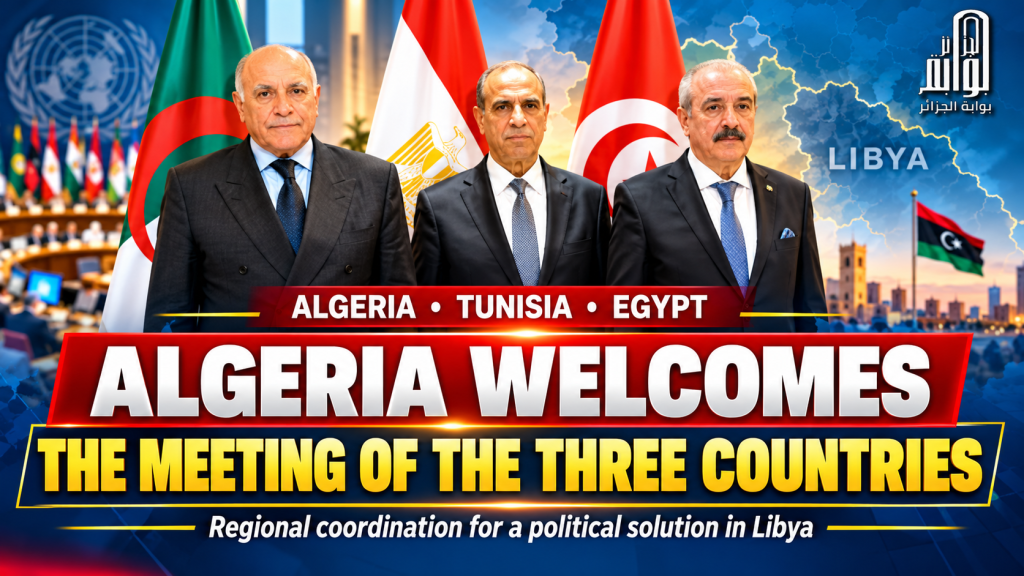
Algeria Gate: Algeria is hosting a ministerial consultation meeting of the trilateral mechanism involving Libya’s neighbouring countries, with the participation of the foreign ministers of Algeria, Tunisia and Egypt.

The meeting brings together Ahmed Attaf, Algeria’s Minister of State and Minister of Foreign Affairs, National Community Abroad and African Affairs; Mohamed Ali Nafti, Tunisia’s Minister of Foreign Affairs, Migration and Tunisians Abroad; and Badr Abdelatty, Egypt’s Minister of Foreign Affairs, International Cooperation and Egyptian Expatriates.

The meeting is part of ongoing efforts by the three countries to strengthen coordination and consultation in support of an inclusive political solution to the Libyan crisis, agreed upon by Libyans themselves.

The proposed solution is expected to be based on dialogue among the various Libyan parties and lead to free and transparent legislative and presidential elections. These elections would pave the way for unified and strong institutions capable of meeting the aspirations of the Libyan people for security and stability.

During the meeting, the ministers will examine the latest political and security developments in Libya.

They will also exchange assessments and views on ways to revive the political settlement process under the auspices of the United Nations.

#Algeria#Libya#Tunisia
Author
African coast
Share this post

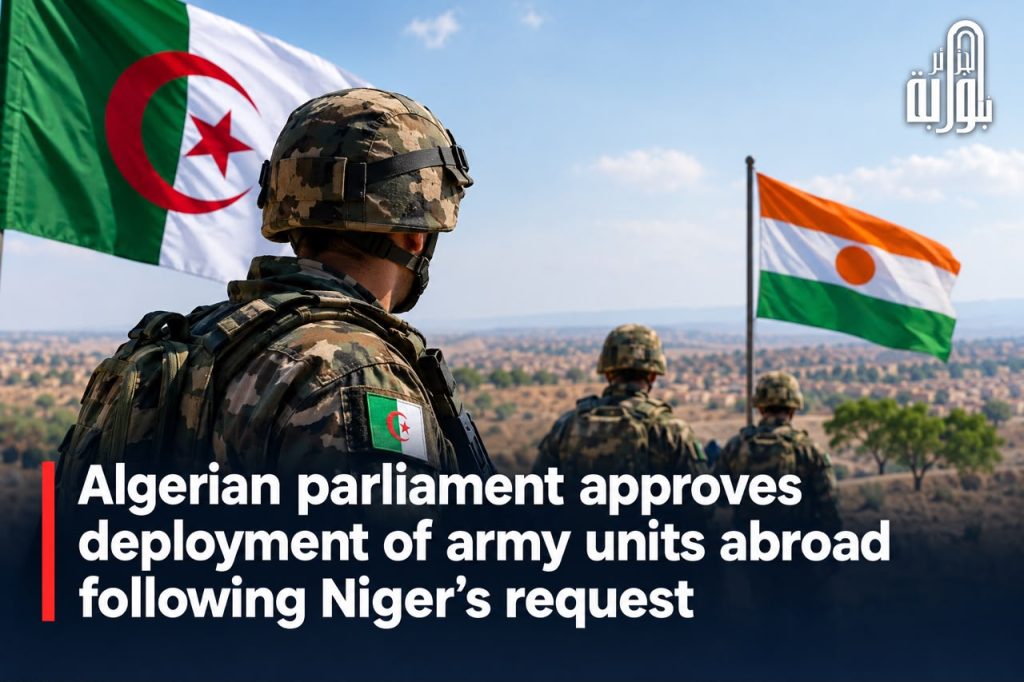
Algerian parliament approves deployment of army units abroad following Niger’s request

Algerian parliament approves deployment of army units abroad following Niger’s request

Algeria Gate: Algeria’s parliament has approved the deployment of units of the People’s National Army outside the country in response to an official request from Niger, according to Algeria Gate.

The move marks a potential shift in Algeria’s approach to security in the Sahel, moving beyond traditional diplomatic efforts towards direct field coordination with its southern neighbour. It is presented as part of broader efforts to strengthen border security, counter armed groups and organized crime, and support regional stability.

Political analyst Sultan, speaking to Algeria Gate, said the development represents a significant change in Algeria’s understanding of strategic defence. He argued that national security can no longer rely solely on protecting geographical borders, but also requires addressing threats before they reach Algerian territory.

According to the analyst, direct coordination with Niger could strengthen surveillance, reconnaissance and intelligence-sharing capabilities, restricting the movement of terrorist groups and smuggling networks. However, he stressed that the effectiveness of such an approach would depend on clearly defining the military mission and security coordination arrangements.

Constitutional and legal framework

Sultan said parliamentary approval gives the decision an institutional and constitutional basis, placing the deployment of military units abroad within a formal process linking presidential powers with legislative approval.

He added that this framework strengthens accountability and signals to regional partners that Algeria’s actions are being undertaken within established legal boundaries.

Implications for regional security

The analyst also linked the move to the changing security landscape in Niger, amid political transformations and the reduced presence of traditional Western military forces in the region.

He said Algeria’s approach focuses on direct bilateral cooperation to strengthen its neighbour’s defence capabilities rather than merely responding to crises after they spill across borders. He also cited previous support provided by the Algerian Air Force to Niamey.

However, Sultan cautioned that Algeria’s involvement alone would not be sufficient to address the wider security vacuum across the Sahel, given the region’s interconnected economic and institutional challenges.

He concluded that the move’s main strategic significance lies in protecting Algeria’s national borders and advancing the principle of African-led solutions to regional crises.

#Algeria#Niger#Parliment
Author
African coast
Share this post

Algerian parliament to vote on possible deployment of army units to Niger

Algerian parliament to vote on possible deployment of army units to Niger

Algeria Gate: Algeria is preparing for an exceptional parliamentary development on Sunday, as the Council of the Nation and the People’s National Assembly, the two chambers of the Algerian Parliament, are expected to hold separate extraordinary sessions to vote on a presidential order concerning national defence.
According to sources cited by Algeria Gate, the order concerns the approval of a decision to deploy units of the People’s National Army outside the country’s borders as part of military cooperation with the Republic of Niger.
The bureau of the People’s National Assembly has already held a meeting, while the bureau of the Council of the Nation is expected to meet in the coming hours to finalise the organisational arrangements for the two sessions.

Extraordinary parliamentary sessions scheduled

According to Algeria Gate’s sources, members of the Council of the Nation and deputies of the People’s National Assembly received official notifications by text message. The brief messages specified the times of the sessions without disclosing details of the agenda.
The Council of the Nation is scheduled to convene at 10 a.m., while members of the People’s National Assembly are expected to meet later the same day. The two chambers will hold separate sessions rather than a joint meeting.
The discussions are expected to focus on a presidential order concerning national defence, aimed at implementing the second paragraph of Article 91 of the Constitution. This provision allows the President of the Republic, as Supreme Commander of the Armed Forces and responsible for national defence, to deploy units of the People’s National Army beyond Algeria’s national borders, subject to approval by a two-thirds majority of the members of each parliamentary chamber.

Algeria and Niger strengthen military cooperation

The anticipated parliamentary sessions come amid an unprecedented rapprochement between Algeria and Niger in the military and security fields, particularly following the visit to Algeria by Niger’s Minister of State for National Defence, Salifou Modi, who met with President Abdelmadjid Tebboune.
During the visit, Salifou Modi and Chief of Staff of the People’s National Army, General Saïd Chanegriha, signed a military cooperation protocol aimed at strengthening coordination between the two countries.
The agreement focuses in particular on securing their shared borders, combating terrorism and exchanging military expertise. It also seeks to address Nigerien authorities’ needs in developing their army’s operational capabilities.

Tebboune confirms deployment of fighter jets to Niger

In his most recent televised interview, Algerian President Abdelmadjid Tebboune confirmed that Algeria had sent fighter jets to Niger late last month at the request of Nigerien authorities, following an alleged coup attempt in the capital, Niamey.
Tebboune said the aircraft were dispatched because certain parties had gone too far. He explained that Niger’s Prime Minister, Ali Mahamane Lamine Zeine, had visited Algeria and returned to his country during the night, before a coup attempt took place.
“The matter is clear. This is a provocation against us. I will also send aircraft. Fine, let’s face each other head-on — an eye for an eye,” Tebboune said.
On August 30, the Algerian Ministry of National Defence announced the deployment of four Sukhoi Su-30 fighter jets to Niamey to support the Nigerien army following developments in the country.
Nigerien Defence Minister Salifou Modi had previously stated that a group of military personnel attempted, during the night of August 28–29, to detain several of their colleagues inside Air Base 101 in Niamey. The group also opened fire on strategic locations in the capital.

Shared security concerns

Algeria and Niger maintain close military and security ties and share an extensive land border. Algeria considers stability in the Sahel a key component of its national security.
Nigerien Prime Minister Ali Mahamane Lamine Zeine visited Algeria on August 26 and 27, leading a high-level ministerial delegation. The working visit aimed to strengthen bilateral cooperation and included a meeting with President Abdelmadjid Tebboune.

#Algeria#Niger#Parliment
Author