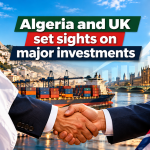


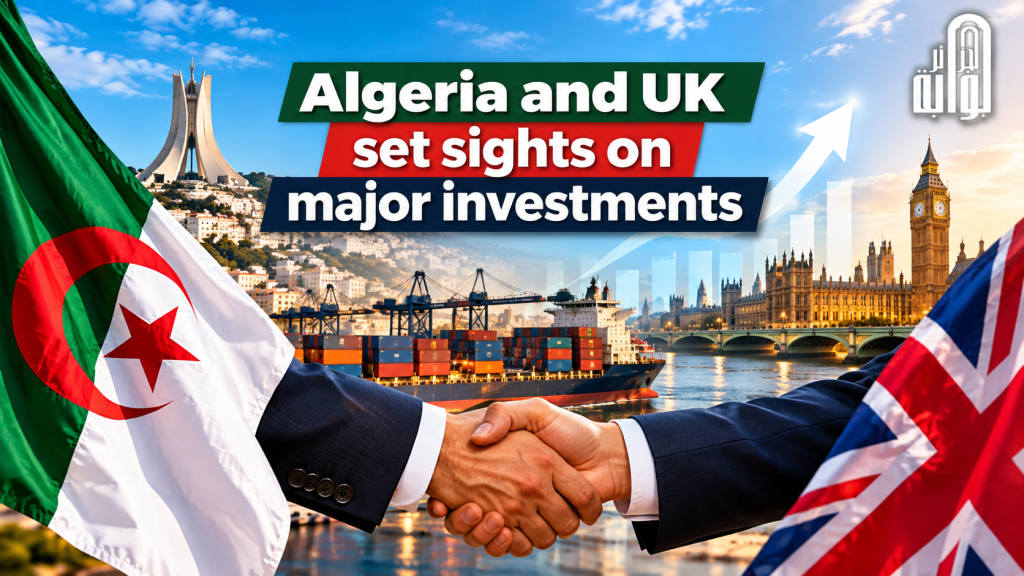
Algeria Gate: Algeria and the United Kingdom are moving toward a broader economic partnership, with bilateral trade reaching £2.8 billion in 2025 and fresh discussions opening the door to British investment in mining, renewable energy, agriculture, technology and industrial development.
The latest initiative follows a meeting on October 27 between the Algerian Investment Promotion Agency (AAPI) and Hannah Barbosa, regional director for trade policy at the UK’s Department for Business and Trade. Representatives of the British Embassy in Algeria also attended the discussions.
The meeting focused on identifying investment opportunities, encouraging joint projects and strengthening cooperation between businesses in both countries.
The renewed engagement reflects a growing ambition to move beyond traditional trade relations, particularly in hydrocarbons, and develop partnerships capable of supporting Algeria’s economic diversification.
Bilateral trade doubles in less than a decade
Economic exchanges between Algeria and the United Kingdom have expanded considerably over recent years.
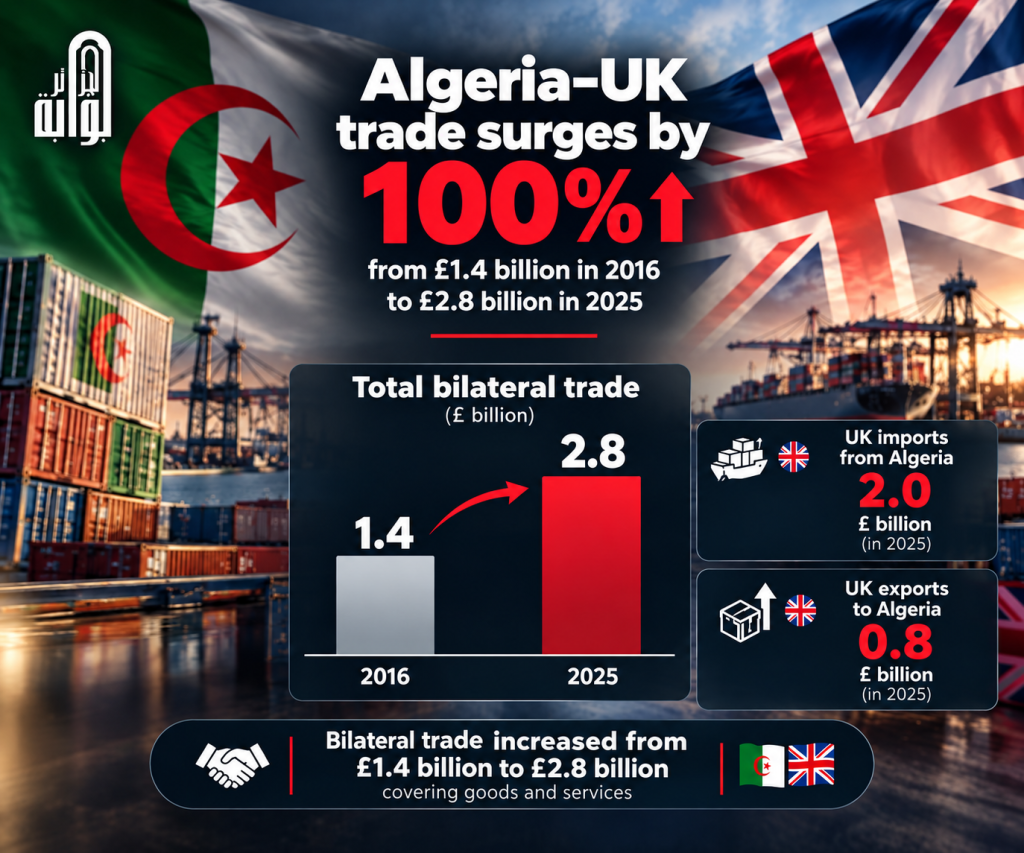
According to British statistical figures cited in the report, total bilateral trade increased from approximately £1.4 billion in 2016 to £2.8 billion in 2025, representing a doubling in value.
British imports from Algeria accounted for approximately £2 billion, while UK exports to the Algerian market reached around £800 million.
Energy remains a major component of Algeria’s exports to Britain, reflecting the country’s established position as a supplier of hydrocarbons to international markets.
British exports to Algeria include industrial vehicles, mechanical equipment, pharmaceutical products and scientific instruments.
The composition of trade highlights the complementary strengths of the two economies while revealing opportunities to expand cooperation into higher-value industrial and technological activities.
Mining and renewable energy attract growing interest
Mining is emerging as a promising area for future Algerian-British cooperation.
Algeria is pursuing major mineral development projects aimed at increasing domestic processing, reducing dependence on imports and creating new export opportunities.
These initiatives could generate demand for specialized machinery, engineering services, industrial technology and technical expertise.
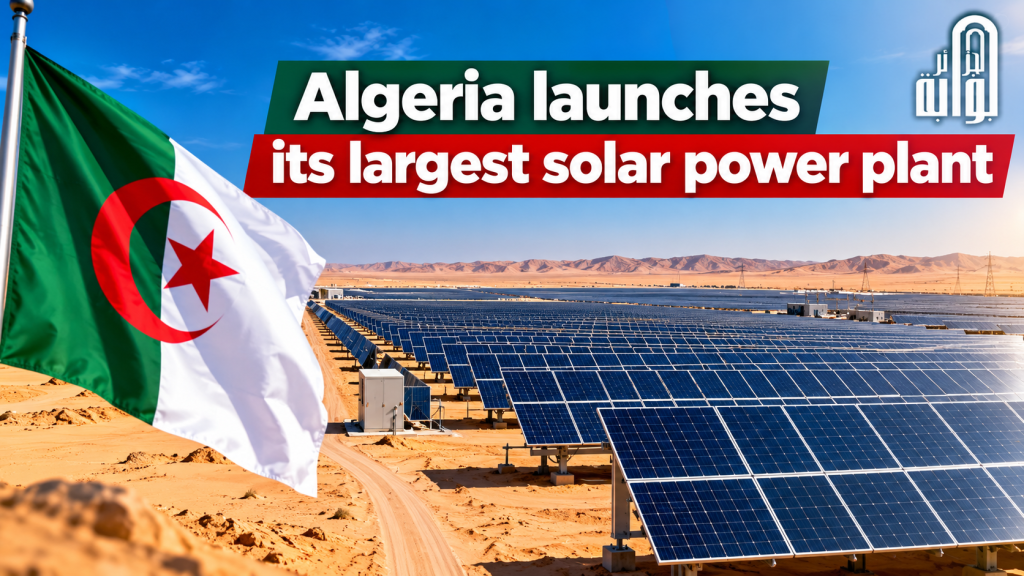
Renewable energy also offers potential for collaboration as Algeria seeks to expand its solar electricity capacity and modernize its energy infrastructure.
British companies with experience in energy technology, project development and engineering could explore opportunities in these sectors, although specific investments remain subject to further negotiations.
Digital transformation represents another area of interest, particularly in industrial modernization, business services and technological cooperation.
Agriculture opens another investment opportunity
Algeria’s efforts to increase agricultural production, particularly through large-scale farming projects in southern regions, could create additional opportunities for British businesses.
Potential areas of cooperation include agricultural machinery, irrigation technology, food processing, storage infrastructure and modern farming techniques.
Expanding domestic food production is an important component of Algeria’s economic diversification strategy.
Investment partnerships in agriculture could contribute to improving productivity, strengthening supply chains and supporting the development of food-processing industries.
However, translating these opportunities into operational projects will depend on financing, infrastructure, regulatory conditions and commercial agreements between interested companies.
British investment has room to expand
Despite the size of bilateral trade, the United Kingdom’s direct investment presence in Algeria remains comparatively limited.
British foreign direct investment stock in Algeria stood at approximately £77 million at the end of 2024, according to the figures cited in the report.
The gap between trade volumes and existing investment suggests significant potential for a deeper economic relationship.
Greater investment in manufacturing, mining, agriculture and renewable energy could help shift bilateral cooperation from the exchange of goods toward long-term production partnerships.
Such projects could also support technology transfer, workforce development and greater participation by Algerian companies in international supply chains.
London and Algiers build on earlier economic talks
The latest discussions follow the second meeting of the Algeria–UK Economic Working Group, held in London on April 22, 2026.
During that meeting, both sides agreed to intensify economic exchanges and explore cooperation in industry, infrastructure, agriculture, mining, energy transition and digitalization.
The continuation of these discussions indicates an effort to establish a more structured framework for bilateral economic engagement.
Officials are now seeking to improve information-sharing and identify concrete investment projects that could attract businesses from both countries.
The possibility of organizing an Algerian-British business forum was also discussed, potentially creating a platform for investors, companies and economic institutions to explore commercial opportunities.
A new chapter for Algeria–UK economic relations
Algeria’s expanding investment ambitions and the United Kingdom’s experience in industrial technology, financial services and engineering provide a foundation for closer economic cooperation.
For Algeria, attracting productive foreign investment is part of a broader effort to diversify economic activity, develop domestic industries and reduce reliance on hydrocarbon revenues.
For British companies, Algeria offers opportunities in energy, mineral resources, infrastructure and a range of emerging industrial sectors.
The challenge will be to convert diplomatic and institutional discussions into concrete investment commitments and commercially viable projects.
With bilateral trade already reaching £2.8 billion, both countries are seeking to build a partnership that extends beyond conventional trade and delivers longer-term economic benefits.