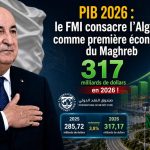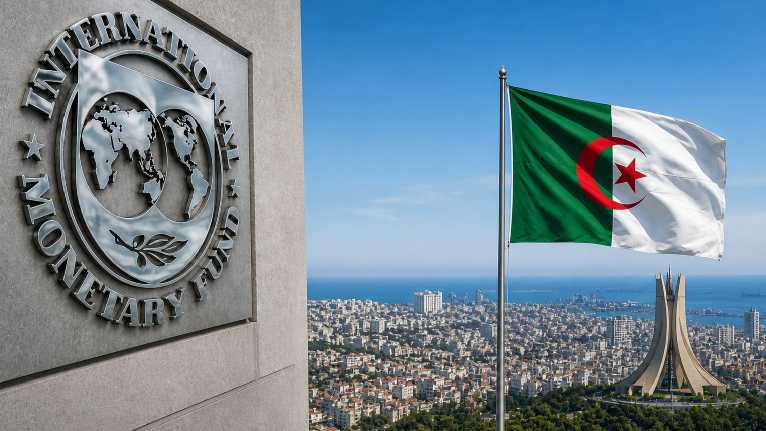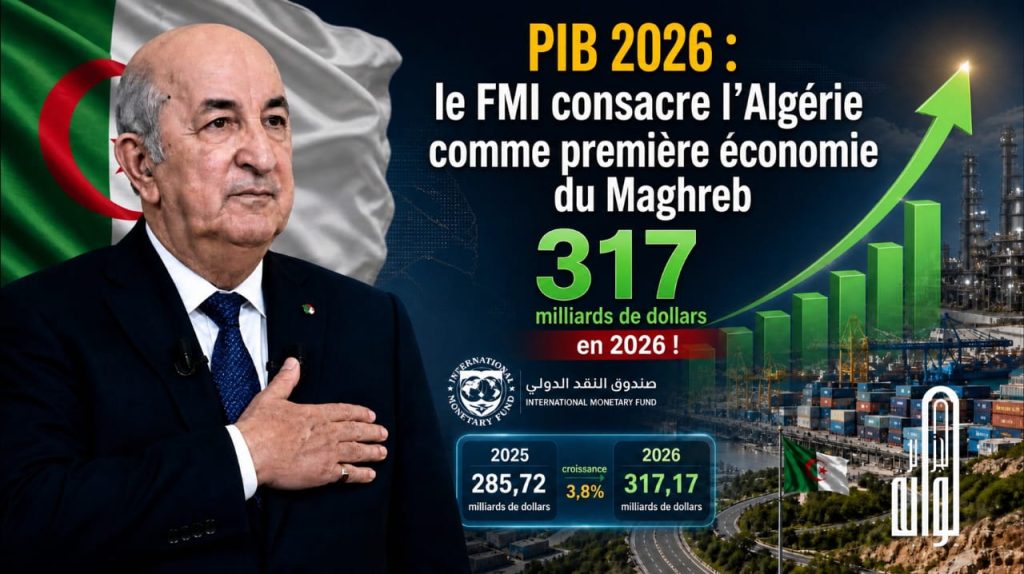
The latest economic reports issued by the International Monetary Fund (IMF) for 2026 are not merely dry statistics; they represent a “birth certificate” for a new economic era in Africa. With Algeria’s Gross Domestic Product (GDP) reaching the $317 billion threshold, the Algerian state confirms it has moved past the “recovery” phase to effectively enter a stage of “sophisticated economic dominance.”
Algeria: The Leading Power in the Maghreb and Fourth in Africa
A Leap in Numbers: Beyond Coincidence
According to the World Economic Outlook (April 2026), Algeria did not just achieve a massive figure; it secured an upward revision of its growth rate to 3.8%. This rise is not accidental; it is the fruit of economic sovereignty driven by diversifying exports beyond hydrocarbons and stimulating local and foreign investment through bold, incentivizing legislation.
With this achievement, Algeria officially sits at the throne of the Maghreb region’s economies and secures its position as the fourth-largest power on the African continent in terms of nominal GDP. More importantly, the IMF revealed that in terms of Purchasing Power Parity (PPP), the total output is approaching the $941 billion mark, reflecting the true capacity of the national economy to meet its citizens’ needs and create sustainable wealth away from exchange rate fluctuations.
Why Global Institutions are Betting on Algeria
This international praise stems from several core factors supporting Algeria’s strong position
Major Strategic Projects: The launch of projects like the “Baladna” dairy production plant, the Gara Djebilet mines, and the expansion of the national railway network are all engines that have made the $317 billion mark a “station” rather than the “destination.”
Conclusion: The Sovereignty of Economic Decision
Reaching this milestone amidst complex global geopolitical conditions is a clear response to those who doubted the state’s ability to break free from dependency. Today, Algeria is not building a consumer economy; it is establishing an industrial and commercial fortress whose roots extend from the Mediterranean to the heart of Africa.
It is the “Real Growth” Algeria—the one that is no longer content with being a partner, but has become the engine driving development in the region.
Inflation Control: Algeria has successfully reined in inflation, bringing it to low levels (2.9%) compared to its economically volatile regional surroundings.
Financial Stability: Thanks to a positive trade balance and growing reserves, Algeria has become an “oasis” of financial stability at a time when major countries are struggling with suffocating debt.