

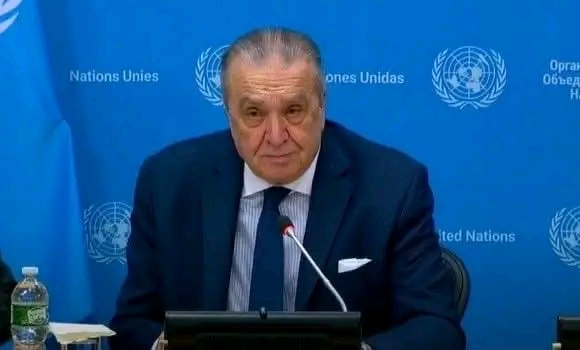
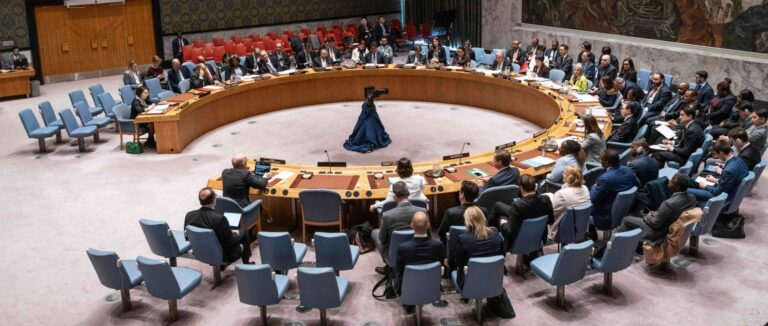
Algeria has been elected Vice-President of the 11th Review Conference of the Treaty on the Non-Proliferation of Nuclear Weapons, taking place from April 27 to May 22, 2026, at the United Nations headquarters in New York, thereby reaffirming its status as a committed and recognized actor in the multilateral nuclear disarmament process.
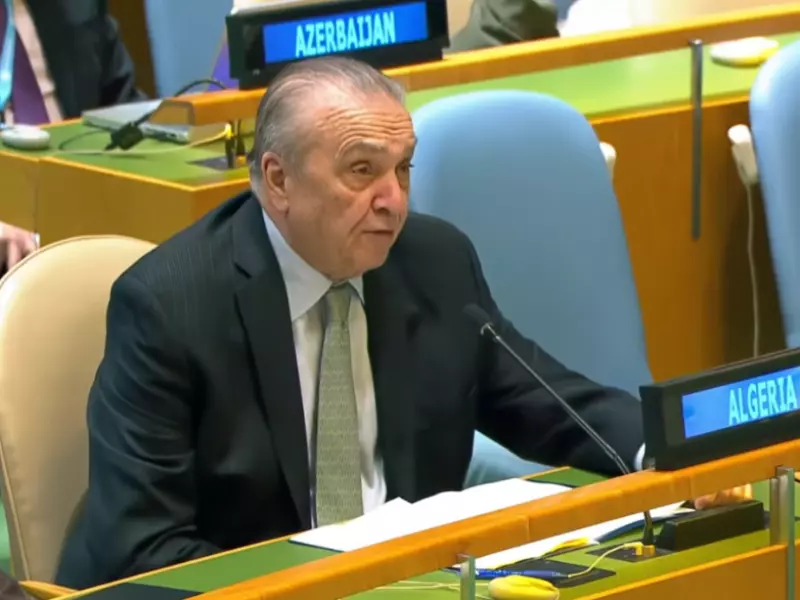
This new election to the position of Vice-President of the Conference, which Algeria has previously chaired on two occasions, is evidence of its important role in strengthening and promoting the nuclear disarmament and non-proliferation regime.During the general debate, Algeria’s Permanent Representative to the United Nations, Ambassador Ammar Benjama, took the initiative to reveal a “painful chapter” in global nuclear history.He noted in this regard that Algerian soil was the site of seventeen nuclear tests conducted by France in the 1960s, with the radioactive fallout from the first test reaching more than three thousand kilometers in all directions.He added that “the effects of those tests remain an open wound that has not healed for the Algerian population affected: from diseases and birth defects to barren, arid lands, as the International Atomic Energy Agency itself has recorded high levels of persistent radiation in those areas.”Faced with this reality, Ambassador Ben Jamaa posed three questions that remain unanswered to this day: “Why has France not yet provided Algeria with maps detailing the exact locations of the nuclear test sites, which would allow for the identification of buried waste? What obstacles continue to prevent the disclosure of the historical archives, radiation data, and medical files necessary for environmental decontamination and the protection of public health? Can such obstacles override the fundamental principles and essential rights of the affected populations?”In this regard, Algeria’s Permanent Representative to the United Nations also questioned France’s policy of double standards, noting that “continues to reject the concrete and constructive proposals put forward by Algeria for the rehabilitation of contaminated sites and shirks all responsibility,” while it “has dismantled its technical facilities and made efforts to decontaminate French Polynesia.”He asked in this regard, “How can these double standards be justified?
”Ambassador Ammar Benjama noted on this occasion that by acceding to the Treaty on the Non-Proliferation of Nuclear Weapons, Algeria has chosen the path of multilateralism and renounced the nuclear option while committing to the obligations arising from the treaty.
He added that this international mechanism is based on a mutual and balanced commitment, namely that “countries without nuclear weapons have renounced the nuclear option, while countries possessing nuclear weapons have committed to dismantling their arsenals.
”Mr. Ben Jemaa called on conference participants to be frank, stressing that “one party has fulfilled its obligations, while the other, regarding disarmament, has yet to do so.
”He concluded by emphasizing that “the failure of two consecutive review conferences has placed the credibility of this very system at a crossroads,” calling on the international community to “unite its efforts to restore the credibility of the non-proliferation regime and work toward a world free of nuclear weapons.”