Friday, 6 November 2026 • 20:40 Algiers time
Algeria Gate
Share this post

Algerian Authorities Race Against Time to Support Fire Victims and Address Their Concerns

• Author: Lys Iwannughen • 0 comments • 41 views
Algerian Authorities Race Against Time to Support Fire Victims and Address Their Concerns

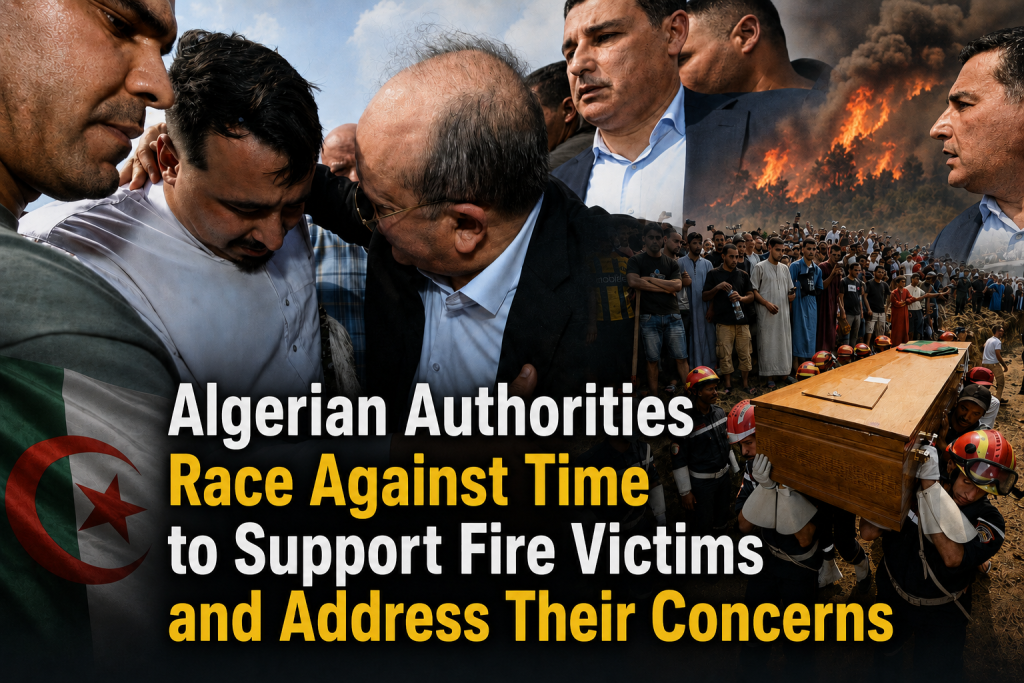
Algeria Gate: Algerian Prime Minister, Sifi Ghrieb, conveyed today, Friday, at the cultural center in the municipality of El Djemaa Beni Habibi (Jijel), the condolences of President of the Republic, Abdelmadjid Tebboune, to the families of the victims of the fires that struck Jijel Province. He affirmed the President’s support and solidarity, reiterating the state’s determination to stand by the victims’ families, address their concerns, and take all necessary measures and steps to alleviate the effects of this tragedy.

According to the Prime Minister’s Office, during his meeting with a number of the victims’ families, the Prime Minister listened to their concerns and needs, stressing that the public authorities will give them full attention and care, and work to address them as soon as possible.

Acting on the instructions of President of the Republic Abdelmadjid Tebboune, the Prime Minister, accompanied by a number of government members, took part on Friday in the funeral ceremonies for the victims of the fires that hit Jijel Province.

The funeral rites were held at Dar El Baqa Cemetery in the El Djemaa Beni Habibi area in a solemn atmosphere marked by grief and sorrow. They were attended by the victims’ families, local authorities, and a large number of citizens who insisted on sharing the families’ great loss and expressing their solidarity and condolences in this painful time.

https://twitter.com/algatedzEng/status/2093366590871875769?s=20

The victims’ bodies were laid to rest amid deep feelings of emotion and sadness, in a scene that embodied the scale of the tragedy that has befallen the families in Jijel Province and that has left a state of mourning and solidarity across different regions of the country.

On this painful occasion, Prime Minister Sifi Ghrieb prayed for the souls of the fire victims, asking Almighty God to grant them His vast mercy and forgiveness, to place them in His spacious Paradise, and to inspire their relatives with beautiful patience and solace.

He also asked God Almighty to grant the injured and wounded a swift and complete recovery, and to protect Algeria and its people from all harm.


Author
Lys Iwannughen
View my articles

Leave a comment

Your email address will not be published. Required fields are marked *

Algeria
Share this post

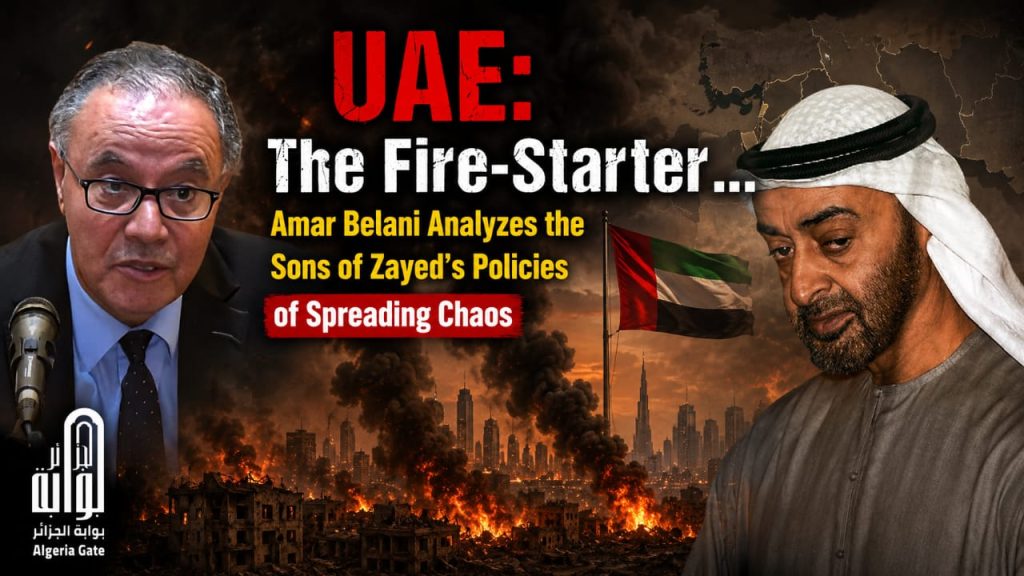
UAE: The Fire-Starter … Amar Belani Analyzes the Sons of Zayed’s Policies of Spreading Chaos

UAE: The Fire-Starter … Amar Belani Analyzes the Sons of Zayed’s Policies of Spreading Chaos

Amar Belani; former Ambassador

Algeria Gate: Mohammed bin Zayed has set the United Arab Emirates on a reckless bid for regional power that it was never built to hold. A confetti-state with neither the population nor the territory of a true power, Abu Dhabi compensates with vast wealth, world-class infrastructure, dense influence networks and a rapidly expanding defense industry. The formula is simple: invest heavily, cultivate local proxies, and build autonomous military muscle. The result is influence wildly out of proportion to the country’s size.

Yet the method rests on a fatal contradiction. To prosper, Abu Dhabi multiplies interference, leans on fragile states, local forces, militias and shadowy economic networks; exactly the forces that hollow out the central institutions of the countries it claims to engage.

The Sahel offers a clear case. The Emirates; working with its strategic partners, Israel and Morocco, is pushing economic and financial footholds into the Alliance of Sahel States. The goal goes beyond investment: it targets infrastructure, trade routes and financial circuits in what has long been Algeria’s strategic depth. The move is deliberate and hostile, designed to shrink Algiers’ room to defend its southern interests. Dubai, meanwhile, has become the hub for African gold. Much of the Sahel’s production travels informal channels before reaching Emirati markets, feeding parallel economies and the mafias that orbit conflict.

Yemen is the purest expression of this cynical playbook. After joining the Saudi-led intervention against the Houthis in 2015, the Emirates built its own network of southern forces. At Abu Dhabi’s instigation, the Southern Transitional Council pursues separatist aims. The partner supposedly helping rebuild the Yemeni state is arming a force whose purpose is to tear it apart.

The same fragmenting logic operates in Sudan. Abu Dhabi backs dissident forces and separatist impulses to seize control of Darfur’s gold. In Libya it has long supported Khalifa Haftar alongside Egypt, consolidating a rival military power against the internationally recognized government. UN reports have repeatedly documented Emirati breaches of the arms embargo. Southern Libya has become a transit zone linking Haftar’s circle to Sudan’s Rapid Support Forces, closing the circuit.

Tunisia saw a similar attempt to plant durable political, financial and diplomatic networks against Islamist currents viewed as close to the Turkey-Qatar axis. The method never changes: bet on local partners willing to serve Emirati interests, even if it destabilizes institutional balances.

Sudan remains the bloodiest theater. Since the war began, the Rapid Support Forces of Mohamed Hamdan Dagalo have received massive Emirati backing. Abu Dhabi denies it; international investigations keep confirming the presence of Emirati-origin military equipment. The result is a policy that fuels conflict through seditious local actors and sustains war crimes against civilians.

In the Horn of Africa the Emirates has woven a web of ports, airstrips and footholds around the Red Sea and Gulf of Aden; Berbera, Socotra, Mayun, Assab and more. Some of these “commercial” assets carry clear dual-use potential. Support for Somaliland prioritizes a pliable partner over Somali state authority. Israel’s recognition of Somaliland has tightened operational proximity between Abu Dhabi and Tel Aviv, sharpening rivalry with Turkey and Egypt, which back Somali unity. DP World and AD Ports investments follow the same pattern: commercial gains that create strategic access and future political leverage.

This economic reach travels with military ambition. The creation of the EDGE defense conglomerate in 2019 signals the drive to produce drones, missiles, armored vehicles, ships and electronics at home. Autonomy expands freedom of action. The Abraham Accords and the deployment of Israeli air-defense systems on Emirati soil have accelerated technology transfers.

The Saudi-Emirati rivalry has moved beyond personalities. It is now a clash of power models. Abu Dhabi intends to remain the region’s premier financial, commercial and logistical platform. Riyadh, through Vision 2030, wants Saudi Arabia to claim that role. Yemen, Sudan and the Horn have become the main arenas of this competition.

The emerging Saudi-Turkey-Pakistan alignment around the Mecca pact is partly a response. Officially about collective security, it also gives Riyadh tools to loosen dependence on Washington and contain Abu Dhabi’s growing autonomy. Turkey brings defense industry and operational experience; Pakistan brings military capacity and a nuclear dimension; Saudi Arabia brings money and political weight. For Ankara the project is more than tactical: it is the outline of a regional security architecture grounded in sovereignty and mutual trust, with Turkey at the center.

Sudan may be the first test. Turkey supports the Sudanese army, Saudi Arabia has moved closer, Pakistan has provided material backing, while the RSF remains tied to the network attributed to the Emirates. The Riyadh-Abu Dhabi contest is now fought through proxies. Egypt keeps its distance, constrained by economic interdependence and Emirati financial support. Turkey, by contrast, seeks to convert military and industrial strength into broader political reach across the Middle East, Mediterranean and Africa.

No formal anti-Emirati front has yet formed. But the contestation of Abu Dhabi’s model is growing. That model thrives by exploiting regional fractures; and, through relentless interference, deepens them.

#Amar Belani#UAE
Author
Lys Iwannughen
View my articles
Algeria
Share this post

Government Officials Deployed Across Algeria to Tackle Widespread Wildfires (Special Report)

Government Officials Deployed Across Algeria to Tackle Widespread Wildfires (Special Report)

Alegria Gate: On the instructions of President Abdelmadjid Tebboune, Prime Minister Sifi Ghrieb travelled today, Thursday August 27th 2026, to Jijel Province to assess the situation caused by the fires, monitor firefighting operations, and review care for the injured and those affected.

Accompanied by a ministerial delegation, he visited hospitals in Jijel, Taher and El Milia that received the casualties. He inspected the injured, inquired about their health and treatment, and stressed the need for continued medical care until full recovery. He also spoke with the patients and offered condolences to the families of the victims, praying for the deceased and a swift recovery for the wounded.

The Prime Minister affirmed that the State is giving special attention to the injured, those affected and the victims’ families, and will continue to support them. He praised the efforts of medical teams and State services, as well as the solidarity shown by citizens.

He then visited the Mechta area in El Milia, where he received a briefing on the fire situation, the efforts to control the blazes, and measures to protect people and property. He inspected the damaged sites and stressed the need for continued mobilisation, coordination and priority for citizens’ safety.

The visit aims to closely monitor the health of the injured, the extent of the damage, and ongoing firefighting efforts in order to ensure continued support for the affected population.

#Algeria#Prime Minister
Author
Lys Iwannughen
View my articles
Algeria
Share this post

From Jeddah: Algeria Urges End to Israeli Violations and Protection for Palestinians

From Jeddah: Algeria Urges End to Israeli Violations and Protection for Palestinians

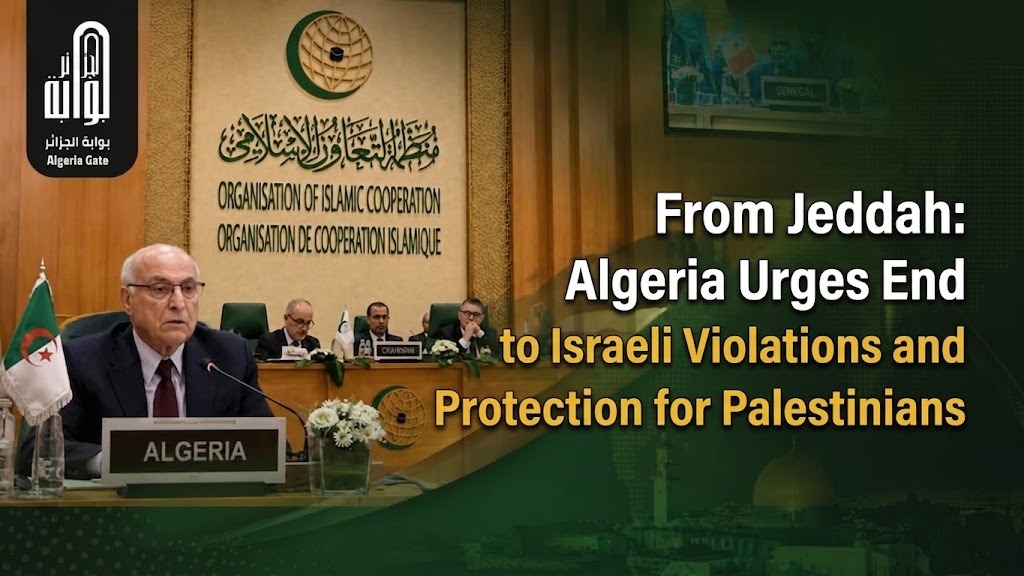
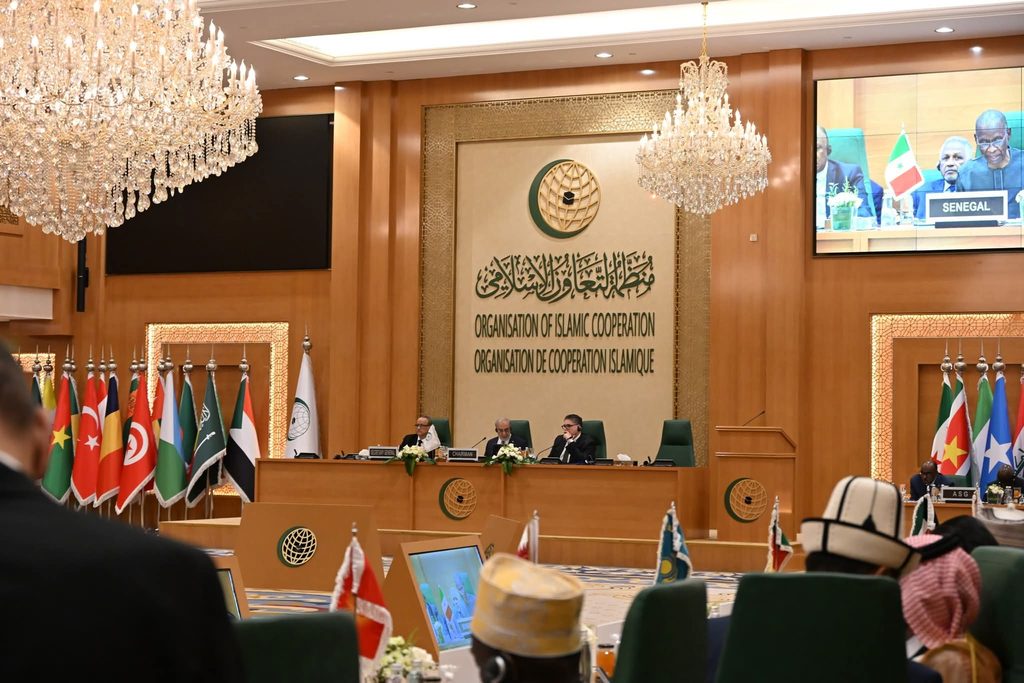
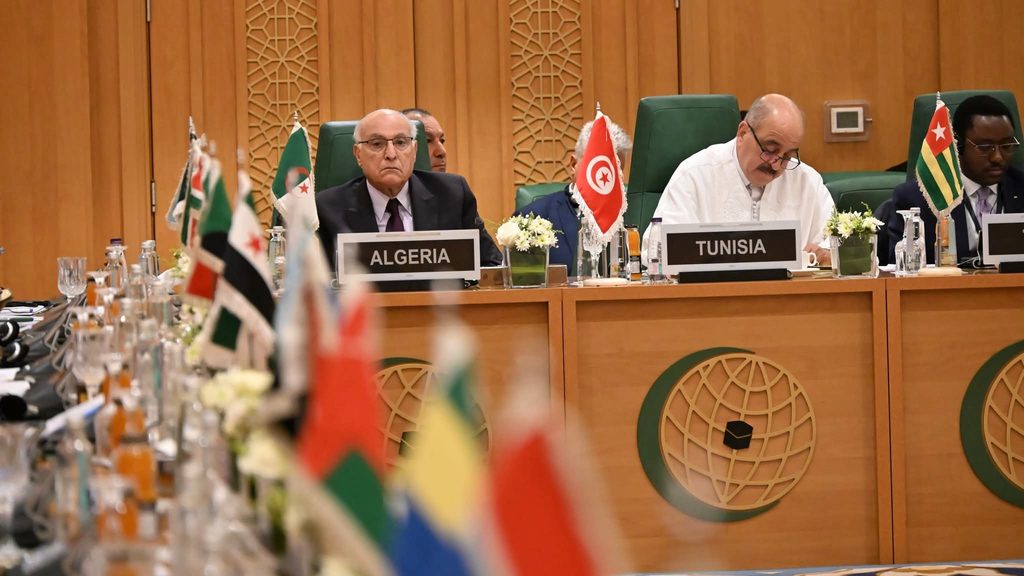
Algeria Gate: Minister of State, Minister of Foreign Affairs, National Community Abroad and African Affairs, Ahmed Attaf, took part in the 23rd Extraordinary Session of the Council of Foreign Ministers of the Organisation of Islamic Cooperation (OIC) member states, held on August 27th in Jeddah, Saudi Arabia.

From Jeddah: Algeria Urges End to Israeli Violations and Protection for Palestinians

The session endorsed the Mauritanian candidate, Ismail Ould Cheikh Ahmed, as the new Secretary-General of the OIC, succeeding Hussein Ibrahim Taha of the Republic of Chad.

The meeting also provided an opportunity to review the latest developments in the occupied Palestinian territories amid the ongoing and escalating Israeli violations against the Palestinian people, which have resulted in a serious deterioration of the humanitarian and security situation.

From Jeddah: Algeria Urges End to Israeli Violations and Protection for Palestinians

In this regard, participants stressed the need to intensify efforts and collective action to put an end to the Israeli aggressions and violations, and to provide international protection for the Palestinian people in a manner that guarantees respect for their legitimate national rights.

For his part, Attaf reaffirmed in his address Algeria’s firm and steadfast position in support of the Palestinian cause and the legitimate, inalienable national rights of the Palestinian people, foremost among them the right to establish an independent and sovereign state with Al-Quds Al-Sharif as its capital, in accordance with the resolutions of international legitimacy.

https://twitter.com/algatedzEng/status/2093038755447701577?s=20

The Algerian Foreign Minister also called for an end to Israeli aggressions against Arab lands, underlined the necessity of respecting the sovereignty and territorial integrity of states, and stressed the importance of de-escalation and prioritising dialogue and peaceful means in addressing crises, so as to create the conditions necessary for establishing security and stability in the Middle East.

Attaf further reiterated the importance of strengthening joint Islamic action and unifying positions in the face of the challenges confronting the Islamic world, enabling the OIC to fulfil its role more effectively in defending the interests of member states and their just causes.

#Algeria#KSA#Palestine
Author
Lys Iwannughen
View my articles