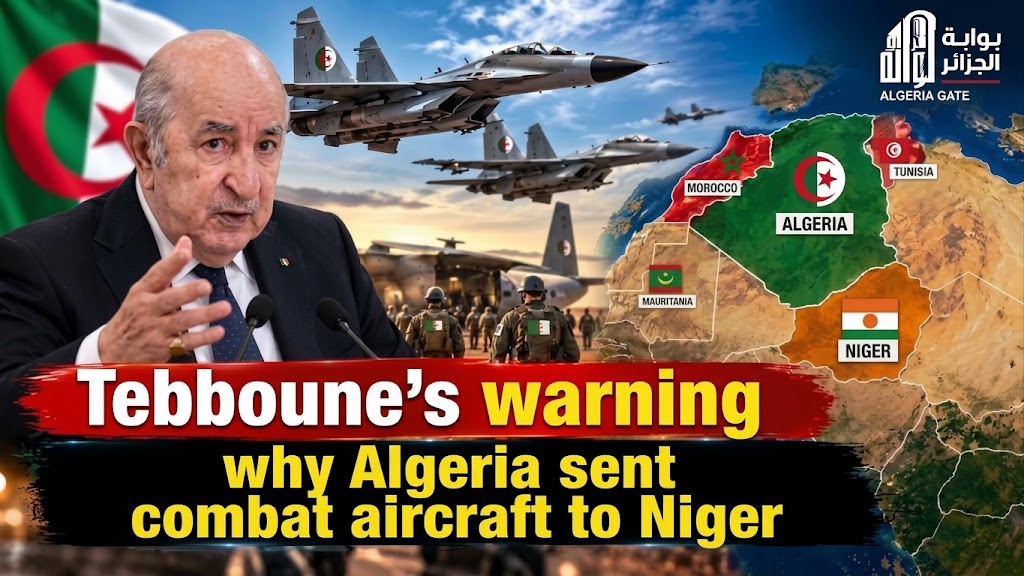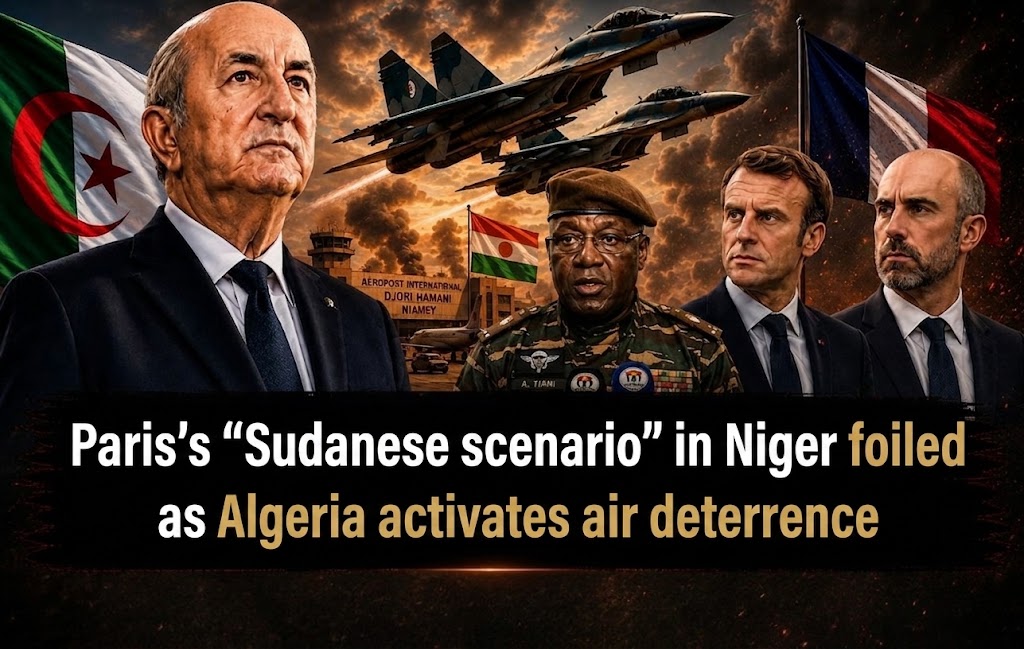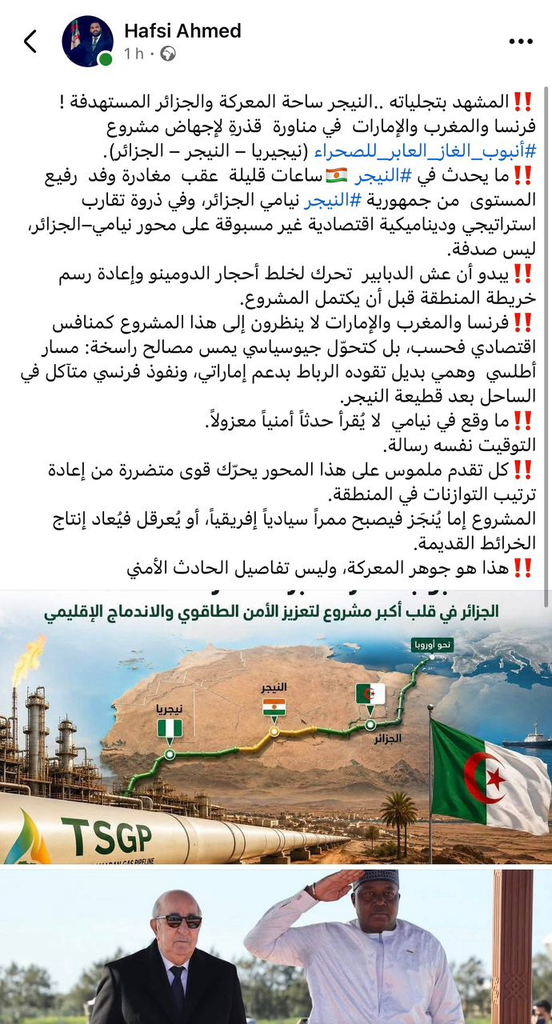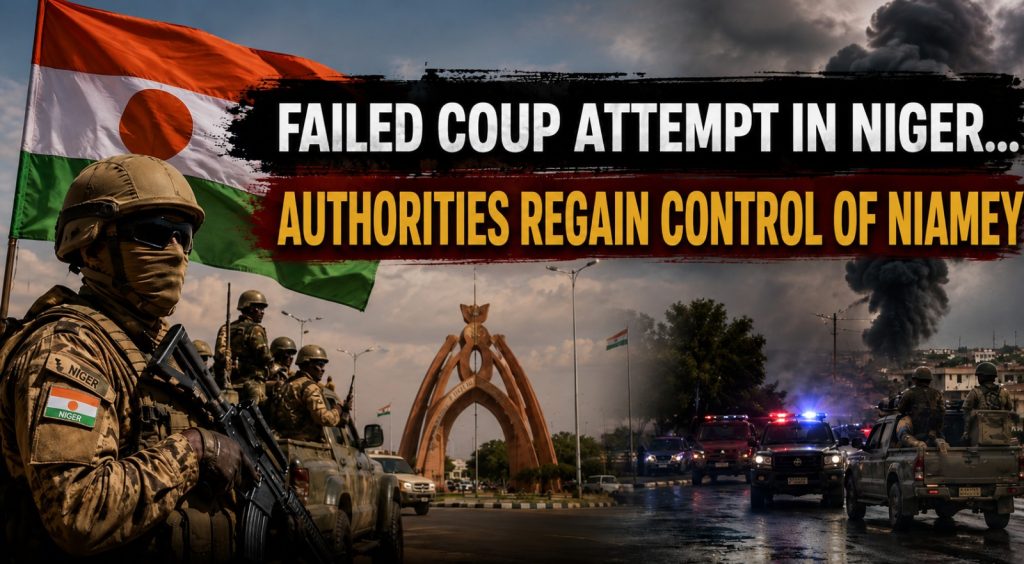

Algeria Gate: Nigerien authorities have unveiled new and explosive details about the military rebellion that shook the capital Niamey on the night of 28–29 August 2026. According to official accounts, both internal and external actors were behind the failed attempt to destabilise the country.
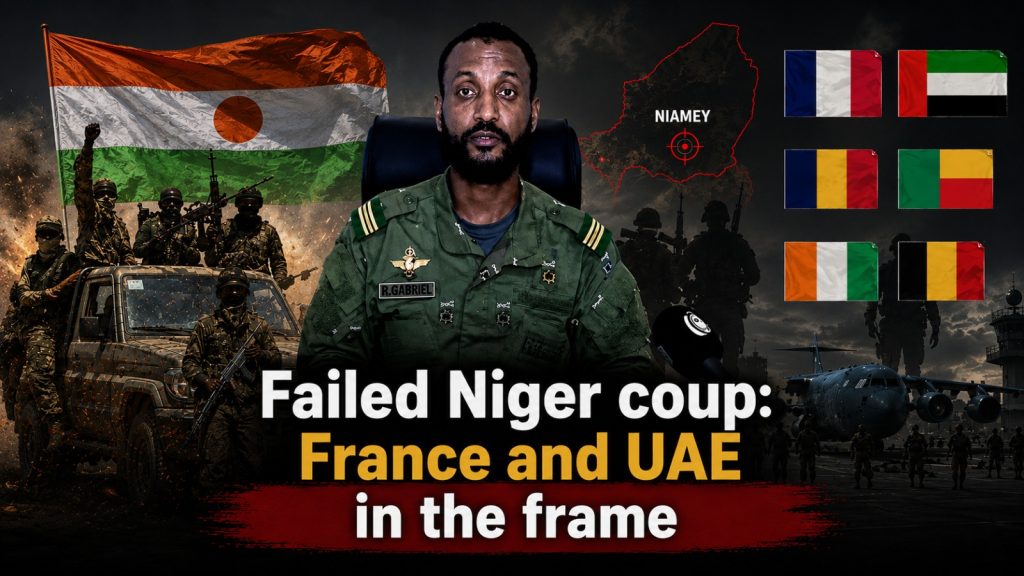
In a televised address on Tuesday evening, Captain Roger Gabriel, commander of Niamey’s 1st Parachute Battalion, named several officers he accused of leading the mutiny. He also claimed that members of the army’s Security and Intelligence Unit (BSR) took part in the operation.
Gabriel widened the scope of the accusations. He implicated figures close to former president Mohamed Bazoum, as well as officers from France, Chad, Benin and Ivory Coast. The captain further stated that he had received phone calls from Belgium and Dubai urging his unit to join the rebels.
In the most serious claim, Gabriel alleged that plans were under way to deploy French special forces to Niamey airport in support of the mutineers, placing France firmly at the centre of Niger’s official narrative.
These revelations go far beyond a simple barracks revolt. They suggest a calculated effort to exploit internal rifts and reassert foreign influence in Niger, following the profound geopolitical and military realignments the country has undergone in recent years.
The message from Niamey is unambiguous. For the authorities, the struggle is no longer confined to a handful of mutineers. It is a broader confrontation with what they describe as an external network seeking to regain a foothold through local proxies.