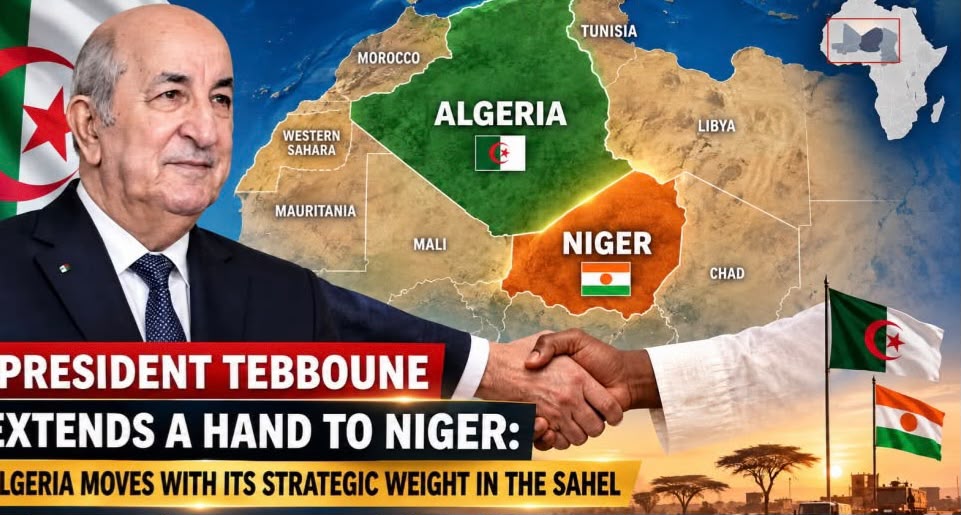
Algeria Gate: Under President Abdelmadjid Tebboune, Algeria has moved from observing developments in the Sahel to acting as a key regional power. Drawing on its geography, history, and capabilities, it is now actively contributing to the security and stability of its southern neighborhood.
The Algerian approach stands out clearly: no military bases imposing external control, no ready-made political agendas for export, and no aid conditioned on political loyalty. Instead, Algeria offers cooperation grounded in respect for sovereignty and support for states’ ability to protect their own territory.
Crucially, Algeria does not present itself in the Sahel as a power seeking influence for its own sake. It views the stability of its southern neighborhood as a direct component of its national security. This distinction matters in a region where international competition for influence has intensified and where Sahelian states have become arenas for overlapping security, strategic, and economic interests.
Military Assistance to Niger Carries a Dual Message
The recent military support provided to Niger delivers two clear signals: solidarity with Niamey and a strategic message to capitals concerned with the future of the Sahel.
Algeria is stating in practical terms that leaving regional states to face security threats alone is not an option. The vacuum left by traditional powers can quickly become a direct threat to the entire region. Supporting Niger’s defensive capabilities therefore fits a broader vision: enabling Sahelian countries to develop their own security tools rather than remaining open arenas for external intervention.
Niger’s geography amplifies the importance of this step. The country shares borders with Libya, Algeria, Mali, Burkina Faso, Nigeria, Chad, and Benin. Strengthening its security capacities benefits not only Niamey but the wider regional security architecture.
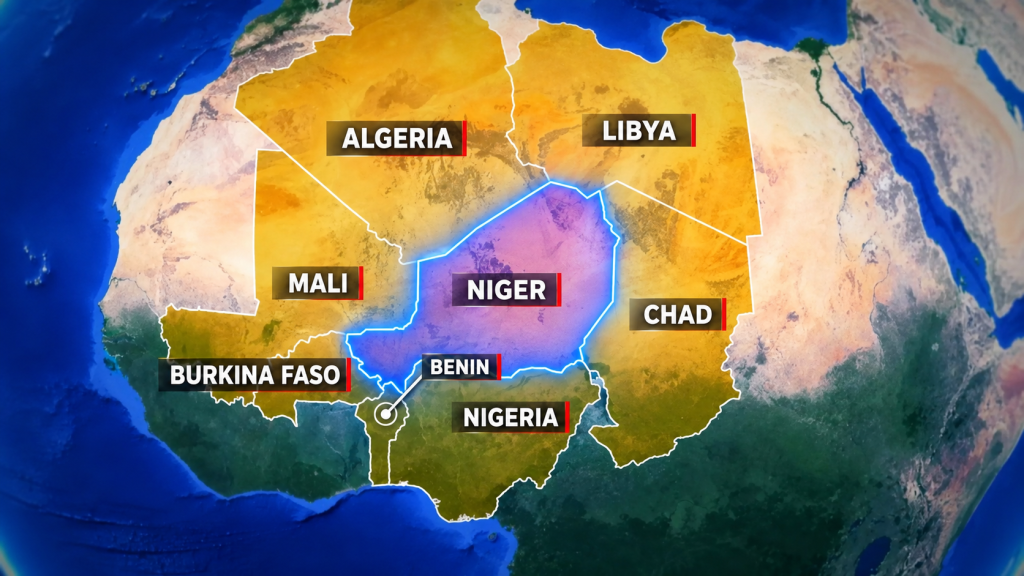
The fact that the assistance was launched from the secondary deployment base at In Guezzam, in Algeria’s far south, toward Niamey further highlights the geographic and strategic depth of Algerian-Nigerien relations and the weight of the Saharan hinterland in Algeria’s security calculations.
A Comprehensive Approach: Security, Development, and Diplomacy
What distinguishes Algeria’s Sahel policy is that it does not rely solely on military tools. The Algerian approach combines security, development, and diplomacy in an effort to address the roots of instability rather than only its symptoms.
When Algeria places military capabilities at the service of a neighboring state, it does not abandon diplomacy. It reinforces it with concrete instruments. The “outstretched hand” does not signal weakness; it reflects a deliberate choice to use power in ways that promote stability while preserving the independent decision-making of regional states.
This is one of President Tebboune’s central messages: Algeria can be present and influential in the Sahel without becoming a tutelary power.
A New Geopolitical Landscape Creates Strategic Opportunity
Recent transformations in the Sahel have produced a new geopolitical reality. Alliances are shifting, external powers are competing, political systems are redefining international relations, traditional roles are receding, and new actors are emerging.
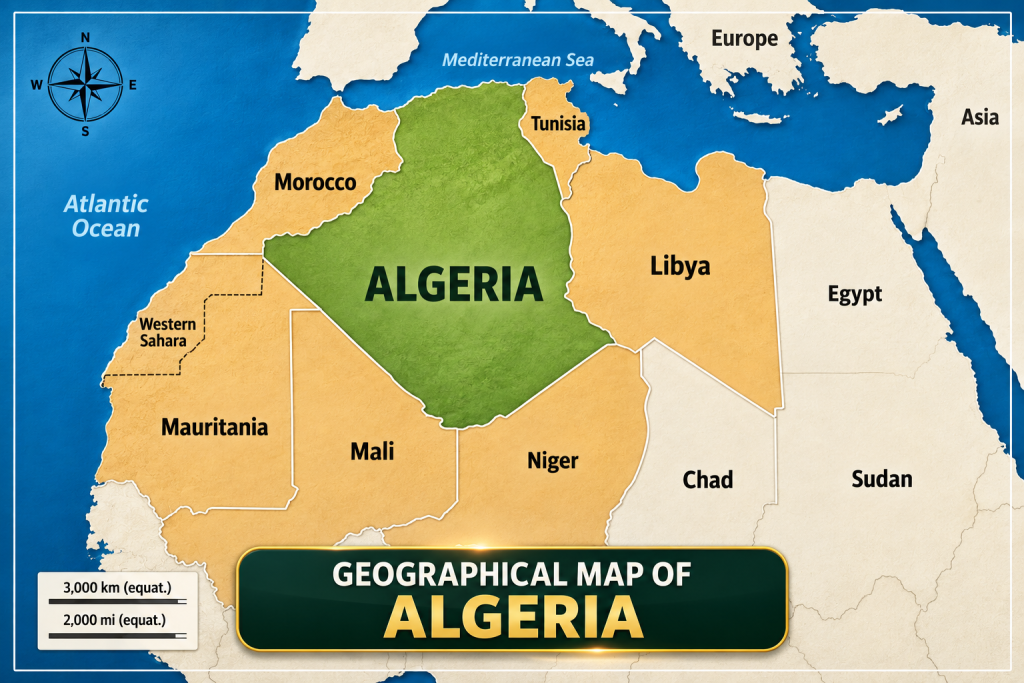
In this environment, Algeria faces a strategic opportunity to reaffirm its position as a regional power that cannot be bypassed in any arrangements concerning the future of the Sahel.
The military assistance to Niger fits this context. It does not mean Algeria seeks to draw the regional map alone. Rather, it underscores that any new geopolitical configuration of the Sahel will remain incomplete without accounting for Algerian interests, security concerns, and historical role.
Algeria holds the longest land border with the Sahel region. It understands better than most that a collapse of security to the south will not stop at national borders. Protecting Algeria’s strategic depth therefore depends, in significant measure, on contributing to the stability of its neighborhood.
Tangible Support Confirms a Practical Doctrine
The latest Algerian military package delivered to the Nigerien army included four helicopters, ammunition, spare parts, maintenance equipment, and logistical support. The operation was carried out under the directives of the President of the Republic, Supreme Commander of the Armed Forces and Minister of National Defense.
This delivery confirms that President Tebboune’s “outstretched hand” policy is not a diplomatic slogan for political consumption. It is a practical approach that, when required, translates into concrete security and military support.
The step should not be read merely as a shipment of equipment to a neighboring country. Algeria recognizes that the security of its own borders cannot be separated from the security of neighboring states. Continued fragility in the Sahel sustains cross-border threats ranging from terrorism and organized crime to smuggling networks, irregular migration, and arms trafficking.
A Distinctive Model of Regional Influence
The military assistance to Niger is not a technical decision limited to helicopters and equipment. It forms part of a broader trajectory through which Algeria is developing a more present and influential policy in the Sahel. This policy rests on a clear equation: sovereignty of states in exchange for cooperation, collective security in place of chaos, and development instead of marginalization.
While other international and regional powers seek new footholds in the Sahel, Algeria responds with a different set of tools: active diplomacy, economic cooperation, developmental support, and security and military coordination with neighboring countries.
In Algerian doctrine, the “outstretched hand” becomes an instrument of influence of a different kind: one built on shared interests rather than imposition, and demonstrated through concrete action rather than slogans.