Sunday, 18 October 2026 • 20:57 Algiers time
Algeria Gate
News Room
Cameron Hudson: UAE is virtually the sole backer of the RSF..without its support the war in Sudan would not continue Algeria-Niger: Official launch of Trans-Saharan fibre optic link Five minutes of lament over Algeria: Amar Belani exposes CNEWS’s real obsession Algerian courts hand down first death sentences under new drugs law Ségolène Royal’s masterclass on Algeria against an ignorant and demagogic journalist President Tebboune and senior officials receive the remains of Boualem Boualem in Algiers NAPEC 2026 in Oran: Algeria at the Heart of Africa’s and the Mediterranean’s New Energy Landscape Pegasus Files: Amnesty Uncovers Morocco’s Espionage Against Spain President Tebboune Orders Salary Increases in Algeria’s 2027 Budget, Rules Out New Taxes on Citizens Algeria Emerges as a Trusted Power for Regional Peace and Stability
Share this post

Algeria Advances Tebboune’s Vision: Integrated Phosphate Project and Deepening Oil Partnership with Niger

• Author: Lys Iwannughen • 0 comments • 50 views
Algeria Advances Tebboune’s Vision: Integrated Phosphate Project and Deepening Oil Partnership with Niger

Algeria Gate: Algeria is accelerating its economic transformation under President Abdelmadjid Tebboune through two major initiatives that highlight the country’s dual focus on domestic industrial development and regional energy cooperation.
The advancement of the integrated phosphate project and the launch of exploration drilling at the Kafra South-East 1 well in Niger underscore a clear strategy of resource valorization, economic diversification, and stronger African partnerships.
Algeria Advances Tebboune’s Vision: Integrated Phosphate Project and Deepening Oil Partnership with Niger

Integrated Phosphate Project: Building a High-Value Industrial Chain

Sonatrach has signed two engineering, procurement and construction (EPC) contracts with Italy’s Saipem and China’s CHEC, in partnership with the Algerian Fertilizer Company (AFC), marking a decisive step in the integrated phosphate project.

The first phase includes a phosphate extraction and enrichment complex at Bled El Hadba in Tébessa with a capacity of 5.5 million tonnes per year, an integrated industrial complex at Oued El Kebrit in Souk Ahras for phosphate and nitrogen fertilizers, and supporting port infrastructure in Annaba.

Operating under an accelerated EPC Fast Track model, the project is scheduled to deliver its first enriched phosphate in the first quarter of 2027, with fertilizer production starting in the fourth quarter of the same year. Once fully operational, it is expected to produce approximately 6 million tonnes of enriched phosphate and 4 million tonnes of fertilizers annually (including DAP, MAP, NPK and urea), along with strategic products such as sulfuric acid, phosphoric acid and ammonia.
Algeria Advances Tebboune’s Vision: Integrated Phosphate Project and Deepening Oil Partnership with Niger

President Tebboune has closely monitored the project, directing that phosphate exports from Bled El Hadba begin no later than March 2027 and that the phosphoric acid plant enter service by the end of 2026 or early 2027. The initiative is projected to create around 12,000 direct jobs, mainly in Tebessa, Souk Ahras, Skikda and Annaba. Supporting infrastructure includes a 422 km mining railway linking Bled El Hadba to Annaba and the expansion of the port to handle large vessels, positioning Annaba as a major logistics hub for mineral exports.

Experts view the project as one of Algeria’s most significant industrial achievements because it moves beyond raw extraction to create a full value chain of high-value products. It supports non-hydrocarbon exports, responds to global demand for fertilizers driven by food security needs in Africa and Asia, and reduces reliance on primary commodity exports.

Kafra South-East 1: Strengthening the Algeria-Niger Strategic Partnership

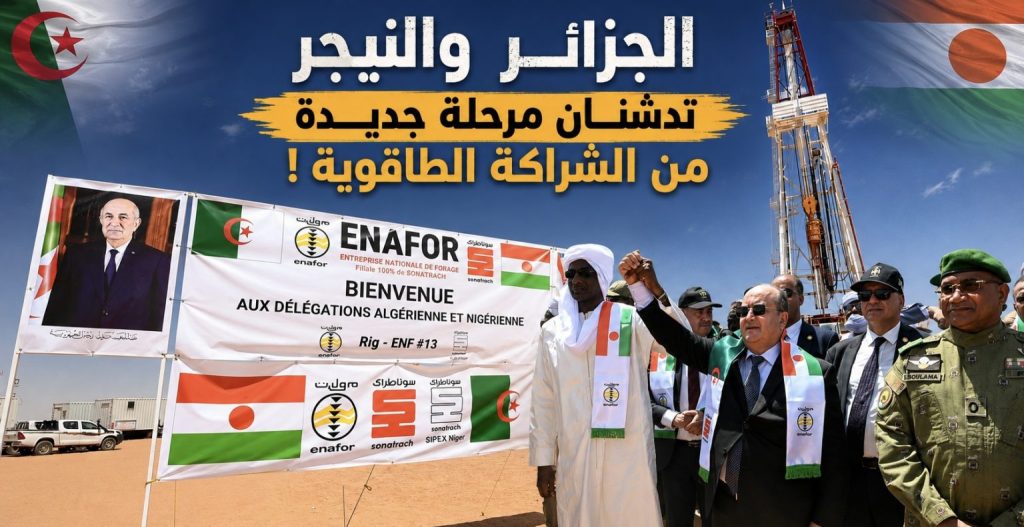
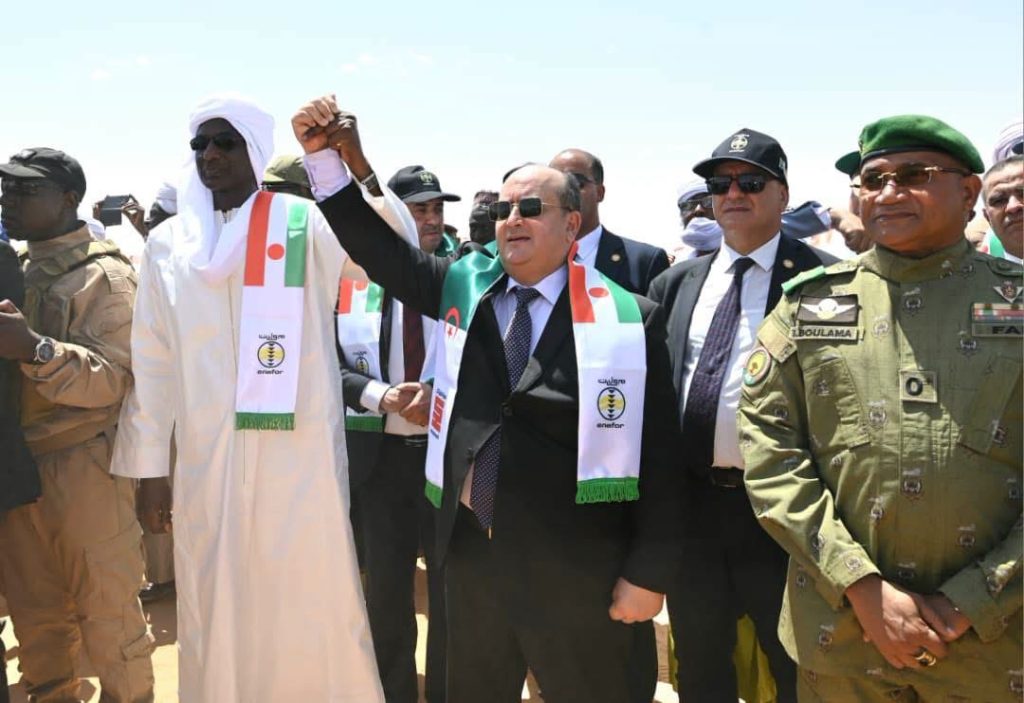
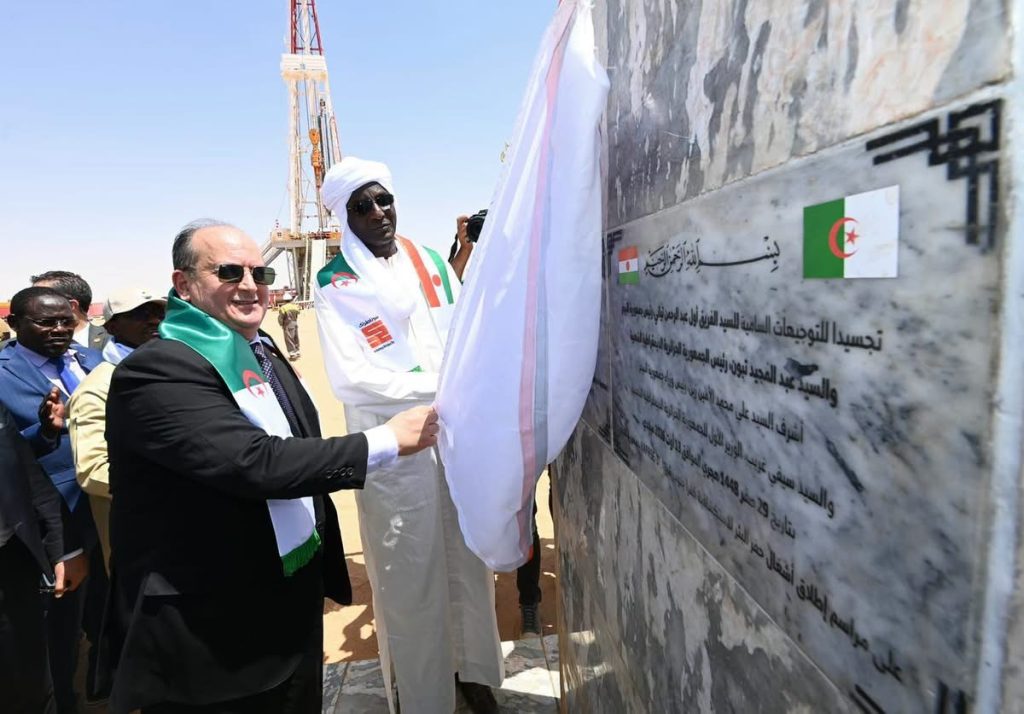
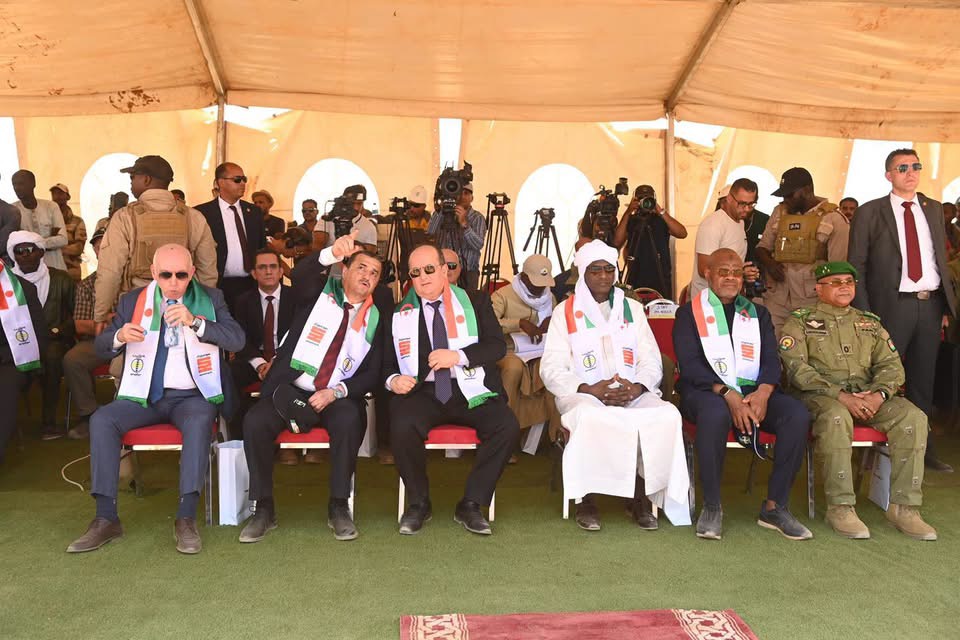
In parallel, Algeria is deepening its energy partnership with Niger. Prime Minister Sifi Ghrieb co-chaired the official launch of drilling works at the Kafra South-East 1 exploration well in Agadez alongside his Nigerien counterpart, Ali Mahaman Lamine Zeine.
Algeria Advances Tebboune’s Vision: Integrated Phosphate Project and Deepening Oil Partnership with Niger

The launch represents a new stage in the strategic partnership initiated by President Tebboune and Nigerien President Abdourahamane Tiani. The well forms part of broader exploration efforts to assess the potential of the promising Kafra oil field ahead of future development and production phases.

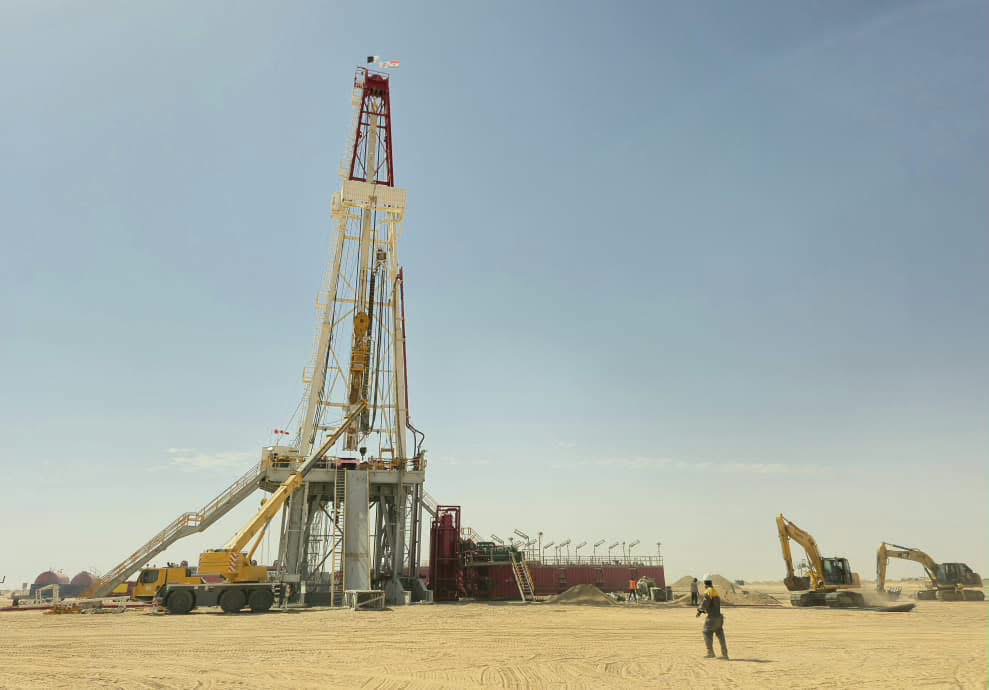
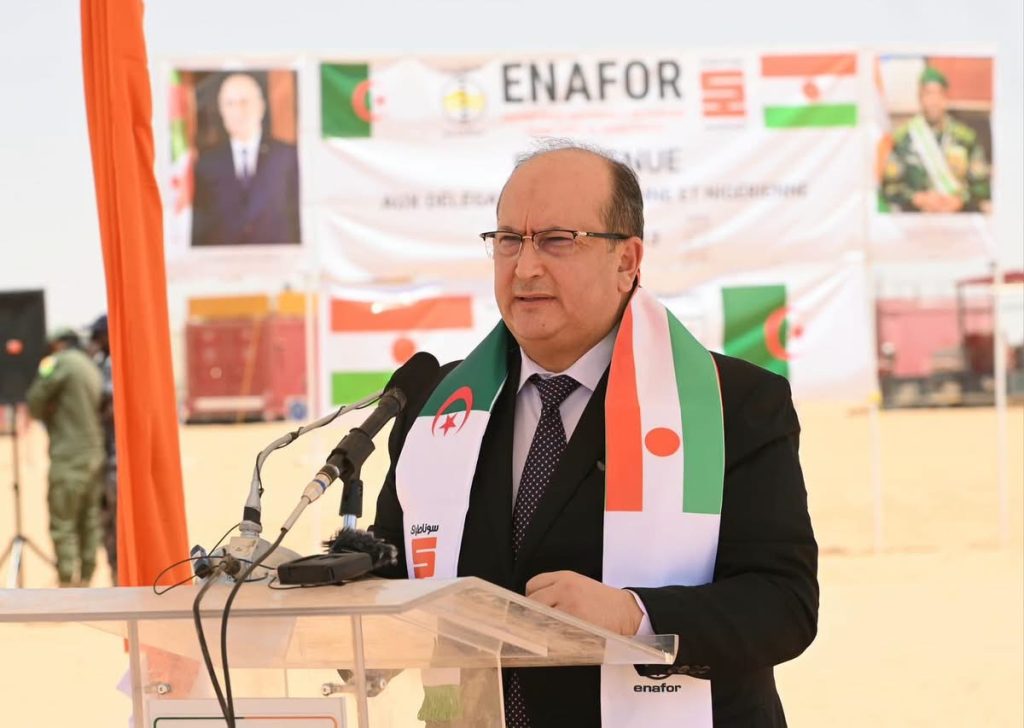
A key technical achievement was the mobilization and transport of the 2,000-horsepower ENF-13 drilling rig from Algeria to the remote Kafra site by the National Drilling Company (Enafor), working with Sonatrach’s Sipex and Niger’s Sonidep under challenging logistical and security conditions.

The partnership extends beyond exploration. It covers research, development, production, refining, petrochemicals, marketing, training and technology transfer. Algeria is supporting Sonidep in crude oil marketing and capacity building, will undertake major maintenance at the Zinder refinery, and continues evaluating additional blocks, including Bilma. Enafor has committed to progressively using Nigerien companies and recruiting and training local youth.
Algeria Advances Tebboune’s Vision: Integrated Phosphate Project and Deepening Oil Partnership with Niger

Prime Minister Ghrieb emphasized that this cooperation forms part of a broader African energy partnership aligned with sustainable development and continental integration, including progress on the Trans-Saharan gas pipeline. The approach also prioritizes the development of border regions as zones of shared growth, security and stability in the Sahel.
Algeria Advances Tebboune’s Vision: Integrated Phosphate Project and Deepening Oil Partnership with Niger

A Unified Vision for Diversification and African Cooperation

Both projects reflect President Tebboune’s consistent emphasis on reducing dependence on a single resource, building industrial capacity, creating jobs and strengthening Algeria’s role as a driver of regional cooperation. The phosphate complex anchors domestic value-added industrialization and export diversification, while the Kafra partnership expands Algeria’s energy cooperation model across the continent.

Together, these initiatives demonstrate a practical shift from planning to execution, positioning Algeria to enhance its economic sovereignty, support African integration, and deliver long-term benefits through strategic infrastructure and cross-border partnerships.

#Algeria#Niger#President tebboune
Author
Lys Iwannughen
View my articles

Leave a comment

Your email address will not be published. Required fields are marked *

Algeria
Share this post

1.27-Billion-Year-Old Martian Meteorite Found in Algeria Fills Major Gap in Mars History

1.27-Billion-Year-Old Martian Meteorite Found in Algeria Fills Major Gap in Mars History

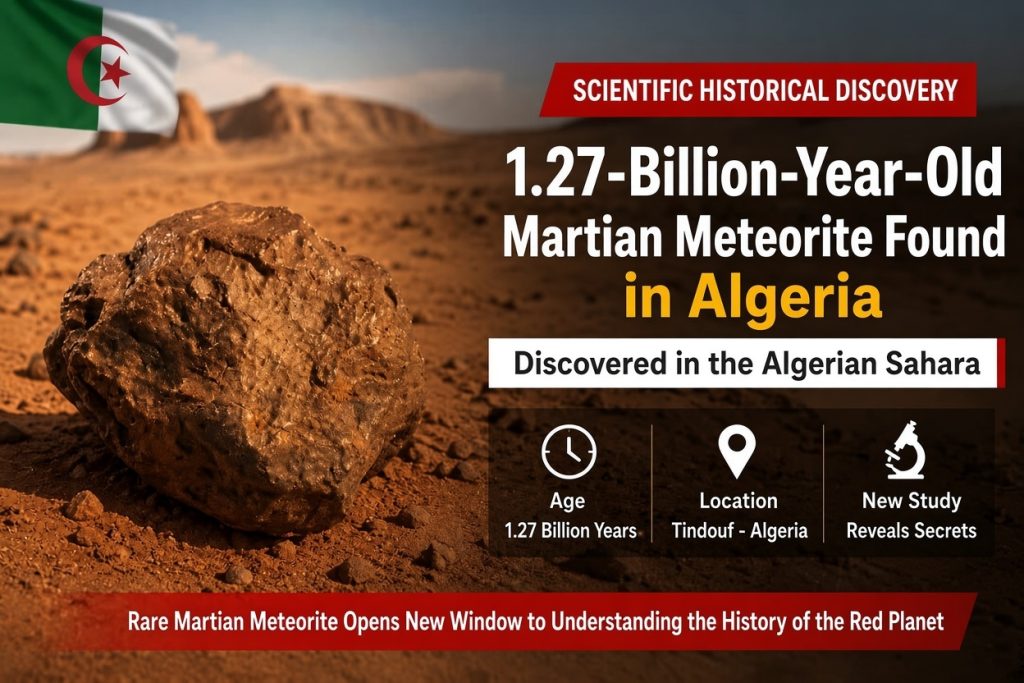
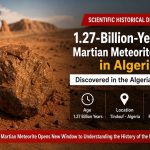
Algeria Gate: A groundbreaking study has confirmed that a Martian meteorite discovered in the heart of Algeria’s Sahara holds a unique place in planetary science. Named NWA 13441, the rock was found in 2019 in Tindouf Province and has been dated to approximately 1.273 billion years old, making it the first known shergottite from this critical period in Mars’ history.

Why NWA 13441 Matters for Understanding Mars

Most Martian meteorites classified as shergottites (the most common type of rock from Mars found on Earth) are either younger than 600 million years or about 2.4 billion years old. This left a nearly 2-billion-year gap in the record of magmatic and volcanic activity on the Red Planet.

NWA 13441 fills that gap. According to research led by scientists at Boston College, in collaboration with institutions in the United States and the United Kingdom, no other known Martian meteorite of this type dates to 1.27 billion years ago.

Professor Ethan Baxter of Boston College’s Department of Earth and Environmental Sciences, a co-author of the study published in Geochimica et Cosmochimica Acta, noted that the meteorite’s age and composition were entirely unexpected.

How Scientists Dated the Algerian Meteorite

Researchers used high-precision radioactive isotope analysis, specifically the samarium-neodymium (Sm-Nd) system, which acts like an atomic clock. These measurements revealed when the crystals in the rock formed.

Even more striking is the meteorite’s isotopic signature. Its neodymium composition closely matches that of chondrites; primitive materials that date back to the formation of the solar system 4.56 billion years ago. This suggests the rock originated from a previously unsampled, relatively pristine reservoir deep in Mars’ mantle that remained largely unaltered since the planet’s early history.

Algeria’s Role in Martian Science

The meteorite was recovered by local finders near Rafsa in the Oum El Assel area of Algeria and later classified as an olivine-phyric shergottite. Algeria’s vast desert has long been a rich source of meteorites, and NWA 13441 adds to the country’s growing scientific importance in planetary research.

The study shows that material from deep within Mars was brought to the surface by volcanic activity around 1.27 billion years ago, later ejected into space by an impact, and eventually landed in the Algerian Sahara.

Key Takeaways

  • Name: Northwest Africa 13441 (NWA 13441)
  • Found: 2019, Tindouf Province, Algeria
  • Age: ~1.273 billion years
  • Type: Intermediate olivine-phyric shergottite
  • Significance: First shergottite from this time period; reveals a long-lived, chondritic reservoir in Mars’ interior

This discovery from Algeria not only advances our understanding of Mars’ geological past but also highlights the Sahara’s continuing value as a natural archive of the solar system’s history.

#Algeria
Author
Lys Iwannughen
View my articles
Algeria
Share this post

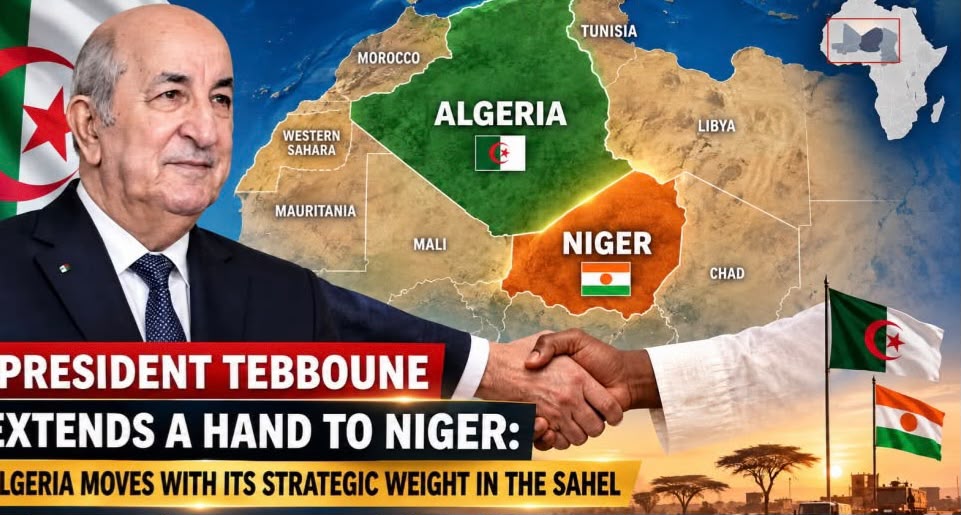
President Tebboune Extends a Hand to Niger: Algeria Moves with Its Strategic Weight in the Sahel

President Tebboune Extends a Hand to Niger: Algeria Moves with Its Strategic Weight in the Sahel

Algeria Gate: Under President Abdelmadjid Tebboune, Algeria has moved from observing developments in the Sahel to acting as a key regional power. Drawing on its geography, history, and capabilities, it is now actively contributing to the security and stability of its southern neighborhood.

The Algerian approach stands out clearly: no military bases imposing external control, no ready-made political agendas for export, and no aid conditioned on political loyalty. Instead, Algeria offers cooperation grounded in respect for sovereignty and support for states’ ability to protect their own territory.

Crucially, Algeria does not present itself in the Sahel as a power seeking influence for its own sake. It views the stability of its southern neighborhood as a direct component of its national security. This distinction matters in a region where international competition for influence has intensified and where Sahelian states have become arenas for overlapping security, strategic, and economic interests.

Military Assistance to Niger Carries a Dual Message

The recent military support provided to Niger delivers two clear signals: solidarity with Niamey and a strategic message to capitals concerned with the future of the Sahel.

Algeria is stating in practical terms that leaving regional states to face security threats alone is not an option. The vacuum left by traditional powers can quickly become a direct threat to the entire region. Supporting Niger’s defensive capabilities therefore fits a broader vision: enabling Sahelian countries to develop their own security tools rather than remaining open arenas for external intervention.

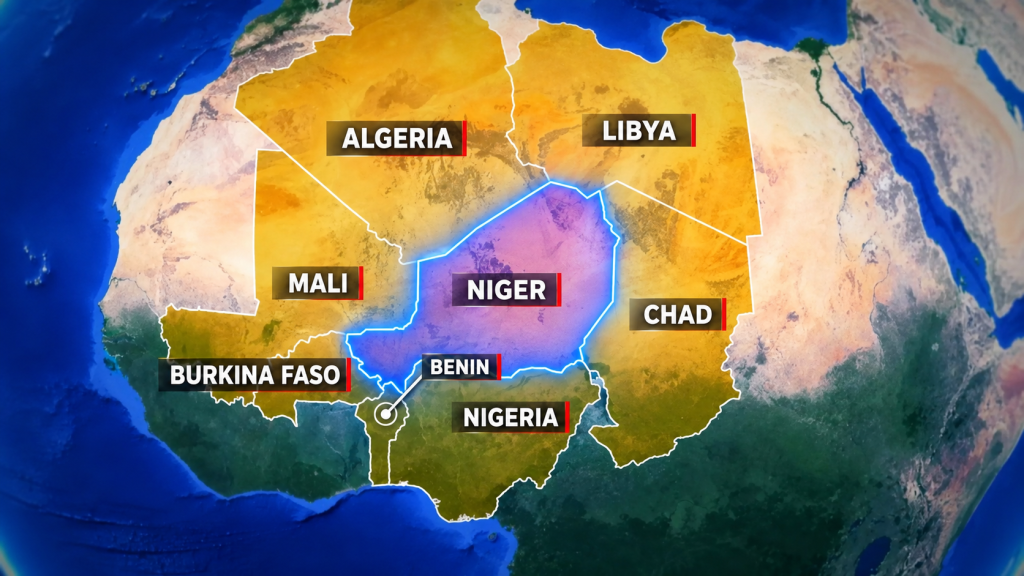
Niger’s geography amplifies the importance of this step. The country shares borders with Libya, Algeria, Mali, Burkina Faso, Nigeria, Chad, and Benin. Strengthening its security capacities benefits not only Niamey but the wider regional security architecture.

President Tebboune Extends a Hand to Niger: Algeria Moves with Its Strategic Weight in the Sahel

The fact that the assistance was launched from the secondary deployment base at In Guezzam, in Algeria’s far south, toward Niamey further highlights the geographic and strategic depth of Algerian-Nigerien relations and the weight of the Saharan hinterland in Algeria’s security calculations.

A Comprehensive Approach: Security, Development, and Diplomacy

What distinguishes Algeria’s Sahel policy is that it does not rely solely on military tools. The Algerian approach combines security, development, and diplomacy in an effort to address the roots of instability rather than only its symptoms.

When Algeria places military capabilities at the service of a neighboring state, it does not abandon diplomacy. It reinforces it with concrete instruments. The “outstretched hand” does not signal weakness; it reflects a deliberate choice to use power in ways that promote stability while preserving the independent decision-making of regional states.

This is one of President Tebboune’s central messages: Algeria can be present and influential in the Sahel without becoming a tutelary power.

A New Geopolitical Landscape Creates Strategic Opportunity

Recent transformations in the Sahel have produced a new geopolitical reality. Alliances are shifting, external powers are competing, political systems are redefining international relations, traditional roles are receding, and new actors are emerging.

President Tebboune Extends a Hand to Niger: Algeria Moves with Its Strategic Weight in the Sahel

In this environment, Algeria faces a strategic opportunity to reaffirm its position as a regional power that cannot be bypassed in any arrangements concerning the future of the Sahel.

The military assistance to Niger fits this context. It does not mean Algeria seeks to draw the regional map alone. Rather, it underscores that any new geopolitical configuration of the Sahel will remain incomplete without accounting for Algerian interests, security concerns, and historical role.

Algeria holds the longest land border with the Sahel region. It understands better than most that a collapse of security to the south will not stop at national borders. Protecting Algeria’s strategic depth therefore depends, in significant measure, on contributing to the stability of its neighborhood.

Tangible Support Confirms a Practical Doctrine

The latest Algerian military package delivered to the Nigerien army included four helicopters, ammunition, spare parts, maintenance equipment, and logistical support. The operation was carried out under the directives of the President of the Republic, Supreme Commander of the Armed Forces and Minister of National Defense.

This delivery confirms that President Tebboune’s “outstretched hand” policy is not a diplomatic slogan for political consumption. It is a practical approach that, when required, translates into concrete security and military support.

The step should not be read merely as a shipment of equipment to a neighboring country. Algeria recognizes that the security of its own borders cannot be separated from the security of neighboring states. Continued fragility in the Sahel sustains cross-border threats ranging from terrorism and organized crime to smuggling networks, irregular migration, and arms trafficking.

A Distinctive Model of Regional Influence

The military assistance to Niger is not a technical decision limited to helicopters and equipment. It forms part of a broader trajectory through which Algeria is developing a more present and influential policy in the Sahel. This policy rests on a clear equation: sovereignty of states in exchange for cooperation, collective security in place of chaos, and development instead of marginalization.

While other international and regional powers seek new footholds in the Sahel, Algeria responds with a different set of tools: active diplomacy, economic cooperation, developmental support, and security and military coordination with neighboring countries.

In Algerian doctrine, the “outstretched hand” becomes an instrument of influence of a different kind: one built on shared interests rather than imposition, and demonstrated through concrete action rather than slogans.

#Algeria#President tebboune
Author
Lys Iwannughen
View my articles
Algeria
Share this post

Algeria Triumphs in the Media Narrative War: Morocco Loses the Digital Battle Despite Its Electronic Brigades

Algeria Triumphs in the Media Narrative War: Morocco Loses the Digital Battle Despite Its Electronic Brigades

Algeria Gate: The media and digital confrontation between Algeria and Morocco has undergone a fundamental transformation in recent years. Algeria has shifted from being a frequent target of coordinated influence and disinformation campaigns to building a robust system for monitoring, responding, and protecting its digital sovereignty. Meanwhile, Moroccan media circles increasingly accuse Algeria of waging a “digital war” whenever internal debates intensify or social crises erupt inside the kingdom.

A clear distinction exists between political accusations designed for domestic consumption and documented digital operations identified by technology companies themselves.

Meta Documents Moroccan-Originated Coordinated Inauthentic Behavior

While Moroccan platforms portray Rabat as a victim of Algerian digital attacks, Meta previously announced the removal of a network of accounts, pages, and groups whose activity originated in Morocco and targeted audiences in both Morocco and Algeria.

This was not an Algerian media claim or official statement. It resulted from Meta’s technical investigation into “coordinated inauthentic behavior.” The platform deleted:

  • 255 Facebook accounts
  • 93 pages
  • 17 groups
  • 60 Instagram accounts

Meta linked part of the activity to a Moroccan marketing company. In this case, Algeria was among the countries actually targeted by digital networks originating from Morocco.

This precedent matters today because Moroccan discourse often reverses the narrative; framing every wave of criticism or negative content directed at Moroccan authorities as Algerian interference. Yet internal crises in the kingdom have clear social, economic, and political roots. International institutions and major media outlets have documented protests related to public services, unemployment, corruption, and spending distribution. Moroccan youth increasingly use social platforms to shape public debate independently of traditional media. Attributing every digital wave of anger to Algeria serves as a convenient way to export crises rather than address their internal causes.

Algeria Builds a Comprehensive Digital Defense System

Algeria’s approach has evolved significantly. After an earlier period of scattered and reactive media responses, the state developed organized layers combining cybersecurity, institutional communication, national media, digital monitoring, and coordination between civilian and military institutions.

This shift is embodied in the National Strategy for the Security of Information Systems 2025–2029, approved by President Abdelmadjid Tebboune as Supreme Commander of the Armed Forces and Minister of National Defense. The strategy prioritizes the protection of digital sovereignty, data, critical infrastructure, and service continuity as core elements of national security.

The Role of the People’s National Army in Cyber Defense

The People’s National Army plays a pivotal role—not by engaging in daily media polemics, but by protecting the state’s digital infrastructure, developing monitoring and anticipation capabilities, securing sensitive systems, and strengthening military-civilian cybersecurity cooperation.

The Ministry of National Defense has repeatedly emphasized that modern threats extend beyond traditional military domains to include cyberspace, artificial intelligence, data, and information warfare. Communication and digital security are now integral to national defense.

For Algeria, the battle is no longer about individual posts or hashtags. It centers on the state’s ability to make any disinformation operation less impactful, shorter-lived, and more detectable. Early monitoring institutions, media outlets with accurate information, security agencies tracking coordinated campaigns, and official platforms that release data quickly all reduce the cost of information attacks while raising the cost for those behind them.

Media Response Becomes Part of Economic Protection

This security development has been accompanied by stronger media coordination. Former Minister of Communication Mohamed Meziane publicly stated that Algeria faces a multi-form media war and called for a national media front capable of protecting the country’s image and responding to false news targeting its institutions, projects, and policies.

Results of this transformation are visible in how sensitive files are managed. Algerian media and digital teams now release documents, figures, and official data more rapidly. National media has improved at dismantling claims by linking them to international sources, particularly on major economic projects, security files, and diplomatic issues that previously suffered from distortion.

The media war against Algeria has not only targeted the state’s image. In some cases it has directly affected economic assets. Doubts cast on mining or energy projects, inaccurate narratives about major investments, or amplified social disturbances can quickly reach search engines, foreign press, investors, and rating agencies—raising reputational costs and harming the country’s economic image. Defending projects such as Gara Djebilet, energy investments, or infrastructure is therefore inseparable from protecting the assets themselves when reputation forms part of their value.

International Media Begins Distinguishing Narratives

The external information environment has also shifted. The Moroccan narrative no longer passes unchallenged. Major European and international media outlets increasingly distinguish between official Moroccan statements and evidence from field realities or digital investigations. In several cases, internal explanations of crises; youth protests, migration issues, social tension, or criticism of Moroccan authorities, have proven stronger than the hypothesis of “Algerian interference.”

This change benefits Algeria without requiring propaganda. The real gain is not that every foreign outlet adopts the Algerian narrative, but that the Moroccan narrative is no longer treated as the sole truth. When Algerian documents, official data, and narratives become part of the materials foreign media use, the communication balance shifts toward credibility competition rather than unilateral narrative dominance.

The Credibility Challenge Facing Moroccan Accusations

The Makhzen discourse faces growing difficulty when it attributes internal crises to an “Algerian digital war.” Such claims now require technical evidence that can be independently examined. Technology platforms, cybersecurity firms, and research centers can increasingly trace the origin of digital networks and coordination patterns. Without this evidence, accusations become political rhetoric aimed at domestic audiences rather than verifiable security findings.

The paradox is clear: Algeria, documented by international reports as a target of Moroccan-originated digital campaigns, has strengthened its cyber and media defenses. Meanwhile, parts of the Moroccan discourse present the kingdom as a victim of Algerian digital warfare whenever authorities lose control of an internal narrative.

This does not mean Algeria is immune. Digital warfare evolves rapidly. Generative AI, deepfakes, and automated accounts make disinformation faster, cheaper, and more sophisticated. The difference is that Algeria no longer confronts these risks with outdated tools. It now operates with a national strategy, specialized security institutions, greater media awareness, and direct support from the highest levels of the state.

Cybersecurity as Preventive National Doctrine

The Algerian army integrates security deterrence into a broader system that links territorial sovereignty with digital sovereignty. An attack on databases, platforms, communications networks, or strategic institutions can produce economic and security effects comparable to certain forms of traditional aggression. Cybersecurity has therefore become part of the state’s preventive doctrine.

Media performs a complementary role. Its mission is not to chase every anonymous account but to prevent false information from becoming accepted international truth. When Algerian journalists respond with documents, figures, official reports, or international sources, counter-campaigns lose staying power in search engines and foreign media.

Algeria has moved from reacting to external narratives to producing the primary narrative, presenting documents, defining discussion angles, and allowing international press to verify the information. With the expansion of AI-generated misleading texts, images, and videos, superiority in speed and accuracy will become even more decisive.

Algeria does not need to build an “electronic army” mirroring what it attributes to adversaries. It needs a resilient wall of data integrity, security, verification systems, and multilingual content that makes false narratives short-lived and costly.

The New Phase of the Digital Confrontation

The digital battle between Algeria and Morocco has entered a different phase. Algeria, once primarily targeted, has become more capable of fortification and response. The state has constructed an integrated front combining security, media, and the digital sphere. The army protects cyber infrastructure, while media institutions more effectively defend the national narrative.

Continued attempts by Moroccan authorities to convert internal crises into accusations against Algeria neither resolve social problems nor restore narrative credibility. Such efforts may increase communication losses when international reports contradict the claims or reveal that Algeria itself was among the early victims of disinformation networks originating from Morocco.

The decisive question is no longer who controls more accounts or pages, but who maintains a stronger system for protecting information and establishing credible narratives beyond national borders. On this measure, Algeria today appears more organized and in control than in previous years, while the opposing discourse increasingly shifts from offensive posture to explaining loss of control over the digital space.

#Algeria#Morocco
Author
Lys Iwannughen
View my articles