Sunday, 18 October 2026 • 20:57 Algiers time
Algeria Gate
News Room
Cameron Hudson: UAE is virtually the sole backer of the RSF..without its support the war in Sudan would not continue Algeria-Niger: Official launch of Trans-Saharan fibre optic link Five minutes of lament over Algeria: Amar Belani exposes CNEWS’s real obsession Algerian courts hand down first death sentences under new drugs law Ségolène Royal’s masterclass on Algeria against an ignorant and demagogic journalist President Tebboune and senior officials receive the remains of Boualem Boualem in Algiers NAPEC 2026 in Oran: Algeria at the Heart of Africa’s and the Mediterranean’s New Energy Landscape Pegasus Files: Amnesty Uncovers Morocco’s Espionage Against Spain President Tebboune Orders Salary Increases in Algeria’s 2027 Budget, Rules Out New Taxes on Citizens Algeria Emerges as a Trusted Power for Regional Peace and Stability
Share this post

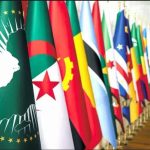
Under Algeria’s Presidency… The African Union Adopts the “One Union Approach” to Strengthen Peace and Governance

• Author: Lys Iwannughen • 0 comments • 25 views
Under Algeria’s Presidency… The African Union Adopts the “One Union Approach” to Strengthen Peace and Governance

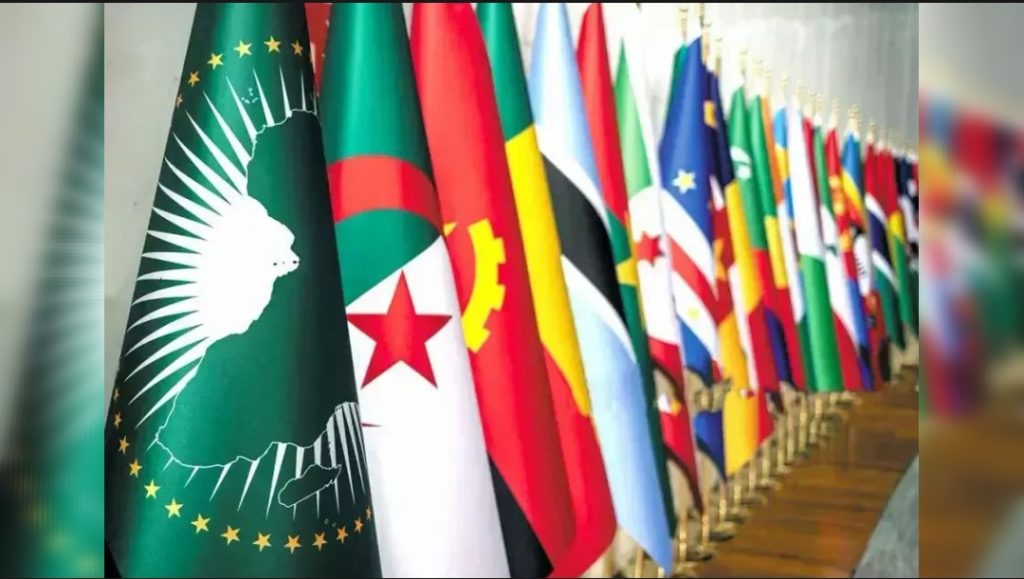
Algeria Gate / Agencies: Algeria, in its capacity as Chair of the African Union Peace and Security Council for the current month of August, chaired the annual consultative meeting between the Council and the Sub-Committee of the Permanent Representatives Committee on Human Rights, Democracy and Governance, as well as the African Governance Architecture – African Peace and Security Architecture (AGA-APSA).

This meeting falls within the framework of the annual consultations aimed at assessing progress made in enhancing coordination among the various organs and institutions of the African Union, exchanging views on emerging trends and challenges in the fields of governance, democracy, the rule of law, human rights, peace and security, and examining ways to adopt coordinated African responses to address the root causes of conflicts and instability.

These consultations take on particular importance in light of the Peace and Security Council assuming the presidency of the AGA-APSA platform at both the political and technical levels during the period 2026–2028. This provides an opportunity to strengthen the “One African Union in Action” approach and to move beyond fragmented approaches between the governance and peace-and-security systems.

In the opening address delivered by Algeria’s Ambassador and Permanent Representative to the African Union, Mohamed Khaled, in his capacity as Chair of the meeting, he highlighted the main developments achieved since the previous consultations. These include the adoption of the African Union’s forthcoming theme for 2028 on human rights, democracy and governance; the preparation of a joint roadmap between the Governance Architecture and the Peace and Security Architecture (AGA-APSA); and the development of the “African Union Trigger Model” within the framework of the early-warning and rapid-response mechanism for crises.

He also stressed the importance of unifying efforts, avoiding the duplication and proliferation of initiatives, and directing available resources toward joint action, while supporting existing initiatives and raising their efficiency on the ground.

The Council Chair emphasized that “the current situation on the continent requires a shift from mere theoretical commitment to practical and concrete measures, and the strengthening of the African Union’s capacity to prevent and respond to crises, in order to build a more stable, democratic and prosperous Africa, free from double standards.”

Furthermore, Algeria’s Ambassador and Permanent Representative reiterated the importance of continuing to strengthen the interlinkage between governance, democracy, human rights, peace and security, regarding them as “complementary and essential pillars for achieving peace, stability and sustainable development in Africa.”

The session featured high-level interventions by Mr. Bankole Adeoye, African Union Commissioner for Political Affairs, Peace and Security; Ambassador Jevin Pillay Poonoosamy, Representative of the Southern African Development Community (SADC) to the African Union in his capacity as Vice-Chair of the AGA-APSA platform; and Ambassador Willy Nyamitwe, Permanent Representative of the Republic of Burundi to the African Union and Vice-Chair of the Sub-Committee of the Permanent Representatives Committee on Human Rights, Democracy and Governance.

During the meeting, participants discussed ways to enhance the implementation of African legal instruments related to shared values, foremost among them the “African Charter on Democracy, Elections and Governance.” They urged member states that have not yet ratified these instruments to complete the ratification procedures, while ensuring the effective implementation of related commitments and the fulfillment of periodic reporting obligations.

Participants also stressed the need to move from “annual coordination to practical and sustainable cooperation based on identifying and implementing joint initiatives, enhancing information exchange and unified analysis, and supporting conflict-prevention efforts, while addressing governance shortcomings, particularly those related to transparency, accountability, inclusiveness and institutional effectiveness.”

In addition, participants examined the contribution of these mechanisms to preparing for the implementation of the African Union’s forthcoming theme for 2028, entitled: “Promoting Human Rights, Democracy and Governance to Achieve the Goals of Agenda 2063 in Africa.” They affirmed the importance of mobilizing the necessary political, institutional, technical and financial support to realize it and the related initiatives.

At the conclusion of the proceedings, it was agreed to strengthen synergy between the governance and peace-and-security systems by adopting a new approach known as the “One African Union Approach,” thereby enhancing the African Union’s effectiveness in preventing conflicts and responding to challenges related to governance, human rights and democracy.

The Council is expected to issue a final communiqué containing the recommendations emerging from this consultative meeting.

#African Union#Algeria
Author
Lys Iwannughen
View my articles

Leave a comment

Your email address will not be published. Required fields are marked *

Algeria
Share this post

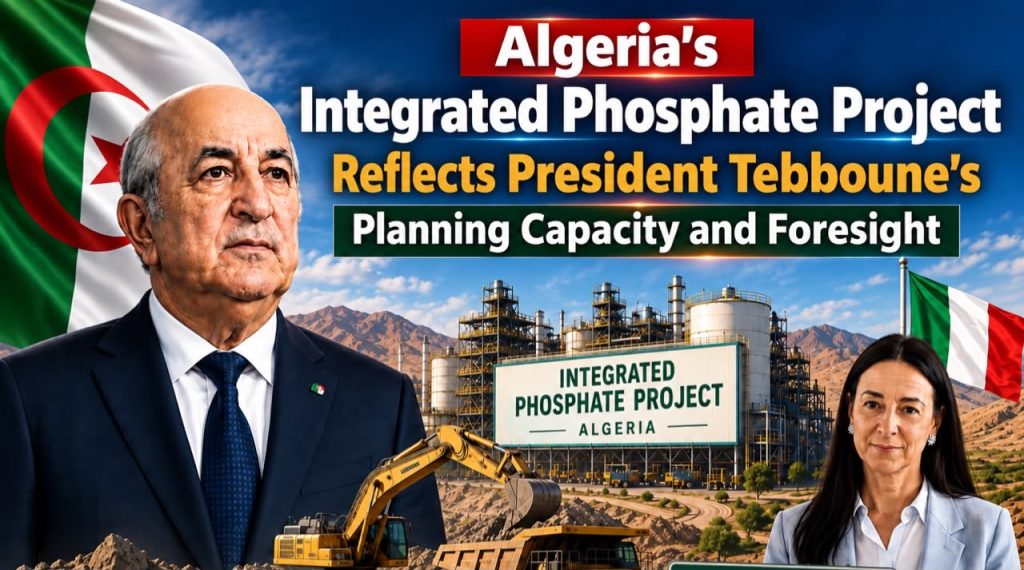
Algeria’s Integrated Phosphate Project Reflects President Tebboune’s Planning Capacity and Foresight

Algeria’s Integrated Phosphate Project Reflects President Tebboune’s Planning Capacity and Foresight

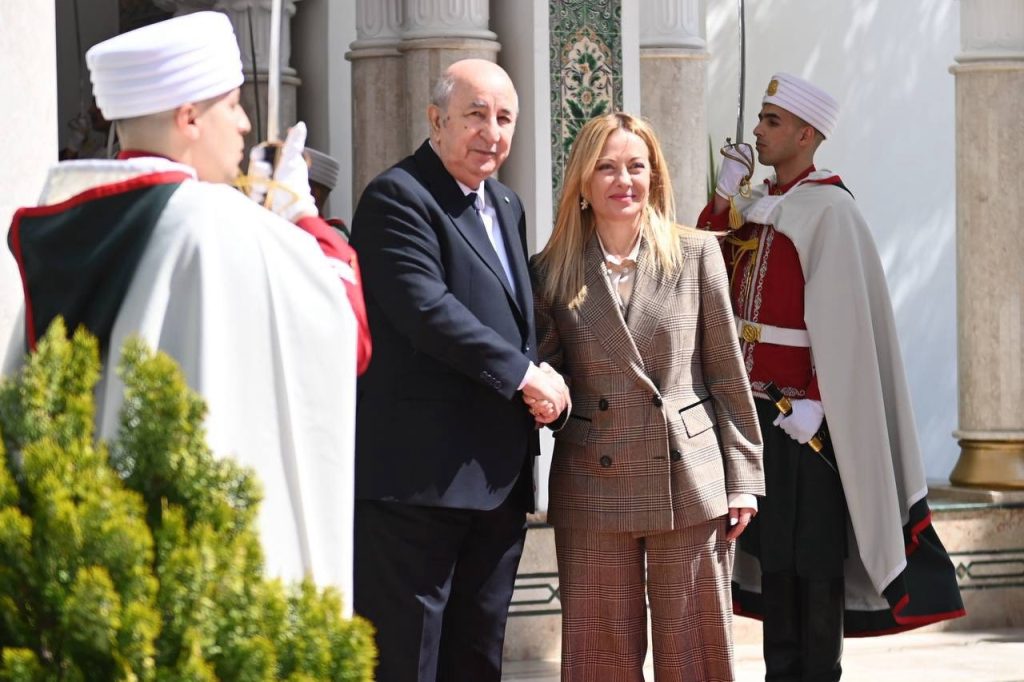
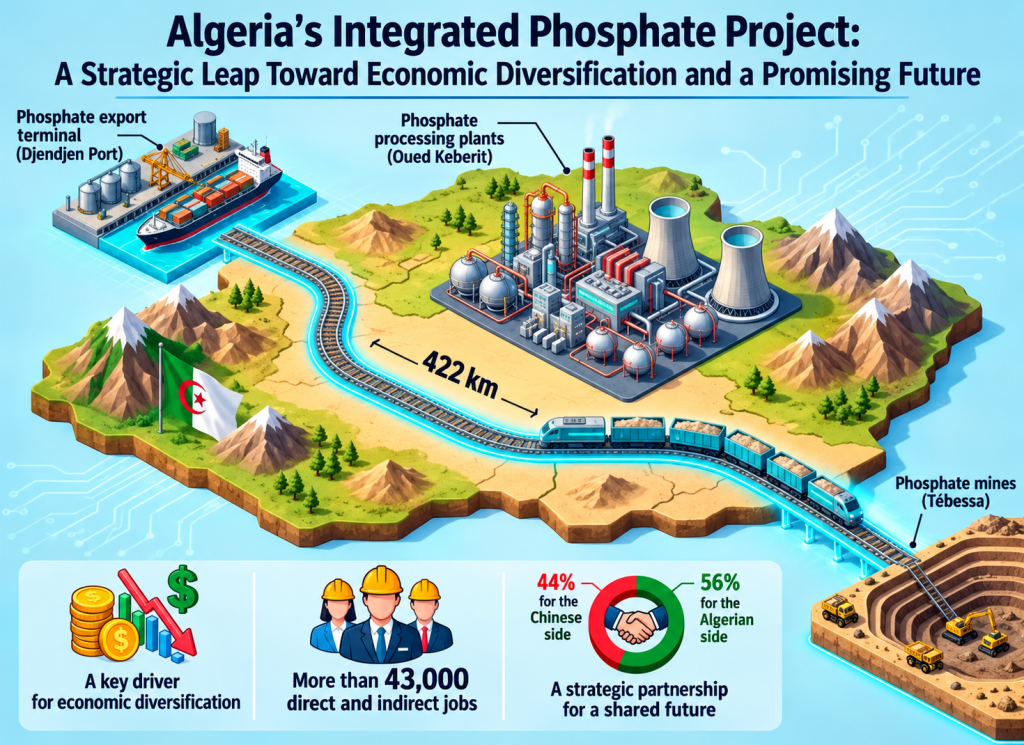
Algeria Gate: Italy’s Ambassador to Algeria, Alessandra Chiavo, has described Algeria’s integrated phosphate project as a highly ambitious and forward-looking initiative that aligns with the goals of Italy’s Mattei Plan. The project aims to build production capacity, transfer expertise, and strengthen the self-sufficiency of an African nation that Italy regards as a priority partner on the continent.

Speaking to the Nova news agency on the sidelines of the launch ceremony for the project’s first phase, in which the Italian energy and engineering company Saipem is participating, Ambassador Chiavo said the initiative reflects the planning capacity and long-term vision of Algerian President Abdelmadjid Tebboune and the Algerian government. She noted, however, that implementation will pose both technological and organizational challenges due to the very short deadlines set for the facilities to enter service.

A Model of Cooperation Beyond Traditional Energy Ties

The Italian diplomat stressed that the integrated phosphate project offers a concrete example of cooperation that goes beyond the conventional framework of energy relations. By establishing a full local industrial chain, the initiative is expected to contribute to Algeria’s economic and social development.

Algeria’s Integrated Phosphate Project Reflects President Tebboune’s Planning Capacity and Foresight

Ambassador Chiavo underlined that the project marks a significant expansion of collaboration between Saipem and Algeria, extending well beyond the hydrocarbons sector. Saipem will help construct the mining and industrial infrastructure required to extract phosphate at Bled El Hadba in Tebessa Province and to process it into fertilizers at Oued El Kebirit in Souk Ahras Province.

Supporting Algeria’s Food Sovereignty Strategy

According to Chiavo, the scale of the operation exceeds its purely mining and industrial value. Converting phosphate into fertilizers fits directly into Algeria’s broader strategy of boosting agricultural production and reducing the country’s vulnerability to international crises.

“A nation’s food sovereignty is its sovereignty in the full sense of the word,” the Ambassador stated. She explained that dependence on imports leaves countries exposed to price volatility, supply-chain disruptions, and shocks caused by global crises.

Algeria’s Integrated Phosphate Project Reflects President Tebboune’s Planning Capacity and Foresight

By developing domestic fertilizer production capacity, Algeria aims to strengthen its agricultural sector and enhance national resilience; objectives that the Italian side views as fully consistent with the Mattei Plan’s emphasis on creating productive capacity and supporting African self-sufficiency.

The launch of the first phase of the integrated phosphate project, with Saipem’s involvement, therefore represents both a strategic industrial investment for Algeria and a tangible step in the evolving economic partnership between Algiers and Rome.

#Algeria#Italy#phosphate
Author
Lys Iwannughen
View my articles
Algeria
Share this post

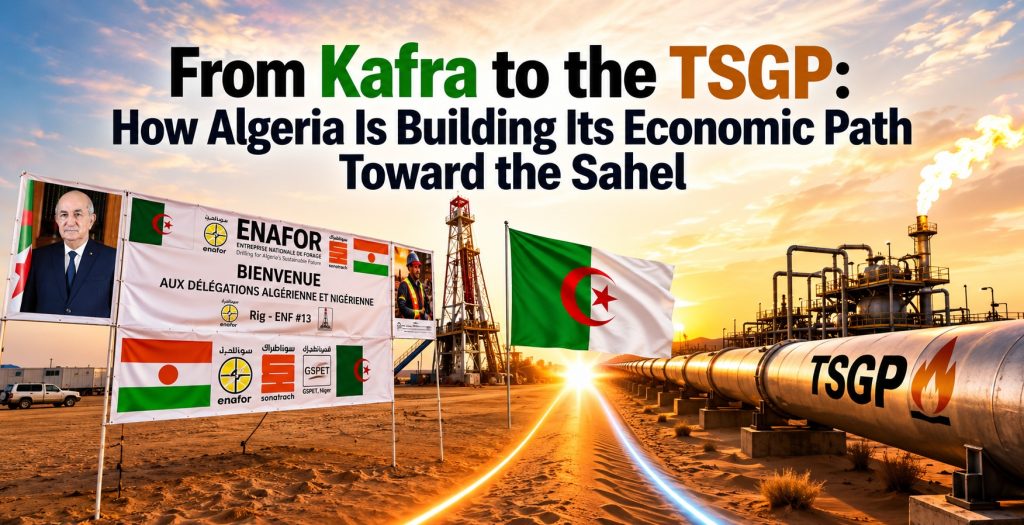
From Kafra to the TSGP: How Algeria Is Building Its Economic Path Toward the Sahel

From Kafra to the TSGP: How Algeria Is Building Its Economic Path Toward the Sahel

Algeria Gate: Algeria is advancing a multi-dimensional economic partnership with Niger that combines oil exploration, petroleum services, electricity generation, training, knowledge transfer, and continental energy infrastructure.

Four exploratory wells planned by Sonatrach in northern Niger over the next two years, led by Kafra Southeast 1 located approximately 85 kilometers from the Algerian border, coincide with Nigerian estimates of around 2.7 billion barrels of potential petroleum resources in the Kafra Basin.
These developments place the project at the center of a new phase of Algeria-Niger economic cooperation focused on mutual interests and regional integration.

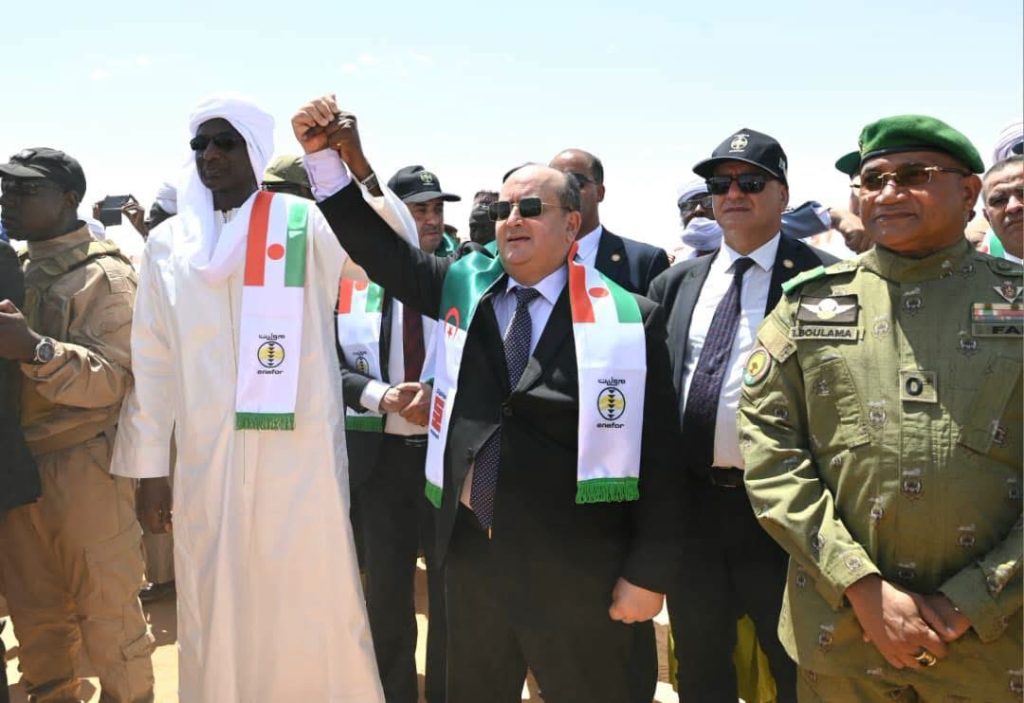
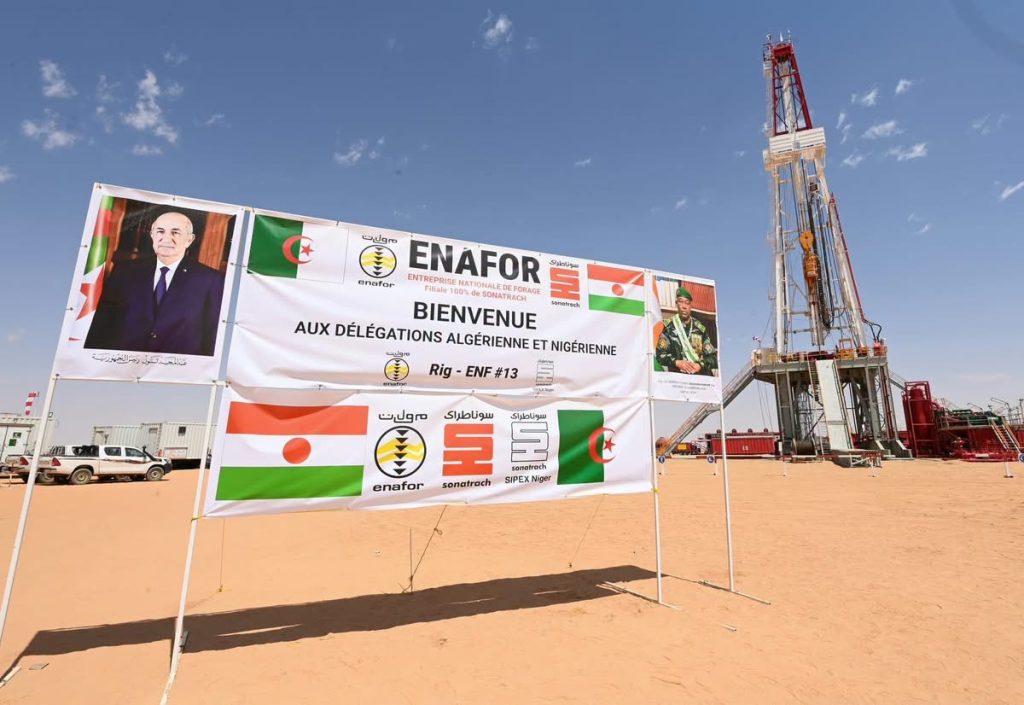
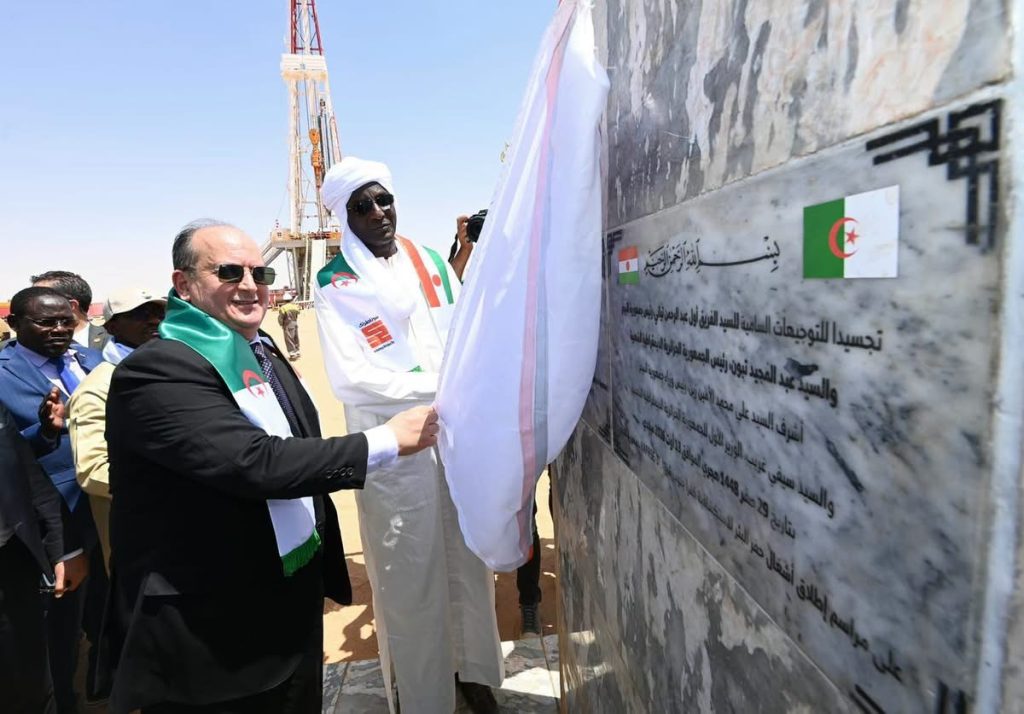
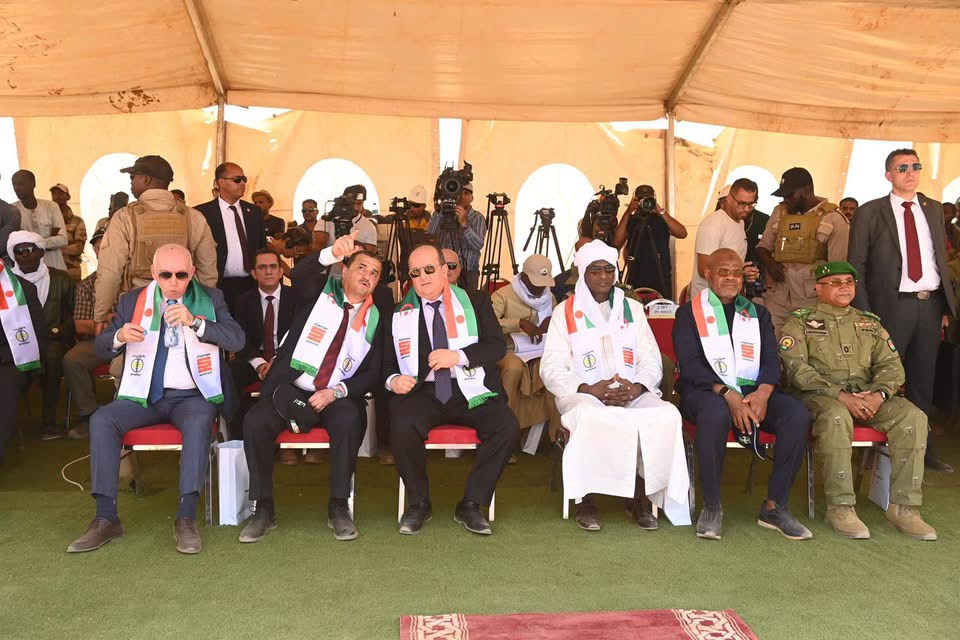
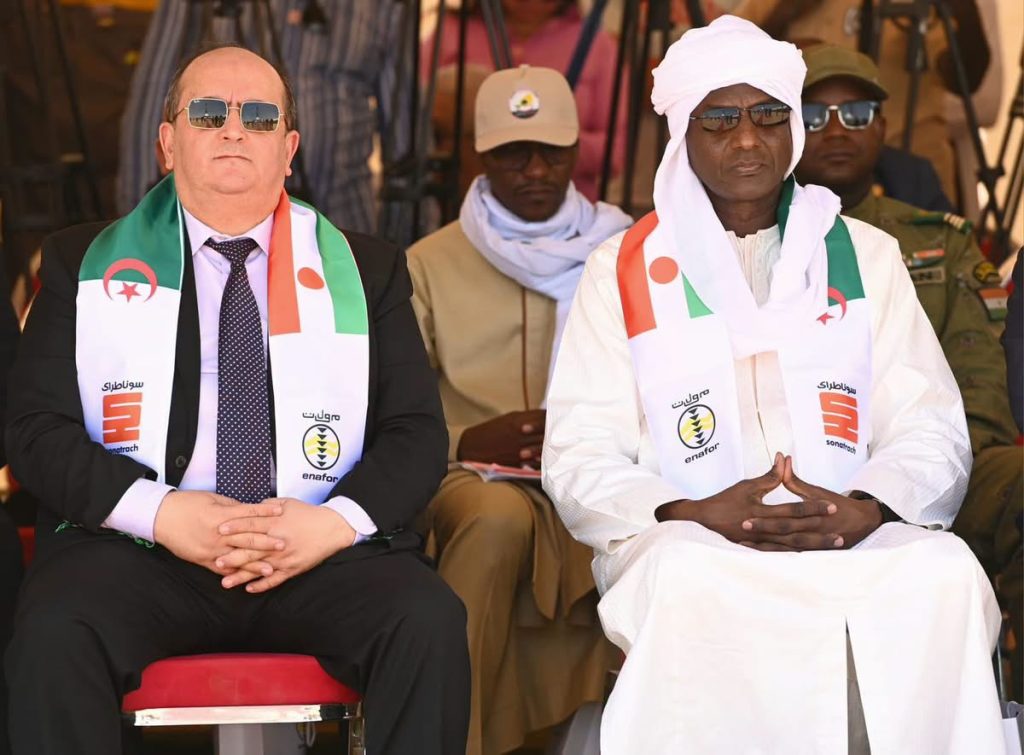
The launch of drilling works on the new exploratory well in August 2026 crowns a year of accelerated progress. Key steps include the reactivation of the Kafra project, the second session of the Algeria-Niger Joint Grand Committee in March, the signing of three memoranda of understanding between Sonatrach subsidiaries and Sonidap in June, the inauguration of the Algeria-Niger power plant in Gorou Banda with a capacity of 40 megawatts, and the start of construction on the Algerian section of the Trans-Saharan Gas Pipeline (TSGP). Although different in nature, these initiatives converge on the shared goal of building a long-term partnership that links natural resources to infrastructure, services, and skills.

This dynamic draws institutional support from President Abdelmadjid Tebboune’s guidance to strengthen African economic integration and develop sustainable development projects on the continent. Sonatrach formally placed the agreements signed with the Nigerian side on 2 June within this framework. Nigerian authorities, for their part, emphasize partnerships based on good neighborliness, mutual benefit, and respect for sovereign choices; an approach that has helped move cooperation from political understandings to concrete, implementable economic projects.

From Kafra to the TSGP: How Algeria Is Building Its Economic Path Toward the Sahel

Understanding the 2.7 Billion Barrel Estimate for the Kafra Basin

Precision is essential when interpreting the widely cited figure for Kafra. Nigerian Petroleum Minister Hamadou Tini stated that potential resources in the Kafra Basin are estimated at approximately 2.7 billion barrels. He simultaneously stressed that it is still too early to determine final reserves for the new projects under exploration. Proven reserves currently under production in Niger stand at about 853 million barrels, while the country aims to maintain production around 110,000 barrels per day, according to data from the Nigerian Ministry of Petroleum.

The 2.7 billion barrel figure therefore does not represent a final commercial discovery for Sonatrach or proven reserves. It is an estimate of the basin’s geological potential. The role of Kafra Southeast 1 and the subsequent wells is to improve understanding of the reservoirs and identify the portion that can later be converted into reserves suitable for economic development and exploitation.

From Kafra to the TSGP: How Algeria Is Building Its Economic Path Toward the Sahel

In the latest information from Agadez on August 12th, 2026, Rabah Bouchak, director of Sipex’s Niger branch, confirmed that the company’s strategy for the next two years includes launching four exploratory wells in northern Niger, including Kafra. He noted that preliminary studies conducted in parallel with drilling operations already indicate significant exploitable potential.

Sonatrach therefore views Kafra Southeast 1 not as an isolated operation but as the first link in a broader exploration program. The data generated will support subsequent investment decisions, whether additional drilling, reservoir evaluation, or a later transition to the development phase.

From 2005 to 2026: A Two-Decade Oil Partnership Enters a New Implementation Phase

Sonatrach’s presence in the Kafra area dates back more than twenty years. The company began exploratory activity through its international subsidiary Sipex in 2005. A production-sharing contract for the block followed in 2015. Drilling operations carried out between late 2017 and early 2018 confirmed, according to Nigerian government data, the existence of a petroleum system that required further studies and appraisal work.

From Kafra to the TSGP: How Algeria Is Building Its Economic Path Toward the Sahel

In November 2018, both sides expanded the program to improve reservoir knowledge and refine estimates of resources and possible additional volumes. The project later entered a period of slowdown.

The return to active implementation became clear on 26 January 2026, when State Minister, Minister of Hydrocarbons Mohamed Arkab led an Algerian delegation to Niamey to follow up on the Kafra and TSGP projects. After talks with President Abdourahamane Tiani, Arkab confirmed agreement on measures to accelerate development of the block, along with cooperation in training and technical support. He also expressed Algeria’s readiness to help raise the capacities of Niger’s national oil and gas institutions.

From Kafra to the TSGP: How Algeria Is Building Its Economic Path Toward the Sahel

President Abdourahamane Tiani’s visit to Algeria on February 15–16, provided additional political momentum. On March 23–24, Niamey hosted the second session of the Algeria-Niger Joint Grand Committee, which placed economic and investment projects at the core of the new phase of relations. The Nigerian side stressed the need to convert the two countries’ potential into projects of mutual benefit, while Algerian Prime Minister Sifi Ghrieb spoke of establishing a “renewed and ambitious partnership” serving both nations’ interests.

On March 24th, Algeria announced that Sonatrach had completed several studies related to Kafra and that drilling would begin once the necessary equipment and materials arrived. Hakim Zubairi, Director of International Cooperation at the Ministry of Hydrocarbons, described the move as a practical step toward valorizing Niger’s energy resources.

In May, discussions expanded to cover the full oil value chain. Meetings between Algerian officials and a Nigerian Ministry of Petroleum delegation addressed refining, petrochemicals, drilling, petroleum product development, and Naftal’s potential contribution. This evolution showed that cooperation was no longer limited to crude extraction but was moving toward multiple economic links capable of generating new activity and investment in both countries.

Sectoral Agreements Strengthen the Partnership

On June 2nd 2026, Sonatrach subsidiaries signed three memoranda of understanding with the Nigerian petroleum company Sonidap. These agreements build on a broader memorandum of understanding signed between Sonatrach and Sonidap on October 1st 2024, reflecting a gradual shift from a general framework to more specialized sectoral arrangements.

The first MoU, between Enagio and Sonidap, covers the acquisition and processing of seismic data inside Niger.
The second, between Enafor and Sonidap, concerns the study of a joint venture specialized in oil and gas drilling.
The third, between Naftal and Sonidap, addresses distribution of petroleum products, filling centers, training, and the possible creation of a joint company for the manufacture, installation, distribution, and storage of bitumen.

From Kafra to the TSGP: How Algeria Is Building Its Economic Path Toward the Sahel

On the operational side, Enafor has become a central player in the Kafra project. Its Niger subsidiary was registered in Niamey in April 2026. The company presents its presence as an extension of its Algerian drilling expertise, based on partnership and skills transfer.

In statements from Agadez on 12 August, Enafor Chairman and Managing Director Ibrahim Hamoudi stated that the institution’s priority is to consolidate its presence in Niger within a vision of sustainable cooperation, while maintaining high standards of safety, quality, performance, and protection of people, equipment, and the environment. Enafor serves as main contractor for Kafra Southeast 1, coordinating means and interveners with the participation of other Sonatrach entities, particularly the National Well Services Company and the National Geophysics Company. This integrated structure allows Algeria to offer a complete package of oilfield services rather than isolated interventions.

If the proposed Enafor-Sonidap joint drilling company moves forward, its potential extends beyond Kafra. Official data indicate that Niger has 44 oil blocks, of which 35 are open to investors, along with more than 430 wells and extensive seismic data. Success at Kafra could therefore give Algerian service companies a stronger operational reference in the Nigerian market, while Niger benefits from drilling capacity, training, knowledge transfer, and the development of local capabilities, creating mutual economic gains rather than a one-sided resource relationship.

From Oil to Electricity: Expanding the Network of Shared Interests

Oil cooperation is closely linked to expanding collaboration in the electricity sector. On 24 March, Prime Ministers Sifi Ghrieb and Ali Mahamane Lamine Zeine laid the foundation stone for the “Solidarity” power plant in Gorou Banda. Ghrieb returned to Niamey on 3 June to inaugurate the completed 40-megawatt facility.

Algeria provided the plant to support Niger’s electricity system. Nigerian authorities described it as the first major concrete result of the solidarity partnership between the two countries. President Abdourahamane Tiani, receiving the Algerian Prime Minister, underlined the importance of continuing commercial and economic cooperation programs as well as strategic infrastructure projects.

For Algeria, the plant marked the first completed overseas energy project of Sonelgaz International. It was accompanied by training programs for Nigerian personnel in plant operation and maintenance, industrial safety, and technical management method; placing knowledge transfer alongside physical infrastructure.

The combined presence of Sonatrach and Sonelgaz in Niger illustrates the broadening of Algeria’s offer to the continent. Sonatrach contributes expertise in exploration, drilling, geophysics, and oil services; Sonelgaz contributes engineering and power-system development capabilities. Together they form a more comprehensive cooperation package that goes beyond the simple sale of oil or gas.

In June, Nigerian Petroleum Minister Hamadou Tini described bilateral relations as strategic and welcomed progress on the agreements emerging from the Joint Committee, including those related to Kafra and the new understandings with Sonatrach subsidiaries. He has also identified human-capital development and training as priorities for Niger’s oil industry; priorities that align with the Algerian agreements, which systematically include training and technical accompaniment.

The economic value of Algerian projects in Niger is therefore measured not only by the assets delivered but also by the number of skills trained, the services local institutions may eventually assume, and the share of value retained within the Nigerian economy.

TSGP: Energy Integration Beyond Bilateral Borders

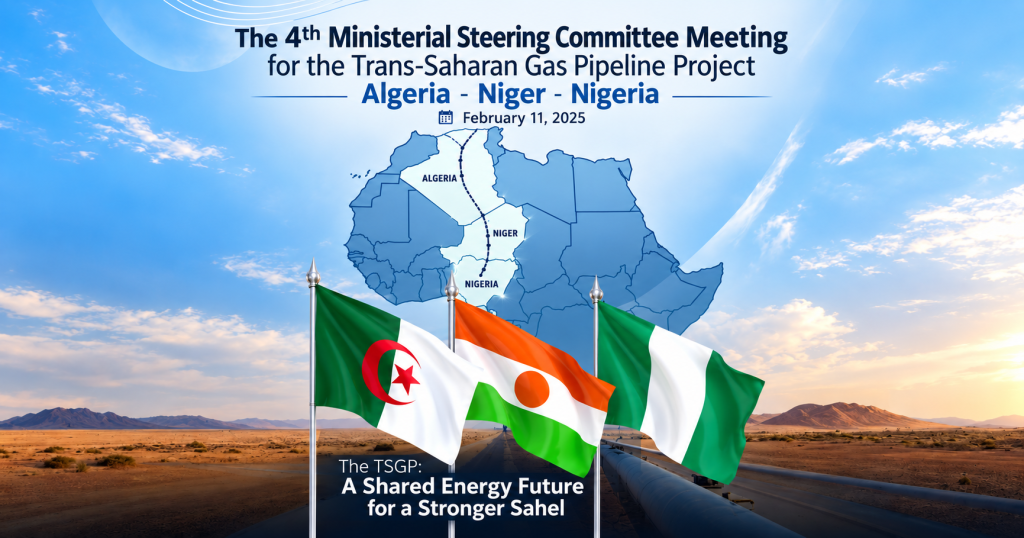
The overall picture is completed by the Trans-Saharan Gas Pipeline (TSGP), a continental project involving Algeria, Niger, and Nigeria. It aims to transport Nigerian gas resources through Niger into Algeria’s network and onward to Mediterranean export outlets.

On June 4th 2026, Algeria officially launched construction of its section of the pipeline in Aoulef, Adrar Province, in the presence of energy ministers from the three countries and Sonatrach Chairman and Managing Director Noureddine Daoudi. The Algerian section will run parallel to the Trans-Saharan Highway axis, from the Algeria-Niger border to the gas distribution center at Hassi R’Mel.

The project positions Niger as a key transit partner in a regional energy corridor. Algeria contributes its existing gas infrastructure and experience in transport, liquefaction, and export. Nigeria supplies the underlying gas resource base.

From Kafra to the TSGP: How Algeria Is Building Its Economic Path Toward the Sahel

Niamey regards the TSGP as a structural project that extends beyond bilateral interests to the continental level. The Nigerian Petroleum Minister reaffirmed his country’s commitment and described the pipeline as important for the three participating states and for Africa as a whole. The project’s primary value lies in its ability to demonstrate financial viability, secure financing, complete infrastructure, and provide an additional route for African energy to international markets; not in competition with other corridors.

For Algeria and Niger, the TSGP adds a third pillar alongside oil exploration and electricity: potential oil production at Kafra, power generation to support economic activity, and a cross-border gas line linking regional economies.

2026: A Year of Transition from Intentions to Implementation

The sequence of events in 2026 illustrates a clear shift from declarations to measurable delivery:

  • January: Discussions on reactivating Kafra
  • February: President Tiani’s visit to Algeria provides political impetus
  • March: Joint Grand Committee and business forum
  • May: Talks expand to the full hydrocarbons value chain
  • June: Sectoral agreements signed, power plant inaugurated, TSGP construction launched
  • August: Drilling operations begin at Kafra Southeast 1

Both sides consistently frame these projects in terms of mutual benefit. Niger seeks to valorize its resources, expand production capacity, strengthen national institutions, and develop skills. Algeria aims to internationalize the expertise of its energy companies and open additional markets for drilling, geophysics, electricity, and distribution services. This structure creates interests distributed across institutions, sectors, and longer time horizons, making the relationship more sustainable than single-resource or one-off commercial deals.

Geographic proximity reinforces the partnership. Algeria and Niger share a border of approximately 951 kilometers (according to Nigerian data), facilitating the expansion of economic activity in border regions, improved connectivity between northern Niger and southern Algeria, and new flows of equipment, services, and trade.

What Distinguishes Kafra Southeast 1

The significance of Kafra Southeast 1 extends beyond the possibility of discovering oil. It anchors an emerging economic network that includes:

  • Sipex as Sonatrach’s international exploration arm
  • Enafor in drilling
  • Enagio in geophysics
  • Naftal in petroleum products
  • Sonelgaz International in electricity
  • The TSGP at the continental level

This diversity enables Algeria to move gradually from the presence of a single company toward an integrated energy-services system. It simultaneously allows Niger to engage a partner capable of covering multiple links in the value chain.

From Kafra to the TSGP: How Algeria Is Building Its Economic Path Toward the Sahel

Success of the oil component remains dependent on drilling results. No commercial reserves specific to Kafra Southeast 1 have been announced, and no production-test results or flow rates have been published. Discussion of the 2.7 billion barrel figure is therefore most accurate when kept within the framework of potential resources rather than treated as discovered, ready-to-produce oil. The four-well program over the next two years will reduce this uncertainty.

If results confirm reservoirs suitable for economic development, the relationship can advance to production planning, facilities, transport, and investment. Combined with implementation of the joint drilling company and expanded cooperation in refining, petroleum products, and storage, Kafra’s value would extend beyond the block itself and become a foundation for broader industrial collaboration.

Strategic Framing and Long-Term Outlook

The approach promoted by Algeria under President Abdelmadjid Tebboune links solidarity to development, development to concrete economic projects, and projects to the building of local capacities; rather than reducing relations to short-term commercial exchanges. Sonatrach itself invoked this framework when announcing the June agreements, stating that the objective is to reinforce African economic integration and develop sustainable development projects.

For Niger, the partnership expands economic options while preserving ownership of resources and sovereignty over development decisions, while drawing on the experience of a neighboring country with decades of expertise in hydrocarbons, electricity, and desert environments.

For Algeria, success is measured not solely by the number of barrels Sipex may ultimately produce, but by the ability of national institutions to convert expertise into service exports, contracts, and investments beyond Algeria’s borders.

In this light, the latest developments in Agadez carry broader economic significance than the drilling of a single well. Two decades after Sonatrach’s first presence in Kafra, Algeria returns to the project in 2026 within a transformed environment: a four-well exploration program, multiple group subsidiaries active in the market, a proposed joint drilling company, an operational power plant, agreements covering petroleum products, and the transition of the TSGP from studies to construction on Algerian territory.

The new phase of Algeria-Niger relations is therefore built less on promises and more on measurable deliverables, megawatts entering the grid, wells reaching the drilling platform, seismic data being processed, joint companies under formation, and a gas pipeline moving from planning to physical infrastructure.

This is the central diplomatic and economic dimension of the Kafra project: transforming the shared geography between Algeria and Niger from a simple border into a space for mutual interests, energy integration, and joint development, while fully respecting each country’s sovereignty over its resources and economic choices.

#Algeria#Niger
Author
Lys Iwannughen
View my articles
Algeria
Share this post

Air Algérie and Oman Airports Sign Deal, Plan Algiers-Muscat Flights in 2027

Air Algérie and Oman Airports Sign Deal, Plan Algiers-Muscat Flights in 2027

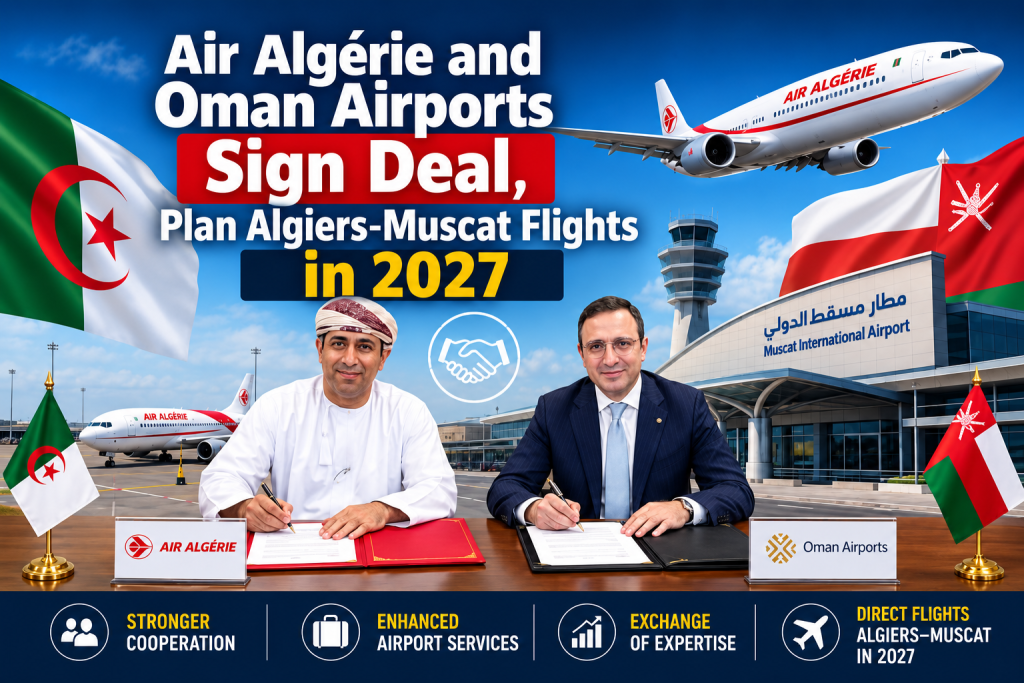
Algeria Gate: Air Algérie Group and Oman Airports – Transom have signed a memorandum of understanding to boost cooperation in airport services, including ground handling and aviation support.

The agreement was signed under the supervision of Air Algérie Group CEO Hamza Benhamouda and Oman Airports – Transom CEO Nasser bin Ahmed Al Sharji. It aims to improve service quality, enhance the passenger experience, and share expertise in air transport and freight.

This partnership strengthens ties between Algeria and the Sultanate of Oman in transport, logistics, and digital transformation. Both countries have already discussed airport cooperation and knowledge exchange.

A key highlight is the planned launch of a direct Algiers–Muscat route in 2027. The new connection is expected to increase travel and trade between the two nations and improve air links in the region.

Through this collaboration, Air Algérie continues its international expansion strategy and seeks value-creating partnerships in the aviation sector.

#Air Algérie#Algeria#Oman
Author
Lys Iwannughen
View my articles