Tuesday, 3 November 2026 • 22:03 Algiers time
Algeria Gate
Share this post

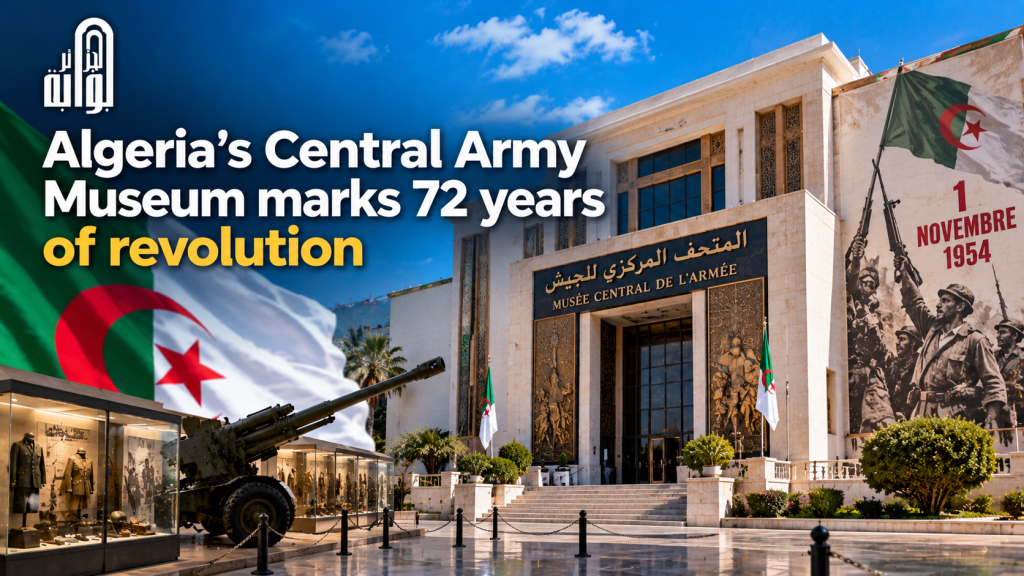
Algeria’s Central Army Museum marks 72 years of revolution

• Author: Y.R • 0 comments • 5 views
Algeria’s Central Army Museum marks 72 years of revolution

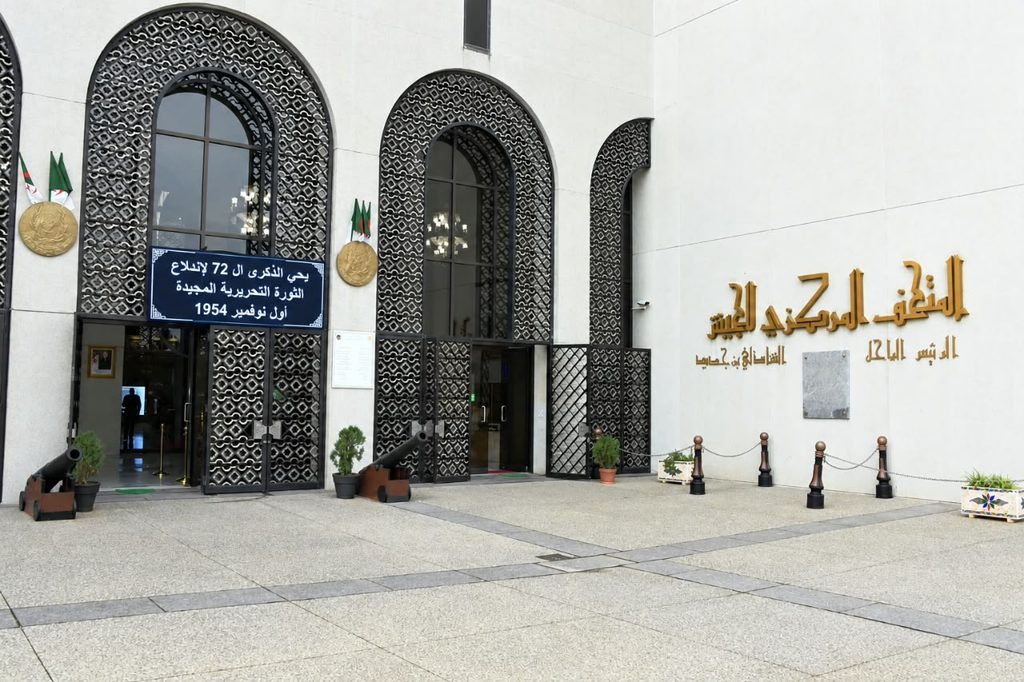
Algeria Gate: Algeria’s Central Army Museum has launched a special commemorative program marking the 72nd anniversary of the outbreak of the Algerian Revolution on November 1, 1954, one of the most significant events in the country’s modern history.

The commemorations began on Thursday, October 29, and will continue until November 1, under the theme “November: The memory of a nation and the future of a people.”

According to Algeria Gate, the initiative aims to honor the sacrifices of Algeria’s freedom fighters and martyrs while preserving the historical memory of the country’s struggle for independence from French colonial rule.
Algeria’s Central Army Museum marks 72 years of revolution

Honoring the legacy of November 1, 1954

The anniversary commemorates the beginning of the Algerian War of Independence, which started on November 1, 1954, when the National Liberation Front (FLN) launched a coordinated uprising against French colonial rule.

The revolution marked a turning point in Algeria’s struggle for national sovereignty, bringing together generations of Algerians in a movement that ultimately led to the country’s independence on July 5, 1962.

Over the course of nearly eight years, the conflict profoundly transformed Algeria’s political and social landscape and became an important chapter in the wider history of decolonization.

Today, November 1 remains a powerful national symbol, representing the determination of Algerians to reclaim their freedom, dignity and sovereignty.

Through its commemorative program, the Central Army Museum seeks to reinforce the significance of this historical milestone and pay tribute to those who participated in the liberation struggle.

Preserving Algeria’s revolutionary memory for future generations

A central objective of the museum’s commemorations is to strengthen historical awareness among younger generations.

The initiative places particular emphasis on introducing young Algerians to the major stages of the liberation struggle, the contributions of revolutionary leaders and the sacrifices made by freedom fighters and civilians.

As an institution dedicated to preserving Algeria’s military and revolutionary heritage, the Central Army Museum plays an important role in safeguarding historical records, artifacts and accounts associated with the country’s struggle for independence.

The anniversary provides an opportunity to encourage younger generations to explore the historical events that shaped modern Algeria and better understand the foundations of its national identity.

Preserving this heritage is also considered essential to maintaining the connection between Algeria’s revolutionary past and its future development.

Algiers prepares cultural and historical celebrations

The museum’s commemorations form part of a broader national program celebrating the 72nd anniversary of the November Revolution.

The Wilaya of Algiers has announced a series of cultural, artistic, historical, sporting and recreational activities across several locations in the capital.

These events will take place in cultural venues, public squares and parks, providing opportunities for residents and visitors to participate in the anniversary celebrations.

The activities are intended to highlight Algeria’s revolutionary history while encouraging public participation in events that celebrate national heritage and collective memory.

By bringing commemorations into public spaces, local authorities aim to make the anniversary accessible to a wider audience, particularly young people and families.

A revolution that shaped Algeria’s national identity

The November 1 Revolution occupies a central place in Algeria’s national consciousness.

The outbreak of the armed struggle in 1954 marked the beginning of a decisive phase in the country’s fight against French colonial rule, which had begun in 1830.

The conflict ended with the Evian Accords in March 1962, followed by a referendum on self-determination and the proclamation of Algerian independence in July of the same year.

Beyond its military and political dimensions, the revolution became a defining element of Algeria’s national identity, influencing its institutions, historical narrative and international relations.

Its legacy continues to be reflected in national commemorations, educational initiatives, museums and monuments dedicated to those who participated in the struggle.

Keeping the spirit of November alive

As Algeria approaches the 72nd anniversary of the revolution, the Central Army Museum’s commemorative program highlights the continuing importance of preserving national history.

Under the theme “November: The memory of a nation and the future of a people,” the celebrations connect the sacrifices of previous generations with the responsibility of preserving their legacy for those who follow.

The events scheduled through November 1 offer an opportunity to revisit the country’s path toward independence, honor its historical figures and encourage greater engagement with Algeria’s revolutionary heritage.

More than seven decades after the beginning of the liberation struggle, November 1 remains a defining date in Algeria’s history and an enduring symbol of its independence and sovereignty.

#Algeria#Revolution
Author

Leave a comment

Your email address will not be published. Required fields are marked *

Algeria
Share this post

Algeria moves toward Visa and Mastercard issuance in 48 hours

Algeria moves toward Visa and Mastercard issuance in 48 hours

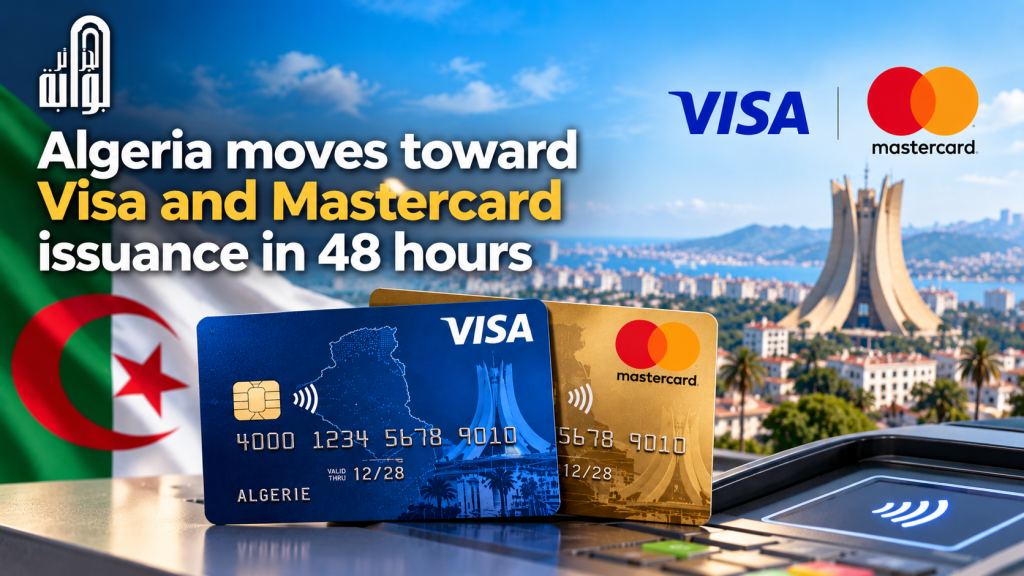
Algeria Gate: Algeria is taking a major step toward modernizing its banking sector after the Société d’Automatisation des Transactions Interbancaires et de Monétique (SATIM) secured official certification from international payment giants Visa and Mastercard, paving the way for locally issued international bank cards in as little as 48 hours.

The development is expected to significantly reduce waiting times for Algerian customers, who currently face delays of two to three weeks when applying for international payment cards.

The certification was announced on October 27 by Toufik Chikaoui, SATIM’s project director for international networks, during an interview with Algeria’s national Radio Channel 3.

Algeria brings international card production home

Until now, Algerian banks have relied on foreign service providers, particularly in Tunisia, to personalize international payment cards and process associated banking information.

With its newly certified personalization center, SATIM can now perform these operations domestically, reducing dependence on external providers while strengthening national control over sensitive financial data.

The initiative represents an important development for Algeria’s financial infrastructure, allowing banks to streamline card issuance procedures and improve data management.

According to Chikaoui, keeping these operations within Algeria is also a matter of national sovereignty, particularly as digital payments become increasingly important to the country’s economy.

Visa and Mastercard cards could be ready in 48 hours

One of the most significant benefits of the new certification is the potential reduction in card issuance times.

At Crédit Populaire d’Algérie (CPA), customers currently wait approximately two weeks to receive an international payment card, compared with three weeks previously. The bank expects to reduce this period to just 48 hours once SATIM’s new system becomes operational.

Meanwhile, Banque Extérieure d’Algérie (BEA) can already prepare cards within five days through its own personalization facilities. However, customers may still wait an additional 10 to 15 days for their confidential PIN codes, which are currently processed abroad.

The 48-hour issuance target is not yet available to customers. SATIM remains in the pilot-testing phase, and no official date has been announced for the full commercial rollout.

Algerian banks prepare for nationwide rollout

Several major Algerian public banks are participating in the modernization initiative.

CPA has completed the certification process for Visa cards, while Banque de Développement Local (BDL) has successfully finalized the corresponding process for Mastercard.

Other public financial institutions, including BEA, Banque Nationale d’Algérie (BNA), and Banque de l’Agriculture et du Développement Rural (BADR), are preparing to launch their own pilot programs.

According to SATIM, initial tests have delivered positive results, with locally personalized cards successfully used for ATM withdrawals, contactless transactions and online payments.

These results mark an important technical milestone ahead of a broader deployment across Algeria’s banking network.

Growing demand driven by Algeria’s €750 travel allowance

The initiative comes amid a sharp increase in demand for international payment cards following changes to Algeria’s foreign currency travel allowance.

Under the rules introduced in July 2026, eligible adult travelers can receive an annual travel allowance of €750, while eligible minors aged 12 to 18 can receive €300.

The allowance is provided through international bank cards linked to foreign currency accounts rather than being distributed in cash before departure.

This transition has increased demand for Visa and Mastercard products, placing additional pressure on banks to issue cards quickly and maintain sufficient stocks.

The scale of demand has been particularly visible at CPA, which exhausted an initial stock of 35,000 cards in approximately three weeks during the summer.

To address potential shortages, Algerian public banks have coordinated card procurement through SATIM, with orders totaling approximately one million cards from a local supplier.

The centralized purchasing strategy is expected to improve availability, reduce procurement costs and help banks respond more effectively to customer demand.

International payments and tourism set to benefit

Beyond faster issuance for Algerian customers, SATIM’s certification could also improve the use of foreign bank cards within Algeria.

The modernization project includes measures to facilitate payments by international visitors at local businesses and enable cash withdrawals in Algerian dinars through compatible ATMs.

These improvements could support Algeria’s tourism industry by making everyday financial transactions more convenient for foreign travelers.

They could also encourage broader adoption of electronic payments among merchants, contributing to the gradual development of a more connected financial ecosystem.

However, the expansion of international card acceptance will depend on the availability of compatible payment terminals, banking infrastructure and the successful deployment of the new services.

A significant milestone for Algeria’s digital banking transformation

SATIM’s certification represents the culmination of a project that has been under development for several years.

Plans to obtain international certification were discussed as early as 2017, making the latest approval an important milestone in Algeria’s efforts to modernize its payment infrastructure.

By combining domestic card personalization, improved data security and shorter processing times, the initiative could strengthen the efficiency of Algeria’s banking system while reducing reliance on foreign service providers.

For Algerian consumers, the most immediate anticipated benefit is straightforward: obtaining an international Visa or Mastercard in approximately two days instead of waiting several weeks.

Although the nationwide launch date remains unconfirmed, the successful certification and initial testing suggest that Algeria is moving closer to a faster and more accessible international payment card system.

#Algeria#Economy#Master Card
Author
Algeria
Share this post

Algeria’s Béjaïa port sets new cargo handling record

Algeria’s Béjaïa port sets new cargo handling record

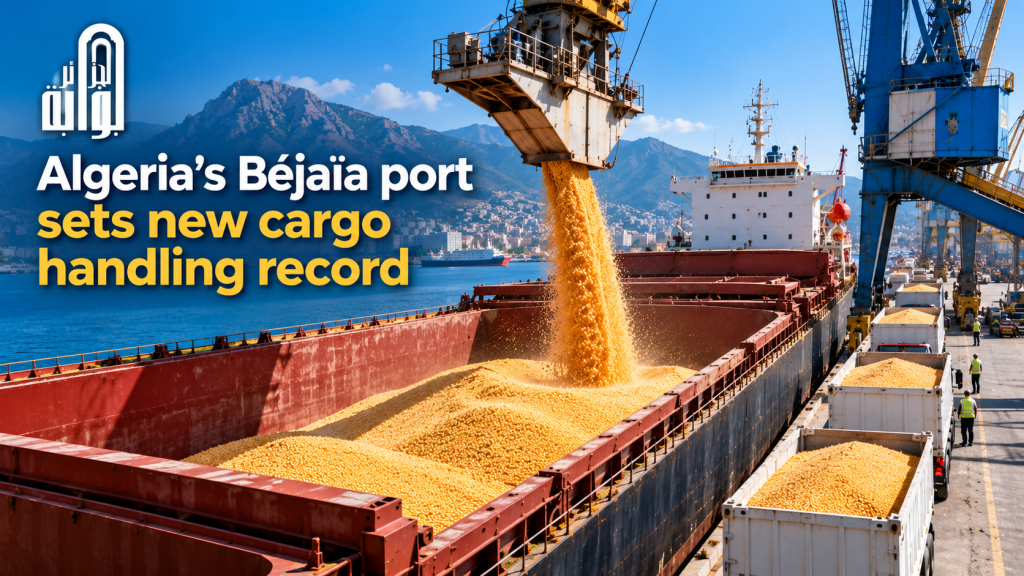
Algeria Gate: Algeria’s Port of Béjaïa has achieved a major operational milestone, handling an impressive 15,153 tonnes of corn in just 24 hours, setting a new cargo handling record, according to the Béjaïa Port Authority .

The achievement took place at Berth No. 21 during the unloading of the bulk carrier BUNUN TREASURE, which arrived from Santarém, Brazil, carrying a shipment of corn destined for the Algerian market.

The operation was distinguished by an efficient logistics system that enabled cargo to be transferred directly from the vessel onto trucks, eliminating the need for intermediate storage. This approach significantly accelerated unloading operations, reduced handling times and improved the movement of goods through the port.

Round-the-clock operations deliver record performance

To achieve this result, four operational teams worked in continuous shifts over a 24-hour period, ensuring uninterrupted cargo handling.

The coordinated effort involved port operations personnel, equipment operators, vessel crews and security services, whose cooperation was essential to maintaining the pace and efficiency of the operation.

The EPB praised the commitment and professionalism of everyone involved, highlighting the importance of effective coordination and operational planning in achieving the record.

A boost for Algeria’s port logistics

The milestone underscores the Port of Béjaïa’s growing operational capabilities and its role in supporting Algeria’s maritime trade and agricultural supply chains.

Efficient handling of imported agricultural commodities, particularly corn, is important for maintaining reliable supply flows to the domestic market.

By transferring cargo directly from ships to trucks, port operators can reduce congestion, minimize storage requirements and accelerate the delivery of goods to their destinations.

The latest achievement also illustrates the potential benefits of improved logistics coordination and continuous operations at Algeria’s commercial ports.

For the Port of Béjaïa, the handling of more than 15,000 tonnes of corn within a single day represents a significant operational accomplishment and a benchmark for future cargo-handling performance.

#Algeria#Economy
Author
Algeria
Share this post

Algeria and Czech Republic eye major gas and industrial deals

Algeria and Czech Republic eye major gas and industrial deals

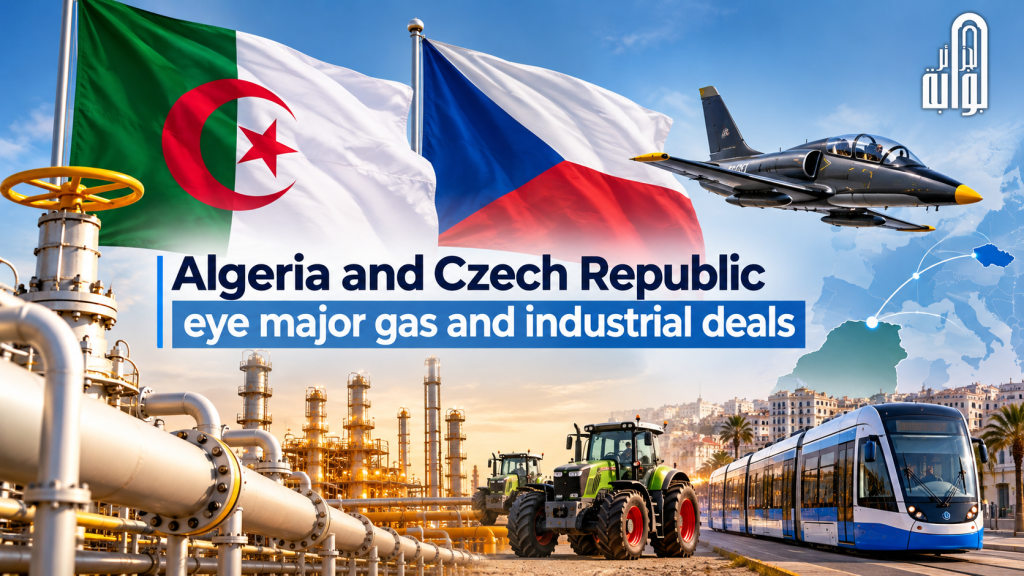
Algeria Gate: Algeria is emerging as an increasingly important economic and energy partner for the Czech Republic, as Prague seeks to double its imports of Algerian natural gas while exploring major cooperation opportunities in aviation, railway transport and industrial manufacturing.

According to the Czech News Agency (ČTK), Czech Deputy Prime Minister Karel Havlíček announced during his visit to Algiers on October 26–27, 2026, that he had secured an agreement in principle from Algerian President Abdelmadjid Tebboune regarding a potential increase in natural gas supplies.

The Czech Republic aims to raise its annual imports of Algerian gas from 200 million to 400 million cubic metres, a move that could strengthen Algeria’s position as a reliable energy supplier to European markets.

https://twitter.com/algatedzEng/status/2115457172658385303?a=kLngUl5xrtFpiLq0llE&s=20

Czech Republic proposes up to 24 military training aircraft

Beyond energy cooperation, Prague is seeking to expand its industrial and technological presence in Algeria through several proposed projects.

One of the most significant proposals involves the potential sale of 12 to 24 L-39 Skyfox aircraft, manufactured by Czech aerospace company Aero Vodochody.

The aircraft, designed primarily for military pilot training, could contribute to the modernisation of Algeria’s aviation training capabilities.

The proposed acquisition remains under discussion, with no final purchase agreement announced.

Tractor manufacturing and technology transfer

Industrial cooperation also features prominently in the discussions between the two countries.

Czech officials have proposed establishing a joint tractor manufacturing project in Algeria, involving the transfer of technical expertise and the supply of industrial components.

Such a partnership could support Algeria’s efforts to develop domestic manufacturing, strengthen agricultural mechanisation and reduce reliance on imported equipment.

The project could also create opportunities for local industrial integration and workforce development, depending on the terms of any future agreement.

Škoda eyes Algeria’s tramway market

The Czech Republic is also seeking opportunities in Algeria’s public transportation sector.

Czech manufacturer Škoda Transportation has expressed interest in supplying tramways and exploring potential industrial partnerships with Algerian operators.

The initiative could open new opportunities for cooperation in urban mobility, transport infrastructure and related industrial activities.

However, these proposals remain preliminary and would require further negotiations before commercial contracts or investment commitments can be confirmed.

Algeria strengthens its position in Europe

The latest discussions highlight Algeria’s growing importance in European energy diversification strategies, while also demonstrating its ambition to build economic partnerships extending beyond hydrocarbons.

For the Czech Republic, closer relations with Algeria could provide greater access to natural gas supplies and new markets for its industrial and technological products.

For Algeria, the proposed cooperation offers potential opportunities to attract investment, acquire industrial expertise and expand domestic production in strategic sectors.

The central challenge will now be translating these preliminary discussions into concrete agreements capable of delivering long-term economic benefits for both countries.

If successful, the emerging partnership could mark a new chapter in Algerian-Czech relations, combining energy security with industrial development and technological cooperation.

#Algeria#Gas
Author