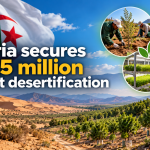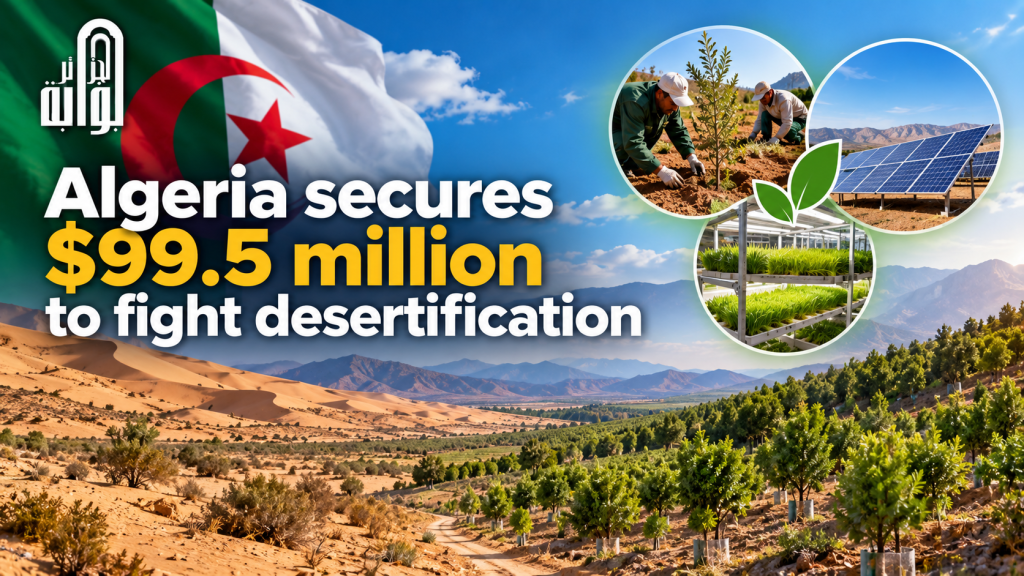
Algeria Gate: Algeria has secured approval for a major $99.5 million environmental and rural development project aimed at combating desertification, restoring degraded land and improving livelihoods across six provinces, with more than one million people expected to benefit.
The initiative, approved by the Green Climate Fund (GCF), represents the first project of its kind to receive funding from the international climate financing institution in Algeria.
The decision was announced following a meeting of the GCF Board in Songdo, South Korea. The seven-year programme will be implemented with support from the United Nations Food and Agriculture Organization (FAO), marking a significant investment in Algeria’s efforts to address climate change and strengthen rural development.
$99.5 million investment to transform rural communities
The project brings together international climate financing and national resources to support environmental restoration and economic development.
Of the total $99.5 million budget, $43 million will come from the Green Climate Fund as a grant, while the Algerian government will contribute an additional $56.5 million.
The programme will cover approximately 454,138 hectares across six Algerian provinces, targeting regions particularly vulnerable to desertification, land degradation and climate-related pressures.
According to information published by the United Nations and reported by Algeria Gate, more than one million people are expected to benefit from the initiative, including over 142,000 farmers and livestock breeders.
Women account for more than one-third of the agricultural beneficiaries, reflecting the programme’s emphasis on inclusive rural development.
The targeted areas are also home to more than half of Algeria’s nomadic population, making the initiative particularly important for communities whose livelihoods depend on livestock, grazing land and natural resources.
Restoring more than 59,000 hectares of degraded land
Environmental restoration is at the heart of the programme.
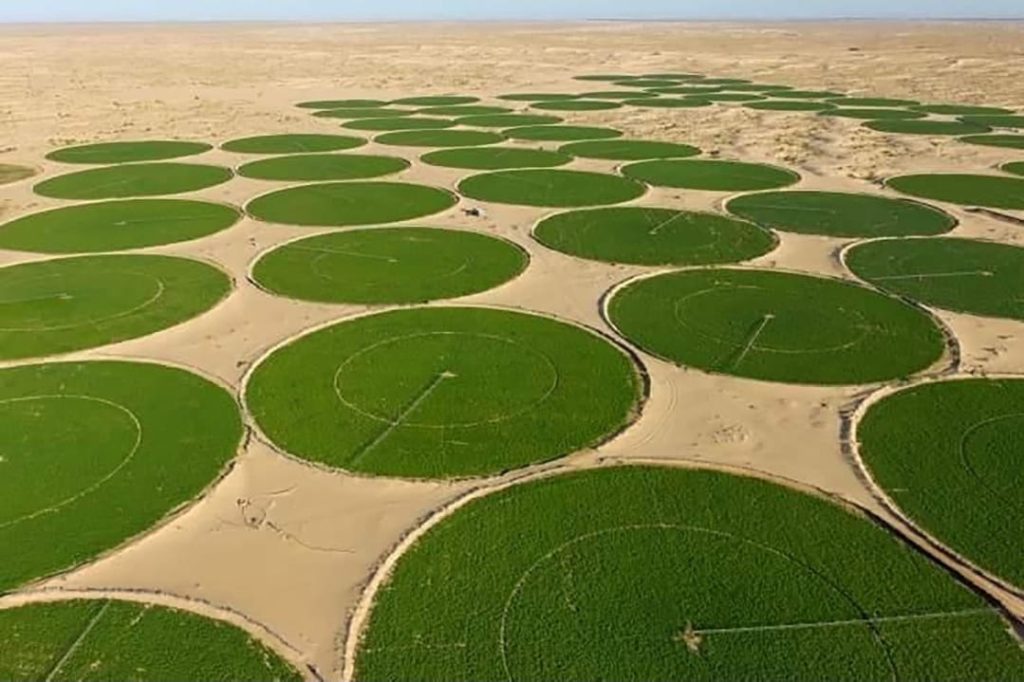
The project aims to rehabilitate more than 59,000 hectares of degraded forests, rangelands, sand dunes and agricultural land.
These interventions are designed to address the effects of soil erosion, declining vegetation cover and expanding desertification, which threaten agricultural productivity and rural livelihoods in Algeria’s arid and semi-arid regions.
Restoration activities are expected to improve land management, protect biodiversity and strengthen ecosystems against the increasingly severe effects of climate change.
By rehabilitating natural landscapes and supporting sustainable agricultural practices, the initiative also seeks to improve the long-term productivity of rural areas.
Solar energy and innovative farming solutions
Beyond environmental restoration, the programme includes significant investments in renewable energy and agricultural innovation.
A total of 190 solar energy units will be installed to provide clean power for rural households and agricultural activities.
These installations will support essential services such as refrigeration, agricultural processing and other productive activities, helping rural communities reduce their reliance on conventional energy sources.
The project also includes the installation of 240 hydroponic farming units dedicated to animal feed production.
These systems are expected to provide year-round feed for more than 25,000 livestock animals, offering a practical response to shortages caused by drought and deteriorating grazing conditions.
Hydroponic fodder production could help livestock breeders maintain more stable agricultural activities while reducing pressure on vulnerable natural rangelands.
New economic opportunities for rural entrepreneurs
The programme also seeks to strengthen rural economies by improving access to financing and supporting small-scale businesses.
Special attention will be given to microenterprises operating in agriculture, livestock production and the processing of natural resources.
At least half of the supported projects are expected to be led by women, creating opportunities for greater participation in local economic development.
The initiative will also promote value chains associated with traditional Algerian agricultural products, including prickly pears, olives, rosemary, wool, esparto grass and mint.
By improving production, processing and market access, the programme aims to help rural communities generate additional income and create more sustainable economic activities.
These measures are intended to complement environmental restoration by ensuring that local populations can benefit economically from improved natural resource management.
A new boost for Algeria’s Green Dam project
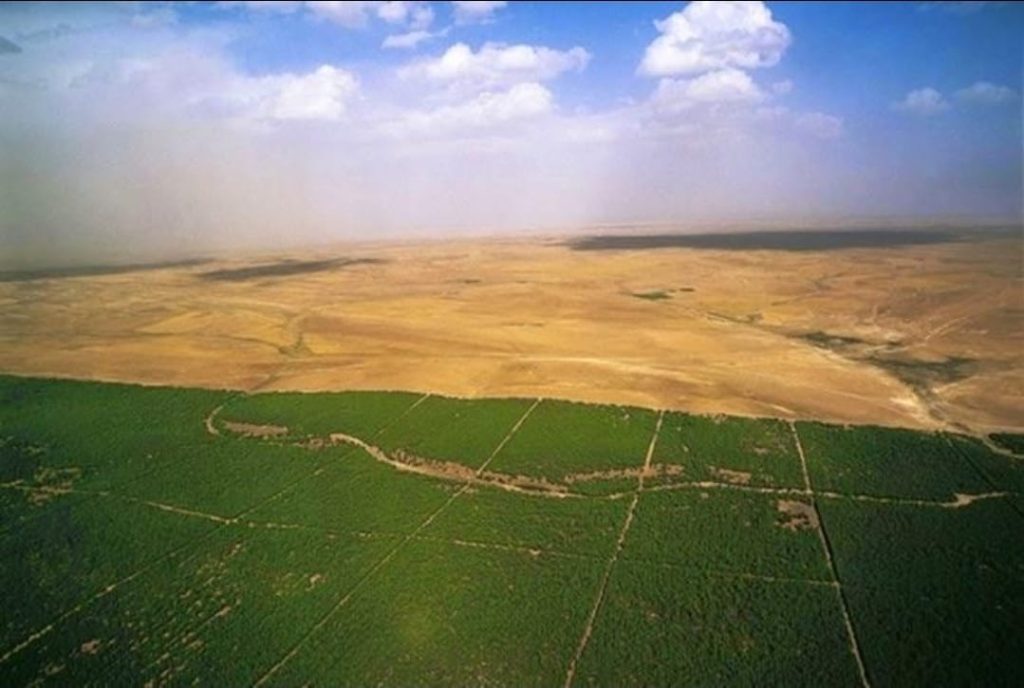
The newly approved investment is closely linked to the revival of Algeria’s historic Green Dam initiative, known as the Barrage Vert.
Launched in 1971, the Green Dam was designed to combat desertification and protect vulnerable landscapes from the northward expansion of the Sahara.
The project remains one of Algeria’s most ambitious long-term environmental initiatives, covering vast areas of the country’s steppe and semi-arid regions.
The latest financing is expected to support renewed restoration efforts while integrating modern approaches to biodiversity conservation, climate adaptation and rural economic development.
Algeria’s Minister of Agriculture, Rural Development and Fisheries, Sid Ali Khaldi, described the initiative as an important contribution to revitalizing the Green Dam through an approach combining environmental protection with stronger economic resilience for local communities.
The project reflects a broader effort to connect ecosystem restoration with sustainable development rather than treating desertification solely as an environmental challenge.
Algeria strengthens its climate investment ambitions
The approval of the $99.5 million programme marks an important development in Algeria’s efforts to attract international climate financing and expand investment in sustainable development.
By combining environmental restoration, renewable energy, agricultural innovation and support for rural entrepreneurs, the project addresses several interconnected challenges affecting vulnerable communities.
Its expected impact extends beyond combating desertification, with potential benefits for food security, employment, agricultural productivity and the economic resilience of rural households.
The seven-year programme will ultimately be measured by its ability to restore degraded landscapes, deliver practical improvements to local communities and establish sustainable economic activities.
With more than one million people expected to benefit, the initiative represents a substantial commitment to protecting Algeria’s natural resources while supporting the long-term development of its rural regions.