Monday, 2 November 2026 • 19:41 Algiers time
Algeria Gate
Share this post

Algeria’s Skikda port hits historic container milestone

• Author: Y.R • 0 comments • 3 views
Algeria’s Skikda port hits historic container milestone

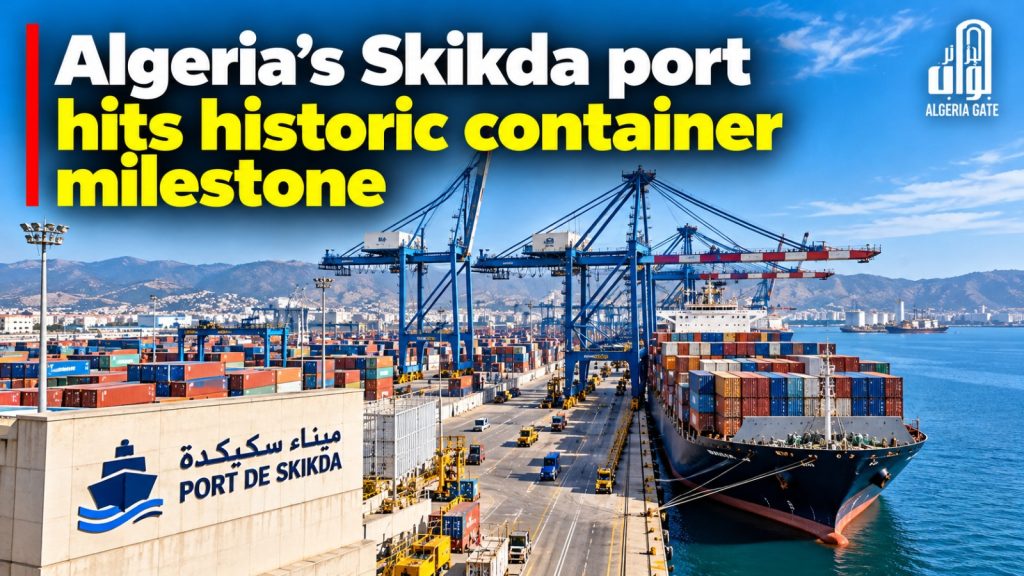
Algeria Gate: Algeria’s Port of Skikda has achieved a historic milestone, handling more than 200,000 twenty-foot equivalent units (TEUs) between January and October 2026, marking the first time the eastern Algerian port has crossed this threshold.

The achievement was announced by the port’s commercial director, Ilyas Manea, according to the Algerian Press Service (APS), highlighting improvements in operational efficiency, cargo handling and logistics capabilities.

The milestone represents a significant development for one of Algeria’s strategic maritime facilities, reinforcing its role in supporting international trade and the country’s broader economic diversification efforts.

A record-breaking performance for Skikda

The port’s latest figures show that container traffic exceeded 200,000 TEUs during the first ten months of 2026, setting a new record in its history.

The TEU, or twenty-foot equivalent unit, is the internationally recognized measurement used to calculate container traffic at seaports.

According to the port’s management, the achievement reflects ongoing efforts to reorganize cargo-handling operations, improve terminal productivity and optimize the use of port infrastructure.

These operational improvements have helped the facility accommodate greater cargo volumes while strengthening its ability to respond to growing commercial demand.

The record also illustrates the importance of modernizing Algeria’s maritime infrastructure to support increasingly complex international supply chains.

A strategic gateway for eastern Algeria

Located on Algeria’s Mediterranean coastline, the Port of Skikda serves as an important commercial gateway for industrial enterprises, manufacturers and economic operators across the country’s eastern regions.

Its activities contribute to the movement of imported goods, industrial materials and Algerian products destined for international markets.

Beyond container handling, the port plays a role in supporting Algeria’s non-hydrocarbon exports, particularly construction materials.

Skikda has handled shipments of cement and clinker to overseas destinations, including Italy and Libya, reflecting efforts to expand Algeria’s export presence beyond traditional energy products.

The growth of these activities is particularly significant as Algeria seeks to diversify its economy and increase the contribution of manufacturing and industrial exports to national trade.

Algeria’s ports gain momentum

Skikda’s achievement comes amid broader efforts to improve the performance of Algeria’s maritime transport sector.

Other national ports have also reported progress in container-handling operations.

The Port of Annaba, another major maritime facility in eastern Algeria, surpassed the 200,000-container threshold in December 2025, highlighting improvements across the country’s port network.

These developments reflect the growing importance of maritime infrastructure in supporting Algeria’s industrial expansion and international commercial ambitions.

Modern ports are essential for reducing transport bottlenecks, facilitating imports and exports, and improving the competitiveness of businesses operating in domestic and international markets.

Boosting trade and logistics efficiency

Higher container-handling capacity can generate important economic benefits, particularly when accompanied by improvements in transportation networks, storage facilities and customs procedures.

More efficient port operations can help reduce vessel waiting times, accelerate cargo movements and lower logistics costs for importers and exporters.

For Algerian companies, these improvements could translate into more reliable supply chains and stronger access to international markets.

However, sustaining this progress will require continued investment in port equipment, digital management systems and connections between maritime facilities and inland transportation networks.

The development of integrated logistics services will also be essential to ensuring that growing container volumes translate into long-term economic gains.

A milestone for Algeria’s maritime ambitions

By surpassing 200,000 TEUs in the first ten months of 2026, the Port of Skikda has strengthened its position within Algeria’s maritime logistics network.

The achievement highlights the potential of improved port management and infrastructure modernization to support higher trade volumes and more efficient commercial operations.

As Algeria continues working to expand non-hydrocarbon exports and strengthen its international trade connections, Skikda’s record represents another step toward developing a more competitive national maritime sector.

The challenge now will be to build on this performance through sustained investment, operational improvements and closer integration between ports, industries and transportation networks.

#Algeria#Economy
Author

Leave a comment

Your email address will not be published. Required fields are marked *

Algeria
Share this post

Tebboune reaffirms Algeria’s sovereignty and security

Tebboune reaffirms Algeria’s sovereignty and security

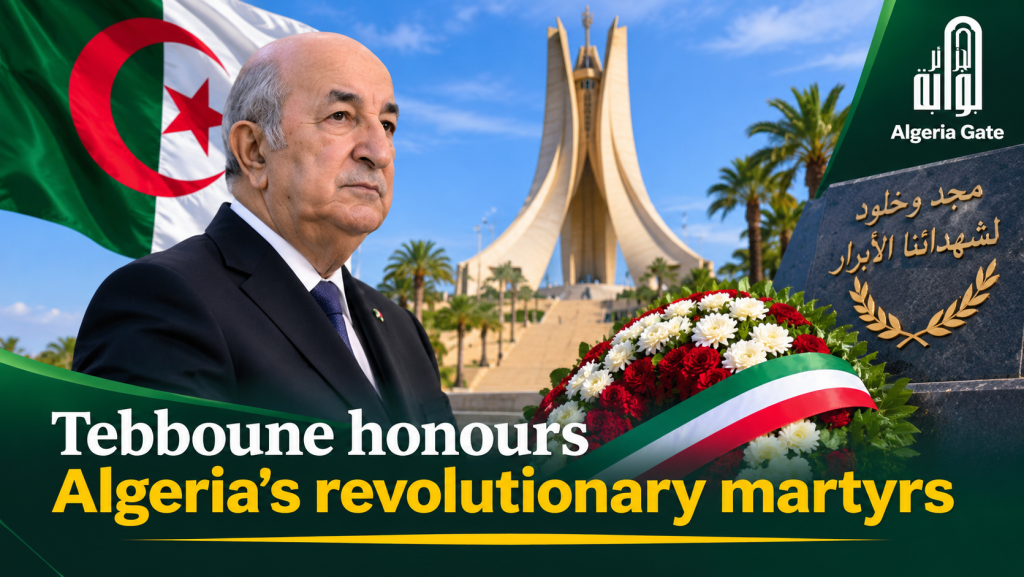
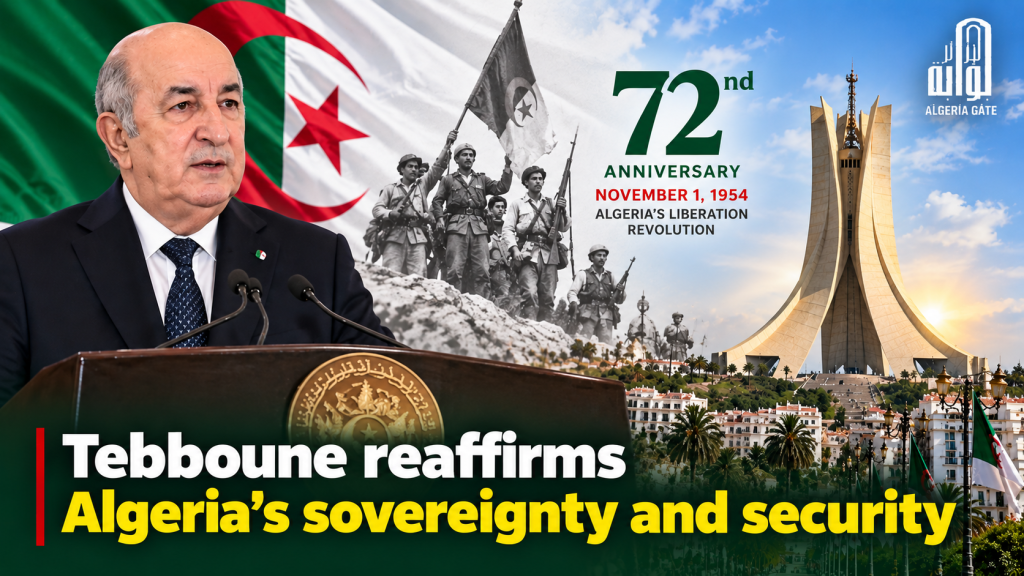
Algeria Gate: Algerian President Abdelmadjid Tebboune has delivered a message to the nation marking the 72nd anniversary of the outbreak of the November 1, 1954 Liberation Revolution, reaffirming Algeria’s commitment to national sovereignty, regional stability and the protection of its vital interests.

In his commemorative address, the president paid tribute to the martyrs of the Algerian Revolution while emphasizing the enduring importance of the country’s struggle for independence in shaping its political decisions and national security strategy.

Honoring 72 years of revolutionary legacy

President Tebboune recalled the sacrifices made by the Algerian people throughout 132 years of French colonial rule, highlighting the confiscation of land, violence against civilians and attempts to erase Algeria’s national identity.

He described the November 1 Revolution as a defining moment in the country’s history, representing the determination of generations of Algerians to regain their freedom and dignity.

The president stressed that Algeria’s independence was achieved through immense sacrifices and that the revolutionary spirit continues to guide the nation’s commitment to sovereignty and territorial integrity.

He also emphasized the importance of preserving the historical memory of the liberation struggle and transmitting its values to future generations.

A strong message on national security

Beyond the historical significance of the anniversary, President Tebboune addressed the evolving security challenges facing Algeria and the wider region.

He highlighted the importance of constitutional authorization and institutional consensus in cooperation with a neighboring brotherly country, describing these mechanisms as essential to protecting Algeria’s vital national interests.

According to the president, such cooperation reflects a proactive approach to national security, allowing Algeria to anticipate regional challenges while maintaining stability.

His remarks underscored the importance of coordinated institutional action and sovereign political decision-making in responding to changing regional circumstances.

The president did not identify the neighboring country in the passage cited, leaving the precise scope of the cooperation unspecified.

Algeria’s sovereignty remains a priority

President Tebboune reaffirmed that Algeria’s political decisions are guided by its sovereign national interests and its commitment to preserving stability.

He linked the country’s current security strategy to the principles established during the November 1954 Revolution, emphasizing national independence, institutional strength and the unity of the Algerian people.

The president also stressed the importance of mobilizing national resources and capabilities to safeguard the country’s achievements amid regional uncertainty.

His message presented stability not only as a security objective but also as a foundation for Algeria’s continued development and the protection of its national interests.

National unity at the heart of Algeria’s future

The president highlighted the cohesion of Algerian society and the strength of national institutions as essential pillars of the country’s resilience.

Drawing on the legacy of the liberation struggle, he called attention to the responsibilities of preserving independence, protecting national achievements and maintaining the values inherited from the revolutionary generation.

The anniversary, he emphasized, offers an opportunity to reflect on the country’s history while remaining attentive to the challenges and responsibilities of the present.

A tribute to Algeria’s martyrs and veterans

Concluding his message, President Tebboune expressed his gratitude to the men and women who participated in the struggle for national liberation.

He paid tribute to the martyrs who sacrificed their lives for Algeria’s independence and extended his appreciation to surviving veterans, known as moudjahidine and moudjahidate.

The president closed with a patriotic tribute:

“Long live Algeria! Glory and eternity to our valiant martyrs.”

As Algeria commemorates the 72nd anniversary of its historic revolution, Tebboune’s message reinforces the connection between the country’s struggle for independence and its present-day priorities: sovereignty, national unity, regional security and stability.

#Algeria#President tebboune
Author
Algeria
Share this post

Algérie Télécom backs 680 young athletes in Timimoun

Algérie Télécom backs 680 young athletes in Timimoun

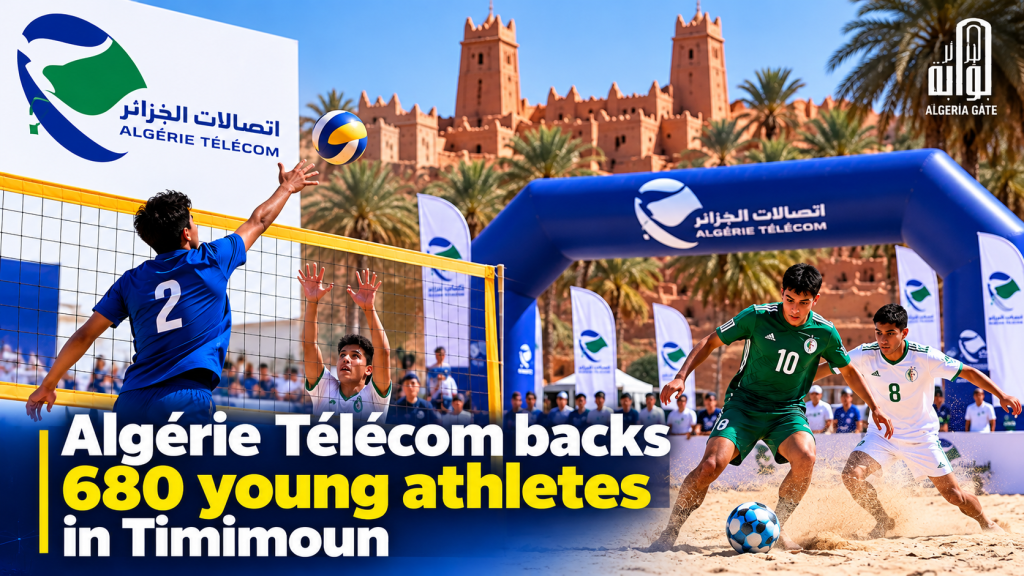
Algeria Gate: Algérie Télécom has reaffirmed its commitment to youth development and school sports by becoming the official sponsor of the third edition of Algeria’s National School Beach Football and Beach Volleyball Championship, taking place in Timimoun from October 28 to November 2, 2026.

The national sporting event brings together 680 students from 50 Wilayas across Algeria, transforming the picturesque Saharan city into a gathering place for young sporting talent, cultural exchange and teamwork.

A national celebration of youth and sport

Held under the supervision of the Ministry of National Education, the championship is organized by the Provincial School Sports League in collaboration with local education, youth and sports authorities.

The competition provides young athletes with an opportunity to showcase their abilities in beach football and beach volleyball while developing essential values such as discipline, cooperation, perseverance and sportsmanship.

Beyond the sporting contests, the championship encourages interaction among students from different regions of Algeria, strengthening connections and promoting a shared sense of national identity.

Algérie Télécom strengthens its commitment to youth

Through its official sponsorship, Algérie Télécom continues to expand its involvement in initiatives that support education, youth engagement and sporting development.

The partnership reflects the company’s broader commitment to supporting activities that contribute to the personal and social development of young Algerians.

By backing a national championship involving hundreds of students, the telecommunications operator is helping highlight the importance of school sports as a platform for discovering talent and encouraging active lifestyles.

Timimoun showcases Algeria’s Saharan heritage

Known as the “Red Oasis,” Timimoun offers a distinctive setting for the championship, combining sporting activities with opportunities to discover the cultural and natural heritage of southern Algeria.

The event also aims to promote Saharan tourism by introducing participants and visitors to the region’s landscapes, traditions and cultural attractions.

Hosting a national sporting competition of this scale provides an opportunity to highlight Timimoun’s potential as a destination for youth events, tourism and cultural activities.

More than a sporting competition

The third National School Beach Football and Beach Volleyball Championship demonstrates how sport can bring together education, youth development and regional promotion.

With 680 students representing 50 provinces, the gathering celebrates Algeria’s young sporting talent while drawing attention to the cultural richness of the country’s southern regions.

For Algérie Télécom, sponsoring the championship represents another step in its support for educational and sporting initiatives, reinforcing its role in encouraging the next generation of Algerian athletes.

#Algeria#Sport
Author
Algeria
Share this post

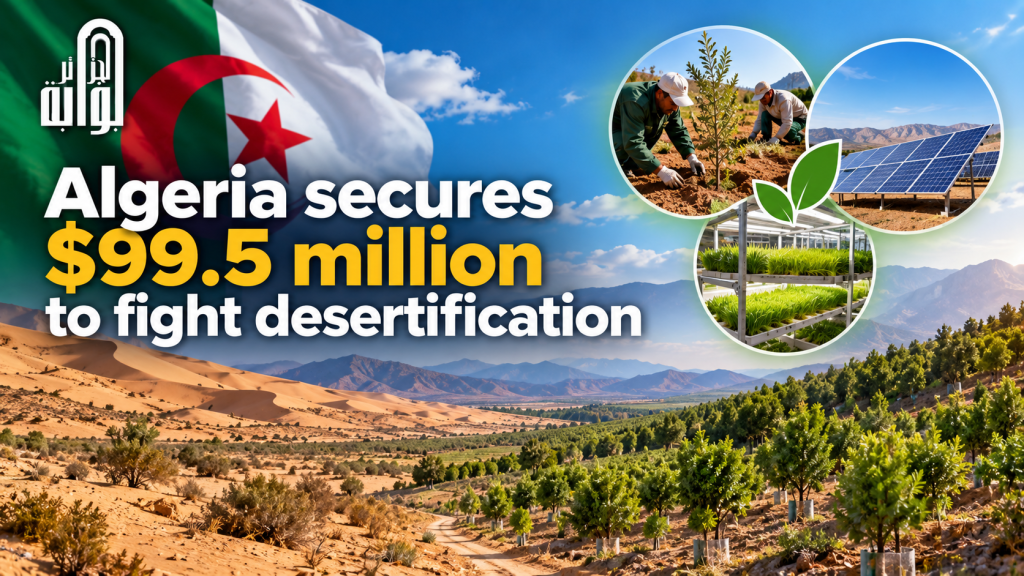
Algeria secures $99.5 million to fight desertification

Algeria secures $99.5 million to fight desertification

Algeria Gate: Algeria has secured approval for a major $99.5 million environmental and rural development project aimed at combating desertification, restoring degraded land and improving livelihoods across six provinces, with more than one million people expected to benefit.

The initiative, approved by the Green Climate Fund (GCF), represents the first project of its kind to receive funding from the international climate financing institution in Algeria.

The decision was announced following a meeting of the GCF Board in Songdo, South Korea. The seven-year programme will be implemented with support from the United Nations Food and Agriculture Organization (FAO), marking a significant investment in Algeria’s efforts to address climate change and strengthen rural development.

Algeria secures $99.5 million to fight desertification

$99.5 million investment to transform rural communities

The project brings together international climate financing and national resources to support environmental restoration and economic development.

Of the total $99.5 million budget, $43 million will come from the Green Climate Fund as a grant, while the Algerian government will contribute an additional $56.5 million.

The programme will cover approximately 454,138 hectares across six Algerian provinces, targeting regions particularly vulnerable to desertification, land degradation and climate-related pressures.

According to information published by the United Nations and reported by Algeria Gate, more than one million people are expected to benefit from the initiative, including over 142,000 farmers and livestock breeders.

Women account for more than one-third of the agricultural beneficiaries, reflecting the programme’s emphasis on inclusive rural development.

The targeted areas are also home to more than half of Algeria’s nomadic population, making the initiative particularly important for communities whose livelihoods depend on livestock, grazing land and natural resources.

Restoring more than 59,000 hectares of degraded land

Environmental restoration is at the heart of the programme.

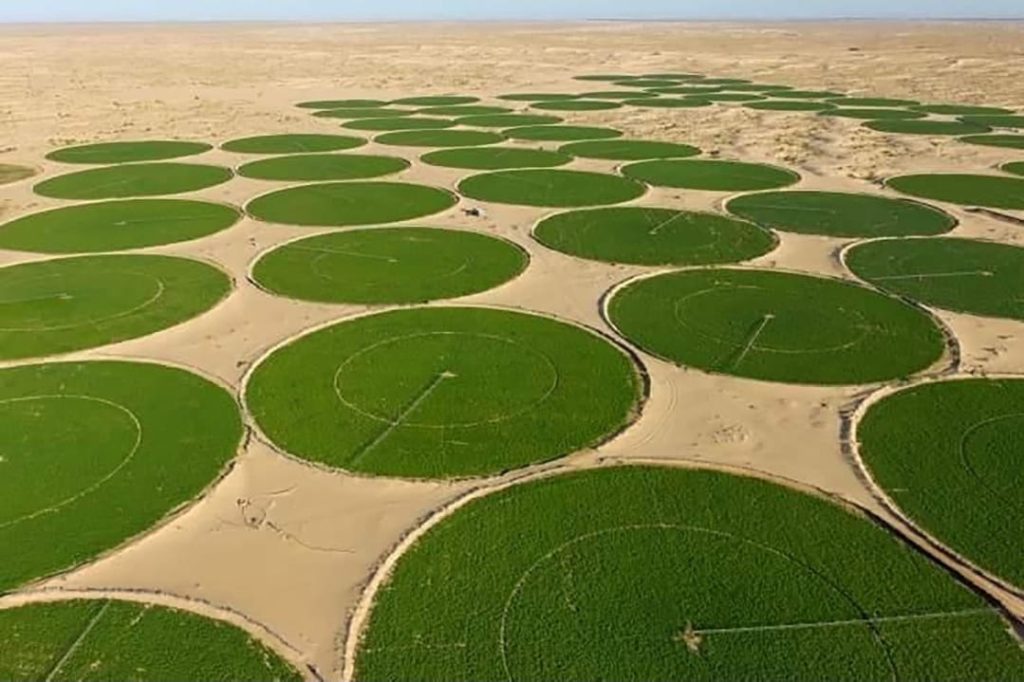
The project aims to rehabilitate more than 59,000 hectares of degraded forests, rangelands, sand dunes and agricultural land.

These interventions are designed to address the effects of soil erosion, declining vegetation cover and expanding desertification, which threaten agricultural productivity and rural livelihoods in Algeria’s arid and semi-arid regions.

Restoration activities are expected to improve land management, protect biodiversity and strengthen ecosystems against the increasingly severe effects of climate change.

By rehabilitating natural landscapes and supporting sustainable agricultural practices, the initiative also seeks to improve the long-term productivity of rural areas.

Algeria secures $99.5 million to fight desertification

Solar energy and innovative farming solutions

Beyond environmental restoration, the programme includes significant investments in renewable energy and agricultural innovation.

A total of 190 solar energy units will be installed to provide clean power for rural households and agricultural activities.

These installations will support essential services such as refrigeration, agricultural processing and other productive activities, helping rural communities reduce their reliance on conventional energy sources.

The project also includes the installation of 240 hydroponic farming units dedicated to animal feed production.

These systems are expected to provide year-round feed for more than 25,000 livestock animals, offering a practical response to shortages caused by drought and deteriorating grazing conditions.

Hydroponic fodder production could help livestock breeders maintain more stable agricultural activities while reducing pressure on vulnerable natural rangelands.

Algeria secures $99.5 million to fight desertification

New economic opportunities for rural entrepreneurs

The programme also seeks to strengthen rural economies by improving access to financing and supporting small-scale businesses.

Special attention will be given to microenterprises operating in agriculture, livestock production and the processing of natural resources.

At least half of the supported projects are expected to be led by women, creating opportunities for greater participation in local economic development.

The initiative will also promote value chains associated with traditional Algerian agricultural products, including prickly pears, olives, rosemary, wool, esparto grass and mint.

By improving production, processing and market access, the programme aims to help rural communities generate additional income and create more sustainable economic activities.

These measures are intended to complement environmental restoration by ensuring that local populations can benefit economically from improved natural resource management.

A new boost for Algeria’s Green Dam project

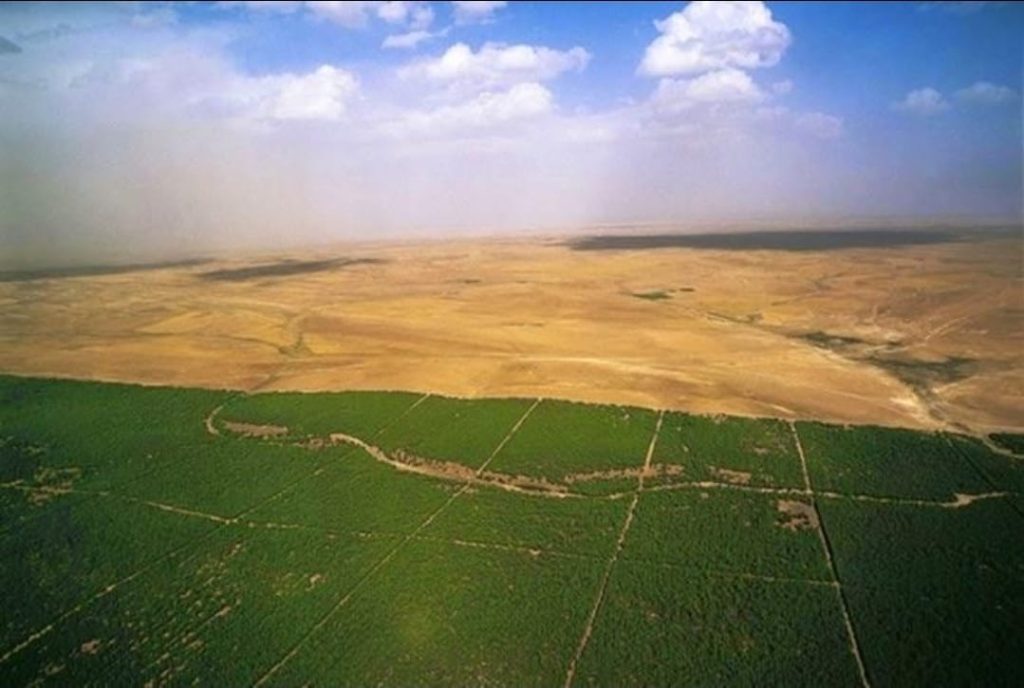
The newly approved investment is closely linked to the revival of Algeria’s historic Green Dam initiative, known as the Barrage Vert.

Launched in 1971, the Green Dam was designed to combat desertification and protect vulnerable landscapes from the northward expansion of the Sahara.

The project remains one of Algeria’s most ambitious long-term environmental initiatives, covering vast areas of the country’s steppe and semi-arid regions.

The latest financing is expected to support renewed restoration efforts while integrating modern approaches to biodiversity conservation, climate adaptation and rural economic development.

Algeria’s Minister of Agriculture, Rural Development and Fisheries, Sid Ali Khaldi, described the initiative as an important contribution to revitalizing the Green Dam through an approach combining environmental protection with stronger economic resilience for local communities.

The project reflects a broader effort to connect ecosystem restoration with sustainable development rather than treating desertification solely as an environmental challenge.

Algeria strengthens its climate investment ambitions

The approval of the $99.5 million programme marks an important development in Algeria’s efforts to attract international climate financing and expand investment in sustainable development.

By combining environmental restoration, renewable energy, agricultural innovation and support for rural entrepreneurs, the project addresses several interconnected challenges affecting vulnerable communities.

Its expected impact extends beyond combating desertification, with potential benefits for food security, employment, agricultural productivity and the economic resilience of rural households.

The seven-year programme will ultimately be measured by its ability to restore degraded landscapes, deliver practical improvements to local communities and establish sustainable economic activities.

With more than one million people expected to benefit, the initiative represents a substantial commitment to protecting Algeria’s natural resources while supporting the long-term development of its rural regions.

#Algeria#Economy
Author