Monday, 2 November 2026 • 18:07 Algiers time
Algeria Gate
Share this post

Algeria opens new headquarters for scientists abroad

• Author: Y.R • 0 comments • 2 views
Algeria opens new headquarters for scientists abroad

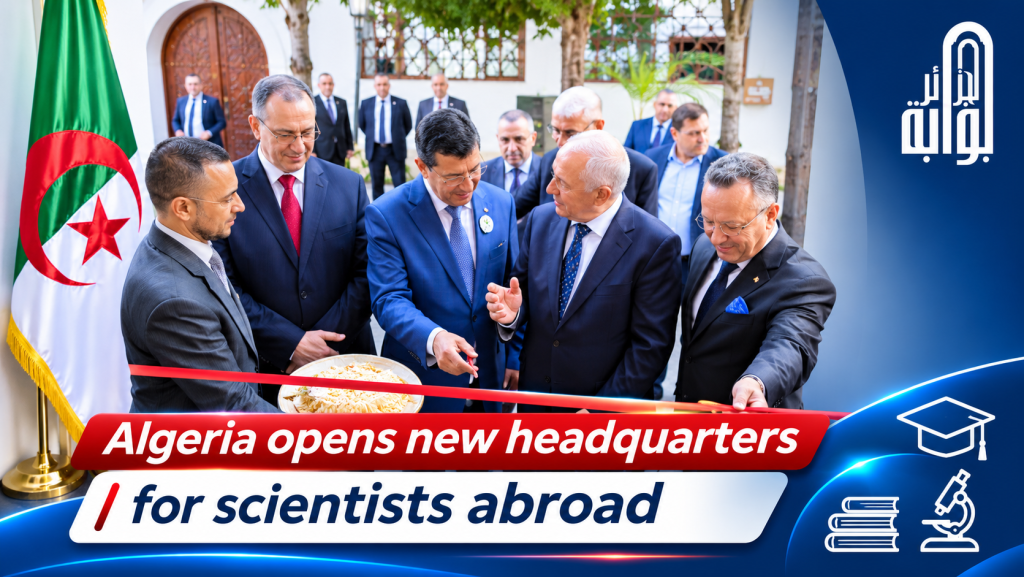
Algeria Gate: Algeria has taken a major step toward strengthening its scientific capabilities and reconnecting with its international talent pool following the official inauguration of the headquarters of the High Council of the National Scientific Community Abroad in Algiers on Monday, November 2, 2026.

The inauguration ceremony was overseen by Abdallah Moundji, Secretary-General of the Presidency of the Republic, alongside Professor Elias Zerhouni, the Council’s coordinator, and Minister of Higher Education and Scientific Research Kamel Baddari.

Established at the initiative of President Abdelmadjid Tebboune, the Council aims to mobilize Algerian scientists, researchers and experts living abroad, encouraging them to contribute their knowledge and expertise to national development.

Operating directly under the Presidency of the Republic, the advisory body is tasked with strengthening scientific cooperation, supporting strategic national projects, promoting innovation and facilitating technology transfer.

The initiative reflects Algeria’s determination to build stronger connections with its highly qualified diaspora and capitalize on the experience gained by Algerian professionals working in leading international research institutions and technological sectors.

The opening of the headquarters represents an important milestone in the country’s efforts to modernize its economy, advance scientific research and encourage greater participation by Algerian experts abroad in national development.

By bringing together scientific expertise from across the world, Algeria aims to reinforce its research capabilities, accelerate technological progress and create new opportunities for cooperation between domestic institutions and its international scientific community.

The Council is expected to serve as a strategic bridge between Algeria and its scientific diaspora, supporting the country’s broader ambitions for innovation, technological advancement and sustainable economic growth.

#Algeria
Author

Leave a comment

Your email address will not be published. Required fields are marked *

Algeria
Share this post

Algeria’s petrochemical ambitions: Investing in technology, not just energy

Algeria’s petrochemical ambitions: Investing in technology, not just energy

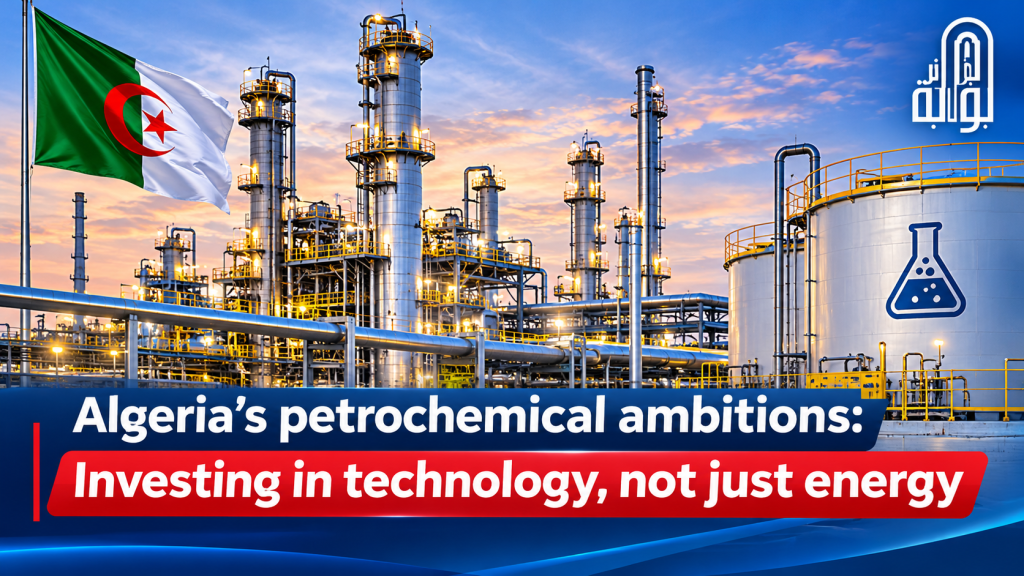
Algeria Gate: Algeria’s energy future may depend on more than its vast oil and gas reserves. As the global energy industry undergoes rapid technological transformation in a fast paced global race, the country faces a crucial challenge: turning its natural resources into industrial expertise, advanced technologies and sustainable economic growth.

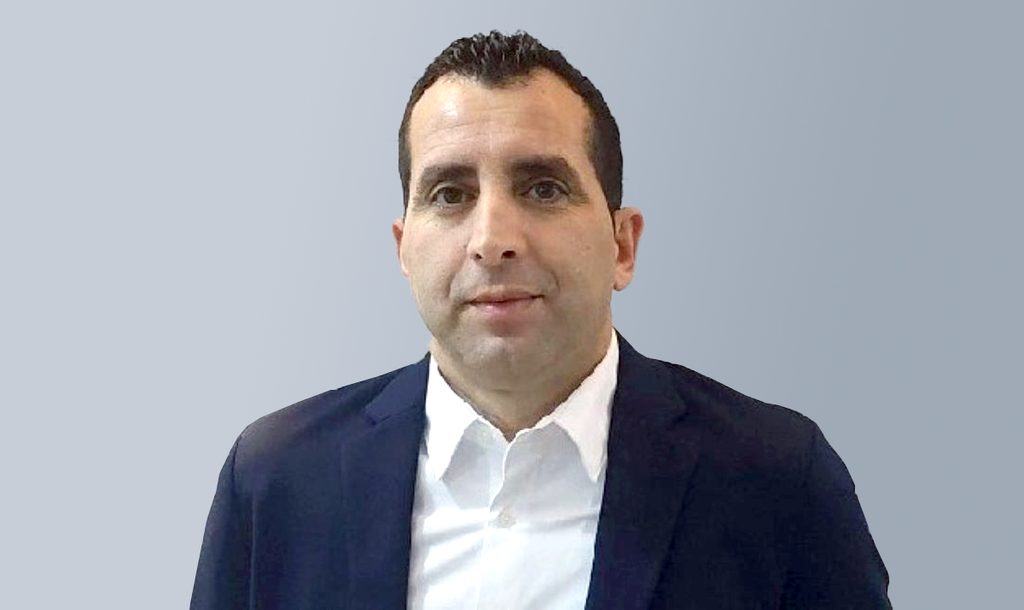
Choieb Boutamine, energy expert and founder and CEO of Ranadrill Energy, has highlighted a strategic direction for Algeria’s energy sector: investing in petrochemicals as a means of acquiring technology, strengthening industrial capabilities and creating greater value from the country’s hydrocarbon resources.

His message, captured in the statement “Investir dans la pétrochimie pour acquérir les technologies” , raises an important question: Can Algeria transform its position as a major energy producer into that of a technologically advanced industrial powerhouse?

Algeria’s petrochemical ambitions: Investing in technology, not just energy

Beyond oil and gas: Algeria’s industrial opportunity

For decades, hydrocarbons have played a central role in Algeria’s economy, generating export revenues and supporting national development. Yet exporting raw materials alone does not capture the full economic potential of the country’s energy resources.

Petrochemicals offer a pathway toward higher-value industrial production. By transforming oil and natural gas into plastics, synthetic materials, fertilizers and other chemical products, Algeria could expand its manufacturing base and strengthen its position in international value chains.

The opportunity extends beyond increasing production. Developing a competitive petrochemical industry could stimulate investment in engineering, specialized manufacturing, logistics and industrial services.

For Algeria, the challenge is therefore not simply to produce more energy, but to extract greater economic and technological value from every unit of energy produced.

Petrochemicals: The gateway to advanced technology

For Boutamine, the strategic importance of petrochemicals goes beyond industrial diversification. It also lies in the opportunity to acquire technologies, develop technical expertise and strengthen Algeria’s long-term industrial independence.

Algeria’s petrochemical ambitions: Investing in technology, not just energy

Modern petrochemical facilities rely on sophisticated processes, advanced catalysts, automation systems, digital monitoring and specialized engineering. Developing this industry could give Algerian companies and professionals greater exposure to technologies that are essential for international competitiveness.

However, building industrial plants does not automatically guarantee technology transfer. Meaningful progress requires partnerships that include technical training, research cooperation, local engineering participation and the development of domestic suppliers.

Boutamine has repeatedly emphasized the importance of technological innovation throughout the oil and gas value chain. In his public analyses, he has advocated greater use of advanced technologies to improve efficiency, strengthen production and generate additional economic value.

This vision suggests a fundamental shift in industrial strategy: Algeria should seek not only to attract foreign capital, but also to ensure that investment contributes to lasting national expertise.

The objective is to move from importing industrial solutions toward progressively mastering, adapting and eventually developing them domestically.

Sonatrach’s petrochemical push gathers momentum

Algeria’s petrochemical ambitions are already taking shape through several major industrial projects.

National energy company Sonatrach has identified refining and petrochemicals as important components of its investment strategy, with plans to allocate 13% of its investment program for 2026–2030 to these activities.

Among the projects highlighted by the company are an MTBE complex in Arzew, designed to produce a gasoline additive currently imported; a linear alkylbenzene complex in Skikda, intended to supply the detergent industry; and a propane dehydrogenation and polypropylene project in Arzew.

These developments are intended to strengthen domestic production, reduce dependence on imported industrial inputs and support the expansion of downstream manufacturing.

Their importance could extend far beyond the energy industry itself.

Locally produced petrochemical materials could support Algerian manufacturers operating in packaging, construction, agriculture, automotive components and consumer goods.

The expansion of these industries could also create opportunities for small and medium-sized enterprises, specialized contractors and technical service providers.

Yet petrochemicals remain a capital-intensive industry, requiring substantial investment, reliable infrastructure, competitive production costs and access to international markets.

The success of Algeria’s strategy will therefore depend not only on completing industrial projects, but also on ensuring that they operate efficiently and generate sustainable economic returns.

From energy giant to technology powerhouse

The longer-term significance of Boutamine’s vision lies in the possibility of reshaping Algeria’s economic identity.

The country already possesses extensive experience in hydrocarbon exploration, production, transportation and export. The next challenge is to translate that experience into broader industrial and technological capabilities.

Boutamine has also linked Algeria’s energy development to renewable power. In a 2024 interview, he argued that expanding solar electricity generation could free up natural gas currently used for domestic power production, making more gas available for petrochemical manufacturing or export.

This approach illustrates how industrial diversification and energy transition policies could reinforce one another.

Solar energy could help reduce pressure on domestic gas consumption, while petrochemical investments could increase the value generated from available hydrocarbon resources.

At the same time, environmental performance will be critical. Modern petrochemical development must address emissions, energy efficiency, water consumption, waste management and increasingly demanding international market standards.

For Algeria, the ultimate measure of success will not simply be the number of new petrochemical complexes constructed. It will be the extent to which those investments generate skilled employment, strengthen local businesses, transfer expertise and create internationally competitive industries.

The central message is clear: Algeria’s next major energy breakthrough may come not from discovering more hydrocarbons, but from learning to transform its existing resources into technology, industrial knowledge and lasting economic value.

Boutamine’s emphasis on petrochemicals points toward a future in which Algeria seeks to become more than an exporter of energy. It could become a producer of the advanced materials, industrial solutions and technological expertise that increasingly shape the global economy.

#Algeria#Economy
Author
Algeria
Share this post

Algeria unveils 2027 finance bill in Parliament

Algeria unveils 2027 finance bill in Parliament

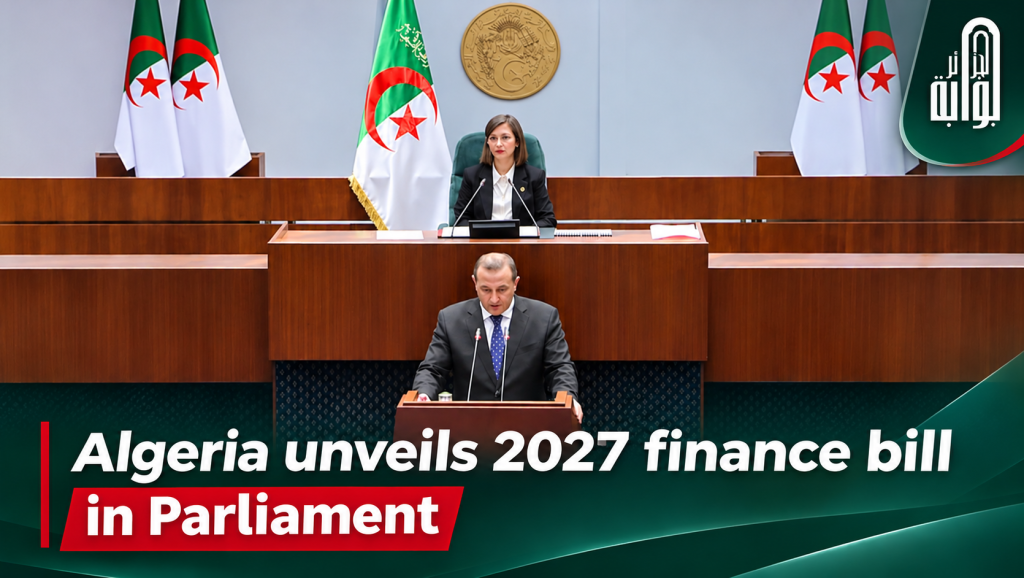
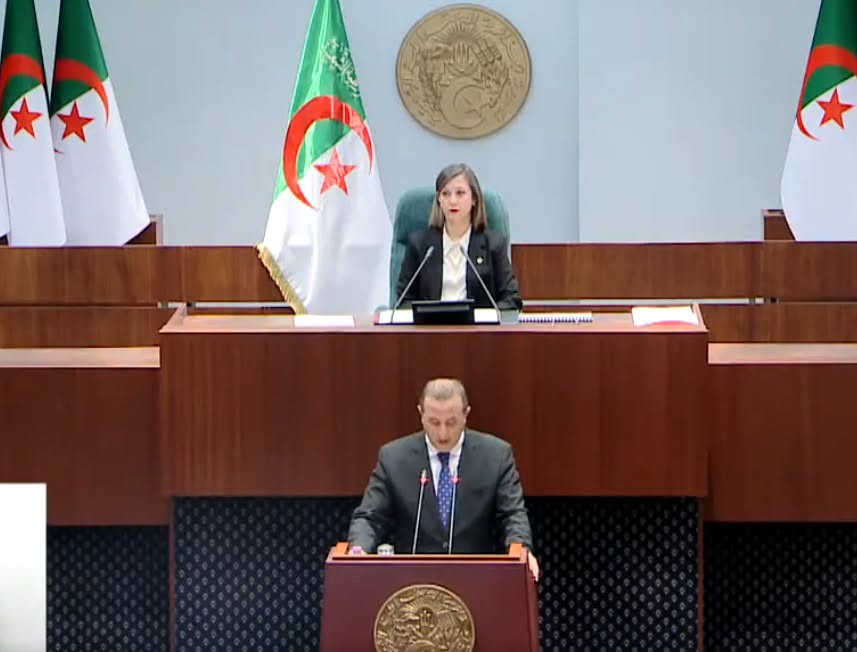
Algeria Gate: Algeria’s Minister of Finance, Mohamed Lamine Lebbou, presented the draft Finance Law for 2027 before the National People’s Assembly (APN), marking a key stage in the country’s annual budget approval process.

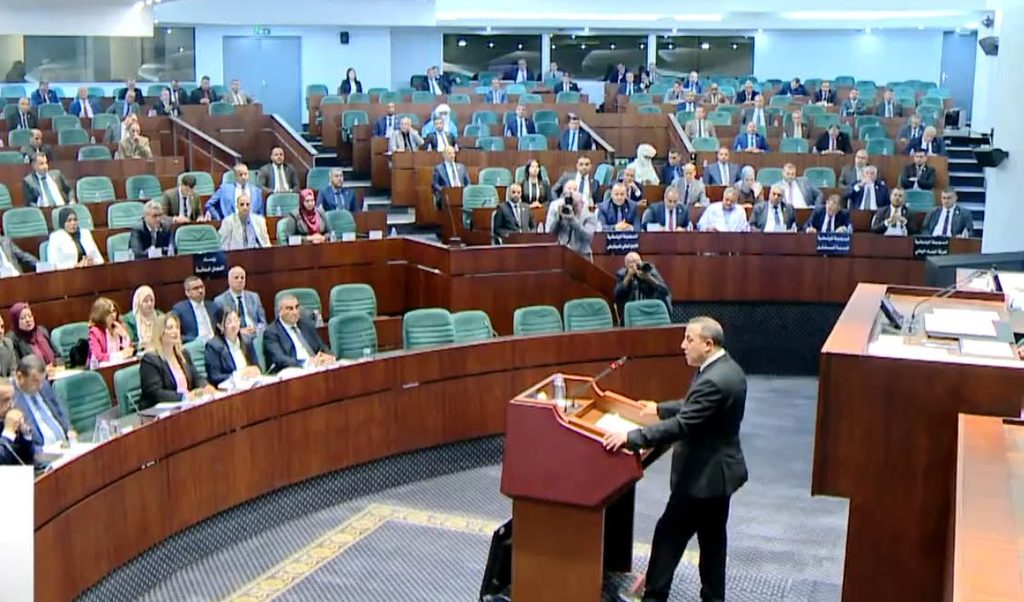
Speaking on behalf of the government, the minister introduced the proposed legislation during a parliamentary session dedicated to examining the country’s financial priorities and budgetary framework for the coming year.

The presentation opens an important phase of parliamentary scrutiny, during which lawmakers will assess the government’s fiscal proposals, public spending priorities, and measures intended to support Algeria’s economic development.

A crucial step in Algeria’s budget process

The 2027 Finance Bill forms part of Algeria’s annual financial planning process, establishing the legal framework for government revenue, expenditure, and fiscal policy.

The legislation is particularly significant as Algeria continues its efforts to diversify the national economy, strengthen non-hydrocarbon sectors, encourage investment, and maintain public services.

Parliamentary examination provides lawmakers with an opportunity to question government representatives, evaluate proposed financial measures, and discuss their potential implications for businesses, households, and public institutions.

Algeria unveils 2027 finance bill in Parliament

Economic growth and purchasing power at the forefront

According to figures previously presented by the Finance Ministry, Algeria’s economy is projected to grow by 4.2% in 2027, supported by activity in industry, construction, services, and agriculture.

The draft budget forecasts revenue of approximately DZD 9,251.1 billion, while payment appropriations are projected at DZD 17,882.6 billion.

The proposed legislation also includes measures to encourage productive investment, modernize tax administration, improve revenue collection, and protect citizens’ purchasing power.

Among its social provisions, the bill includes planned wage increases and the extension of certain value-added tax exemptions on essential food products.

President Abdelmadjid Tebboune had previously instructed the government to incorporate salary increases into the 2027 Finance Bill while avoiding new taxes that would undermine the purchasing power of middle- and lower-income households.

Algeria unveils 2027 finance bill in Parliament

Parliamentary vote scheduled for November 16

According to the National People’s Assembly’s announced timetable, the general debate will continue through Thursday, November 5, when parliamentary group leaders and the government’s representative are expected to address lawmakers’ concerns.

The bill is scheduled for a parliamentary vote on November 16, 2026.

The outcome will help determine the financial framework for Algeria’s economic and social policies in 2027, with particular attention to public investment, economic diversification, social support, and fiscal stability.

#Algeria#Economy
Author
Algeria
Share this post

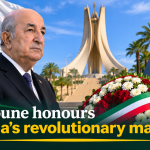
Tebboune honours Algeria’s revolutionary martyrs

Tebboune honours Algeria’s revolutionary martyrs

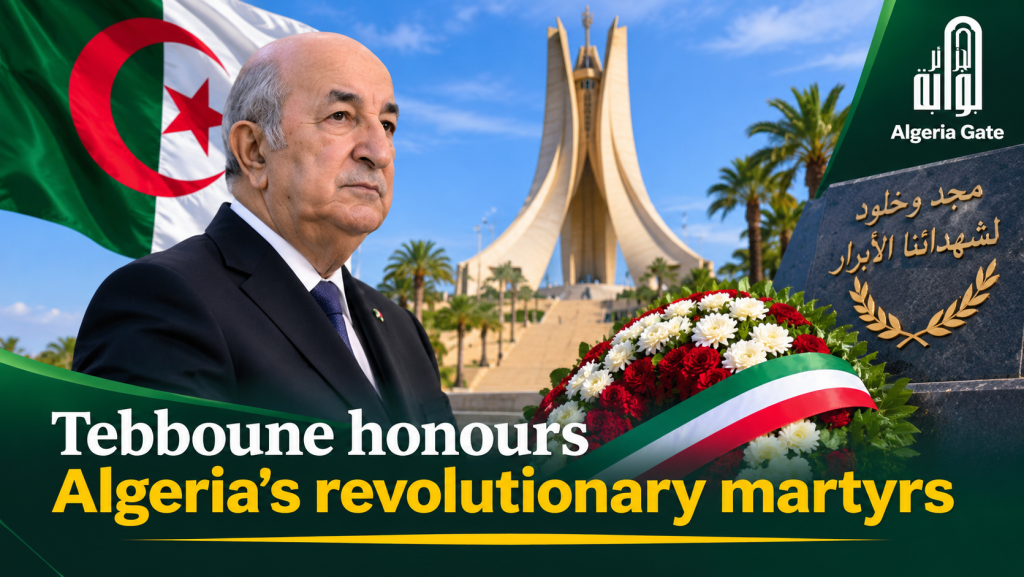
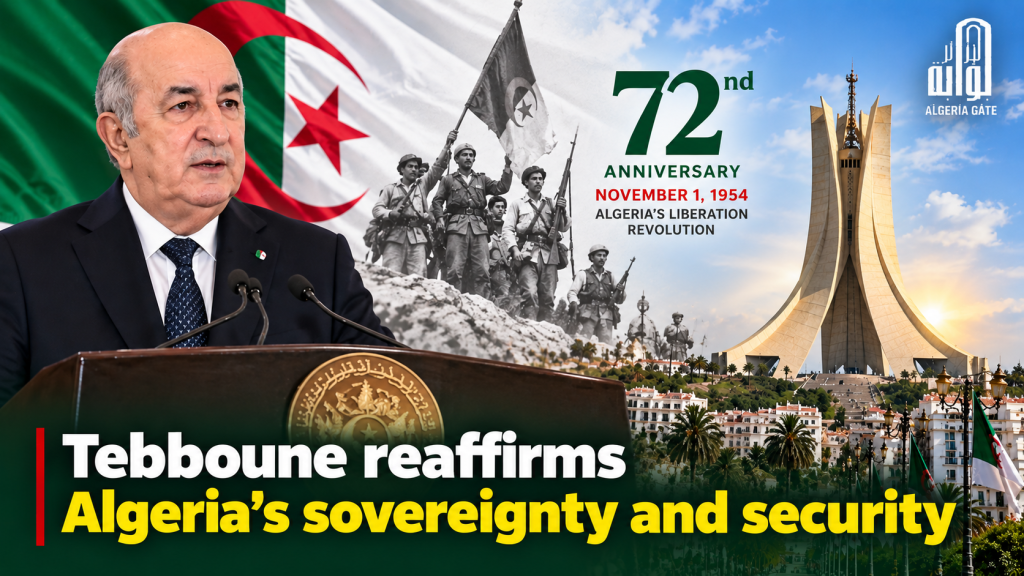
Algeria Gate: Algerian President Abdelmadjid Tebboune paid tribute to the martyrs of the country’s War of Independence on Sunday, 1 November 2026, during a solemn ceremony at the Martyrs’ Memorial (Maqam Echahid) in Algiers, marking the 72nd anniversary of the outbreak of the November 1, 1954 Revolution.

The President laid a wreath of flowers at the memorial dedicated to those who sacrificed their lives during Algeria’s struggle for independence from French colonial rule. He then recited Surah Al-Fatiha in remembrance of the fallen heroes, honouring their sacrifices and their contribution to the establishment of an independent Algerian state.

Algeria commemorates 72 years of revolution

The ceremony formed part of nationwide commemorations marking one of the most significant dates in Algeria’s modern history.

On 1 November 1954, the National Liberation Front (FLN) launched the armed struggle against French colonial rule, beginning a liberation war that would ultimately lead to Algeria’s independence on 5 July 1962.

The anniversary, widely commemorated as Revolution Day, represents a defining moment in the country’s national identity and its struggle for sovereignty.

The Martyrs’ Memorial, overlooking the capital, remains one of Algeria’s most prominent national landmarks. It serves as a symbol of remembrance and a tribute to the men and women who fought for the country’s freedom.

Preserving the legacy of the liberation struggle

President Tebboune’s participation in the commemorative ceremony reflects the importance attached by the Algerian state to preserving the memory of the liberation struggle and honouring those who contributed to national independence.

The annual observance also provides an opportunity to reaffirm the historical significance of the November Revolution and its enduring place in Algeria’s collective memory.

Seventy-two years after the beginning of the independence struggle, the anniversary continues to unite generations of Algerians around the principles of national sovereignty, sacrifice and remembrance.

The President’s tribute at Maqam Echahid underscores the continuing importance of the revolutionary legacy in Algeria’s national commemorations and public life.

#Algeria#President tebboune
Author