
Monday, 2 November 2026 • 19:26 Algiers time
Algeria Gate
Share this post

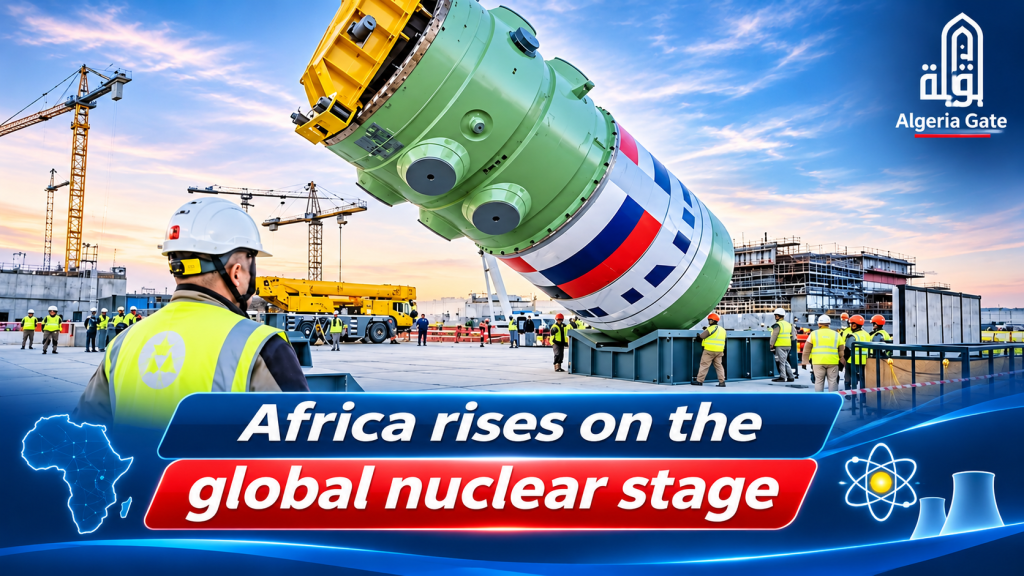
Africa rises on the global nuclear stage as Rwanda seals Russian deal

• Author: Y.R • 0 comments • 1 views
Africa rises on the global nuclear stage as Rwanda seals Russian deal

Algeria Gate: Africa is steadily emerging as a serious player in the global technological and energy landscape, with ambitious investments signaling a growing determination to shape its own industrial future. Rwanda has become the latest example of this transformation after signing a major nuclear cooperation agreement with Russia’s state-owned nuclear corporation, Rosatom.

The agreement, signed during the third Russia-Africa Summit in Moscow, provides for the development of a Small Modular Reactor (SMR) and the establishment of a Centre for Nuclear Science and Technology, marking an important milestone in Rwanda’s pursuit of energy independence and technological advancement.

Rwanda’s ambassador to Russia, Major General Joseph Nzabamwita, announced the agreement on October 31, revealing that construction activities are expected to begin soon.

“Construction works will now soon commence in Rwanda, which will also create jobs for our youths,” the ambassador stated on X.

Beyond Rwanda, the initiative reflects a broader shift taking place across Africa. Increasingly, African nations are seeking to move beyond their traditional roles as suppliers of raw materials and consumers of foreign technologies, positioning themselves instead as active participants in advanced industries, scientific research and global innovation.
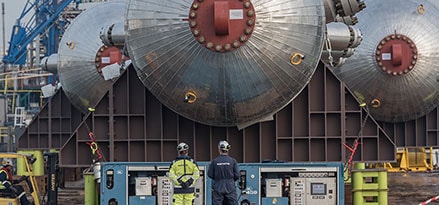
Africa rises on the global nuclear stage as Rwanda seals Russian deal

Rwanda’s nuclear ambitions signal Africa’s technological awakening

Rwanda’s agreement with Rosatom represents more than an investment in electricity generation. It illustrates how African countries are increasingly pursuing sophisticated technologies once concentrated in the world’s most industrialized economies.

At the center of the partnership is the development of Small Modular Reactors, a nuclear technology designed to deliver reliable electricity through facilities smaller than conventional nuclear power plants.

With generating capacities below 300 megawatts, SMRs could offer a suitable solution for countries with relatively small electricity grids, allowing them to explore nuclear energy without immediately developing large-scale conventional reactors.

Rwanda aims to generate its first 110 megawatts of nuclear electricity between 2030 and 2033, potentially strengthening its energy security and supporting future industrial expansion.

The latest agreement follows a cooperation roadmap signed in June between the Rwanda Atomic Energy Board (RAEB) and Rosatom, focusing on nuclear infrastructure, technical training and capacity building.

This development carries wider significance for the continent.

For decades, Africa has been widely recognized for its abundant natural resources, including oil, natural gas and strategic minerals. Today, a growing number of African governments are pursuing a different ambition: transforming these resources and international partnerships into advanced industrial capabilities.

Rwanda’s nuclear initiative illustrates Africa’s determination to participate in the industries shaping the future, rather than remaining on the sidelines of global technological progress.

From energy consumers to innovators: Africa invests in knowledge and expertise

One of the most significant aspects of the Rwanda-Russia agreement is its emphasis on scientific development and technology transfer.

Alongside the planned reactor, the partnership includes the establishment of a Centre for Nuclear Science and Technology, intended to support peaceful nuclear applications in healthcare, agriculture, mining and mineral processing.

In healthcare, nuclear technologies could improve cancer diagnosis and treatment, while agricultural applications could strengthen food preservation and reduce post-harvest losses.

In mining, advanced nuclear techniques could contribute to geological exploration and mineral analysis, supporting efforts to develop higher-value industrial activities.

However, the agreement’s long-term significance may lie in its investment in human capital.

Rwanda aims to train more than 230 nuclear professionals by 2028, compared with approximately 30 to 50 specialists currently working in relevant institutions.

Through cooperation with Rosatom, the country seeks to develop a new generation of nuclear engineers, scientists and technical experts capable of supporting its growing technological ambitions.

This approach reflects an increasingly important priority across Africa: acquiring knowledge and developing domestic expertise rather than relying exclusively on imported technologies.

The continent’s young population represents a major potential advantage in this transformation. With sustained investment in education, research institutions and specialized training, African countries could strengthen their participation in international scientific and industrial networks.

The real breakthrough for Africa will not simply be importing advanced infrastructure, but mastering the technologies behind it.

Rwanda’s initiative demonstrates how strategic international partnerships can become instruments of scientific development, industrial modernization and long-term economic transformation.

Africa claims a stronger position in the global energy landscape

Rwanda’s agreement with Russia also highlights the changing nature of Africa’s international partnerships.

As global powers compete for technological leadership and influence in emerging markets, African countries are increasingly seeking cooperation that advances their own development priorities.

Russia, through Rosatom, has been expanding its nuclear partnerships across Africa, offering cooperation in electricity generation, research infrastructure and specialized technical training.

For Rwanda, the agreement provides an opportunity to access advanced nuclear technologies while building the institutions and expertise necessary to support their peaceful use.

More broadly, it reflects Africa’s growing ambition to become a meaningful participant in global technological development.

From renewable energy investments and major infrastructure projects to digital innovation, advanced manufacturing and nuclear research, African countries are exploring new pathways toward economic diversification.

These initiatives challenge the traditional perception of Africa as a continent defined primarily by resource extraction and development needs.

Instead, they point toward an emerging generation of African economies seeking greater technological independence, stronger industrial capabilities and a more influential position in international markets.

Significant challenges remain. Nuclear projects require substantial financing, strict safety regulations, long-term planning, waste management systems and highly qualified personnel.

Furthermore, signing international agreements is only the beginning. The true measure of success will depend on whether these projects translate into operational infrastructure, sustainable employment, technology transfer and measurable improvements in economic productivity.

#Africa#Economy
Author

Leave a comment

Your email address will not be published. Required fields are marked *

Algeria
Share this post

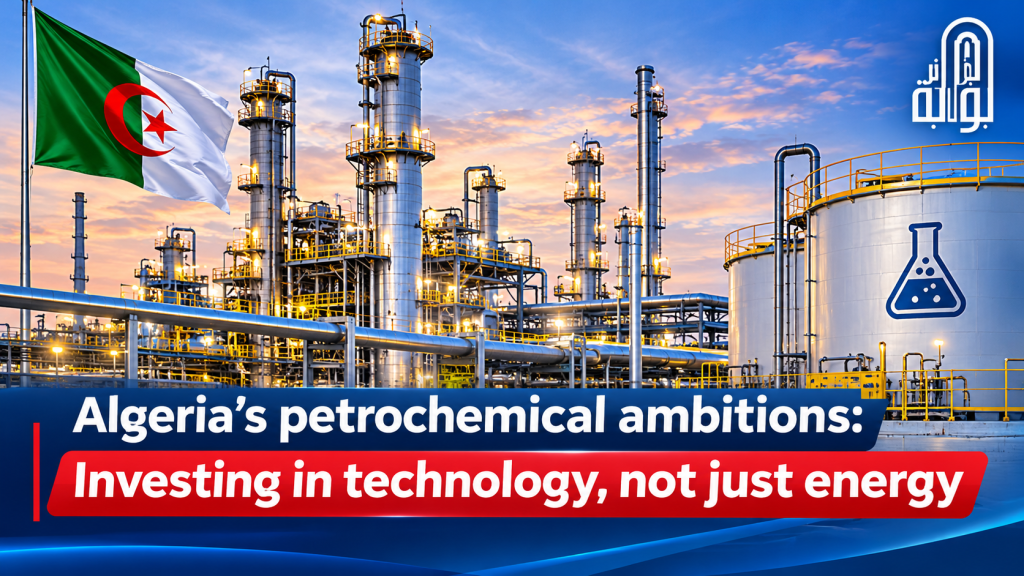
Algeria’s petrochemical ambitions: Investing in technology, not just energy

Algeria’s petrochemical ambitions: Investing in technology, not just energy

Algeria Gate: Algeria’s energy future may depend on more than its vast oil and gas reserves. As the global energy industry undergoes rapid technological transformation in a fast paced global race, the country faces a crucial challenge: turning its natural resources into industrial expertise, advanced technologies and sustainable economic growth.

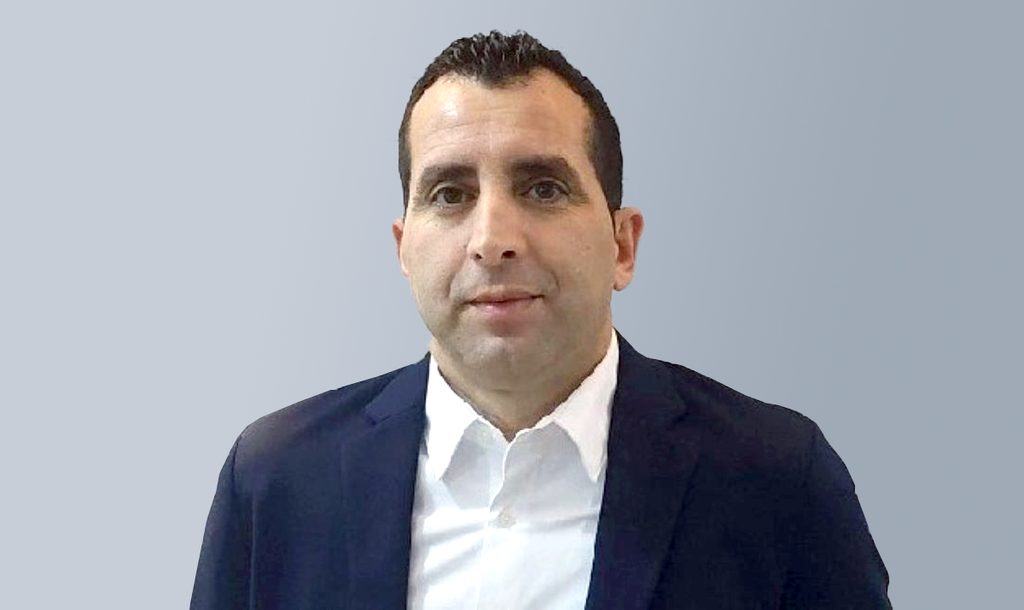
Choieb Boutamine, energy expert and founder and CEO of Ranadrill Energy, has highlighted a strategic direction for Algeria’s energy sector: investing in petrochemicals as a means of acquiring technology, strengthening industrial capabilities and creating greater value from the country’s hydrocarbon resources.

His message, captured in the statement “Investir dans la pétrochimie pour acquérir les technologies” , raises an important question: Can Algeria transform its position as a major energy producer into that of a technologically advanced industrial powerhouse?

Algeria’s petrochemical ambitions: Investing in technology, not just energy

Beyond oil and gas: Algeria’s industrial opportunity

For decades, hydrocarbons have played a central role in Algeria’s economy, generating export revenues and supporting national development. Yet exporting raw materials alone does not capture the full economic potential of the country’s energy resources.

Petrochemicals offer a pathway toward higher-value industrial production. By transforming oil and natural gas into plastics, synthetic materials, fertilizers and other chemical products, Algeria could expand its manufacturing base and strengthen its position in international value chains.

The opportunity extends beyond increasing production. Developing a competitive petrochemical industry could stimulate investment in engineering, specialized manufacturing, logistics and industrial services.

For Algeria, the challenge is therefore not simply to produce more energy, but to extract greater economic and technological value from every unit of energy produced.

Petrochemicals: The gateway to advanced technology

For Boutamine, the strategic importance of petrochemicals goes beyond industrial diversification. It also lies in the opportunity to acquire technologies, develop technical expertise and strengthen Algeria’s long-term industrial independence.

Algeria’s petrochemical ambitions: Investing in technology, not just energy

Modern petrochemical facilities rely on sophisticated processes, advanced catalysts, automation systems, digital monitoring and specialized engineering. Developing this industry could give Algerian companies and professionals greater exposure to technologies that are essential for international competitiveness.

However, building industrial plants does not automatically guarantee technology transfer. Meaningful progress requires partnerships that include technical training, research cooperation, local engineering participation and the development of domestic suppliers.

Boutamine has repeatedly emphasized the importance of technological innovation throughout the oil and gas value chain. In his public analyses, he has advocated greater use of advanced technologies to improve efficiency, strengthen production and generate additional economic value.

This vision suggests a fundamental shift in industrial strategy: Algeria should seek not only to attract foreign capital, but also to ensure that investment contributes to lasting national expertise.

The objective is to move from importing industrial solutions toward progressively mastering, adapting and eventually developing them domestically.

Sonatrach’s petrochemical push gathers momentum

Algeria’s petrochemical ambitions are already taking shape through several major industrial projects.

National energy company Sonatrach has identified refining and petrochemicals as important components of its investment strategy, with plans to allocate 13% of its investment program for 2026–2030 to these activities.

Among the projects highlighted by the company are an MTBE complex in Arzew, designed to produce a gasoline additive currently imported; a linear alkylbenzene complex in Skikda, intended to supply the detergent industry; and a propane dehydrogenation and polypropylene project in Arzew.

These developments are intended to strengthen domestic production, reduce dependence on imported industrial inputs and support the expansion of downstream manufacturing.

Their importance could extend far beyond the energy industry itself.

Locally produced petrochemical materials could support Algerian manufacturers operating in packaging, construction, agriculture, automotive components and consumer goods.

The expansion of these industries could also create opportunities for small and medium-sized enterprises, specialized contractors and technical service providers.

Yet petrochemicals remain a capital-intensive industry, requiring substantial investment, reliable infrastructure, competitive production costs and access to international markets.

The success of Algeria’s strategy will therefore depend not only on completing industrial projects, but also on ensuring that they operate efficiently and generate sustainable economic returns.

From energy giant to technology powerhouse

The longer-term significance of Boutamine’s vision lies in the possibility of reshaping Algeria’s economic identity.

The country already possesses extensive experience in hydrocarbon exploration, production, transportation and export. The next challenge is to translate that experience into broader industrial and technological capabilities.

Boutamine has also linked Algeria’s energy development to renewable power. In a 2024 interview, he argued that expanding solar electricity generation could free up natural gas currently used for domestic power production, making more gas available for petrochemical manufacturing or export.

This approach illustrates how industrial diversification and energy transition policies could reinforce one another.

Solar energy could help reduce pressure on domestic gas consumption, while petrochemical investments could increase the value generated from available hydrocarbon resources.

At the same time, environmental performance will be critical. Modern petrochemical development must address emissions, energy efficiency, water consumption, waste management and increasingly demanding international market standards.

For Algeria, the ultimate measure of success will not simply be the number of new petrochemical complexes constructed. It will be the extent to which those investments generate skilled employment, strengthen local businesses, transfer expertise and create internationally competitive industries.

The central message is clear: Algeria’s next major energy breakthrough may come not from discovering more hydrocarbons, but from learning to transform its existing resources into technology, industrial knowledge and lasting economic value.

Boutamine’s emphasis on petrochemicals points toward a future in which Algeria seeks to become more than an exporter of energy. It could become a producer of the advanced materials, industrial solutions and technological expertise that increasingly shape the global economy.

#Algeria#Economy
Author
Algeria
Share this post

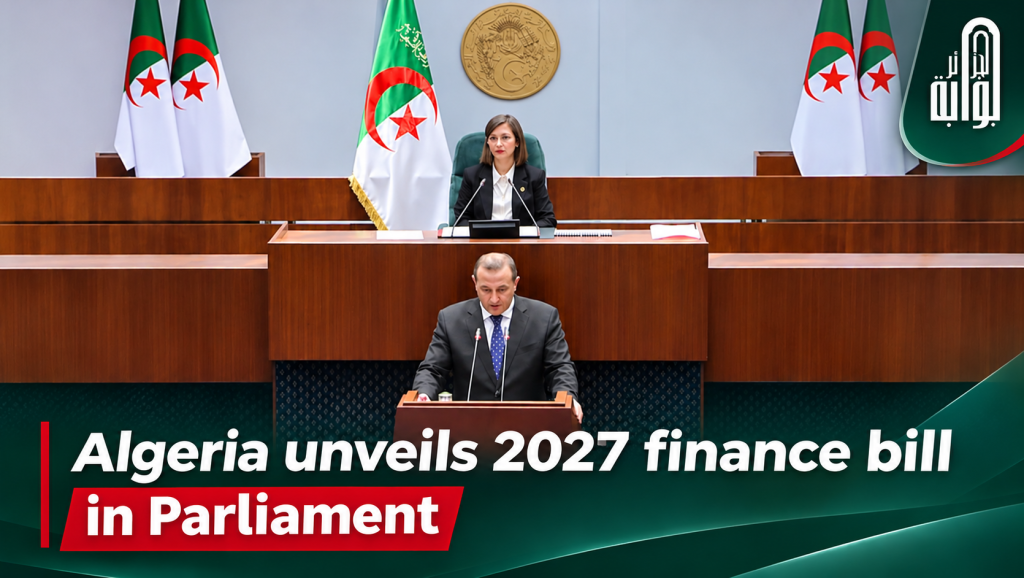
Algeria unveils 2027 finance bill in Parliament

Algeria unveils 2027 finance bill in Parliament

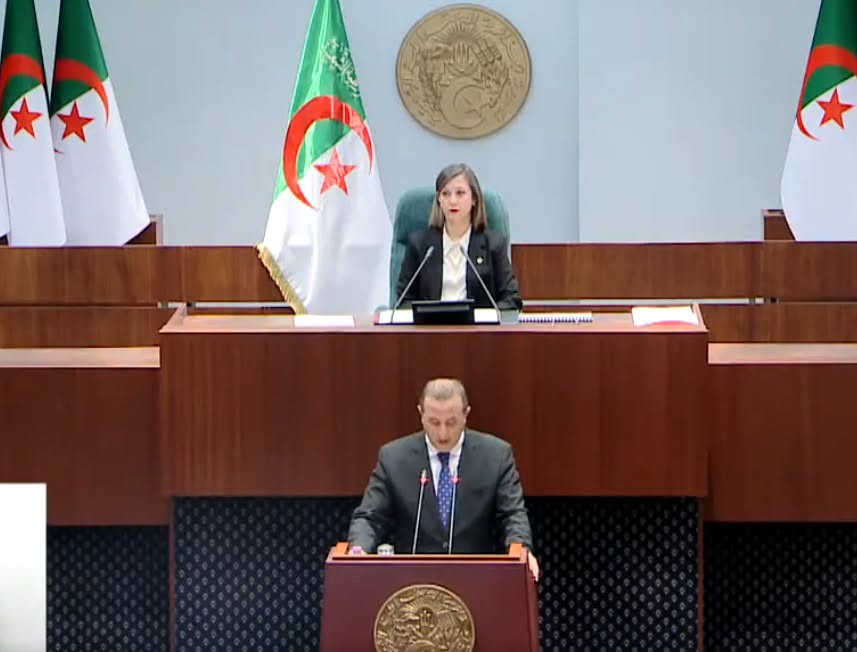
Algeria Gate: Algeria’s Minister of Finance, Mohamed Lamine Lebbou, presented the draft Finance Law for 2027 before the National People’s Assembly (APN), marking a key stage in the country’s annual budget approval process.

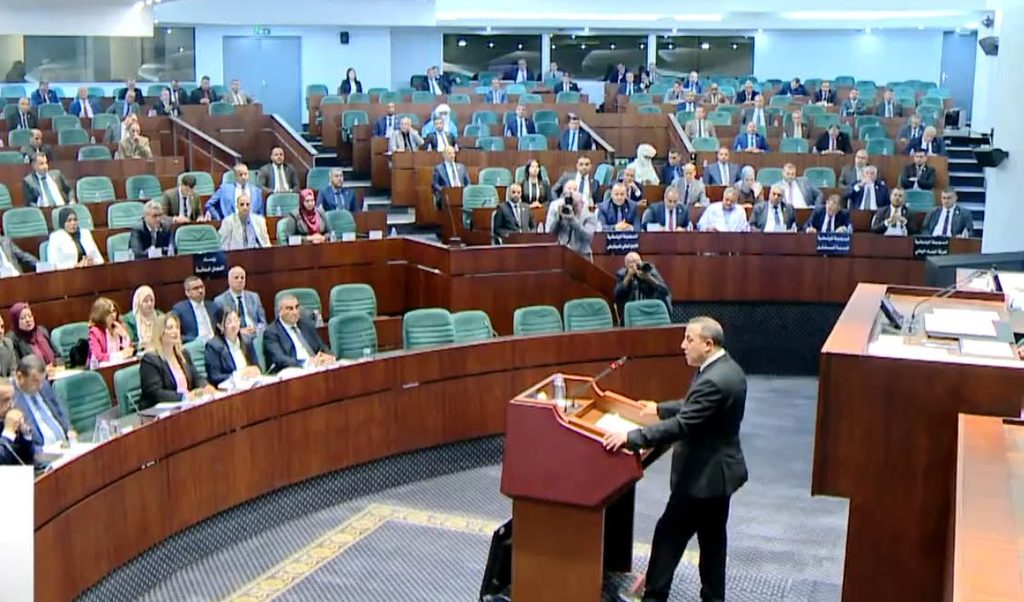
Speaking on behalf of the government, the minister introduced the proposed legislation during a parliamentary session dedicated to examining the country’s financial priorities and budgetary framework for the coming year.

The presentation opens an important phase of parliamentary scrutiny, during which lawmakers will assess the government’s fiscal proposals, public spending priorities, and measures intended to support Algeria’s economic development.

A crucial step in Algeria’s budget process

The 2027 Finance Bill forms part of Algeria’s annual financial planning process, establishing the legal framework for government revenue, expenditure, and fiscal policy.

The legislation is particularly significant as Algeria continues its efforts to diversify the national economy, strengthen non-hydrocarbon sectors, encourage investment, and maintain public services.

Parliamentary examination provides lawmakers with an opportunity to question government representatives, evaluate proposed financial measures, and discuss their potential implications for businesses, households, and public institutions.

Algeria unveils 2027 finance bill in Parliament

Economic growth and purchasing power at the forefront

According to figures previously presented by the Finance Ministry, Algeria’s economy is projected to grow by 4.2% in 2027, supported by activity in industry, construction, services, and agriculture.

The draft budget forecasts revenue of approximately DZD 9,251.1 billion, while payment appropriations are projected at DZD 17,882.6 billion.

The proposed legislation also includes measures to encourage productive investment, modernize tax administration, improve revenue collection, and protect citizens’ purchasing power.

Among its social provisions, the bill includes planned wage increases and the extension of certain value-added tax exemptions on essential food products.

President Abdelmadjid Tebboune had previously instructed the government to incorporate salary increases into the 2027 Finance Bill while avoiding new taxes that would undermine the purchasing power of middle- and lower-income households.

Algeria unveils 2027 finance bill in Parliament

Parliamentary vote scheduled for November 16

According to the National People’s Assembly’s announced timetable, the general debate will continue through Thursday, November 5, when parliamentary group leaders and the government’s representative are expected to address lawmakers’ concerns.

The bill is scheduled for a parliamentary vote on November 16, 2026.

The outcome will help determine the financial framework for Algeria’s economic and social policies in 2027, with particular attention to public investment, economic diversification, social support, and fiscal stability.

#Algeria#Economy
Author
Economy
Share this post

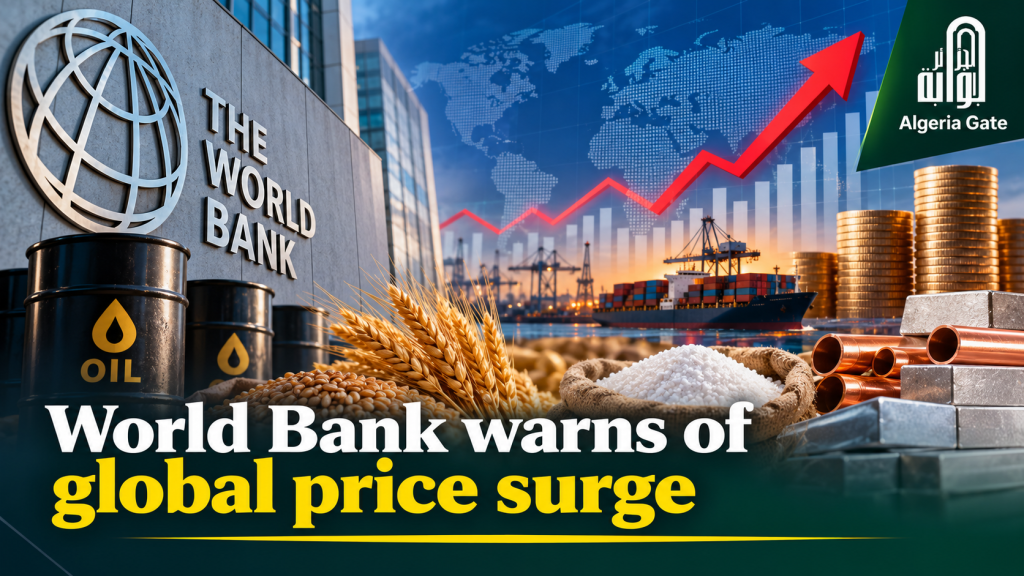
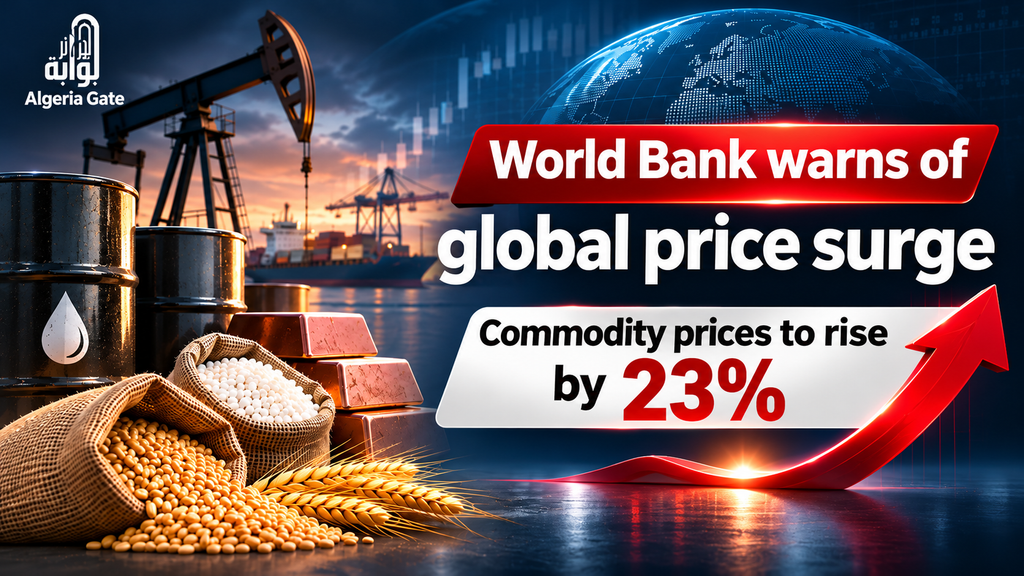
World Bank warns of global price surge

World Bank warns of global price surge

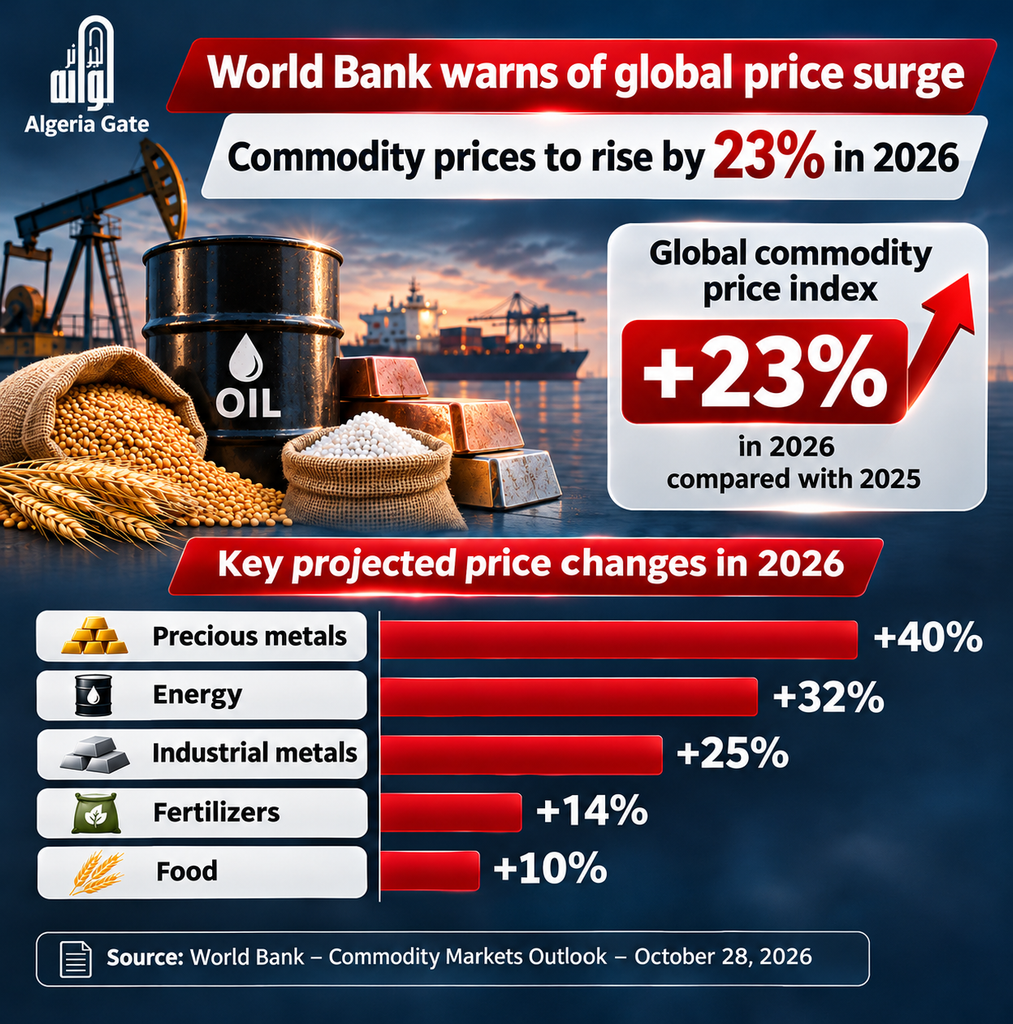
Algeria Gate: The World Bank has warned that the global economy faces renewed inflationary pressures as geopolitical tensions, energy supply disruptions and rising food costs threaten to drive commodity prices sharply higher. According to a report published by Algeria Gate, the Bank’s latest Commodity Markets Outlook, released on 28 October 2026, projects a 23% increase in global commodity prices during 2026.

The projected increase reflects mounting pressure across international energy, agricultural and industrial markets, with developing economies particularly vulnerable to higher import costs and declining household purchasing power.

World Bank warns of global price surge

Energy prices face renewed pressure

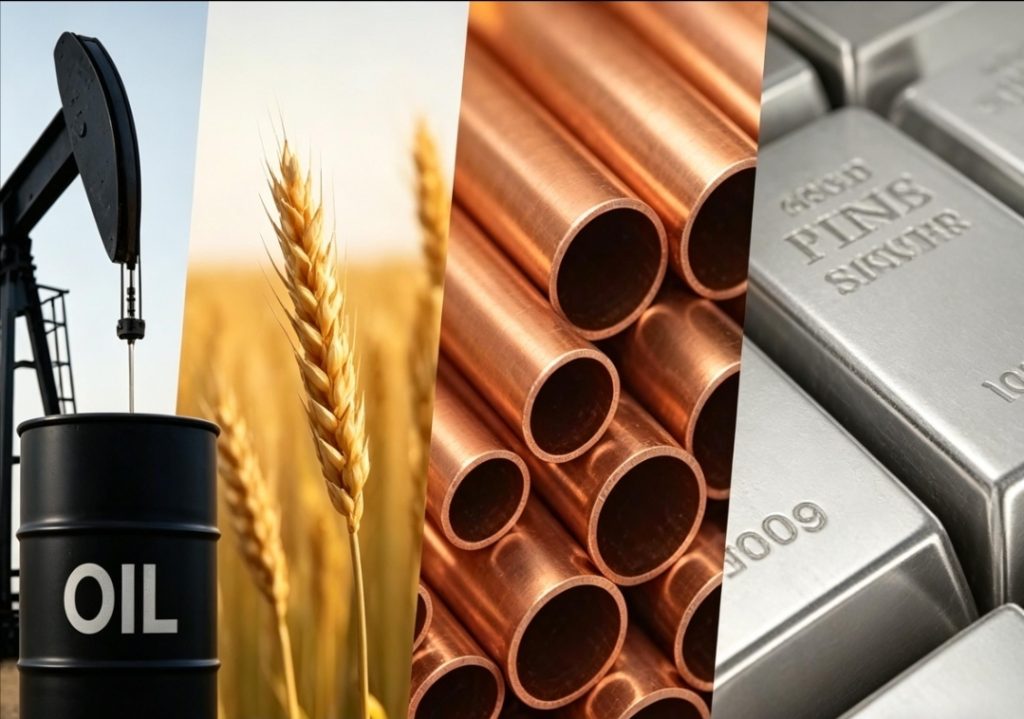
Energy markets are expected to experience some of the sharpest increases, with the report projecting a 32% rise in energy prices in 2026, reversing three consecutive years of decline.

The World Bank’s forecasts, as reported by Algeria Gate, suggest that Brent crude oil could average $91 per barrel in 2026, compared with $69 in 2025, before easing to approximately $79 in 2027 if global supply conditions improve.

The report attributes these pressures to geopolitical instability in the Middle East, declining oil inventories and disruptions affecting international energy supplies.

Global oil production is projected to fall by 5.2% in 2026, while consumption could decline by 2.5% as higher prices constrain demand and electrification expands across transport and industrial sectors.

Despite weaker consumption, supply constraints could continue to place upward pressure on international oil prices.

World Bank warns of global price surge

Food prices threaten household purchasing power

Food markets are also facing significant uncertainty.

According to the report, global food prices could increase by approximately 10% in 2026, followed by a further 7% in 2027, representing a cumulative rise of nearly 18% over two years.

Several factors are contributing to this outlook, including disruptions to grain shipments through the Black Sea, rising fuel and fertiliser costs, and the potential effects of El Niño-related weather conditions on agricultural production.

These developments could have particularly severe consequences for low-income households, where food expenditure represents a substantial proportion of household budgets.

The World Bank also warns that an adverse scenario involving intensified conflicts, shipping disruptions and extreme weather could push food prices 12% above its baseline projections for 2027.

Such developments would increase the risk of food insecurity and place additional pressure on countries already experiencing economic difficulties.

Industrial metals and fertilisers also affected

The inflationary pressures extend beyond energy and food.

Industrial metal prices are projected to increase by 25% in 2026, supported by growing demand from electric vehicle manufacturing, renewable energy infrastructure and data centres.

Copper, aluminium and tin are among the commodities experiencing particularly strong demand, while supply disruptions could further restrict availability.

Precious metals are also expected to register substantial gains, with the report forecasting a 40% increase as investors seek safer assets amid geopolitical and economic uncertainty.

Meanwhile, fertiliser prices could rise by approximately 14%, increasing agricultural production costs and potentially contributing to further food price pressures.

Together, these developments illustrate how disruptions in one commodity market can spread through international production networks, affecting transport, manufacturing, agriculture and consumer prices.

World Bank warns of global price surge

What the price surge means for Algeria

For Algeria, the changing commodity outlook presents both economic opportunities and challenges.

As a major oil and natural gas exporter, Algeria could benefit from stronger international energy prices, potentially increasing hydrocarbon export revenues and supporting public finances.

Higher energy prices may also strengthen Algeria’s position as a reliable supplier to European and Asian markets seeking stable sources of oil and natural gas.

However, the benefits of higher hydrocarbon revenues could be partially offset by rising international prices for imported agricultural products, industrial equipment and raw materials.

In particular, higher grain, fertiliser and industrial commodity prices could increase production and import costs, placing additional pressure on businesses and consumers.

The overall economic impact will therefore depend on the balance between stronger energy export earnings and rising expenditure on imported goods.

World Bank outlines financial support measures

In response to growing economic risks, the World Bank has reportedly made between $50 billion and $60 billion in financing and assistance available through existing instruments.

This includes approximately $25 billion in pre-arranged financing intended to support countries facing financial pressures.

The measures are designed to help vulnerable economies strengthen social protection systems, support farmers and businesses, and manage the consequences of higher commodity prices.

The Bank also projects that its overall commodity price index could decline by 7% in 2027, although this forecast depends on the absence of further major disruptions to global supply chains.

A fragile outlook for the global economy

The latest projections highlight the increasingly interconnected nature of international commodity markets.

Energy shortages can raise transport and manufacturing costs, while agricultural disruptions can increase food prices and intensify inflationary pressures across entire economies.

For developing countries, the principal challenge will be maintaining economic stability while protecting households from rising living costs.

For commodity exporters such as Algeria, the situation may provide additional export revenue, but also reinforces the importance of economic diversification, domestic production and resilient supply chains.

With geopolitical uncertainty remaining elevated, the direction of global commodity prices will depend heavily on developments in energy markets, international trade routes and agricultural production.

The World Bank’s reported forecasts underline a broader concern: sustained commodity price increases could undermine purchasing power, slow economic growth and deepen financial pressures on vulnerable economies.

#Economy#World Bank
Author