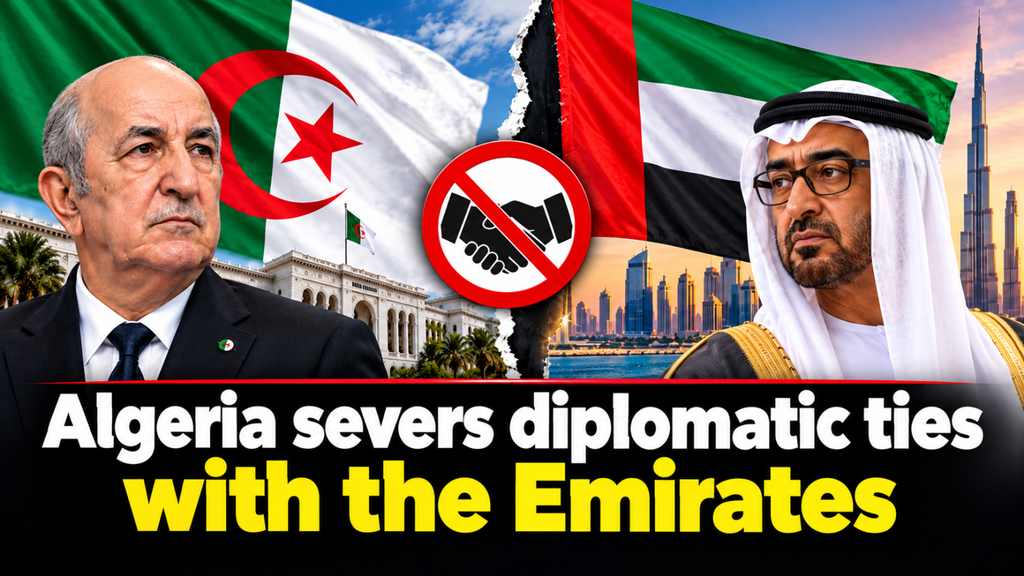

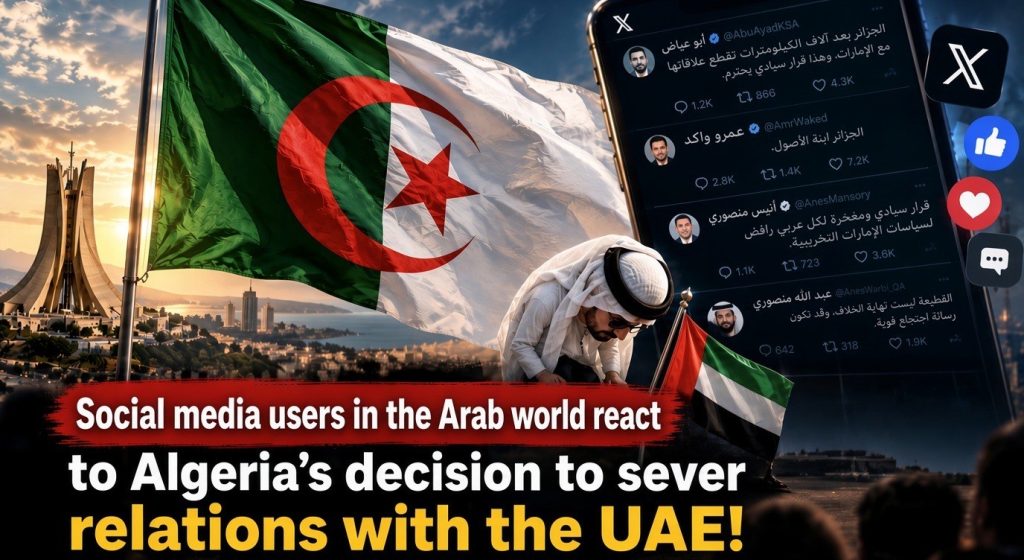
Algeria Gate: Algeria’s decision to sever diplomatic relations with the Emirati mini-state sparked a wave of interaction on social media in the Arab world, where a number of activists, writers, and media figures expressed their support for the Algerian step and directed sharp criticism at Emirati policies in the region.
Among the most prominent reactions, Saudi political analyst Mohammed Abu Ayyad considered that Algeria, after thousands of kilometers, chose to cut its relations with the UAE, noting that the decision came after exhausting all means capable of preserving bilateral relations, and affirming that the Emirati role in a number of Arab countries has become the subject of widespread criticism and that the UAE is an Israeli tool implementing a malicious agenda.
For his part, the Egyptian global producer Amr Waked commented on the Algerian decision, expressing his respect for Algeria and its position, in a post in which he summarized his stance by saying: “We stand in respect for Algeria, the daughter of origins.”
Yemeni journalist Anes Mansory considered the decision “sovereign and a source of pride for every Arab who rejects the UAE’s destructive policies,” and that Algeria practiced a policy of restraint but the sons of Zayed went too far in their satanic hostile acts against Algeria.
In the same regard, Qatari academic researcher and specialist in international relations and foreign policy Abdullah Bandar Al-Otaibi addressed the decision, considering that severing diplomatic relations is not necessarily the end of the dispute between states, but is often preceded by gradual diplomatic measures, affirming that the rupture may raise the cost of the dispute and push toward indirect means of communication.
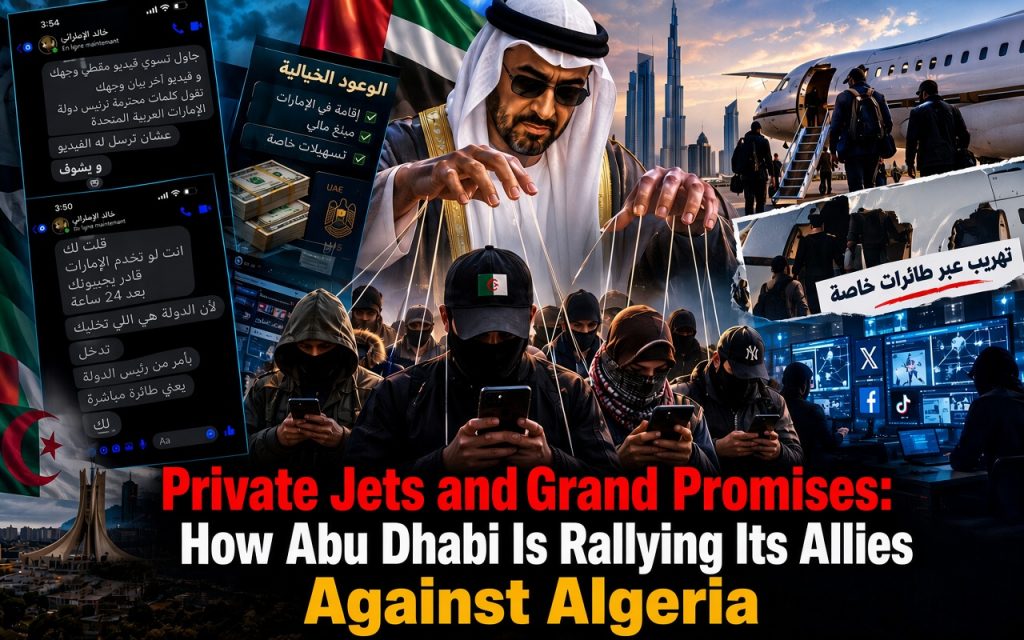
Other posts also spread linking the Algerian decision to what they described as Emirati interventions in a number of Arab files, recalling Somalia, Yemen, Libya, Sudan, and Niger, and considering that Emirati policy in these countries was a reason for the tension in its relations with Arab and regional parties.
A Saudi account went so far as to list a number of countries with which it said the UAE had entered into disputes, before considering that Algeria in turn chose to put an end to relations with Abu Dhabi, in a position it described as a clear message regarding what Algeria considers a crossing of its sovereign lines.
These interactions coincided with other more severe posts against the UAE, describing its regional policy as destructive and accusing it of seeking to influence internal files of a number of Arab countries, and even in the Sahel and Sahara and its intervention in the Niger coup a week earlier, considering that the Algerian decision represents a sovereign response to this policy.
Thus, the reactions circulating in the Arab world reflected a clear state of support from a number of activists for the Algerian decision, in parallel with sharp criticism of Emirati policy and its destructive role in a number of Arab files.