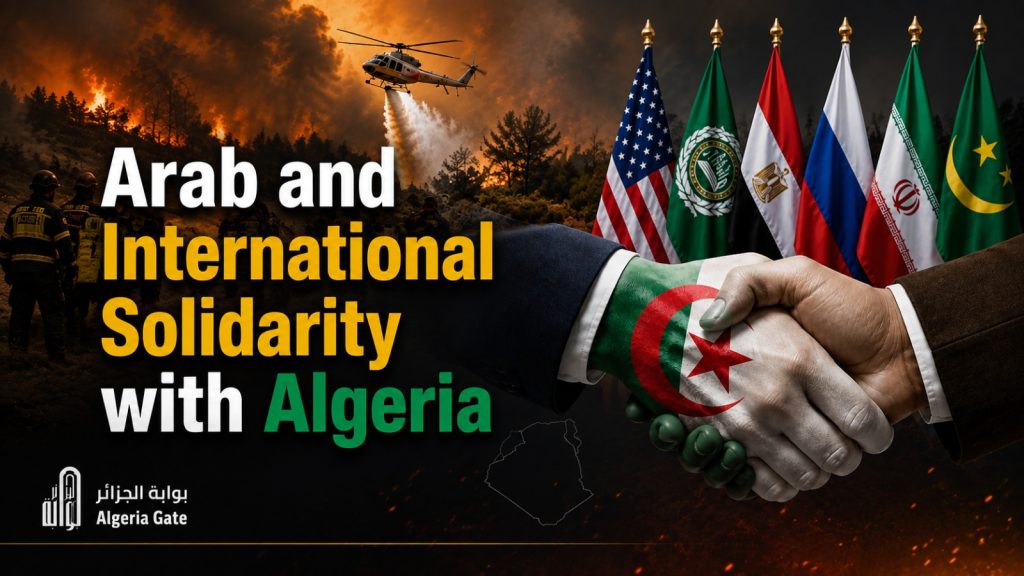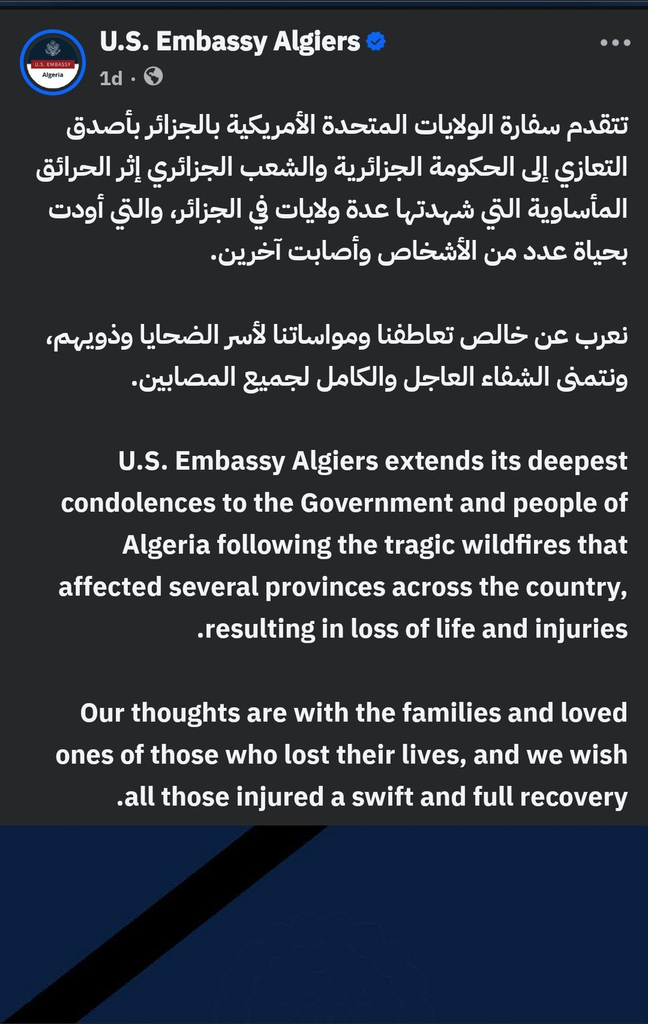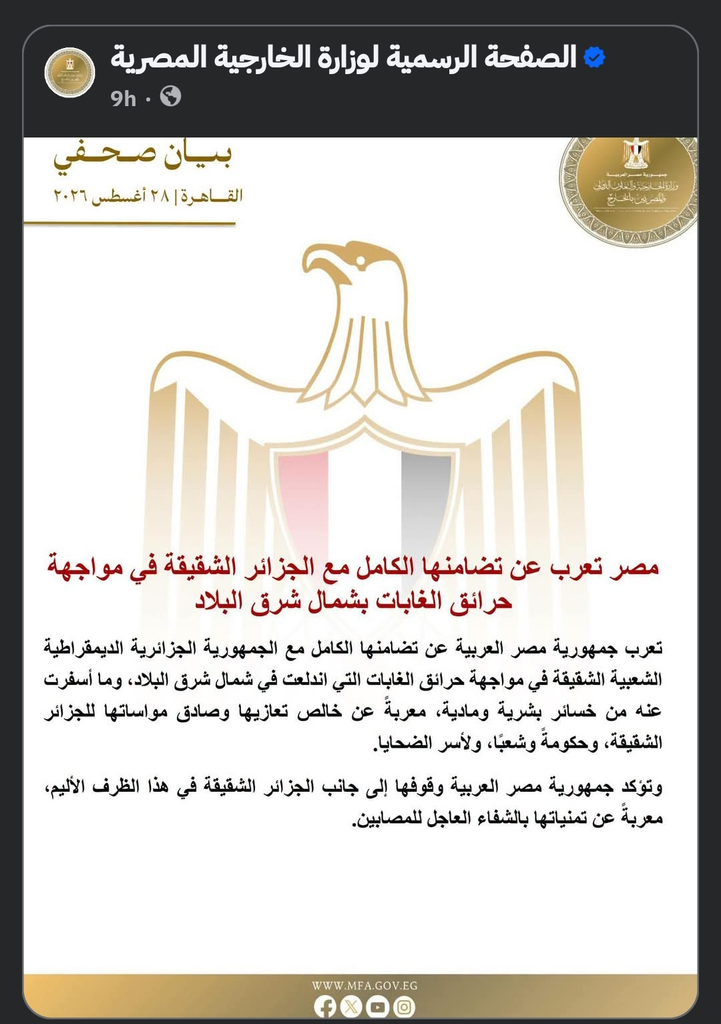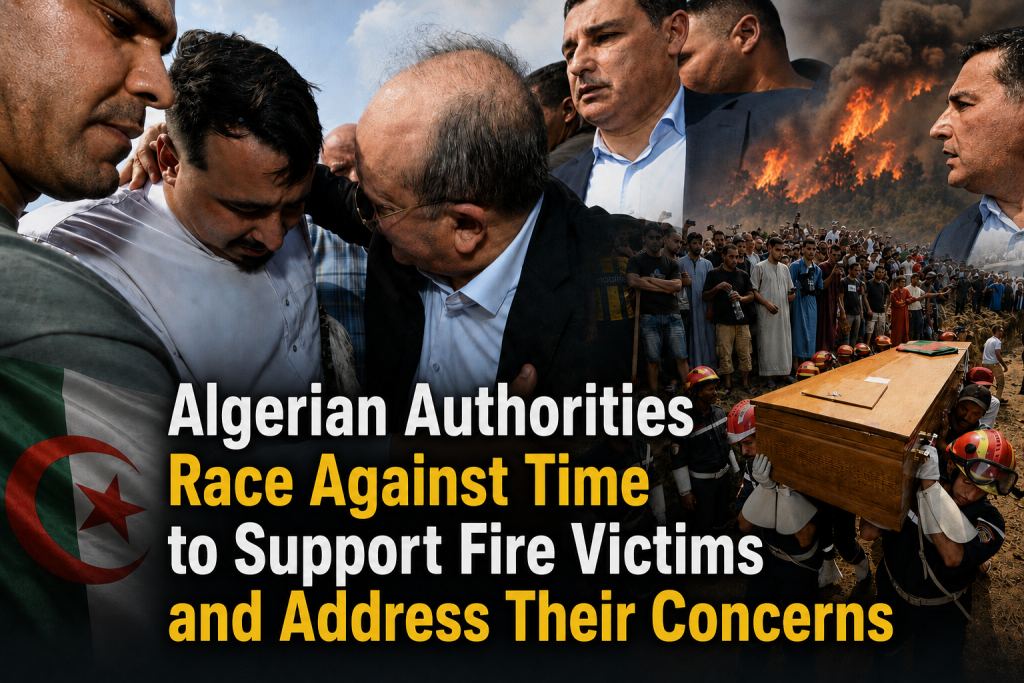
Algeria Gate: Algeria is facing a wave of forest fires that have affected a number of provinces, at a time when firefighting, evacuation, and care operations for those affected continue, with the participation of various state institutions, foremost among them the People’s National Army, Civil Protection, security forces, and medical teams, alongside citizens and volunteers.
The scene on the ground reflects the scale of national mobilization in confronting the fires and places state institutions before their direct responsibilities in protecting lives and property and mitigating the effects of the disaster.
On the fire fronts, the various intervening services are working to contain and control the fires, while operations to care for the affected populations and transfer them to safe areas when necessary continue. In parallel, popular solidarity has emerged through citizens’ initiatives, convoys, and aid directed to the affected areas.
This picture imposes a clear truth: Algeria is confronting its crisis with its human and institutional capabilities, and is dealing with the fires as a field crisis that requires the mobilization of the state and society, far removed from attempts to turn it into a political card.
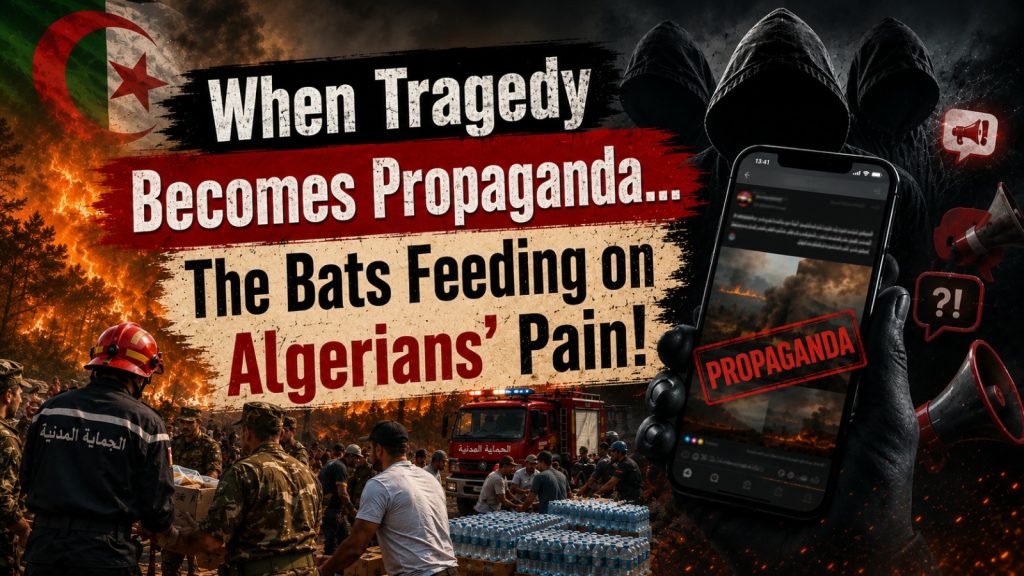
Bats of Darkness… When the Ordeal Turns into Material for Incitement
As happens in every crisis, some parties do not stop at following the events or expressing solidarity with those affected. Instead, they rush to exploit the scene to serve a political discourse based on doubt and incitement.
Here the bats of darkness and hired mouths appear once again, trying to invest the images of the fires and human suffering to construct narratives that target Algeria and its institutions, and to present the crisis as evidence of the state’s incapacity or the failure of its institutions.
In this regard, the axis of media and political evil moves according to a single logic: every crisis inside Algeria becomes an opportunity to magnify failures; every field difficulty is transformed into an attempt to strike confidence in state institutions; and every painful scene is used to market the narrative of incapacity and collapse.
Yet the field realities remain clearer than the campaigns of disinformation. The presence of the People’s National Army, Civil Protection, security agencies, medical teams, and the various services on the ground, alongside the citizens, confirms that the management of the crisis is taking place through state institutions and with the participation of society.
From the People and to the People
In crises, the strength of the state is not measured by slogans, but by its ability to manage the field, protect its citizens, and mobilize its institutions and resources.
This is what the images of solidarity coming from the various provinces reveal, where citizens, associations, bodies, and aid convoys have moved to support those affected, in parallel with the continued performance of their duties by Civil Protection teams and the various services.
This is Algeria: from the people and to the people; a state that moves with its institutions, and a society that supports it in the field.
Algeria Emerges from Ordeals Stronger
Algerian history offers numerous examples of the ability of the state and society to overcome crises, from the War of Liberation to the years of terrorism, and on to successive economic and social crises and natural disasters.
Algeria was never immune to losses or difficulties, but in every stage it possessed the tools of resilience and the capacity to rebuild its capabilities.
Today, the equation is not very different. The fires, however serious they may be, remain a crisis that can be managed and addressed through strengthening prevention, raising readiness, developing means of intervention, and improving coordination among the various services.
As for the bet on turning the fires into a comprehensive political crisis, or using them to create a rift between the citizen and state institutions, it is a losing bet.
Algeria is not merely a geographical space; it is a state with institutions and a cohesive society that possesses long experience in facing crises, and a national memory formed over decades of challenges.