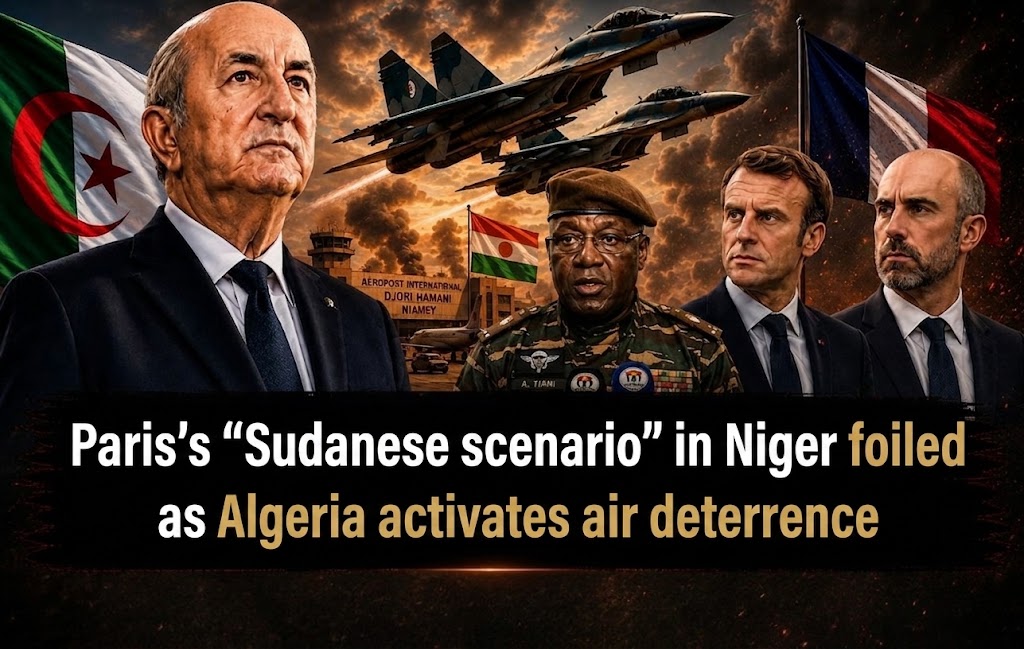

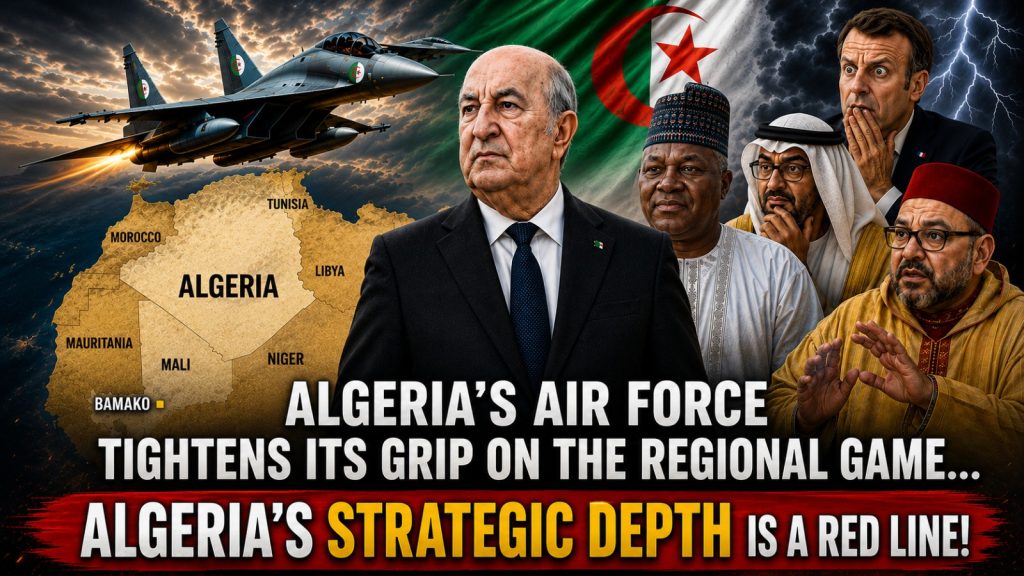
Algeria Gate: Algeria, in a pre-emptive deterrence message to the forces of evil that are lying in wait for the Republic, has demonstrated that the chess pieces in the region only move with a green light from Algeria. With a precise reading of the security situation in the Sahel region, Algeria, by decision of President of the Republic, Abdelmadjid Tebboune and at the request of Niger, has deployed Su-30 fighters in the skies of Niamey, to make the nest of wasps understand that the Republic is not a hostage to the repercussions of manoeuvres being managed on the borders of its strategic depth.
The time for play and games on Algeria’s borders is over. The country will not look at risks of destabilisation as a spectator, and will not wait until the crisis reaches its borders to act. Any security disturbance in neighbouring countries can quickly turn into a regional threat, especially as external powers seek to exploit political and security weaknesses in the Sahel region to strike at Algeria’s strategic interests.
Algeria has emerged as a key partner in regional security operations, intervening in neighbouring countries only at the explicit request of their governments and with full respect for their sovereignty.
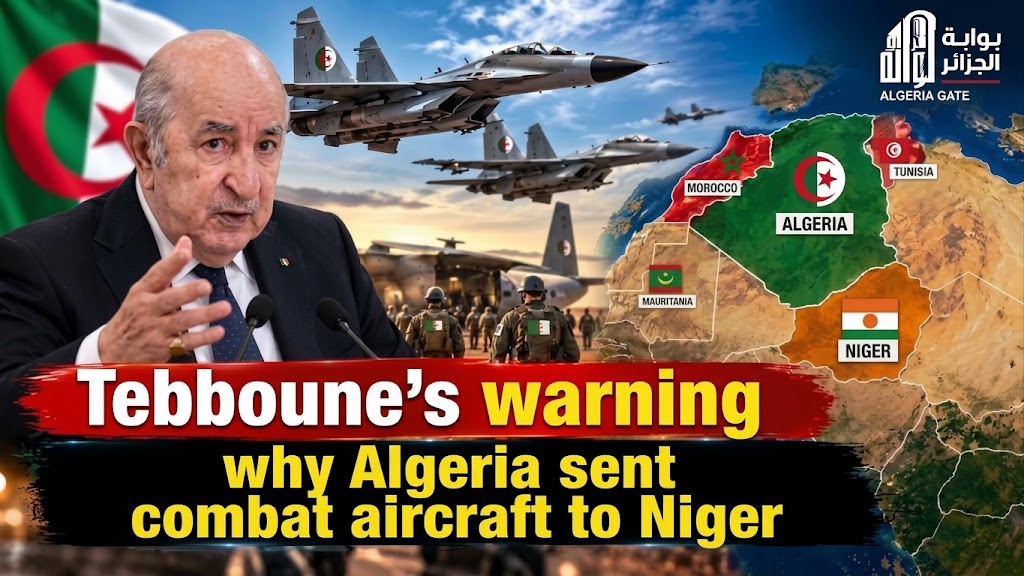
On 30 August, following a sovereign request from the State of Niger and on the instructions of President Abdelmadjid Tebboune, Chief of Staff of the People’s National Army Saïd Chengriha ordered the deployment of two patrols of Sukhoi Su-30 combat aircraft (four aircraft in total).
Algeria has emerged as a key partner in regional security operations, intervening in neighbouring countries only at the explicit request of their governments and with full respect for their sovereignty.
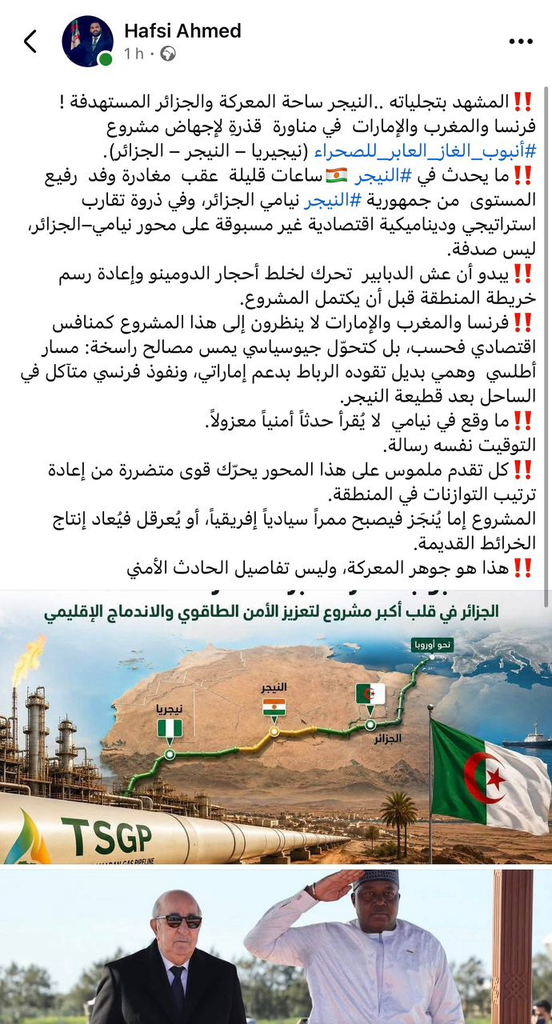
At the sovereign request of Niger, and on the instructions of President Abdelmadjid Tebboune, General Said Chengriha ordered on August 30th the deployment, for the first time in more than fifty years, of two patrols of Sukhoi Su-30 fighter jets (four aircraft in total). The aircraft were sent on a support mission to assist the Nigerien army in confronting an attempt to destabilise the country.
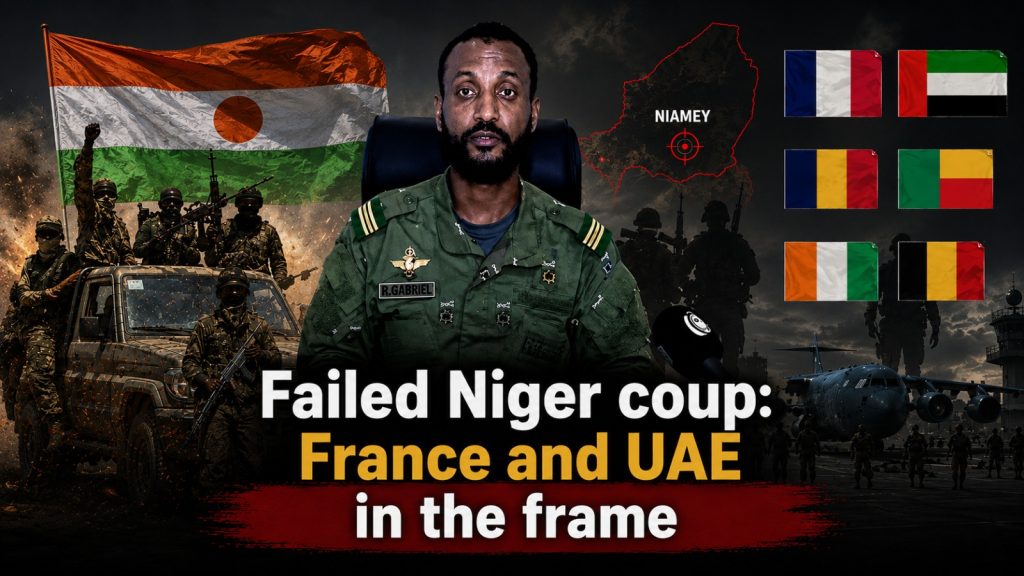
This followed a failed coup attempt in Niamey on August 29th, which Nigerien authorities successfully foiled and for which they have accused France and the United Arab Emirates of involvement.
Algeria had accurately anticipated developments in Niamey. On August10th, in accordance with the instructions of President Abdelmadjid Tebboune, Commander-in-Chief of the Armed Forces and Minister of National Defence, the Algerian Ministry of National Defence provided the Nigerien army with a gift of military equipment and helicopters to reinforce its air forces.
The donation consisted of four helicopters with all their accessories; specifically two Mi-24V and two Mi-171 aircraft, as well as additional military equipment. These were delivered by a military transport aircraft of the Algerian Air Force.
Morocco, for its part, must interpret these developments realistically and recalculate its position with care. Escalatory manoeuvres and shows of force, regardless of which external actors; Israel, France or the United Arab Emirates, may be behind or encouraging them, should not lead the Moroccan Makhzen regime to underestimate the consequences of any potential escalation. A confrontation with Algeria would not amount to a mere diplomatic gesture or display of strength; it would carry strategic and security repercussions far beyond immediate political calculations.
Algeria cuts off Paris’s path to exploiting the situation in Niger
The dispatch of Algerian fighters to Niger is also considered a deterrence message to Paris and its rear protectorate Rabat. According to Andrew Korybko, an American analyst based in Russia, in an exclusive statement to Algeria Gate, Paris’s recovery of its lost influence in Niger by exploiting disturbances in that country could exacerbate Algeria’s regional strategic situation. By sending its fighters to Niamey, Algeria is working to deter any potential intervention by French special forces or conventional intervention that might follow a new round of disturbances.
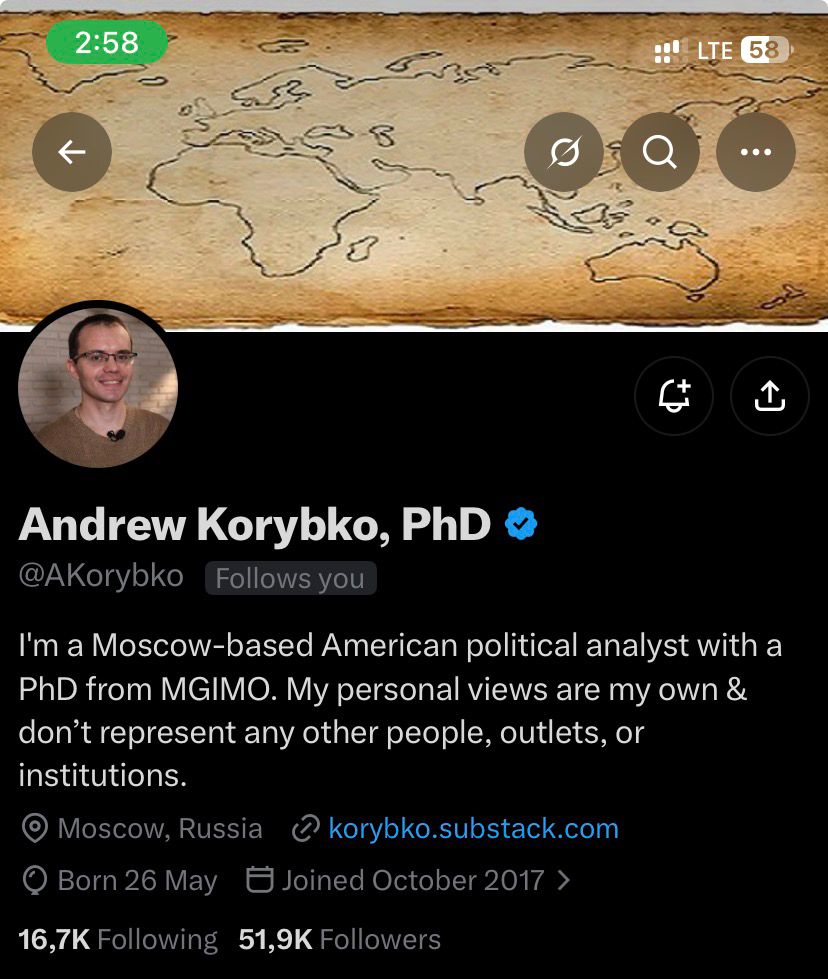
He also clarified that Algeria’s relations with the Alliance of Sahel States are in the process of improving after its rapprochement with Mali, and according to media reports Russia and Niger helped facilitate it. By providing tangible support to Niger in its hour of need, Algeria can win the confidence of Bamako and Burkina Faso and build a basis for partnership with everyone to secure its southern flank. It can then also benefit from its relations and experience in mediation in Mali to persuade the Azawad Liberation Front to abandon its allies in the Group for the Support of Islam and Muslims in preparation for a joint regional counter-terrorism campaign.
He also spoke of establishing a new regional economic and security system through a comprehensive strengthening of relations between Algeria and the Alliance of Sahel States, the ultimate goal of which is to ensure mutual security and prosperity. This would most likely take the form of formal agreements including regular joint exercises, and possibly the deployment of Algerian forces or at least a mechanism for requesting them in crises. The common Russian partner would also have a role in this new system.
Korybko noted that the hybrid warfare threats posed by France and its regional partners must be thwarted for the common good, and hence Algeria’s dispatch of fighters to Niger as a first step, which can be followed by other steps.
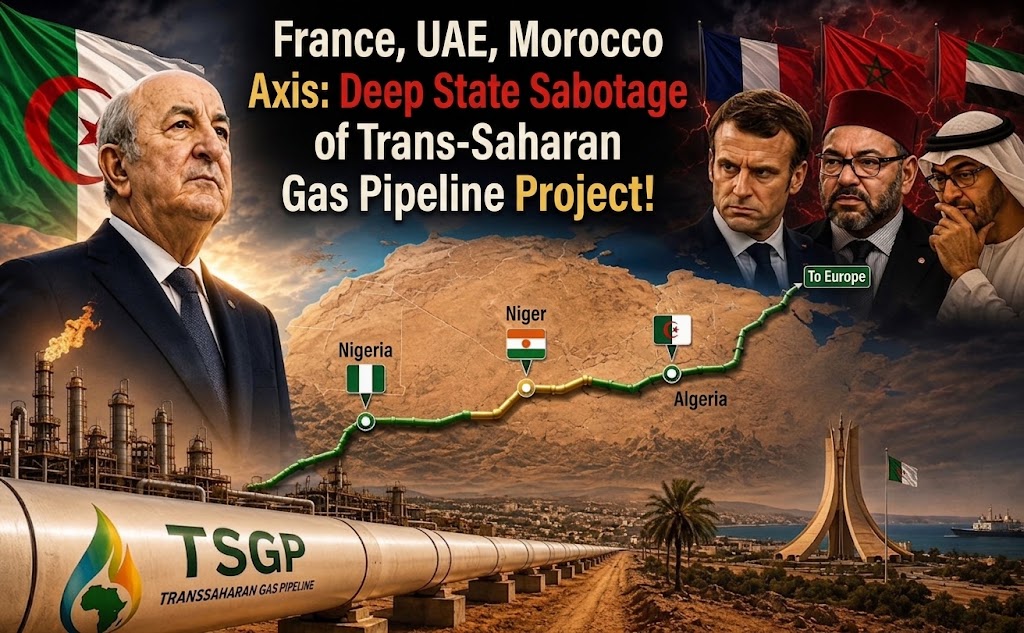
He confirmed that Algeria’s first external military move in more than fifty years goes far beyond merely protecting the state through which the Trans-Saharan gas pipeline from Nigeria will pass, adding that Algeria has more ambitious plans relating to ensuring security along its southern flank, not only in Niger but also in Mali and Burkina Faso, in order to accelerate multipolarity. Had Algeria and the Alliance of Sahel States remained at odds, they could have been divided and controlled, but that has now become far less likely.