Friday, 6 November 2026 • 13:58 Algiers time
Algeria Gate
Share this post

Egypt: TV presenter Sarah Khalifa sentenced to death in a drug-trafficking case

• Author: Lys Iwannughen • 0 comments • 59 views
Egypt: TV presenter Sarah Khalifa sentenced to death in a drug-trafficking case

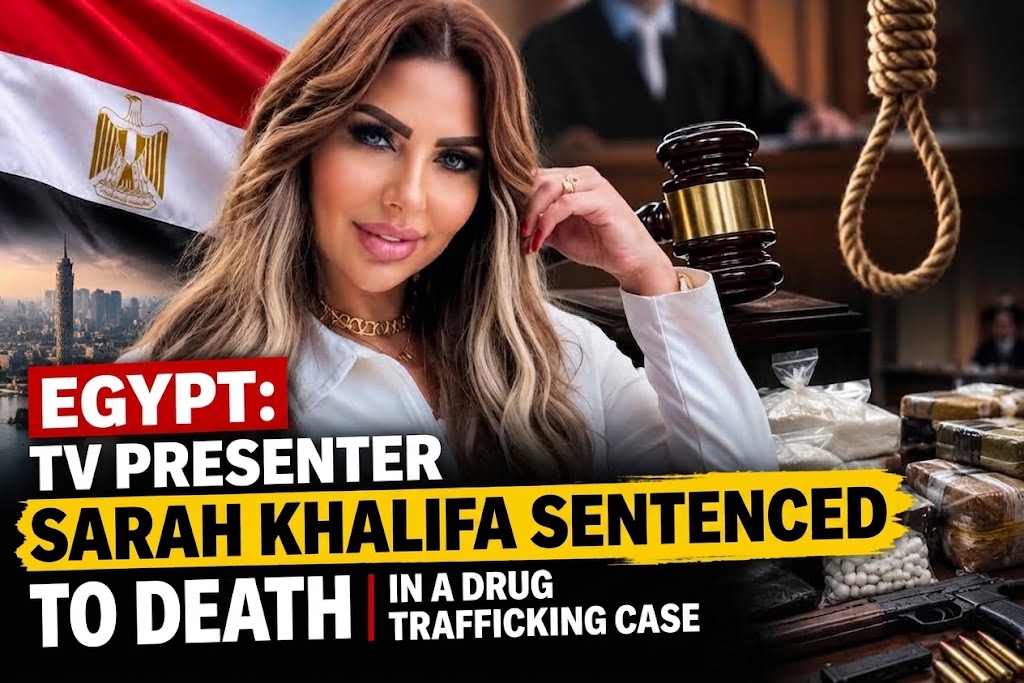
Algeria Gate: Egyptian justice delivered a striking verdict on Saturday, September 5th 2026: the presenter, producer and businesswoman Sarah Khalifa, 39, was sentenced to death by hanging, along with eleven other defendants, for her involvement in a vast network of manufacturing and trafficking synthetic drugs.

A criminal organisation dismantled

According to the official daily Al-Ahram, the Cairo Criminal Court ruled that Sarah Khalifa and her accomplices had set up a criminal organisation responsible for importing from abroad substances intended for the manufacture of narcotics before marketing them. The defendants were also found guilty of the illegal possession of firearms and ammunition.

https://twitter.com/algatedz/status/2096557090420469913?s=20

The investigation, opened last year, initially targeted 28 people, including the presenter’s brother. It led to the seizure of more than 750 kilograms of drugs and raw materials, as well as tools and machinery discovered in two apartments converted into clandestine laboratories.

In accordance with Egyptian procedure applicable to cases carrying the death penalty, the court had previously sought the advisory opinion of Egypt’s Grand Mufti. The sentence is not yet final, however: it may still be appealed.

Who is Sarah Khalifa?

Before her arrest in Giza in April 2025, Sarah Khalifa enjoyed a notoriety that extended well beyond Egypt’s borders. She began her career on the pan-Arab channel ART, then on the Iraqi television channel Al Sharqiya, before joining the private Egyptian channel Al-Mehwar, where she hosted Mission difficile, a programme devoted to security and crime affairs. She also had nearly two million followers on Instagram.

This drug-trafficking case is not the only one to have tarnished the presenter’s reputation. She was also sentenced to five years in prison in a separate case linked to the sequestration and assault of her private chauffeur.

The context of the death penalty in Egypt

Egypt maintains the death penalty for several serious offences, including premeditated murder, certain acts of terrorism, certain rapes and drug trafficking. According to the Egyptian Commission for Rights and Freedoms, a local non-governmental organisation, no fewer than 541 death sentences were handed down in the country in 2025 alone.


#Egypt
Author
Lys Iwannughen
View my articles

Leave a comment

Your email address will not be published. Required fields are marked *

Europe
Share this post

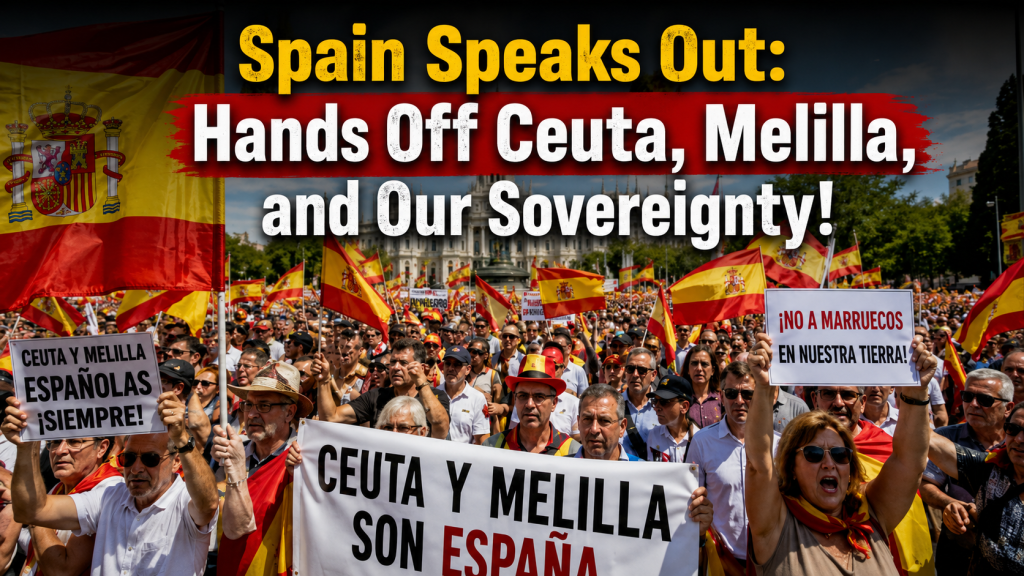
Spain Speaks Out: Hands Off Ceuta, Melilla, and Our Sovereignty!

Spain Speaks Out: Hands Off Ceuta, Melilla, and Our Sovereignty!

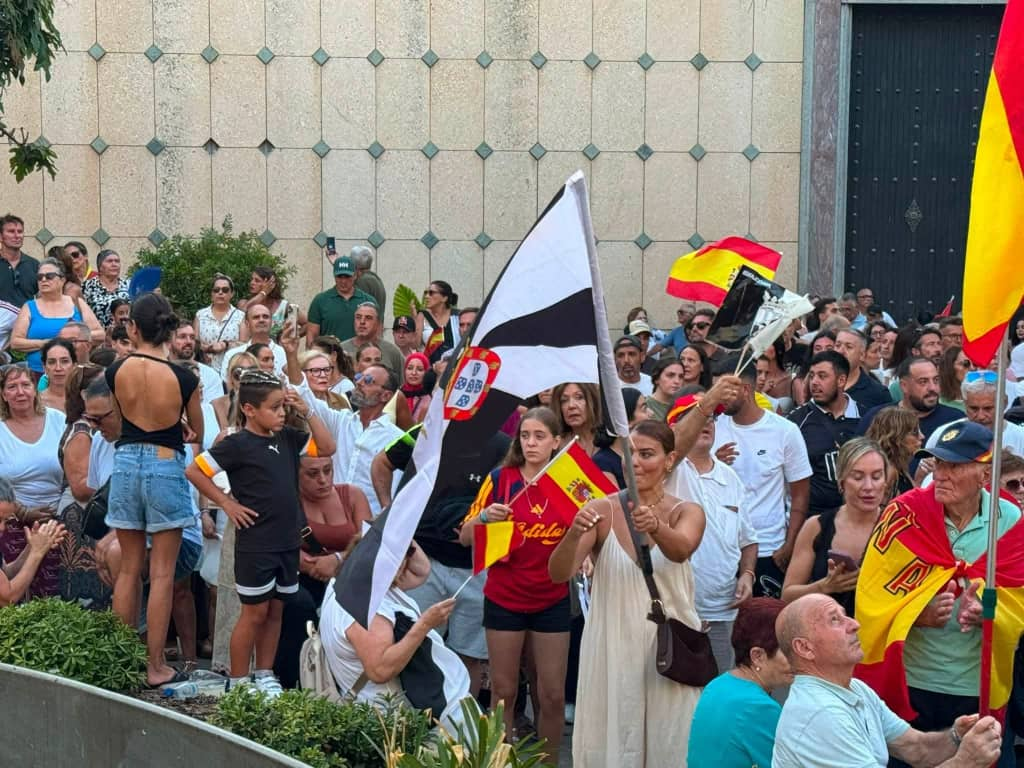
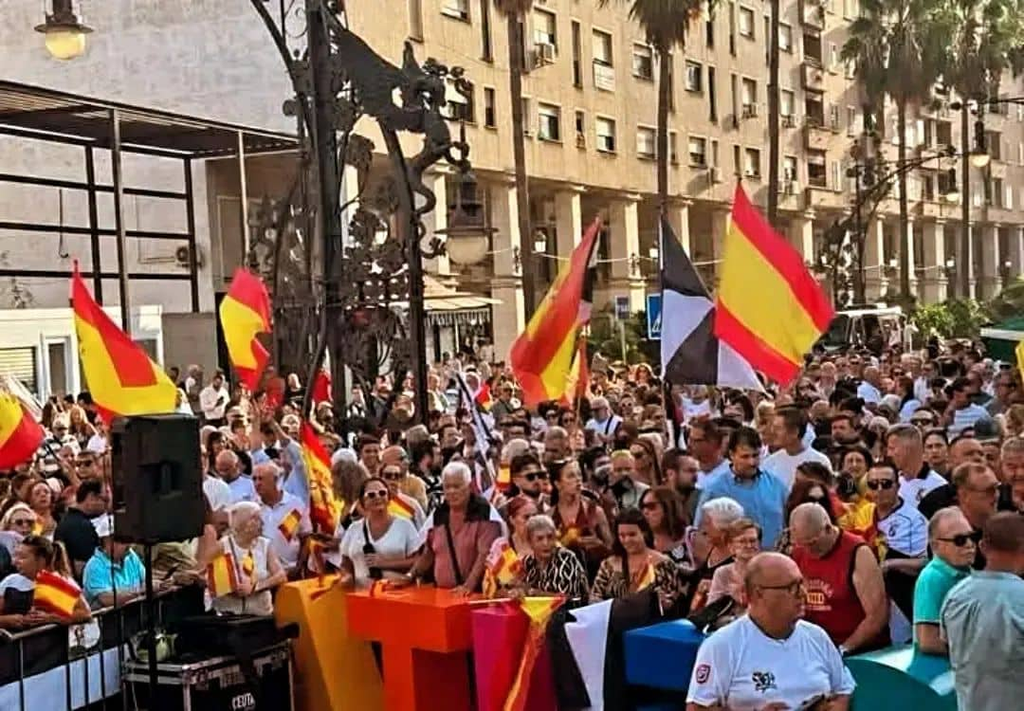
Algeria Gate: Massive popular demonstrations took place in several Spanish cities in denunciation of official Moroccan statements concerning the cities of Ceuta and Melilla, in a scene that reflects the growing rejection within Spain of what sectors of Spanish public opinion regard as a Moroccan attempt to reopen the file of the two cities and place them once again on the agenda of relations between Rabat and Madrid.

Spain Speaks Out: Hands Off Ceuta, Melilla, and Our Sovereignty!

These protests followed statements by two Moroccan ministers that triggered a wave of anger in the Spanish street, particularly since the file concerns two cities that Spain considers part of its sovereignty, which led the Moroccan claims to be read in Spain as a direct assault on national sovereignty.

The anger was not confined to the street. Madrid quickly raised the level of its response. The Spanish Foreign Ministry announced its categorical rejection of any different Moroccan position regarding the status of Ceuta and Melilla, affirming that the two cities are fully Spanish and that any threat to them is treated as a threat to Spain.

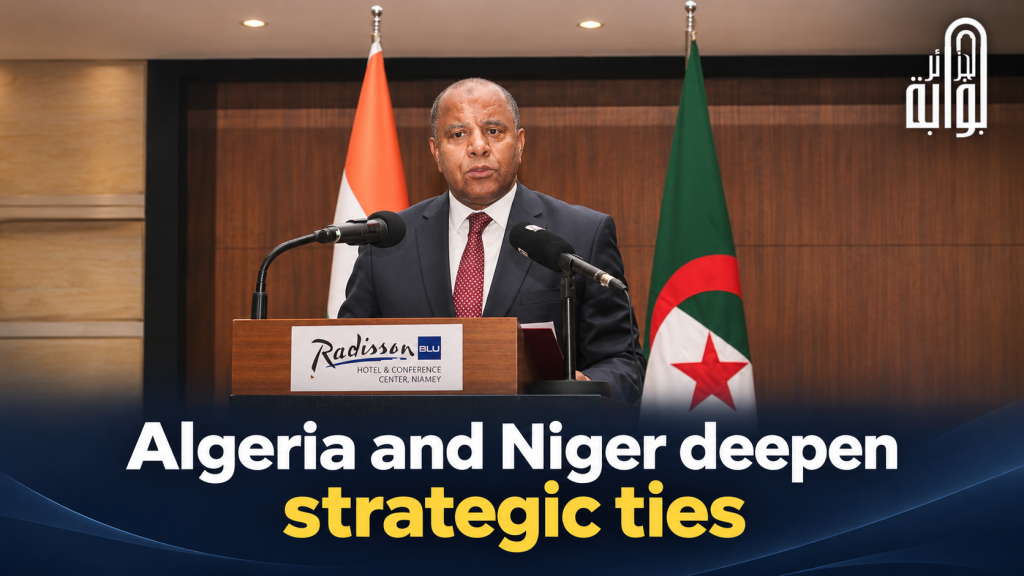
Spanish Defence Minister Margarita Robles also affirmed that Ceuta and Melilla are “fully Spanish” and that any threat affecting them represents a threat to Spain, in a stance that reflects the transition of the issue from a mere political controversy to a matter directly linked to sovereignty and security.

Spain Speaks Out: Hands Off Ceuta, Melilla, and Our Sovereignty!

Amid the escalation, Spanish diplomacy moved directly after official sources reported that Madrid had informed Rabat of its categorical rejection of the Moroccan demands and that the Moroccans must bear responsibility for this escalation.

Spanish Foreign Minister José Manuel Albares also visited Ceuta on August 11th, reiterating the Spanish government’s commitment to Spain’s sovereignty over the two cities and its support for them.

Spain Speaks Out: Hands Off Ceuta, Melilla, and Our Sovereignty!

Spanish Prime Minister Pedro Sánchez today denounced the statements of the two Moroccan ministers regarding Ceuta and Melilla, describing them as unacceptable. Speaking before the plenary session of the Spanish Congress of Deputies, Sánchez said that Madrid had categorically rejected the statements attributed to the two Moroccan ministers.

The Spanish official revealed that his government had summoned the Moroccan ambassador in Madrid on August 21st to inform her of its position on the two statements, explaining that the step was taken in the context of an official rejection of what Madrid considered unacceptable positions regarding the two cities. He finally affirmed that Ceuta and Melilla are Spanish cities forever.

These developments come in the wake of the irregular-migration crisis that Ceuta experienced at the end of July, during which tens of thousands of Moroccan migrants crossed into the city, making the Ceuta and Melilla file more sensitive in relations between Madrid and Rabat.

Thus, the statements of the two Moroccan ministers went from an attempt to put the two cities back on the dialogue table to a spark that ignited the Spanish street and pushed the Spanish government to harden its discourse towards Rabat, with a forthcoming visit by the Spanish King Felipe to the cities of Ceuta and Melilla expected.

#Morocco#Spain
Author
Lys Iwannughen
View my articles
Algeria
Share this post

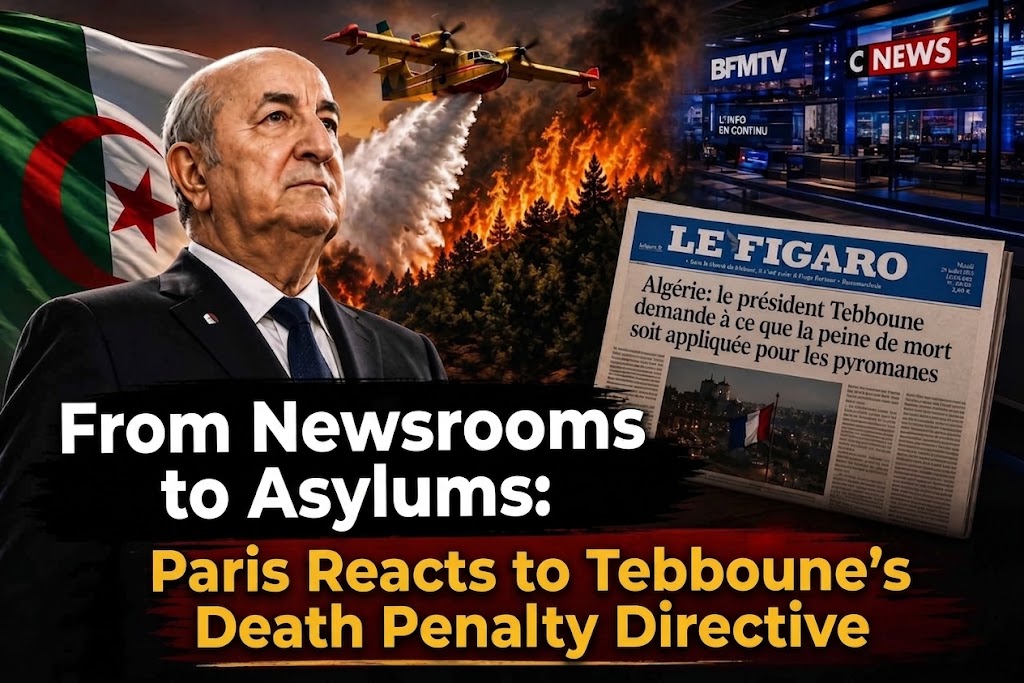
From Newsrooms to Asylums: Paris Reacts to Tebboune’s Death Penalty Directive

From Newsrooms to Asylums: Paris Reacts to Tebboune’s Death Penalty Directive

Algeria Gate: Following President of the Republic, Abdelmadjid Tebboune’s announcement that the death penalty would be applied to those who deliberately set fires, the French propaganda machine went into a state of hysteria over a sovereign decision that disrupted the calculations of the forces of evil working to set Algeria ablaze and destabilize it.

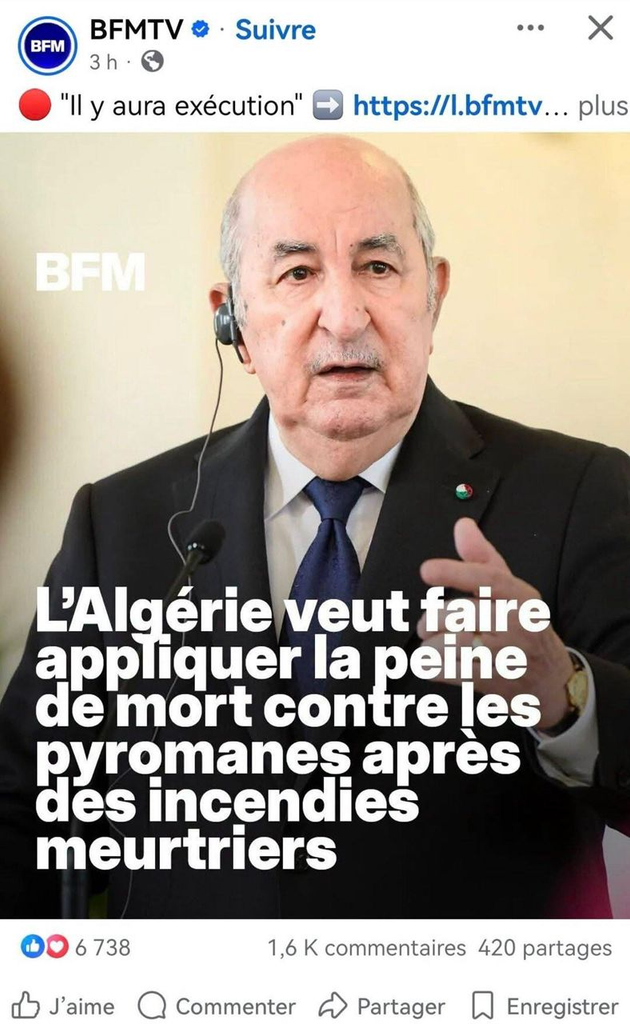
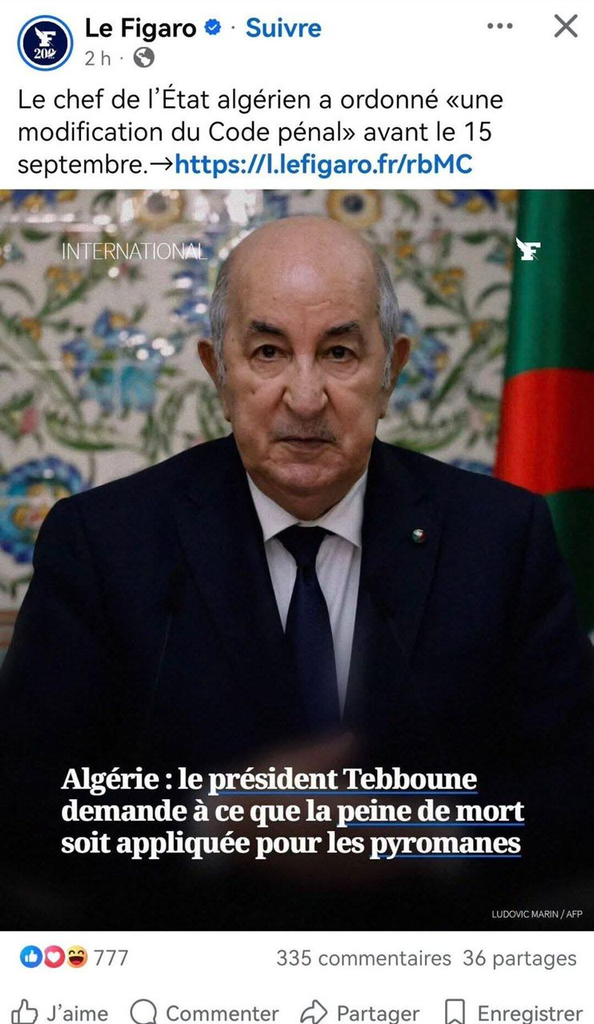
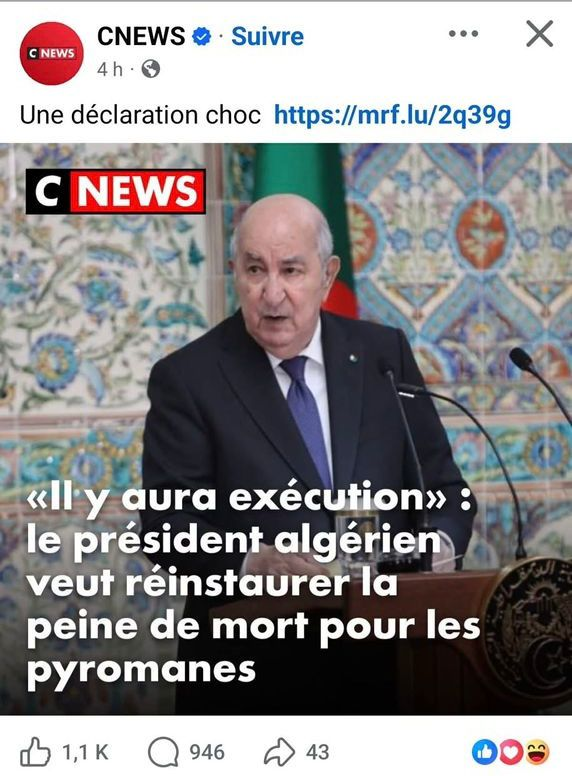
French television channels and newspapers agreed to filter their vocabulary and choose a specific description for the perpetrators of these crimes, adopting the word “Pyromane”, which means a person suffering from an obsession or pathological compulsion to start fires, instead of describing them as deliberate criminals or people involved in criminal acts.

So have French media outlets suddenly turned into psychiatric clinics, or is this linguistic choice an attempt to reframe the image of the perpetrator in the mind of the audience and shift the issue from the realm of crime, motive, responsibility and punishment into the realm of illness, sympathy and diminished capacity?

From Newsrooms to Asylums: Paris Reacts to Tebboune’s Death Penalty Directive

It is striking that BFMTV, CNews and Le Figaro all used the same description, which raises serious questions about the background of this media convergence, how innocent these platforms are of deliberately steering the narrative, who stands behind these media mouthpieces, and whether there are political circles in Paris seeking to influence public opinion and reshape its view of what is happening in Algeria.

From Newsrooms to Asylums: Paris Reacts to Tebboune’s Death Penalty Directive

When the description “deliberate arsonist” is replaced by “someone obsessed with starting fires”, it is not merely an innocent linguistic choice; words are not always neutral. They can become tools for reframing the event and changing the position of the perpetrator in the audience’s consciousness: from a criminal who bears responsibility for a deliberate act to a sick person who deserves sympathy and perhaps a lessening of his responsibility.

It is worth noting that Algeria has partially resumed the application of the death penalty after 33 years since the last judicial execution.

From Newsrooms to Asylums: Paris Reacts to Tebboune’s Death Penalty Directive

The Algerian president did not rule out that criminal acts may lie behind the massive fires that broke out in a number of Algerian provinces, affirming that the relevant services are conducting the necessary investigations.  

In the wake of this, Tebboune decided to take unprecedented measures by applying the death penalty to those who deliberately start fires. This was decided during a meeting he chaired last Sunday devoted to taking the necessary measures to deal with the aftermath and effects of the recent fires that affected a number of provinces in Algeria.

#Algeria#France#President tebboune
Author
Lys Iwannughen
View my articles
Europe
Share this post

Europe’s Massive Hashish Bust… Morocco Flagged as the Command Center of Drug Networks

Europe’s Massive Hashish Bust… Morocco Flagged as the Command Center of Drug Networks

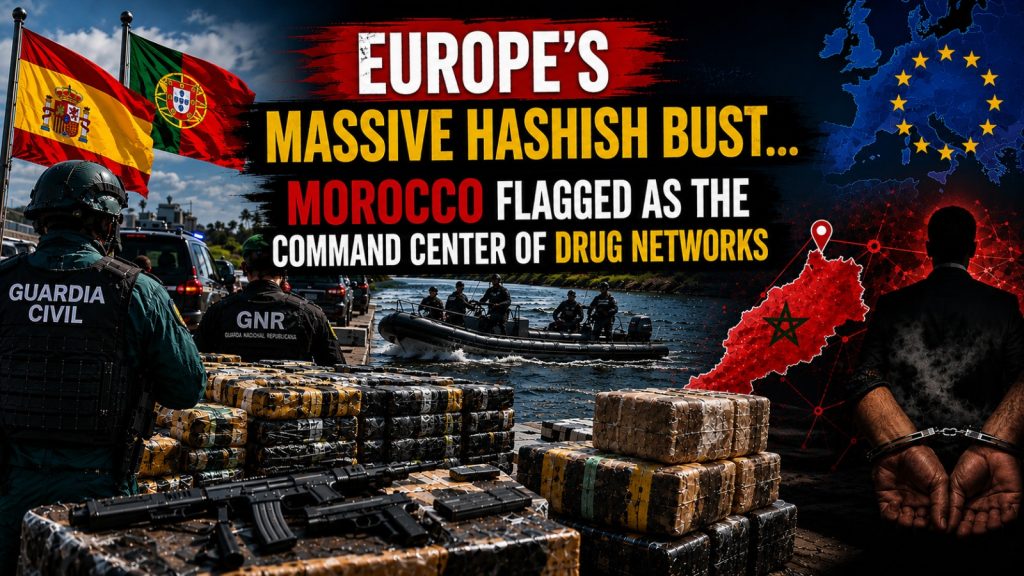
Algeria Gate: Spain and Portugal, in a joint security operation, seized 10.6 tons of hashish and dismantled an organization trafficking it via the Guadiana River on the Iberian Peninsula, at the same time as the Brussels public prosecutor, Julien Moinil, revealed that leaders of drug criminal networks are based in Morocco, according to the Belgian media site “21News.”

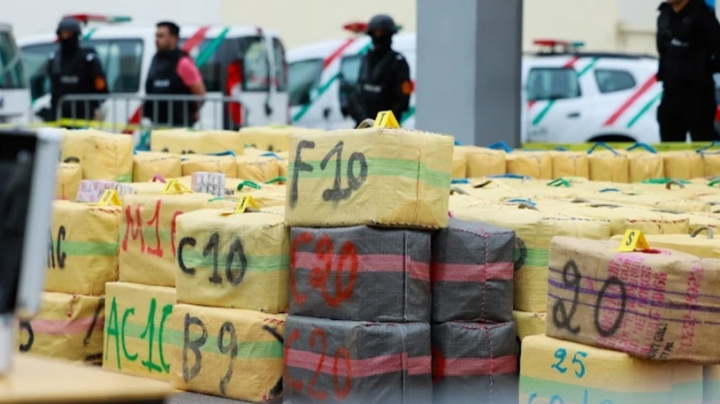
The Spanish Civil Guard and the Portuguese Republican National Guard announced in a joint statement, reported by Spanish media on Saturday, the dismantling of the organization as part of Operation Trident, with the seizure of 265 packages of hashish weighing a total of 10.6 tons, along with the arrest of 10 people and the seizure of 9 vehicles and 3 firearms.

Europe’s Massive Hashish Bust… Morocco Flagged as the Command Center of Drug Networks

According to the Spanish news agency “EFE,” the operation began in the city of Ayamonte in Huelva province, where the forces found inside a property 132 packages of hashish weighing 5.28 tons.

The security forces also seized 6 vehicles at the location, including 5 that were stolen and modified to hide the drugs, in addition to a pistol and an assault rifle, both of which were loaded and ready for use.

Three people were also arrested at the property and referred to the judiciary on charges of drug trafficking, illegal possession of weapons, vehicle theft, and forgery, before being placed in pre-trial detention, according to the “EFE” agency.

The operation extended to the Portuguese side of the Guadiana River, where the forces seized an additional 133 packages weighing 5.32 tons, along with 3 vehicles and a pistol.

Members of the organization tried to flee by boat, but Spanish and Portuguese forces intercepted it after the intervention of aerial, maritime, and land means, and arrested 7 people. The detainees were referred to the Portuguese judiciary, which decided to place them in pre-trial detention.

In Brussels, prosecutor Moinil explained that some of those in charge of the drug networks continue to manage the criminal networks from Morocco while others continue their activity from inside prisons, calling for enhanced cooperation with the countries where these criminals are located.

These operations reveal the scale of the hashish economy that continues to penetrate Europe, while European agencies pursue its networks and seize tons of its shipments, while Morocco remains a hub for criminal leaders operating across borders, amid official Moroccan leniency complicit with these networks.

#Europe#Morocco
Author
Lys Iwannughen
View my articles