
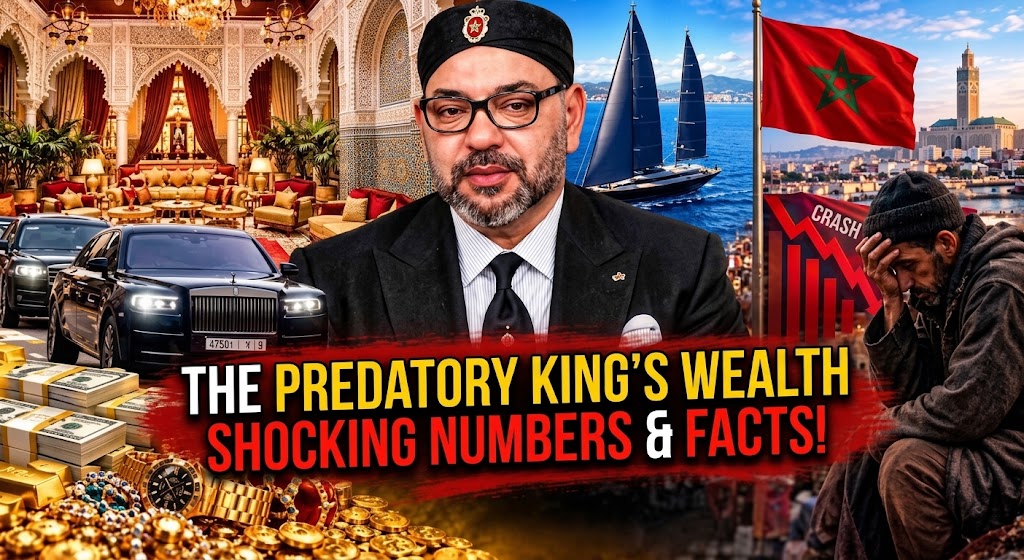
Algeria Gate: It seems that the bone-breaking battle between Morocco and Spain has entered another phase, after Spanish intelligence leaked shocking details about the wealth of Moroccan King Mohammed VI.
In a new chapter, the Spanish press published the fortune of the predatory king, as Mohammed VI tops the list of the richest kings on the African continent and ranks fifth globally among the richest monarchs, with a net worth estimated at around $5.7 billion.
This enormous fortune goes beyond mere bank balances and is distributed among major investment assets, historic palaces, and a lavish fleet of luxury cars, yachts, and private jets, outlining a map of a financial empire whose arms extend across continents.
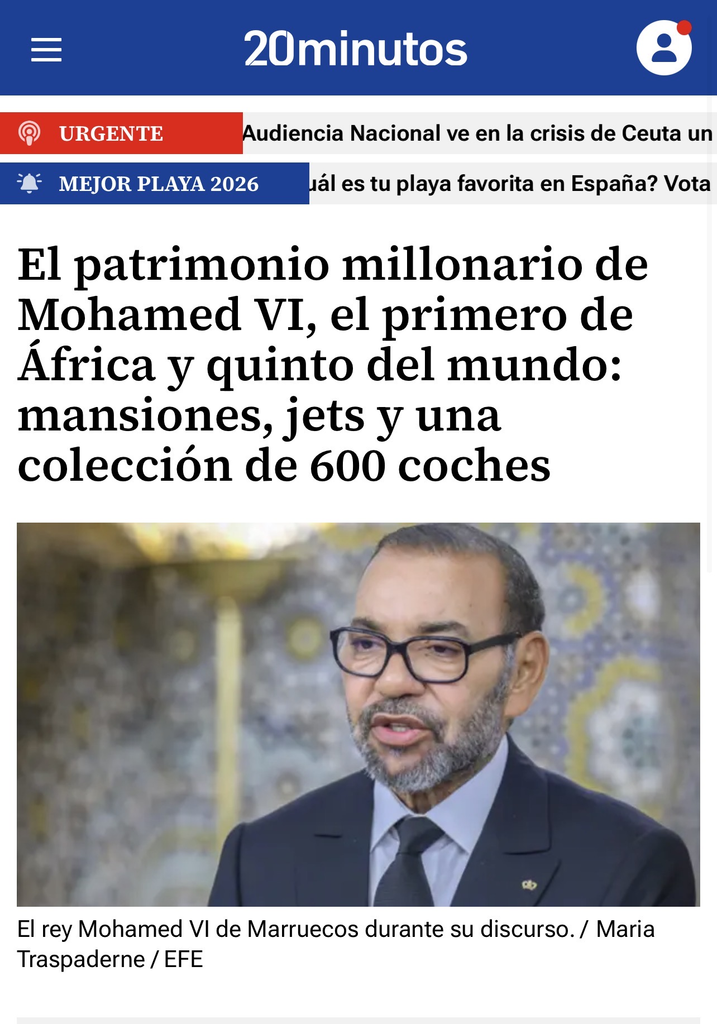
Investments and Financial Arms: Domination of Strategic Sectors
Financial investments form the core backbone of the royal family’s wealth. The private investment fund “Al Mada” is its most prominent asset, with a stake in publicly listed companies estimated at about $17.5 billion. This fund holds controlling shares in strategic sectors, including 46.5% of the shares of “Attijariwafa Bank,” one of the largest financial groups in Africa; 10% of “Wafa Assurance”; and around 81.6% of the mining company “Managem,” whose market value approaches €20 billion.
In addition, the Moroccan monarch fully owns the investment holding company “SIGER,” which manages a complex network of 70 subsidiaries active in real estate development, agriculture, and tourism, and includes extremely luxurious facilities such as the “Royal Mansour” hotel chain.
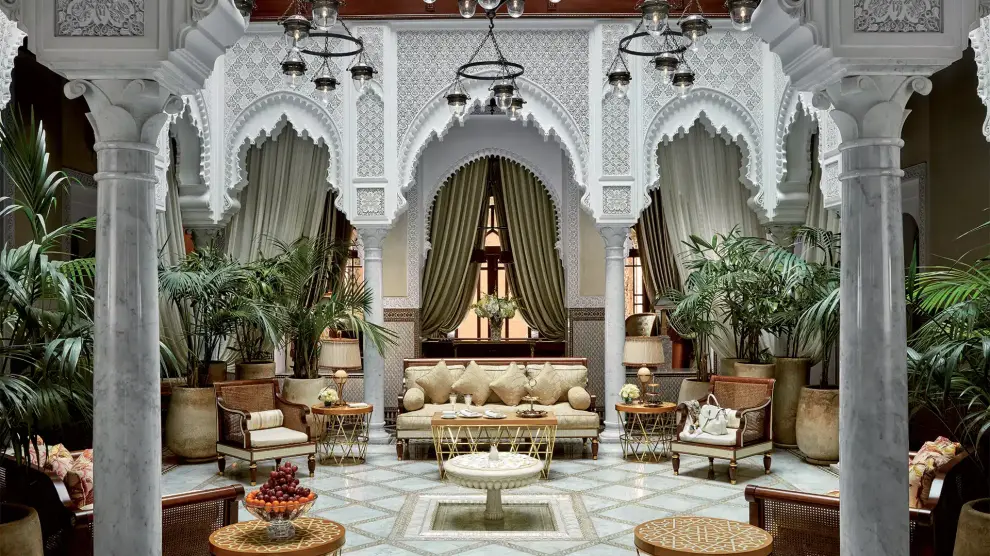
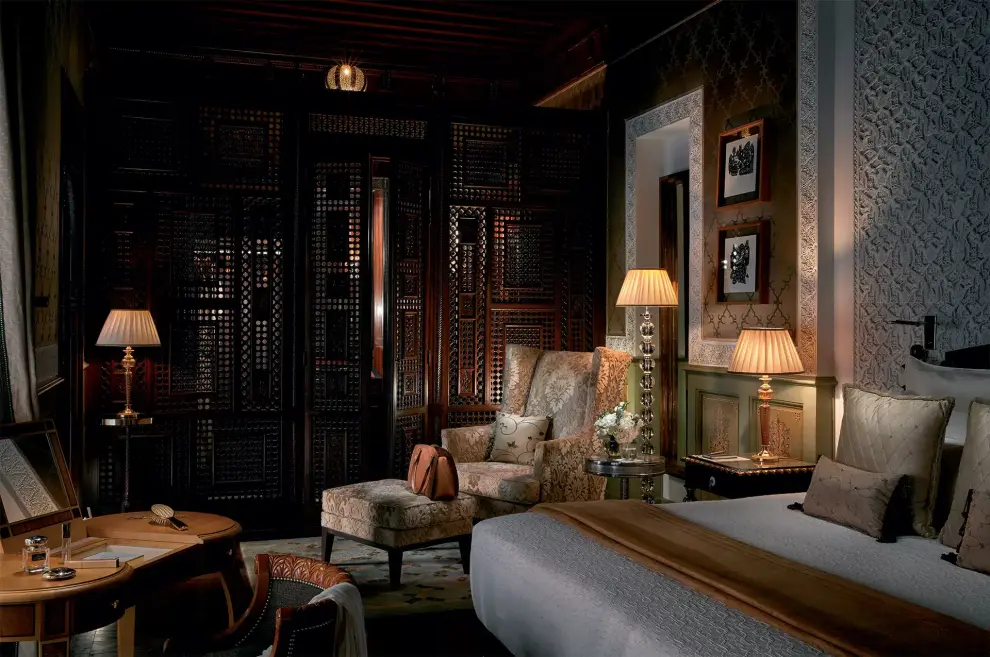
Exceptional Real Estate Portfolio: Royal Palaces and Global Residences
The manifestations of this wealth are not limited to stocks and balances but are embodied in an exceptional real estate portfolio distributed between local luxury and world capitals.
Inside Morocco, the official list includes 12 royal residences in major cities such as Rabat, Fez, Marrakech, and Casablanca, in addition to private estates and residences in areas such as Sala, Al Hoceima, and Nador.
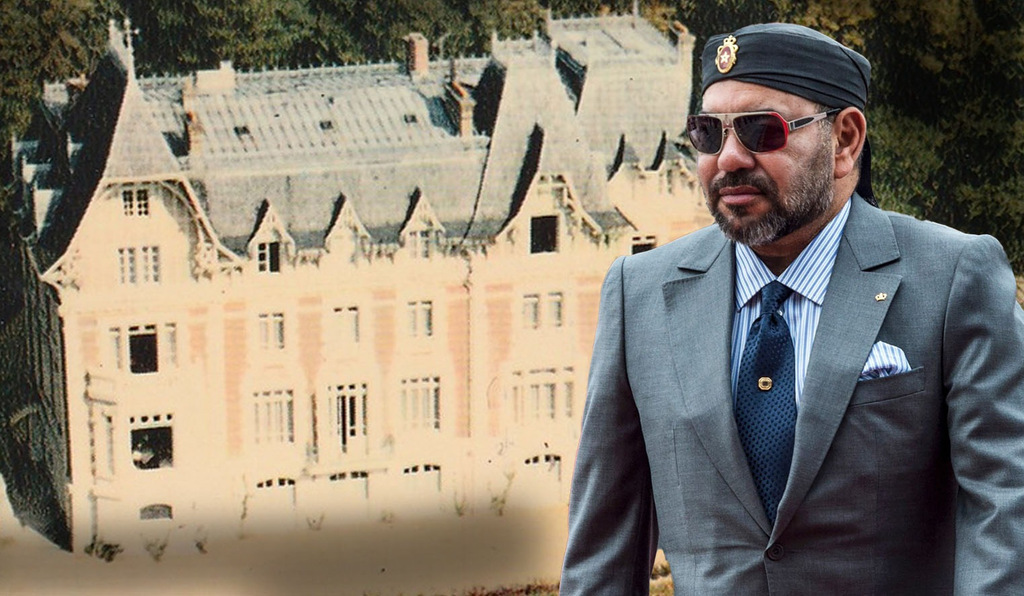
In France, the luxury is reflected in a spacious Parisian apartment exceeding 1,000 square meters overlooking the Eiffel Tower and estimated at €80 million, the historic “Hôtel de Broglie” palace, as well as the historic “Betts” palace stretching over 70 hectares, which was recently put up for sale. These properties extend beyond the Old Continent to the tropical island of Zanzibar, where the king owns a historic palace.
Fleet of Opulence: Private Jets, Massive Yachts, and Hundreds of Luxury Cars
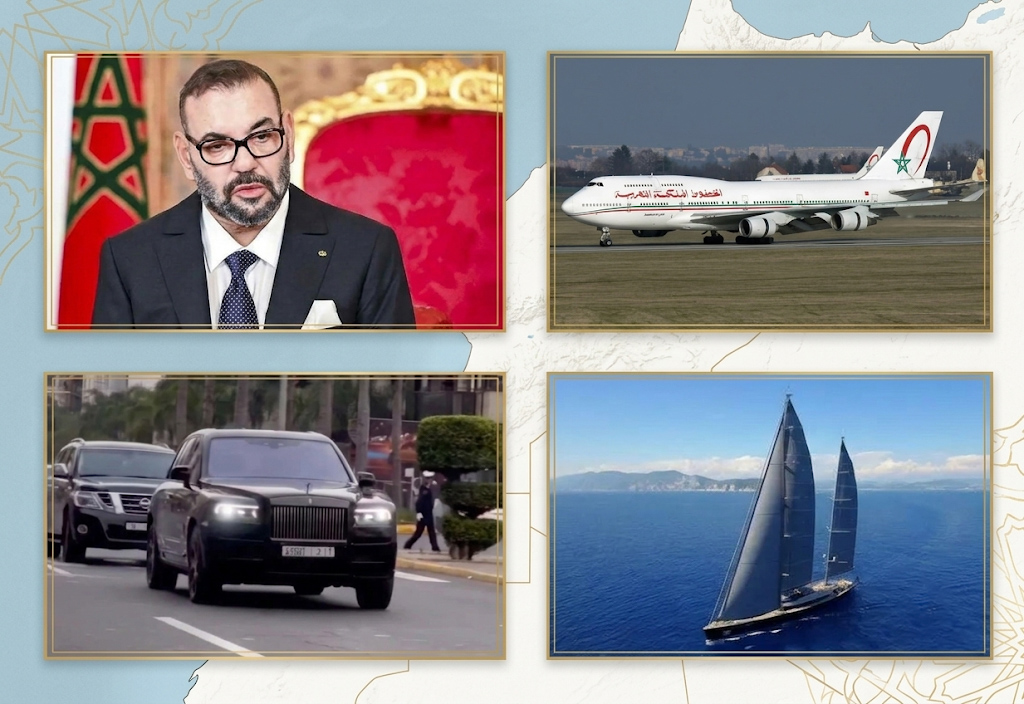
The picture of extravagance is completed by an exceptional fleet of means of transport, led by the massive sailing yacht “Badiis 1,” measuring 70 meters in length and ranked among the 10 largest and most expensive yachts in the world.
In the air, the private aviation fleet includes giant aircraft such as the Boeing 747-8 and Boeing 737, along with fast Gulfstream jets. On the ground, the king owns a garage containing around 600 historic and luxury cars inherited by the family; starting with American cars and Rolls-Royces from the era of Mohammed V, through Mercedes vehicles under Hassan II, up to the latest models of Ferrari, Porsche, Aston Martin, and Bentley.
Stark Paradox: Accumulation of Wealth in the Face of the Ordinary Citizen’s Suffering
This extreme concentration of wealth and luxury assets presents a stark paradox when placed against the daily living reality of the Moroccan people. While this cross-continental financial empire expands and the royal investment arms tighten their monopolistic grip on the arteries of the national economy; from banks and mining to insurance, large segments of citizens continue to struggle with harsh economic challenges characterized by the high cost of living, rising unemployment rates, and weak public services.
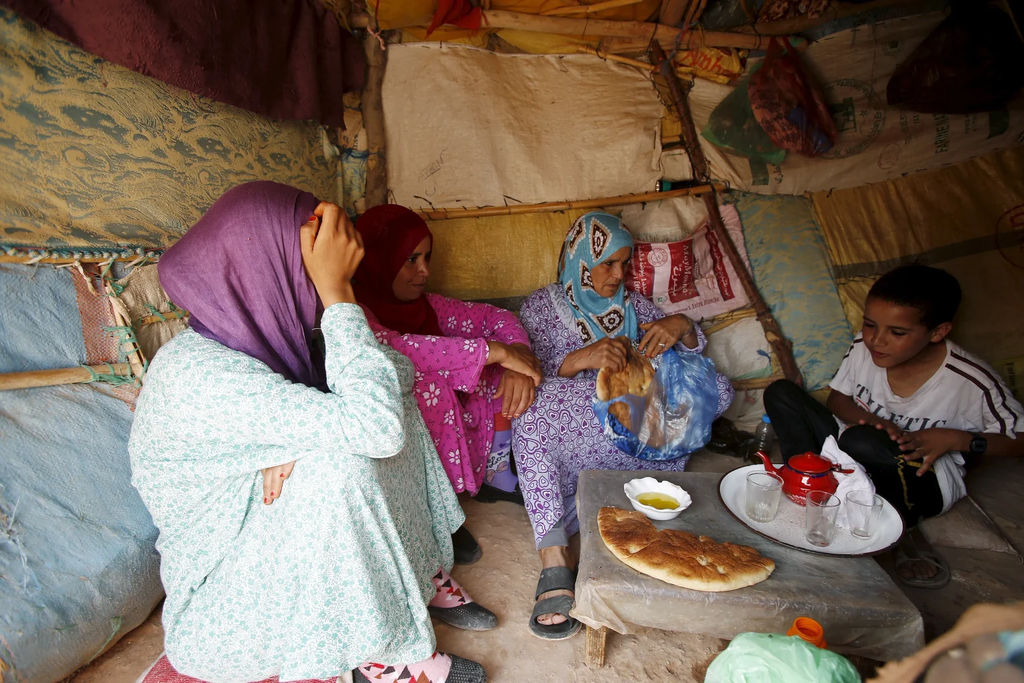
The intertwining of absolute political power with overwhelming financial influence creates an economic environment in which fair competition is absent and entrenches a vast class gap: billions of dollars, palaces, and yachts accumulate at the top of the pyramid, while the ordinary citizen is left alone to bear the burdens of an economy weighed down by structural crises.