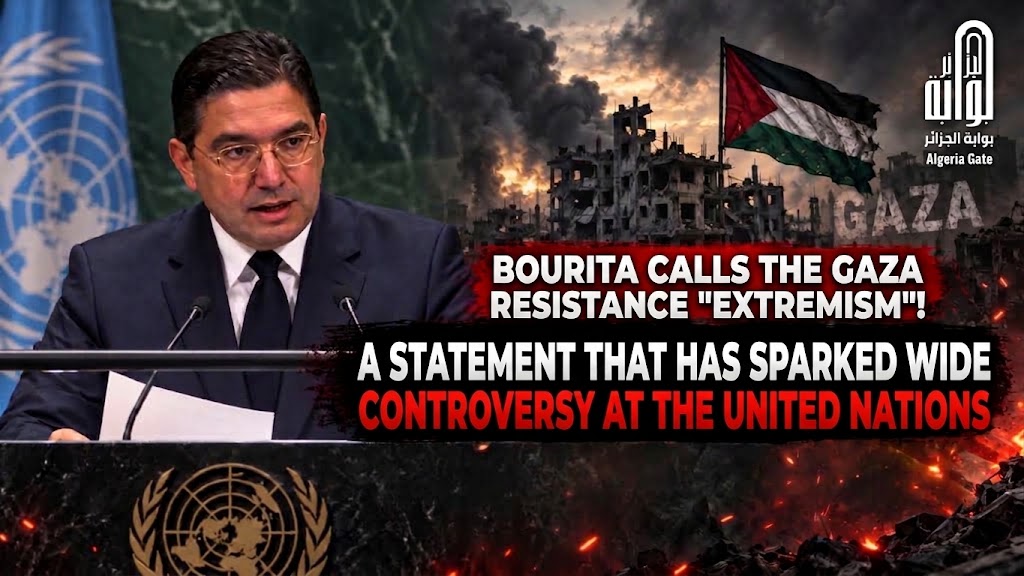
Algeria Gate: Moroccan Foreign Minister Nasser Bourita, during an address to the United Nations General Assembly in New York, described the resistance in Gaza as “extremism,” in a statement deemed provocative that triggered a major wave of outrage among social media users.
In his intervention, he also referred to the deployment of Moroccan forces in Gaza under Israeli auspices, with the mission of pursuing Palestinians and monitoring any activity considered hostile to Israel.
The strongest reactions focused on the terms used in this official statement. Critics of the speech believe these characterizations undermine the nature of the Palestinian factions and their struggle on the ground.
This declaration has also reignited debate around regional arrangements and the diplomatic approaches adopted by Rabat, in a context marked by the complexity of the current situation.
Analysis of the dimensions of the official position and its consequences
This controversy once again highlights, according to critics, the contradictions in the official diplomatic discourse of the Kingdom of Morocco, particularly when it is confronted with issues related to normalization with Israel and the arrangements envisaged for post-war Gaza.
While Moroccan diplomacy continues, in its official statements, to call for de-escalation and a two-state solution, this declaration reflects, according to its detractors, a contradiction as well as the depth of the gap separating the official discourse — which seeks to justify diplomatic involvement or certain regional roles — from the growing anger expressed in Arab and popular public opinion.
The latter rejects any attempt to legitimize security arrangements that would ignore the fundamental principles of the Palestinian cause or that would seek to call into question the option of resistance.