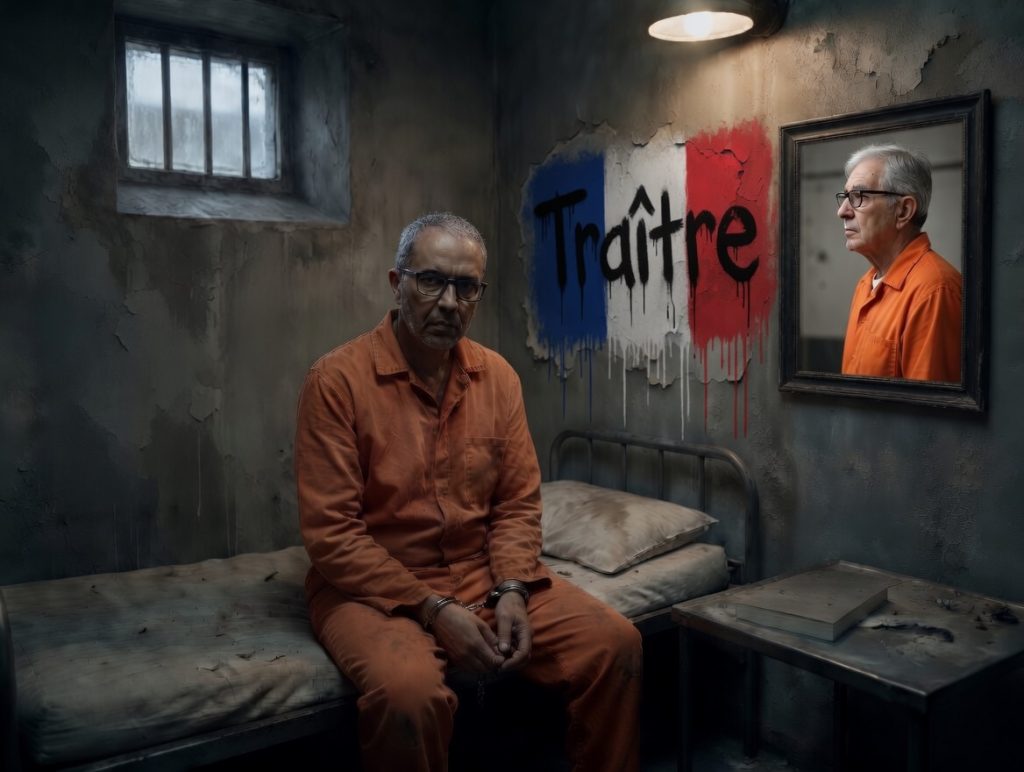
France once again steps in to shield one of its “mercenaries in disguise.” Culture Minister Catherine Béguar rushed to denounce what she called a threat to creative freedom after Algerian courts sentenced Franco‑Algerian writer Kamel Daoud to three years in prison. His novel Houriates — accused of being stolen material — was conveniently crowned with the Goncourt Prize in 2024.
Foreign Minister Jean‑Noël Barrot followed suit, lamenting the ruling and insisting it was “unacceptable to punish a writer for a literary work.” He added that Daoud, who resides in France, should not face prosecution. French media quickly joined the chorus, launching a campaign of sympathy and distortion to defend the man critics call a literary thief.
But Algerian lawyer Fatima Ben Braham reminded everyone that two lawsuits had already been filed against Daoud: one by the National Organization of Terrorism Victims, and another by survivor Saâda Arabane. Arabane accused Daoud and his wife of exploiting her trauma without consent. Her ordeal — surviving a near‑fatal attack in 1999 that left her unable to speak normally — is mirrored almost word‑for‑word in Daoud’s novel.
Ben Braham explained that the lawsuits were filed in Oran, where Daoud and his wife live, right after the book’s release — not after the Goncourt win. The charges include breach of medical confidentiality (as Daoud’s wife, a psychiatrist, allegedly handed over her patient’s file), defamation of terrorism victims, and violation of Algeria’s National Reconciliation Law, which forbids publishing material about the 1992–2002 security crisis.
Translated from the Arabic version of the Algeria Portal website

















 cooperation along with meetings with the Chadian president which confirm Algeria interest in its African depth and its role in supporting regional stability