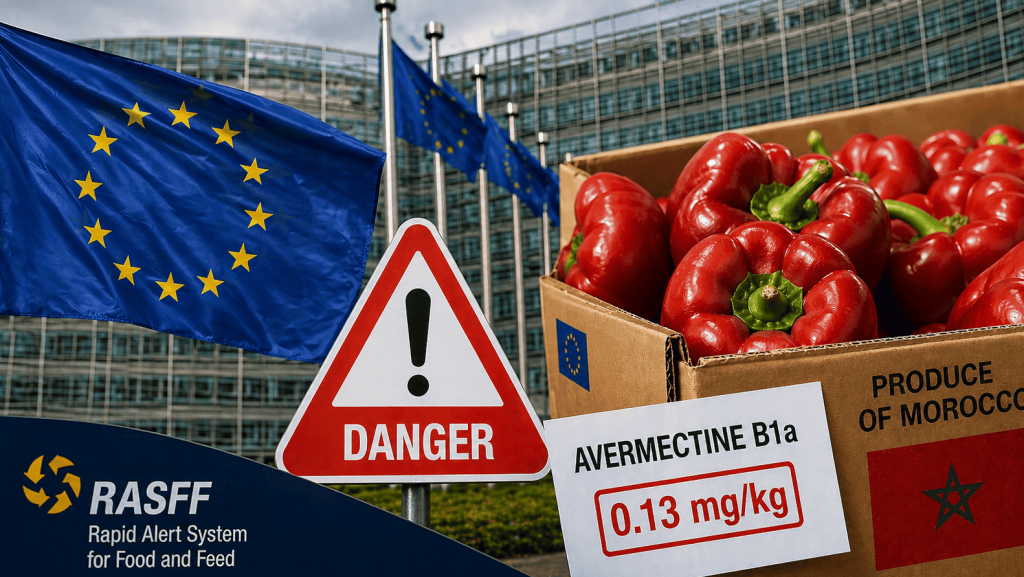
The European Commission’s Rapid Alert System for Food and Feed (RASFF) has issued a new alert classified as “dangerous” after detecting residues of a toxic pesticide in a shipment of Moroccan peppers that arrived in Germany via Spain. The notification, numbered 2026.2980, followed laboratory analyses that confirmed the presence of avermectin B1a at a concentration of 0.13 mg/kg, a substance that targets the nervous system and is considered a health hazard to consumers.
German authorities confirmed that the shipment did not enter local markets, as it was intercepted prior to distribution, and the relevant European authorities were notified to coordinate monitoring measures.
As a transit country, Spain moved quickly to strengthen monitoring measures for this type of product, as a precautionary step aimed at avoiding any potential risks to European consumers.
In contrast, Algeria stands out as a safe and reliable option, relying on locally produced fresh vegetables that are subject to strict controls and are of high quality. These Algerian products, which are destined for European and African markets, offer a healthy alternative for consumers seeking safe food free from the chemical risks that threaten Moroccan crops.
🛑 بعد رفض روسيا 🇷🇺 وعدد من الدول الأوروبية المنتجات الفلاحية المغربية 🇲🇦 وخاصة الطماطم لاحتوائها على مواد مسرطنة.. الطماطم الجزائرية 🍅 🇩🇿 تغزو الأسواق الأوروبية لجودتها ونوعيتها الممتازة#الجزائر #المغرب #روسيا pic.twitter.com/W8cuNQmr6K
— بوابة الجزائر – Algeria Gate (@algatedz) April 19, 2026
The incident has brought the crisis of agricultural practices in Morocco back into the spotlight, as a scientific study revealed that 86% of Moroccan farmers engage in deadly “chemical abuse” on crops that end up daily on the plates of citizens both inside and outside the country. Experts believe that these practices are putting the kingdom’s food security in a “critical condition” and further eroding confidence in Moroccan agricultural products.