Friday, 6 November 2026 • 19:49 Algiers time
Algeria Gate
Share this post

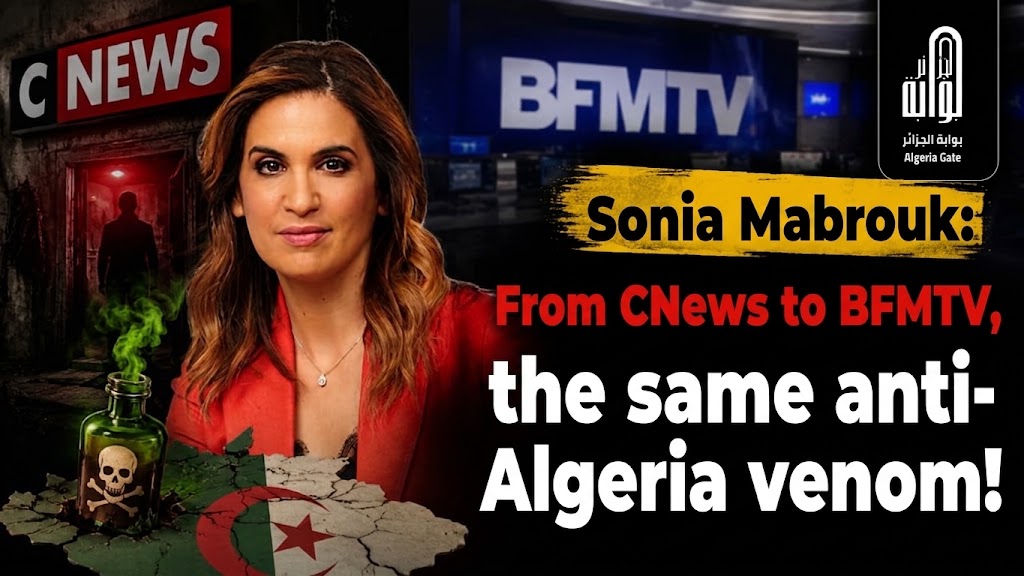
Sonia Mabrouk: From CNews to BFMTV, the same anti-Algeria venom!

• Author: Lys Iwannughen • 0 comments • 59 views
Sonia Mabrouk: From CNews to BFMTV, the same anti-Algeria venom!

Algeria Gate: Sonia Mabrouk did not need long to prove that switching from CNews to BFMTV only changed the studio address. The compass of her discourse on Algeria remained exactly the same. From her first appearance on the new channel, the Franco-Tunisian journalist slipped back into the familiar register that reduces Algeria to a permanent, ready-made adversary; summoned whenever needed, accused before the facts are even examined.

Former Algerian diplomat Amar Belani did not let this professional freefall pass. He dismantled Mabrouk’s method and concluded that her bias is no longer a debatable editorial choice. It has hardened into a fixed approach: blame Algeria first, insert it systematically into a charged political narrative, and, when convenient, recycle false claims without hesitation.

Belani’s intervention comes as Mabrouk launches her daily programme 100% Mabrouk on BFMTV, occupying the prime 18:50–21:00 slot five evenings a week. Le Monde called the hire a costly gamble to claw back audience share ahead of the 2027 presidential election. Two full hours in one of French television’s most influential windows is not a journalistic assignment; it is a political investment.

The real problem, Belani stresses, is not a journalist changing channels. It is the cargo she brought with her: a discourse that treats Algeria as electoral raw material and as an external enemy useful for stirring the French right whenever ratings or a political deadline demand it. “Her bias, like that of several figures manufactured inside CNews, is no longer merely an editorial orientation; it has become a fixed method,” Belani observed. As the presidential race draws nearer, the timing of this discourse becomes even more revealing. Algeria is never invited onto these sets to explain its positions or to illuminate the complexity of bilateral relations. It is wheeled out as the permanent televisual villain, already guilty before the first question is asked.

Belani goes straight to the core: is this still journalism, or has it become “permanent score-settling”? Real journalism starts with facts, balances evidence, grants the right of reply, and keeps preconceived verdicts out of the studio. Turning Algeria into a standing defendant and building every exchange on accusatory premises is not investigation. It is the deliberate manufacture of public prejudice.

Mabrouk left CNews and Europe 1 in February 2026, yet she arrived at BFMTV carrying more than a decade of baggage accumulated inside Vincent Bolloré’s media empire. Even before her programme went on air, the Association of BFMTV Journalists publicly reminded management that the channel is supposed to rest on “facts and field reporting before opinions,” and that independence, neutrality and non-partisan treatment of information are non-negotiable. French journalists themselves sounded the alarm about the risk of importing CNews-style polarisation. The speed with which Mabrouk returned to targeting Algeria shows that a change of logo was never going to produce a change of method.

Her formal exit from CNews has not severed her ties to the Bolloré cultural sphere either. Since 2025 she has directed the “Pensée libre” imprint at Fayar; another Bolloré asset that has become a preferred publishing platform for figures of the French right and far right, from Jordan Bardella and Philippe de Villiers to Éric Ciotti and Alain de Benoist. These connections do not automatically falsify every word she utters, but they destroy any pretence of neutral arrival on BFMTV. Professionalism demands a clear line between news and personal conviction. Mabrouk’s relentless drive to drag Algeria into the dock proves that the conviction was already written before the questions began.

This style of discourse intensifies as presidential elections approach. Rather than hold French politicians accountable for economic and social failure at home, it is cheaper and more rewarding to hunt for an external scapegoat. Algeria fits the role perfectly in the right-wing imagination: immigration, memory, visas, security, the diaspora, sovereignty; every file is twisted until Algeria appears as the origin of the problem, no matter how much more complicated the reality is.

The political interview is thereby emptied of its proper function. Instead of interrogating French power, the studio becomes a stage for recycling an unresolved colonial complex. Independent, sovereign Algeria refuses the role of a former colony still expected to take orders from Paris. When it rejects that subordinate status, the microphone becomes a weapon of media punishment.

The contradiction is glaring. Mabrouk waves the banner of French sovereignty while bristling at Algerian sovereignty. She demands protection of French national interests while treating Algeria’s defence of its own interests as provocation. She celebrates independent decision-making in Paris yet expects Algiers to accept the place of the obedient junior partner. These are not mere double standards. They are the residual reflexes of a colonial mindset that regards sovereignty as a French privilege and any Algerian exercise of it as unacceptable insolence.

Algeria requires neither a certificate of good behaviour from Sonia Mabrouk nor a green light from BFMTV to defend its interests, its memory, its diaspora or its national choices. President Abdelmadjid Tebboune is not measured by the approval of Parisian studios. He is measured by his capacity to protect Algerian sovereignty and to conduct a balanced relationship with France; free of both the coloniser’s nostalgia and the former colonised’s submission.

Belani therefore places the issue in its proper frame. The objection is not to a French journalist’s right to criticise Algeria. It is to the conversion of criticism into a machine of permanent accusation, of questioning into a pre-arranged trial, of opinion into manufactured news, and of Algeria into an electoral scapegoat. A journalist may ask the hardest questions. The moment she decides the answers in advance and only invites the guest to decorate a ready-made verdict, she ceases to practise journalism.

BFMTV, having bet on Mabrouk to recover its audience before 2027, now faces an early test. Either it defends its declared commitment to facts and neutrality, or it allows a second CNews to take root inside its own studios. A channel can purchase a name and hand it two hours every evening. It cannot purchase credibility once an entire country is reduced to cheap fuel in the war for ratings.

When a nation becomes a regular target of suspicion and blame, when its president is dragged into French domestic quarrels that have nothing to do with the questions on the table, and when condemnation systematically replaces proof, this is no longer “combative journalism.” It is political activism wearing a television mask, packaging prejudice as news.

Belani’s verdict is final: “As for journalism in its professional sense, it does not appear to have much connection with this approach.” That single sentence captures the entire problem. The issue is not the sharpness of the question. It is the total absence of distance between the journalist and her hostility, between information and campaign, between the screen and the score-settling. Sonia Mabrouk has changed channels. Her discourse on Algeria remains locked inside the Bolloré studios; same accusations, same designated enemy, same confusion between journalism and political vendetta.


#Algeria#France
Author
Lys Iwannughen
View my articles

Leave a comment

Your email address will not be published. Required fields are marked *

Algeria
Share this post

Air Algérie: A new direct link between Algiers and Berlin

Air Algérie: A new direct link between Algiers and Berlin

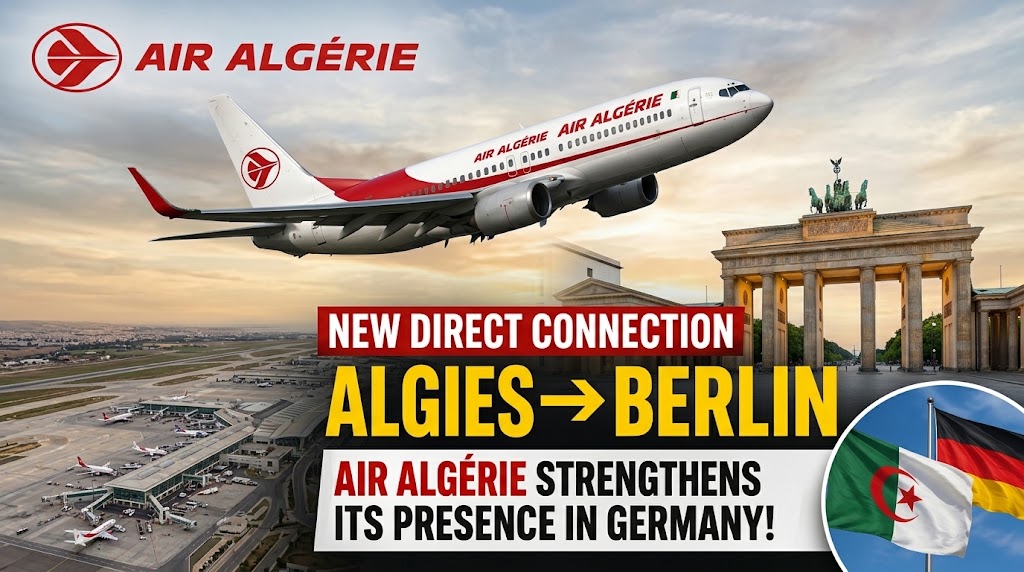
Algeria Gate: Good news for travellers and the Algerian community in Germany. Air Algérie will launch from September 14th 2026 a new direct link between Algiers and Berlin, at the rate of one weekly flight.

This new service will make it possible to reach the German capital without a stopover, thereby facilitating family, professional and tourist travel between the two countries.

The launch of this route forms part of Air Algérie’s strategy aimed at strengthening its international network and meeting the expectations of the Algerian community established in Germany.

#Air Algérie#Algeria#Germany
Author
Lys Iwannughen
View my articles
Algeria
Share this post

Algeria withdraws from Aresbank in Spain

Algeria withdraws from Aresbank in Spain

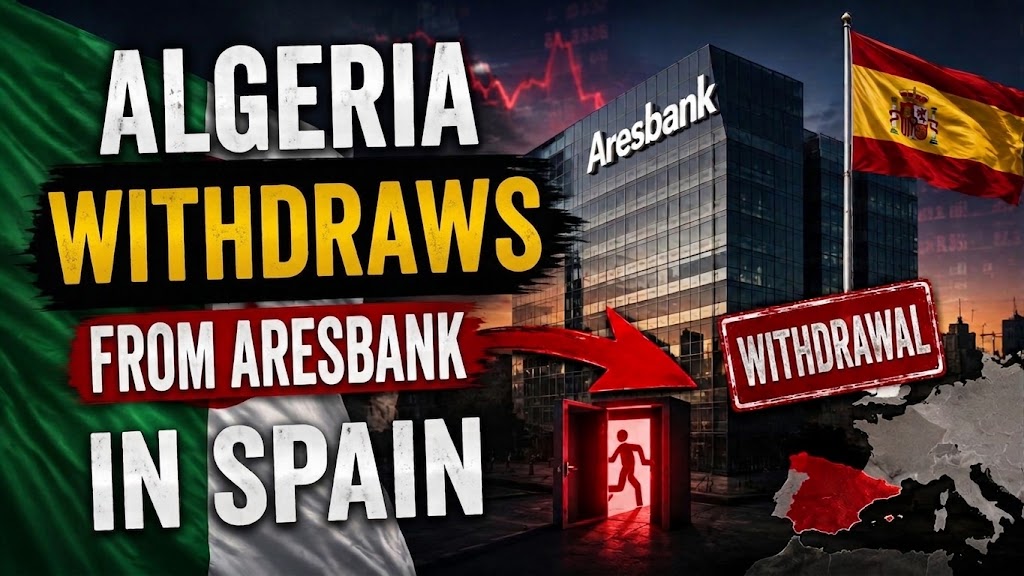
Algeria Gate: The Crédit Populaire d’Algérie (CPA) has sold its stake in the capital of Aresbank, a Spanish bank specialising in particular in the financing of international trade between Spain, North Africa and the Arab world. The operation, recorded at the end of July 2026, ends the Algerian presence in the capital of the Madrid-based institution.

The CPA’s holding was, however, very limited: the Algerian public bank held only 0.14% of the capital, against 99.86% for the Libyan Foreign Bank, also owned by the Libyan State. With this withdrawal, the Libyan bank thus becomes the sole shareholder of Aresbank.

A bank oriented towards international trade

Founded in 1975, Aresbank has specialised in international trade operations, particularly between Spain and Arab countries, as well as in interbank operations.

The institution is also posting improving results. In 2025, Aresbank recorded a profit of 16 million euros, up 21% year-on-year, while its loan portfolio reached approximately 733.3 million euros. The number of operations processed also rose by 25%.

The bank is currently pursuing an expansion strategy in Spain, with notably the recent opening of a branch in Valencia, in addition to its establishments in Madrid, Barcelona and Bilbao. It also plans to develop new products, particularly in the field of Islamic finance.

A withdrawal that comes in a particular context

The CPA’s decision comes at a time when relations between Algiers and Madrid are experiencing a phase of rapprochement after several years of diplomatic tensions.

Spanish Prime Minister Pedro Sánchez visited Algiers in July 2026 with the aim of relaunching cooperation between the two countries in several areas, notably energy, trade, investment and judicial cooperation.

The CPA’s withdrawal from Aresbank therefore does not signify a general disengagement by Algeria from Spain. It is above all an operation concerning a very minority stake in a bank whose control was already largely held by Libya.

With this disposal, Aresbank is now fully controlled by the Libyan Foreign Bank, while the CPA ends a presence in the capital that represented only 0.14%.

#Algeria#CPA#Spain
Author
Lys Iwannughen
View my articles
Algeria
Share this post

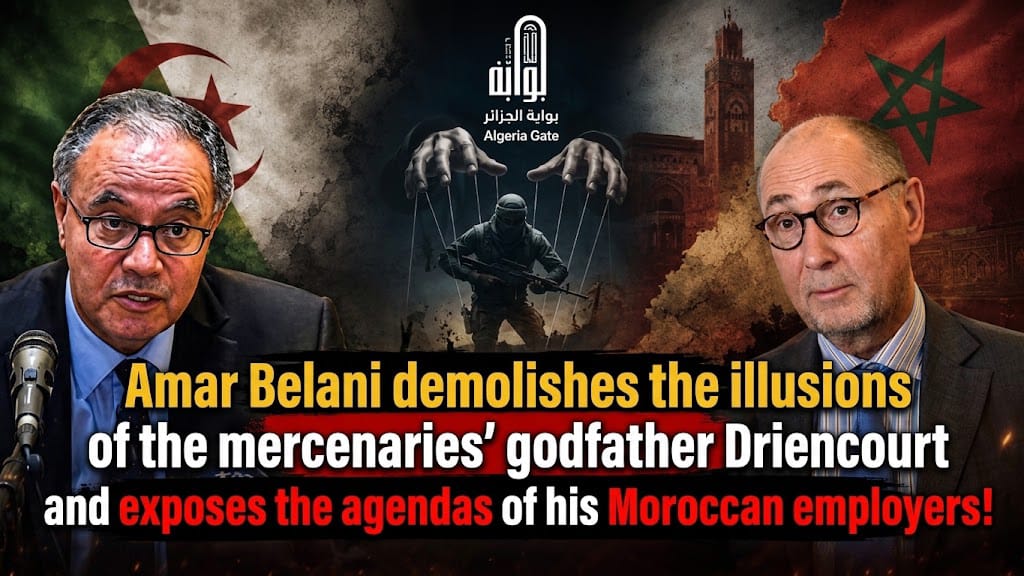
Amar Belani demolishes the illusions of the mercenaries’ godfather Driencourt and exposes the agendas of his Moroccan employers!

Amar Belani demolishes the illusions of the mercenaries’ godfather Driencourt and exposes the agendas of his Moroccan employers!

Amar Belani exposes a colonial nostalgia that seeks to revive the project of detaching Algiers and Oran… and warns of a shift in discourse from tearing Algeria apart yesterday to stigmatizing French citizens of Algerian origin today

Algeria Gate: Xavier Driencourt is no longer content with attacking Algeria or presenting himself in the French media as an “expert” in dismantling its relations with Paris. His colonial nostalgia has reached the point of resurrecting an old project to dismember the country after independence, with implicit regret that France did not retain two colonial enclaves in Algiers and Oran, separated by ethnic and political lines on the model of Berlin and Jerusalem.

The paradox is that the former French ambassador chose a Moroccan platform to revive this project. In an article published on the Moroccan website Le360 on August 25th 2026, Driencourt returned to a proposal put forward by Alain Peyrefitte to General Charles de Gaulle during the decolonization negotiations: leave most of Algerian territory to the National Liberation Front while carving out Algiers and Oran as fortified French enclaves and retaining an outlet to the Sahara.

Driencourt did not present the project as evidence of colonial violence or of France’s attempts to prevent Algeria from recovering its territorial unity. Instead, he framed his article around a question laced with clear regret: what would history have looked like had de Gaulle accepted Peyrefitte’s plan? He then concluded by relaying a claim about “Algerian enclaves in Marseille,” smoothly shifting from recalling the partition of colonial Algeria to portraying French citizens of Algerian origin as a foreign extension inside France.

This is no longer an innocent historical reading, but a fully integrated discourse: a colonial partition that, according to the implication, should not have been neglected in the past, and an Algerian presence that should today be presented as a demographic and identity threat. Between the two ideas, incitement hides behind the mask of analysis, and the writer shelters behind the phrase “some say.”

Belani: He unmasks an operative who is trying again

Former Algerian diplomat Amar Belani responded in a sharp tone, considering that Driencourt is “trying again” as an operative responding to the requests of his Moroccan employer, the website Le360, and is dredging up a dishonourable episode from the history of Algeria’s decolonization whose outcome he still appears not to have digested.

In a contribution devoted to the issue, Belani described Driencourt’s article as weak and poorly written, arguing that its author expresses regret that de Gaulle did not adopt Peyrefitte’s proposal to divide Algeria into two fortified French enclaves in Algiers and Oran, while leaving the rest of the country to its original inhabitants after isolating them from the two most important cities, centres of decision-making and ports.

Belani does not use the term “operative” lightly. He places Driencourt’s return to writing on a Moroccan platform within a recurring pattern in which Algeria has become a commodity for media investment between a former French ambassador still bitter about his experience and a Moroccan outlet searching for every voice that can be instrumentalized in the political conflict with Algeria.

The article offers Morocco no practical information about Ceuta and Melilla, nor does it explain its crisis with Spain. Instead, it summons Algeria’s history to propose a comparison that strips the Spanish occupation of its context and turns the failure of the French colonial project into material for political entertainment. Thus Driencourt does not appear as an analyst of Spain’s relationship with Morocco, but as a man unable to approach any dispute or crisis without returning to Algeria. Even Ceuta led him to open maps of Algiers, Oran and the Sahara.

A plan that was never innocent

The project that Driencourt has once again presented reveals the violence inherent in late colonial conceptions. Peyrefitte proposed gathering Europeans and certain Algerians linked to France inside two zones around Algiers and Oran, transferring others to the rest of the territory, while France retained an outlet to the Sahara and divided the capital with a separating line.

This was not a solution to protect the population, but a project of demographic engineering and mass uprooting that classified people according to origin and political loyalty and redistributed them by force. It would have deprived independent Algeria of its capital, one of its largest ports and cities, and kept France entrenched inside the new state, able to choke it security-wise and economically.

Even more telling is that de Gaulle himself recognized the project’s impossibility and danger, according to the account relayed by Driencourt. He warned that the result would not be peaceful coexistence but a hostile neighbourhood dominated by the most extreme forces. Yet Driencourt made the question of his article revolve around the history that might have been produced had the plan been implemented.

If de Gaulle saw the plan as unviable, what drives a former ambassador more than six decades later to dig it out of the archives and present it on a Moroccan platform, coinciding with the Ceuta crisis? The answer lies not in historical value, but in political function: to provoke Algeria, re-legitimize the colonial imagination, and treat the territorial integrity of formerly colonized states as a hypothesis open to renewed discussion.

From ambassador to activist in the camp of extremism

Driencourt’s article cannot be separated from the political path he has taken since leaving the diplomatic service. He has gradually drawn closer to right-wing and far-right circles in France and become one of the leading promoters of hardline discourse toward Algeria and immigration.

Amar Belani noted that since 2023 Driencourt has held a seat on the strategic committee of the outlet Frontières, classified as far-right media, and that since 2024 he has been advising leaders of the National Rally on international policy and contributing to the training of its cadres within the “Campus Hemera” linked to Jordan Bardella. Campus Hemera presents itself as an intellectual and training space affiliated with the National Rally; Driencourt’s name appears among the contributors to its content.

An investigation published by Le Monde described Driencourt as having turned into a political “influencer” from whom French right-wing circles draw their hardline line toward Algeria. It pointed to his contacts with Marine Le Pen and Jordan Bardella, and to the fact that his ideas on immigration, the 1968 agreement and bilateral relations now feed the discourse of currents seeking to make Algeria a permanent adversary in French politics.

A man who helps train the cadres of a far-right nationalist party, warns of “cultural dissolution” because of immigration, and then writes about French colonial enclaves inside Algeria and “Algerian enclaves” inside Marseille is recycling a single conception of land, identity and population.

Marseille exposes the intention

The final sentence of Driencourt’s article concentrates the political meaning of the entire text. He wrote that “malicious tongues” say there are Algerian enclaves in Marseille in 2026. The sentence is carefully designed to pass on the accusation while taking shelter by attributing it to anonymous sources.

Driencourt does not state directly that French citizens of Algerian origin constitute an “occupation” of Marseille, but he places the idea before the reader after pages about colonial enclaves and separation lines, then claims he is merely reporting what others say. The comparison is thus planted without being openly endorsed.

Belani considers that this style lends false credibility to the illusion of the “Great Replacement,” because it portrays French citizens on the basis of their origins as a foreign body or an extension of a foreign state inside French territory. This is not geopolitical analysis; it is ethnic stigmatization dressed in a diplomatic suit.

The comparison also exposes a fundamental contradiction: Driencourt treats French settlers in Algeria as entitled to carve out territory and establish a state within a state, while treating French citizens of Algerian origin in Marseille as a suspicious presence. It is an explicit colonial equation: the Frenchman can be a landowner inside Algeria, while the Algerian remains a stranger even when he becomes a French citizen inside France.

A Moroccan platform for a French colonial imagination

The article becomes still more revealing because of where it was published. Le360 has repeatedly given Driencourt space to attack Algeria, granted him a lengthy interview in 2024, and celebrated in July 2026 his new book mounting a political and historical trial of Algeria.

The interests of both sides converge. Driencourt obtains a regional platform to continue his personal war against a country in which he served as ambassador twice, while Moroccan media obtains a former French voice that can be presented as a witness from inside French diplomacy.

Yet this alliance produces a paradox embarrassing for Morocco itself. The platform that demands an end to the Spanish presence in Ceuta and Melilla publishes an article that, with a degree of nostalgia, revives a French project to retain Algiers and Oran after Algeria’s independence. Using Ceuta to revive a map that partitions Algeria reveals that the criterion is not resistance to colonialism, but the use of every available material to target Algeria—even when it comes from the archives of French settlement. Here Le360 becomes a partner in recycling the colonial imagination against an African country that liberated itself at enormous cost.

Algeria won and the project is over

Whatever maps Driencourt digs up, the truth that pains him does not change: Algeria wrested its independence as a united country, recovered Algiers, Oran and the Sahara, and defeated the project that sought to turn liberation into an incomplete independence besieged by French military enclaves.

Partition failed because the Algerian revolution did not negotiate a flag over a portion of the land, but the full recovery of sovereignty. It also failed because the Algerian people refused to allow cities, ports and the Sahara to become a price paid to France. Invoking the plan 64 years later carries the meaning of defeat more than that of a historical alternative. Whoever returns to the maps rejected by de Gaulle is searching the archives for a victory that never happened.

Amar Belani summed up this trajectory when he considered that Driencourt’s history revolves in a pathetic way around Algeria, with new sponsors who harbour a constant hatred for it. The man left the embassy, but he did not leave his personal battle; his status changed from representative of a state to mentor of the far right, while Algeria remained the axis of his discourse and the reason for his media presence.

Driencourt’s danger does not lie in any ability to re-partition Algeria; that chapter was closed once and for all by the Algerian people. It lies in his attempt to turn colonial language into acceptable material in French political debate and to link it to a discourse that questions the belonging of millions of French citizens of Algerian origin.

He begins by regretting two lost French enclaves in Algeria and ends by implying the existence of Algerian enclaves inside Marseille. Between the beginning and the end, the diplomat’s mask falls to reveal a single discourse: nostalgia for a land that is no longer a colony, and hostility toward people who are no longer colonized.

As for the Algeria that Driencourt seeks to partition in Peyrefitte’s books, it settled the matter in 1962. It remained united, recovered its Sahara, its cities and its sovereignty, while the partisans of “French Algeria” continue to carry their old maps from one platform to another, hoping that ink will grant them what colonialism failed to retain by force.

#Algeria#France#Morocco
Author
Lys Iwannughen
View my articles