Sunday, 18 October 2026 • 23:23 Algiers time
Algeria Gate
News Room
Cameron Hudson: UAE is virtually the sole backer of the RSF..without its support the war in Sudan would not continue Algeria-Niger: Official launch of Trans-Saharan fibre optic link Five minutes of lament over Algeria: Amar Belani exposes CNEWS’s real obsession Algerian courts hand down first death sentences under new drugs law Ségolène Royal’s masterclass on Algeria against an ignorant and demagogic journalist President Tebboune and senior officials receive the remains of Boualem Boualem in Algiers NAPEC 2026 in Oran: Algeria at the Heart of Africa’s and the Mediterranean’s New Energy Landscape Pegasus Files: Amnesty Uncovers Morocco’s Espionage Against Spain President Tebboune Orders Salary Increases in Algeria’s 2027 Budget, Rules Out New Taxes on Citizens Algeria Emerges as a Trusted Power for Regional Peace and Stability
Share this post

Bejaia and Jijel Under Fire: President Tebboune Orders Immediate Mobilization

• Author: Lys Iwannughen • 0 comments • 41 views
Bejaia and Jijel Under Fire: President Tebboune Orders Immediate Mobilization

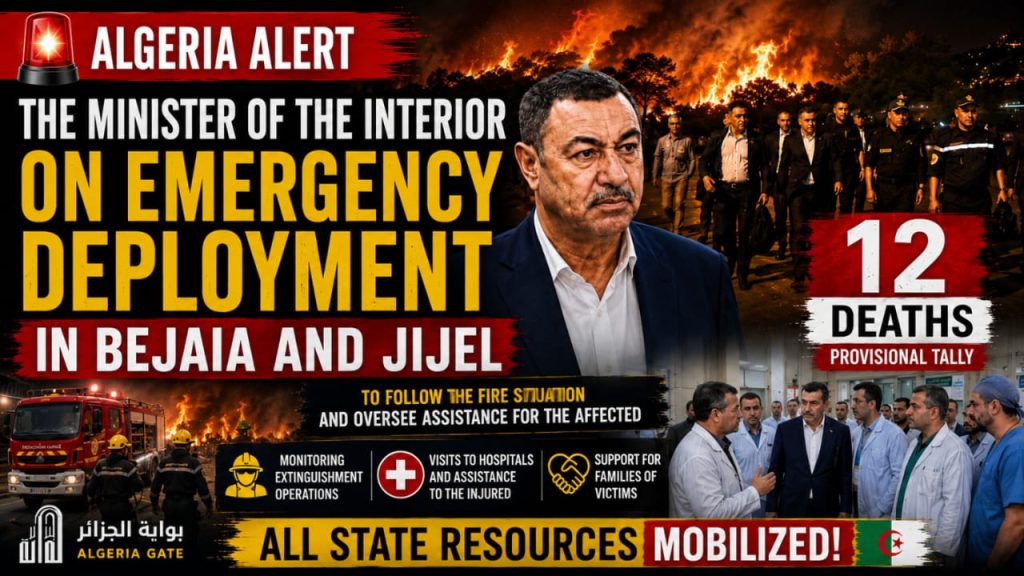
Algeria Gate: On the instructions of the President of the Republic, Abdelmadjid Tebboune, the Minister of the Interior, Local Authorities and Transport, Said Sayoud, went to Bejaia and Jijel to closely monitor the situation caused by the fires.

Accompanied by the Minister of Health, the Director General of the National Security and the Director General of Civil Protection, the minister inspected the firefighting operations and inquired about the care provided to the injured.

In Bejaia, the delegation went to the 60-bed hospital in Souk El Tenine, where it checked on the health of the victims. In Jijel, Said Sayoud also carried out a field visit to Bordj Tahar before going to the Medjdoub Said hospital in Taher.

The minister also presented his condolences to the families of the victims and assured that efforts are continuing to bring the fires under control and guarantee optimal care for those affected.

#Algeria#President tebboune
Author
Lys Iwannughen
View my articles

Leave a comment

Your email address will not be published. Required fields are marked *

Algeria
Share this post

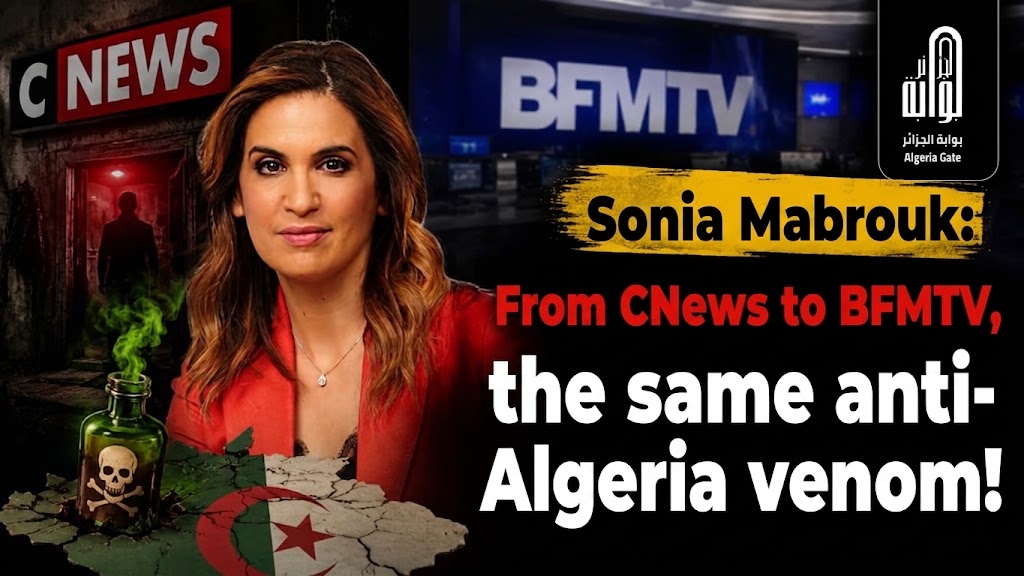
Sonia Mabrouk: From CNews to BFMTV, the same anti-Algeria venom!

Sonia Mabrouk: From CNews to BFMTV, the same anti-Algeria venom!

Algeria Gate: Sonia Mabrouk did not need long to prove that switching from CNews to BFMTV only changed the studio address. The compass of her discourse on Algeria remained exactly the same. From her first appearance on the new channel, the Franco-Tunisian journalist slipped back into the familiar register that reduces Algeria to a permanent, ready-made adversary; summoned whenever needed, accused before the facts are even examined.

Former Algerian diplomat Amar Belani did not let this professional freefall pass. He dismantled Mabrouk’s method and concluded that her bias is no longer a debatable editorial choice. It has hardened into a fixed approach: blame Algeria first, insert it systematically into a charged political narrative, and, when convenient, recycle false claims without hesitation.

Belani’s intervention comes as Mabrouk launches her daily programme 100% Mabrouk on BFMTV, occupying the prime 18:50–21:00 slot five evenings a week. Le Monde called the hire a costly gamble to claw back audience share ahead of the 2027 presidential election. Two full hours in one of French television’s most influential windows is not a journalistic assignment; it is a political investment.

The real problem, Belani stresses, is not a journalist changing channels. It is the cargo she brought with her: a discourse that treats Algeria as electoral raw material and as an external enemy useful for stirring the French right whenever ratings or a political deadline demand it. “Her bias, like that of several figures manufactured inside CNews, is no longer merely an editorial orientation; it has become a fixed method,” Belani observed. As the presidential race draws nearer, the timing of this discourse becomes even more revealing. Algeria is never invited onto these sets to explain its positions or to illuminate the complexity of bilateral relations. It is wheeled out as the permanent televisual villain, already guilty before the first question is asked.

Belani goes straight to the core: is this still journalism, or has it become “permanent score-settling”? Real journalism starts with facts, balances evidence, grants the right of reply, and keeps preconceived verdicts out of the studio. Turning Algeria into a standing defendant and building every exchange on accusatory premises is not investigation. It is the deliberate manufacture of public prejudice.

Mabrouk left CNews and Europe 1 in February 2026, yet she arrived at BFMTV carrying more than a decade of baggage accumulated inside Vincent Bolloré’s media empire. Even before her programme went on air, the Association of BFMTV Journalists publicly reminded management that the channel is supposed to rest on “facts and field reporting before opinions,” and that independence, neutrality and non-partisan treatment of information are non-negotiable. French journalists themselves sounded the alarm about the risk of importing CNews-style polarisation. The speed with which Mabrouk returned to targeting Algeria shows that a change of logo was never going to produce a change of method.

Her formal exit from CNews has not severed her ties to the Bolloré cultural sphere either. Since 2025 she has directed the “Pensée libre” imprint at Fayar; another Bolloré asset that has become a preferred publishing platform for figures of the French right and far right, from Jordan Bardella and Philippe de Villiers to Éric Ciotti and Alain de Benoist. These connections do not automatically falsify every word she utters, but they destroy any pretence of neutral arrival on BFMTV. Professionalism demands a clear line between news and personal conviction. Mabrouk’s relentless drive to drag Algeria into the dock proves that the conviction was already written before the questions began.

This style of discourse intensifies as presidential elections approach. Rather than hold French politicians accountable for economic and social failure at home, it is cheaper and more rewarding to hunt for an external scapegoat. Algeria fits the role perfectly in the right-wing imagination: immigration, memory, visas, security, the diaspora, sovereignty; every file is twisted until Algeria appears as the origin of the problem, no matter how much more complicated the reality is.

The political interview is thereby emptied of its proper function. Instead of interrogating French power, the studio becomes a stage for recycling an unresolved colonial complex. Independent, sovereign Algeria refuses the role of a former colony still expected to take orders from Paris. When it rejects that subordinate status, the microphone becomes a weapon of media punishment.

The contradiction is glaring. Mabrouk waves the banner of French sovereignty while bristling at Algerian sovereignty. She demands protection of French national interests while treating Algeria’s defence of its own interests as provocation. She celebrates independent decision-making in Paris yet expects Algiers to accept the place of the obedient junior partner. These are not mere double standards. They are the residual reflexes of a colonial mindset that regards sovereignty as a French privilege and any Algerian exercise of it as unacceptable insolence.

Algeria requires neither a certificate of good behaviour from Sonia Mabrouk nor a green light from BFMTV to defend its interests, its memory, its diaspora or its national choices. President Abdelmadjid Tebboune is not measured by the approval of Parisian studios. He is measured by his capacity to protect Algerian sovereignty and to conduct a balanced relationship with France; free of both the coloniser’s nostalgia and the former colonised’s submission.

Belani therefore places the issue in its proper frame. The objection is not to a French journalist’s right to criticise Algeria. It is to the conversion of criticism into a machine of permanent accusation, of questioning into a pre-arranged trial, of opinion into manufactured news, and of Algeria into an electoral scapegoat. A journalist may ask the hardest questions. The moment she decides the answers in advance and only invites the guest to decorate a ready-made verdict, she ceases to practise journalism.

BFMTV, having bet on Mabrouk to recover its audience before 2027, now faces an early test. Either it defends its declared commitment to facts and neutrality, or it allows a second CNews to take root inside its own studios. A channel can purchase a name and hand it two hours every evening. It cannot purchase credibility once an entire country is reduced to cheap fuel in the war for ratings.

When a nation becomes a regular target of suspicion and blame, when its president is dragged into French domestic quarrels that have nothing to do with the questions on the table, and when condemnation systematically replaces proof, this is no longer “combative journalism.” It is political activism wearing a television mask, packaging prejudice as news.

Belani’s verdict is final: “As for journalism in its professional sense, it does not appear to have much connection with this approach.” That single sentence captures the entire problem. The issue is not the sharpness of the question. It is the total absence of distance between the journalist and her hostility, between information and campaign, between the screen and the score-settling. Sonia Mabrouk has changed channels. Her discourse on Algeria remains locked inside the Bolloré studios; same accusations, same designated enemy, same confusion between journalism and political vendetta.

#Algeria#France
Author
Lys Iwannughen
View my articles
Algeria
Share this post

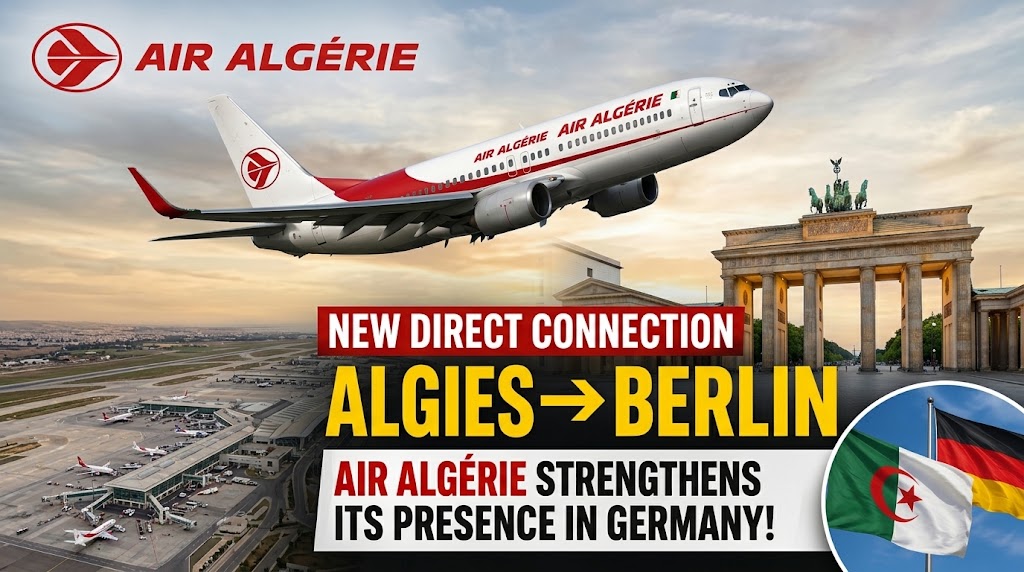
Air Algérie: A new direct link between Algiers and Berlin

Air Algérie: A new direct link between Algiers and Berlin

Algeria Gate: Good news for travellers and the Algerian community in Germany. Air Algérie will launch from September 14th 2026 a new direct link between Algiers and Berlin, at the rate of one weekly flight.

This new service will make it possible to reach the German capital without a stopover, thereby facilitating family, professional and tourist travel between the two countries.

The launch of this route forms part of Air Algérie’s strategy aimed at strengthening its international network and meeting the expectations of the Algerian community established in Germany.

#Air Algérie#Algeria#Germany
Author
Lys Iwannughen
View my articles
Algeria
Share this post

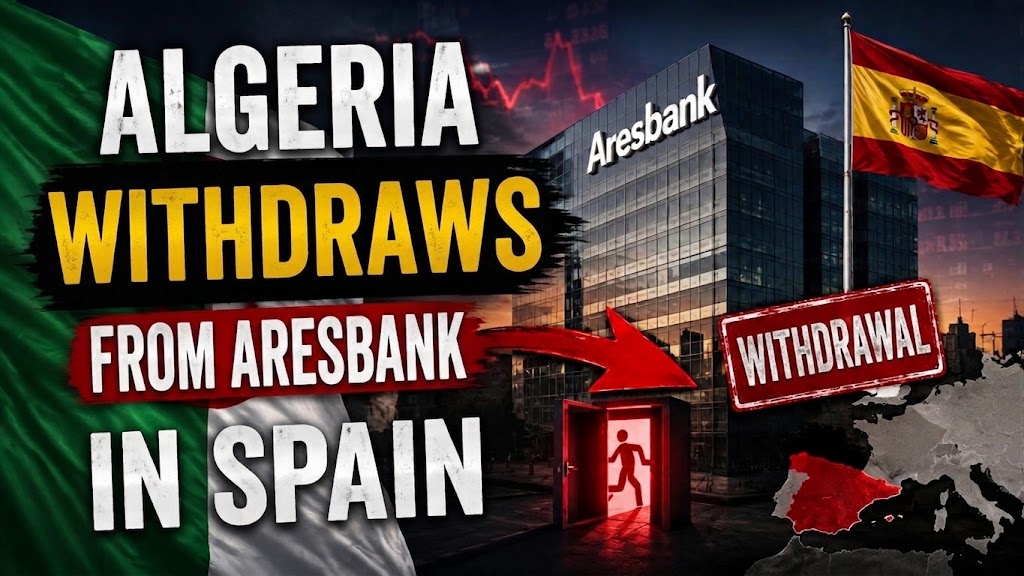
Algeria withdraws from Aresbank in Spain

Algeria withdraws from Aresbank in Spain

Algeria Gate: The Crédit Populaire d’Algérie (CPA) has sold its stake in the capital of Aresbank, a Spanish bank specialising in particular in the financing of international trade between Spain, North Africa and the Arab world. The operation, recorded at the end of July 2026, ends the Algerian presence in the capital of the Madrid-based institution.

The CPA’s holding was, however, very limited: the Algerian public bank held only 0.14% of the capital, against 99.86% for the Libyan Foreign Bank, also owned by the Libyan State. With this withdrawal, the Libyan bank thus becomes the sole shareholder of Aresbank.

A bank oriented towards international trade

Founded in 1975, Aresbank has specialised in international trade operations, particularly between Spain and Arab countries, as well as in interbank operations.

The institution is also posting improving results. In 2025, Aresbank recorded a profit of 16 million euros, up 21% year-on-year, while its loan portfolio reached approximately 733.3 million euros. The number of operations processed also rose by 25%.

The bank is currently pursuing an expansion strategy in Spain, with notably the recent opening of a branch in Valencia, in addition to its establishments in Madrid, Barcelona and Bilbao. It also plans to develop new products, particularly in the field of Islamic finance.

A withdrawal that comes in a particular context

The CPA’s decision comes at a time when relations between Algiers and Madrid are experiencing a phase of rapprochement after several years of diplomatic tensions.

Spanish Prime Minister Pedro Sánchez visited Algiers in July 2026 with the aim of relaunching cooperation between the two countries in several areas, notably energy, trade, investment and judicial cooperation.

The CPA’s withdrawal from Aresbank therefore does not signify a general disengagement by Algeria from Spain. It is above all an operation concerning a very minority stake in a bank whose control was already largely held by Libya.

With this disposal, Aresbank is now fully controlled by the Libyan Foreign Bank, while the CPA ends a presence in the capital that represented only 0.14%.

#Algeria#CPA#Spain
Author
Lys Iwannughen
View my articles