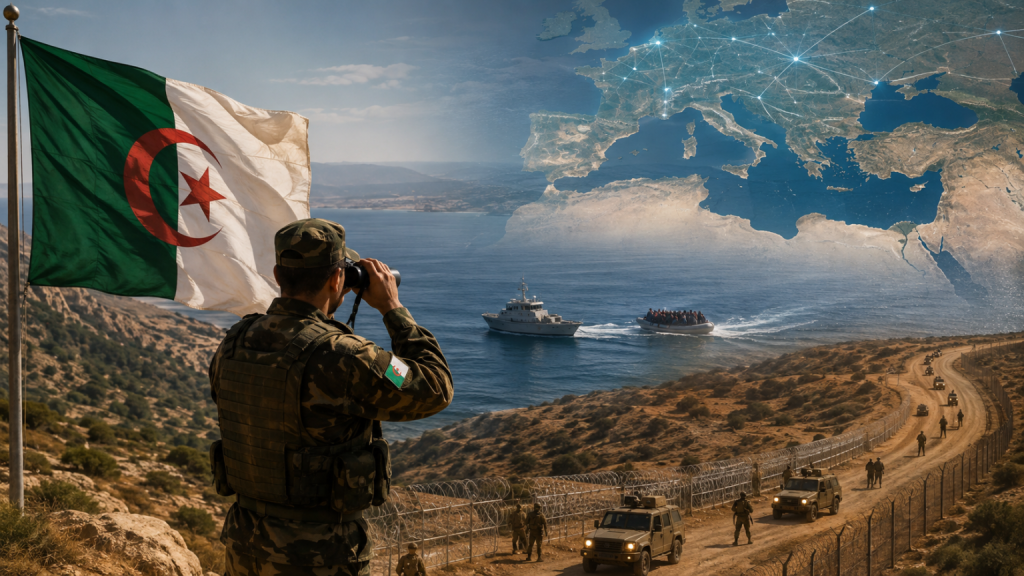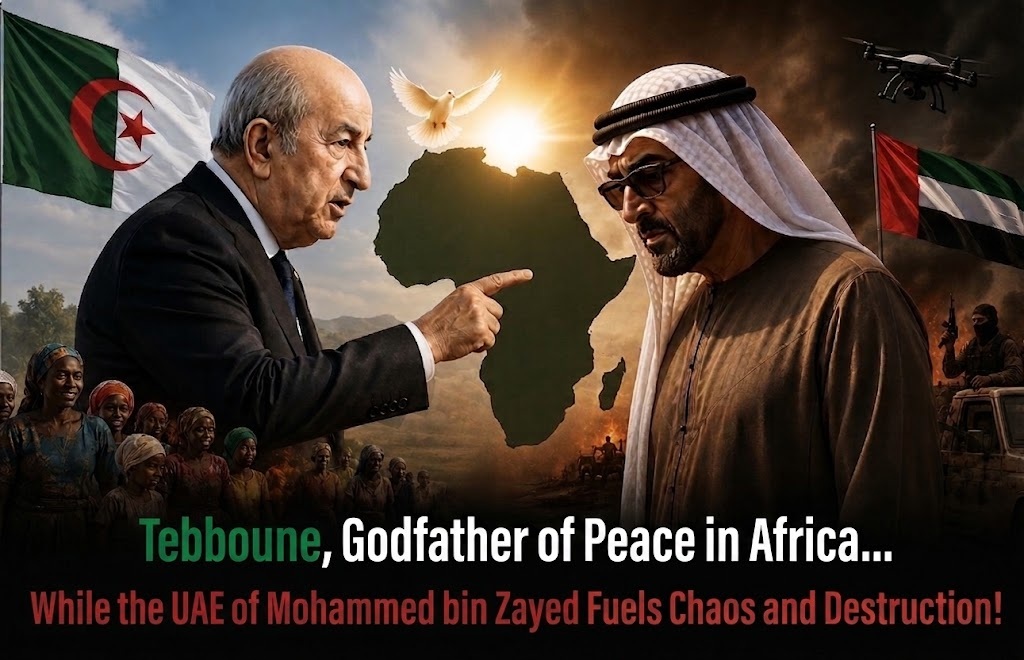
Algeria Gate: Two years ago, the warnings issued by Algerian President Abdelmadjid Tebboune, who was among the first to expose the true face of the UAE’s destructive role in the Sahel region, were not mere political rhetoric or populist posturing. They reflected a precise reading of the dangers posed by the expansion of Emirati money and influence in the region.
As international investigations have continued to unfold, the outlines of these networks have become increasingly clear, matching President Tebboune’s warnings about the threat Abu Dhabi poses to the African Sahel. The most recent evidence came from Britain’s Daily Telegraph and Financial Times, which exposed the UAE of Mohammed bin Zayed over its role in bringing in mercenaries and financing armed conflict in Libya and Sudan, in addition to suspicious activities affecting the Sahel region.
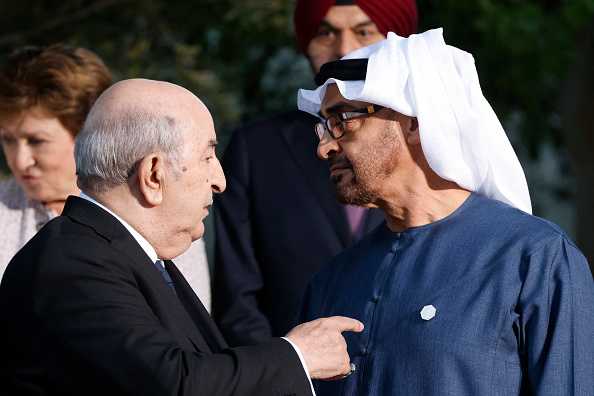
The Daily Telegraph‘s investigative report revealed the existence of a network of secret Emirati camps in eastern and southern Libya, which the paper said are used to train fighters and mercenaries, including members of Sudan’s Rapid Support Forces militia, in the use of drones and heavy weapons. This development highlights the danger of turning Libyan territory into a rear base for training fighters and redistributing them to regional flashpoints. Meanwhile, the Financial Times, in an extensive investigation, detailed a network for recruiting and transporting around two thousand Colombian fighters to Sudan to fight alongside the Rapid Support Forces, through a company called GSSG, based in the UAE.
This information has renewed attention to the warnings issued by President Tebboune regarding the role played by the UAE in igniting tensions around Algeria’s periphery, turning the crises of Sahel countries into open arenas for influence, mercenaries, and arms trafficking.
President Tebboune: “Patience Has Its Limits”
President Tebboune sent clear messages to those lying in wait for Algeria; an apparent reference to the UAE, affirming that the patience of the Algerian state is not limitless, and that its history and the price of its independence make it immune to blackmail and threats. The President said: “To whoever is still lying in wait for us, patience has its limits. Algeria paid more than 5 million martyrs for its freedom, and whoever wants to take the risk can try approaching Algeria,” stressing that whoever allocates vast sums of money for sabotage and stirring strife “is cursed.”
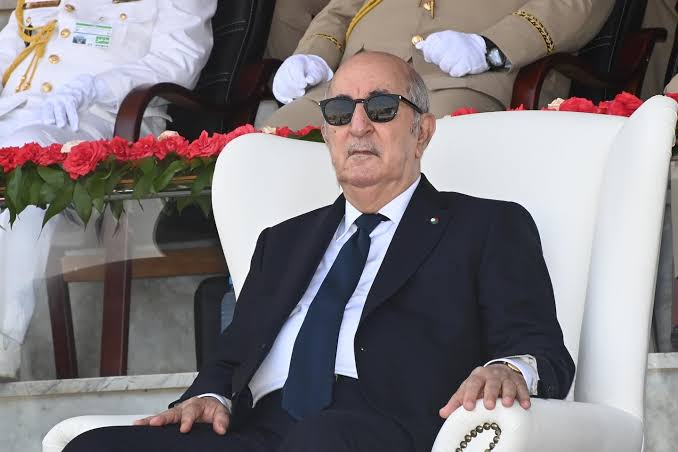
In an even more explicit statement, Tebboune affirmed that this unnamed small state, which engages in hostile actions against Algeria wherever conflict exists, always has its money present in neighboring countries — Mali, Libya, and Sudan. He added: “We harbor no hostility toward anyone, because we need God Almighty and the Algerian people. We want good relations with everyone, but for whoever wants to attack us, patience has its limits.”
Warmth Returns to Diplomatic Relations on the Algeria–Mali Axis
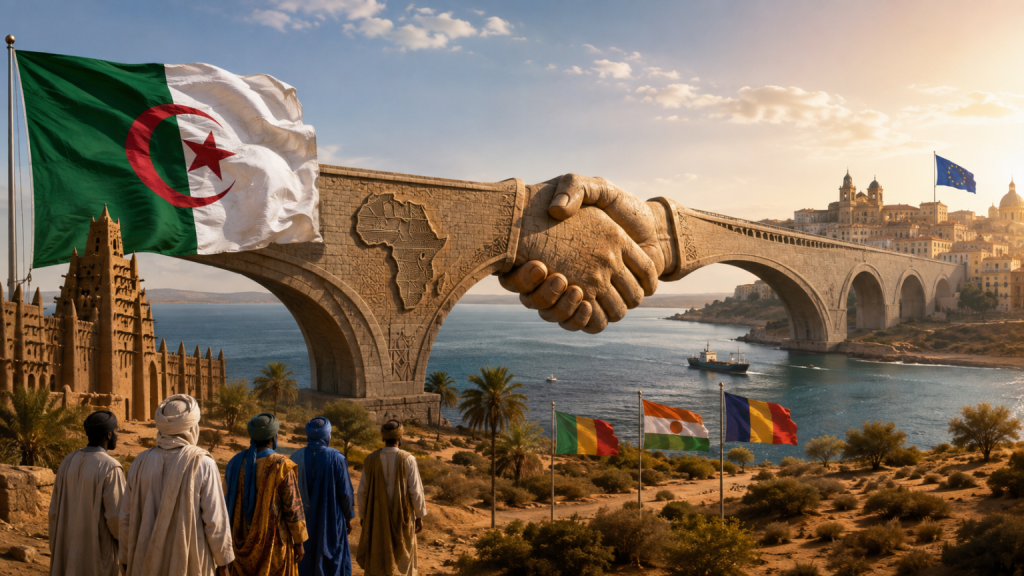
In contrast to the UAE model; built on pumping money into conflict zones and feeding mercenary networks, Algeria, under the leadership of Abdelmadjid Tebboune, who succeeded in keeping the specter of war away from the Sahel region through his skill and sound diplomacy, is pursuing an entirely different approach toward the Sahel: one based on political dialogue, rejection of interference in the internal affairs of states, support for stability, and opening the way for economic partnerships capable of creating shared interests instead of turning the region into a market for weapons and mercenaries.
Thus, President Tebboune called on the Malian authorities to engage in dialogue with the Malian people, affirming the deep bonds of brotherhood, history, and neighborliness linking Algeria and Mali; a step aimed at removing the specter of confrontation from the region and restoring communication channels to their political track.
Algeria Resets the Sahel’s Cards
Algeria has reset the Sahel’s cards through a broader diplomatic and economic approach, after having managed the period of tension with Mali while maintaining its presence in the region, alongside strengthening relations with neighboring countries and opening new avenues for economic cooperation.
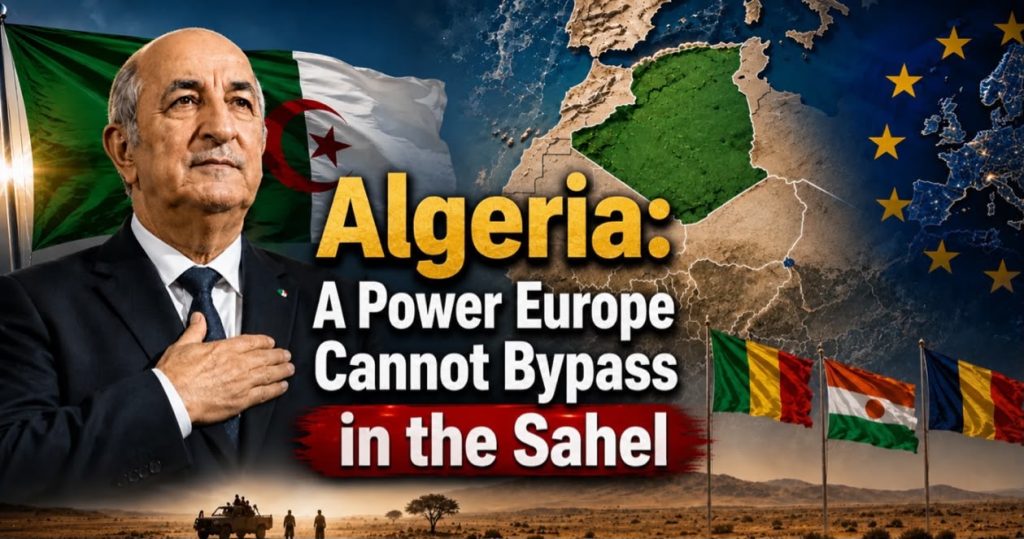
Economically, Algeria is betting on turning its geographic depth and strategic location into tools of soft and sustainable influence, through regional connectivity, energy, and infrastructure projects; foremost among them the Trans-Saharan Gas Pipeline project linking Nigeria to Algeria via Niger, which opens the door to linking the interests of regional countries through long-term development projects.
Algeria is also seeking to expand its partnerships with Niger, Chad, Nigeria, and other Sahel countries through cooperation in energy, infrastructure, and trade, based on the conviction that the region’s security cannot be built through mercenaries and drones, but rather through development, stability, and the creation of shared economic interests.
As the details of recruitment, financing, and movement networks across the Sahel and North Africa continue to come to light, Tebboune’s warnings stand out more than ever. Algeria does not view what is happening in Mali, Libya, and Sudan as separate crises, but as part of a highly sensitive security environment that, if exploited through money, weapons, and mercenaries, could become a direct threat to the stability of the entire region.
Hence Algeria’s emphasis that the Sahel needs dialogue, development, and economic partnerships, not projects of influence and chaos, and that Algeria’s own security also begins with fortifying its regional surroundings against powers seeking to turn its crises into instruments of leverage and bargaining.