Sunday, 18 October 2026 • 18:45 Algiers time
Algeria Gate
News Room
Cameron Hudson: UAE is virtually the sole backer of the RSF..without its support the war in Sudan would not continue Algeria-Niger: Official launch of Trans-Saharan fibre optic link Five minutes of lament over Algeria: Amar Belani exposes CNEWS’s real obsession Algerian courts hand down first death sentences under new drugs law Ségolène Royal’s masterclass on Algeria against an ignorant and demagogic journalist President Tebboune and senior officials receive the remains of Boualem Boualem in Algiers NAPEC 2026 in Oran: Algeria at the Heart of Africa’s and the Mediterranean’s New Energy Landscape Pegasus Files: Amnesty Uncovers Morocco’s Espionage Against Spain President Tebboune Orders Salary Increases in Algeria’s 2027 Budget, Rules Out New Taxes on Citizens Algeria Emerges as a Trusted Power for Regional Peace and Stability
Share this post

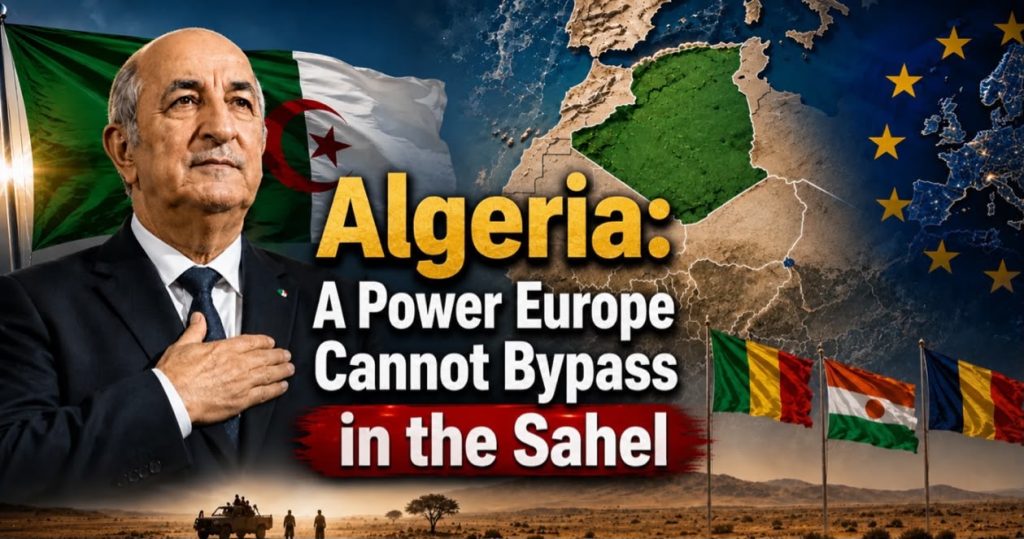
Algeria: A Power Europe Cannot Bypass in the Sahel

• Author: Lys Iwannughen • 0 comments • 71 views
Algeria: A Power Europe Cannot Bypass in the Sahel

Algeria Gate: The rapid transformations in the Sahel no longer allow Europe to treat Algeria as merely a neighboring country to the region or a traditional partner on energy and migration files. With the decline of direct European presence, shifting power balances, and the rise of new international actors, Algeria has imposed itself as a difficult number in any calculations related to Sahel security and the future of the region.

Algeria does not only possess an exceptional geographic position that makes it the northern gateway to the Sahel; it also combines African depth, security expertise, diplomatic weight, and a network of relationships that allow it to communicate with multiple parties, including those whose relations with European capitals have become more complicated.

In this equation, Europe faces a reality that is hard to ignore: one may differ with Algeria politically, but it cannot be bypassed geographically, security-wise, or strategically.

The Sahel Is Changing… and Europe Is Recalculating

In recent years, the Sahel has undergone deep transformations that overturned many of the equations that once governed the region’s relationship with Western powers. French influence has declined, direct European military presence has receded, while countries in the region have sought new partnerships, and Russia has emerged as an influential actor on the security and political scene.
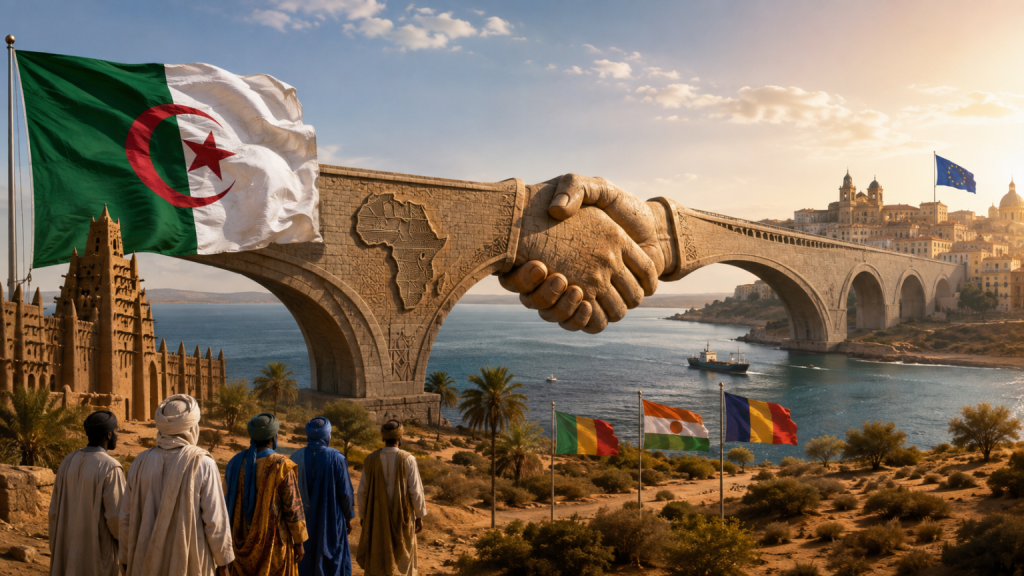
Algeria: A Power Europe Cannot Bypass in the Sahel

This reality has placed Europe before a real dilemma: how to protect its interests in a region where it has lost a significant part of its traditional tools of influence. Here, Algeria stands out as a country that possesses what some external powers lack: geography, relationships, and the capacity for communication.

Algeria… A Bridge Europe Cannot Bypass

One of Algeria’s most important strengths lies in its ability to engage with Sahel countries from the position of a neighboring African state, rather than that of an external power.

At a time when channels of communication between some European capitals and Sahel authorities have become more difficult, Algeria maintains deep political, security, and geographic ties with the region. In this context, Algeria can play a role that goes beyond traditional mediation: it is capable of serving as a channel for dialogue, an important party in security arrangements, or a partner in addressing regional crises, without necessarily becoming subordinate to any international power. This grants Algerian diplomacy a wide margin of maneuver.
Algeria: A Power Europe Cannot Bypass in the Sahel

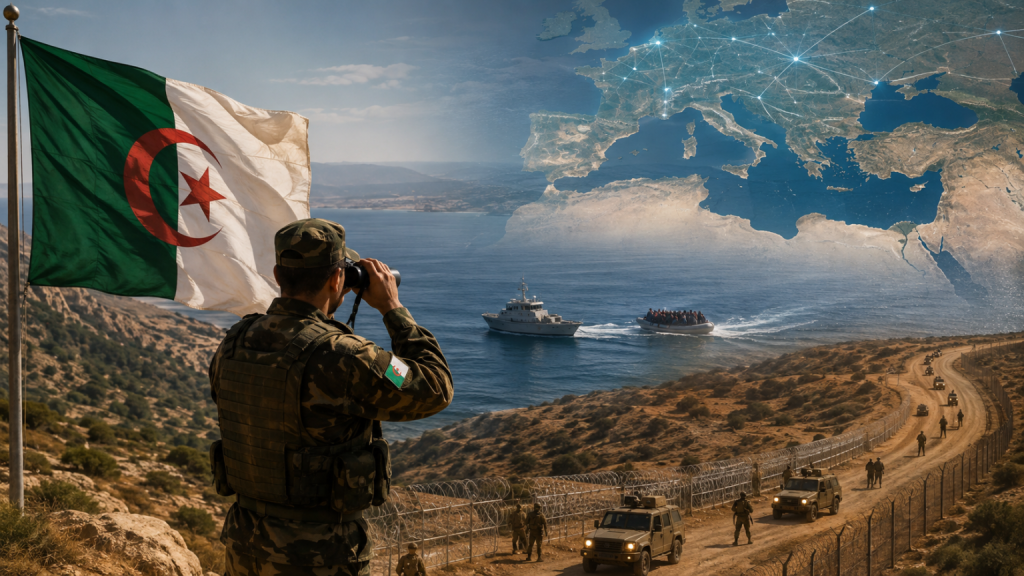
In August 2026, this role re-emerged with the arrival of four Algerian helicopters in Niger within the framework of defense cooperation—a step that reflects Algeria’s continued engagement in its immediate security environment, but through the gateway of cooperation with the countries of the region themselves.

The message here goes beyond the value of the military assistance. Algeria is saying, in practical terms, that it wants Sahel security to be part of the responsibility of the region’s own states, while keeping regional cooperation open to international partners.

European Security Begins South of the Mediterranean

For Europe, the importance of the Sahel does not stop at the borders of the African continent. Armed groups, organized crime networks, human and drug trafficking, and irregular migration are all issues whose effects can move from the Sahel to North Africa and then to the Mediterranean.

Consequently, any European strategy for Mediterranean security cannot be separated from security developments south of the Sahara. Here, Algeria, by virtue of its borders and location, becomes part of the equation.

Algeria has extensive land borders with the Sahel region and has for years dealt with security challenges linked to its southern frontiers. It has also accumulated significant experience in combating terrorism and armed groups.

For Europe, this expertise represents added value at a time when it is searching for a new approach to Sahel security after the decline of the model of direct military intervention.

Migration… Another Card That Makes Algeria Essential

Another factor of no less importance is migration. Europe views the Sahel as one of the main sources of demographic and security pressures reaching the Mediterranean.

But addressing migration does not begin on European shores; it begins in the countries of origin and transit, foremost among them the Sahel and North African states. From this perspective, cooperation with Algeria becomes part of any serious European strategy to curb irregular migration.

Algeria is not merely a transit country. Its location makes it an influential party in the Mediterranean security equation, and its relations with neighboring countries give it the ability to understand the transformations taking place south of the Sahara in a direct manner.

The German National… An Example of the Value of Algeria’s Role

The recovery of the German national who was kidnapped in Niger provides a practical example of the kind of role Algeria can play. The issue is not only about a German citizen returning to his country; it reveals that a European state can find in Algeria a party capable of operating within a complex security environment in the Sahel.

Here, a different value of Algerian diplomacy becomes apparent, not merely in issuing statements or proposing political initiatives, but in possessing the capacity to act when crises become more complicated.


#Algeria#Europe#Sahel
Author
Lys Iwannughen
View my articles

Leave a comment

Your email address will not be published. Required fields are marked *

African coast
Share this post

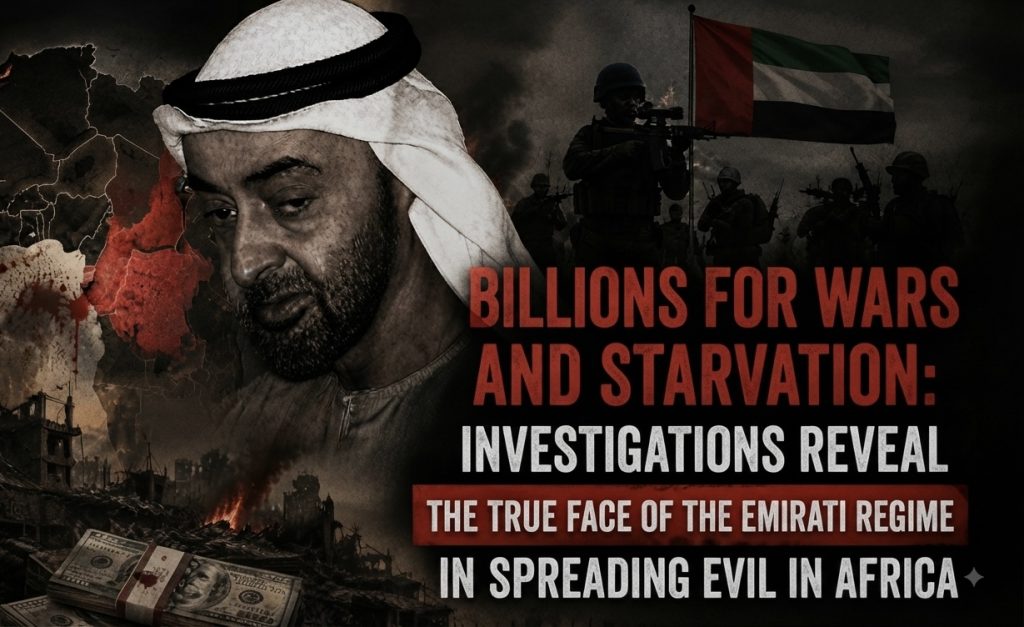
Tebboune Warned Two Years Ago… Billions for Ruin and Mercenaries for Bloodshed: Investigations Reveal the True Face of the Evil Statelet in Africa

Tebboune Warned Two Years Ago… Billions for Ruin and Mercenaries for Bloodshed: Investigations Reveal the True Face of the Evil Statelet in Africa

Algeria Gate: Long before networks of gold, ports, and foreign fighters in Africa drew international investigations, sanctions, and political action, President Abdelmadjid Tebboune had already identified external interference in the continent’s conflict zones as one of the gravest threats to African sovereignty. As early as 2024 he sounded the alarm.

More than two years later, a Financial Times investigation published in August 2026, together with Human Rights Watch reports, U.S. sanctions, and European Parliament moves, has brought those warnings into sharp focus. The figures are stark: more than $168 billion in announced Emirati investments in Africa since 2017, hundreds of tons of African gold flowing through opaque channels, and networks that, according to the British newspaper, funneled around 2,000 Colombian fighters into Sudan to fight alongside the Rapid Support Forces.

Tebboune Warned Two Years Ago… Billions for Ruin and Mercenaries for Bloodshed: Investigations Reveal the True Face of the Evil Statelet in Africa

The chronological comparison is striking. In March 2024, President Tebboune spoke of interference by an unnamed Arab state, noting that its money was present wherever conflicts existed in Mali, Libya, and Sudan, and warning that “patience has limits.” The president did not name the UAE explicitly, which requires a journalistic distinction between his official position and the subsequent linkages drawn by Algerian and international media. Yet subsequent developments have made the core of his reading more present, as international institutions and newspapers began documenting the interweaving of money, ports, resources, security, and fighter networks across a number of African flashpoints.

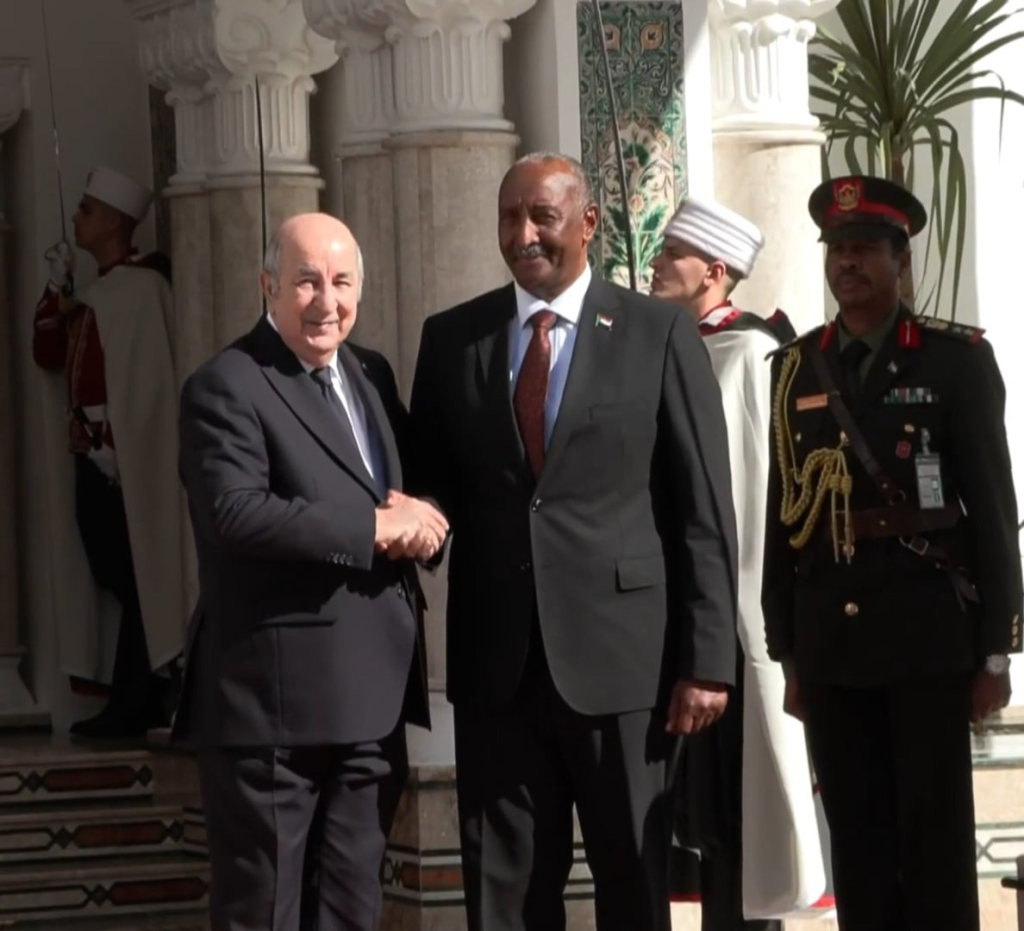
What stands out in this sequence is the forward-looking nature of the approach adopted by President Abdelmadjid Tebboune toward the continent. He did not treat African crises as isolated security files, but early on linked external interference to the persistence of conflicts and the weakening of states’ ability to control their decisions and wealth. Sudan was among the files in which this position appeared most clearly, when Tebboune, while receiving Sudanese Sovereign Council Chairman Abdel Fattah al-Burhan in January 2024, affirmed Algeria’s standing with Sudan and stressed the need to address internal conflicts far from foreign interference, before returning in May of the same year to warn of the widening of external interventions in the crises of Sudan, Libya, and Yemen.

Tebboune Warned Two Years Ago… Billions for Ruin and Mercenaries for Bloodshed: Investigations Reveal the True Face of the Evil Statelet in Africa

What Tebboune Warned About in 2024 Returns with Heavy Figures

More than two years after those warnings, the Financial Times published on August 4th, 2026 an extensive investigation into the Emirati presence in Africa, presenting a picture that goes beyond traditional investment to a broad network of interests in ports, mining, agriculture, energy, and logistics. According to data from fDi Markets affiliated with the newspaper, the announced value of Emirati projects on the continent has exceeded $168 billion since 2017, with the caveat that part of these sums represents announced projects that do not all necessarily translate into executed investments. Examples cited in the investigation include a $10 billion wind power plant in Egypt, a $4 billion oil refinery in Uganda, and a $1.2 billion port project in Senegal.

At the heart of part of this expansion moves the International Holding Company group, whose market value according to the Financial Times is around $240 billion, with investments in copper in Zambia, gold in the Democratic Republic of the Congo, Ethiopia, and Mali, and iron in Mauritania. Yet the importance of this map does not stop at the volume of funds deployed, because the nature of the targeted assets gives the investment a weight that exceeds direct financial return. Ports, maritime corridors, mines, and agricultural land are not ordinary commercial facilities; they are nodes that control the movement of goods, raw materials, and supply chains.

Tebboune Warned Two Years Ago… Billions for Ruin and Mercenaries for Bloodshed: Investigations Reveal the True Face of the Evil Statelet in Africa

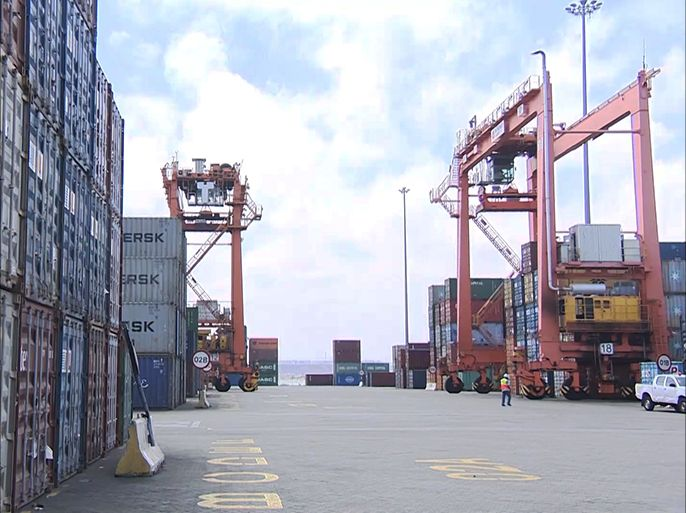
DP World and Abu Dhabi Ports operate or develop ports, inland terminals, and free zones in 13 African countries, while DP World’s logistics and distribution networks have expanded to more than 25 countries after additional acquisitions in South Africa and Nigeria. The case of the Port of Berbera in Somaliland illustrates the nature of this interweaving: DP World injected around $450 million into the port and related infrastructure, including a road connecting to Ethiopia, at a time when the commercial concession was accompanied by a separate agreement granting the UAE use of military facilities and a nearby airstrip.

Here the Algerian vision defended by President Tebboune acquires a deeper dimension, because sovereignty in this reading does not stop at political borders but extends to the ports, corridors, facilities, and resources that control a state’s ability to manage its economy. Foreign investment can constitute a necessary lever for development, but its value for the host state is tied to its capacity to build local capabilities while keeping sovereign decision-making and core wealth under its control.

Tebboune Warned Two Years Ago… Billions for Ruin and Mercenaries for Bloodshed: Investigations Reveal the True Face of the Evil Statelet in Africa

$168 Billion… When Investment Becomes Larger Than a Deal

The British investigation thus poses a question larger than the volume of investment itself: the dividing line between capital that builds infrastructure and capital that grants its owner instruments of influence that go beyond the commercial project. This question aligns with the approach adopted by President Tebboune in his relationship with Africa, where he has consistently emphasized that the continent’s partnerships should serve its development while at the same time preserving the independence of its decision-making.

The sensitivity of the issue becomes clearer when looking at statements by Eritrean Information Minister Yemane Gebremeskel, who criticized before the Financial Times what he described as an Emirati ambition to control the region, considering that the path began with ports in East Africa and then expanded toward power projection and resource exploitation. Ethiopian researcher Mehari Taddele Maru also argued that the volume of resources deployed by Abu Dhabi can limit the ability of some African states to balance their relationship with it.

This reading does not mean that every Emirati investment necessarily carries a security or political dimension, nor does it allow gathering different projects into a single scheme without evidence. But it shows that control over sensitive assets such as ports, mines, and corridors can produce weight that exceeds the accounting value of the contract; precisely what makes the concept of economic sovereignty part of the discussion about Africa’s future.

Tebboune Warned Two Years Ago… Billions for Ruin and Mercenaries for Bloodshed: Investigations Reveal the True Face of the Evil Statelet in Africa

Africa’s gold is vanishing… and the value settles outside the continent

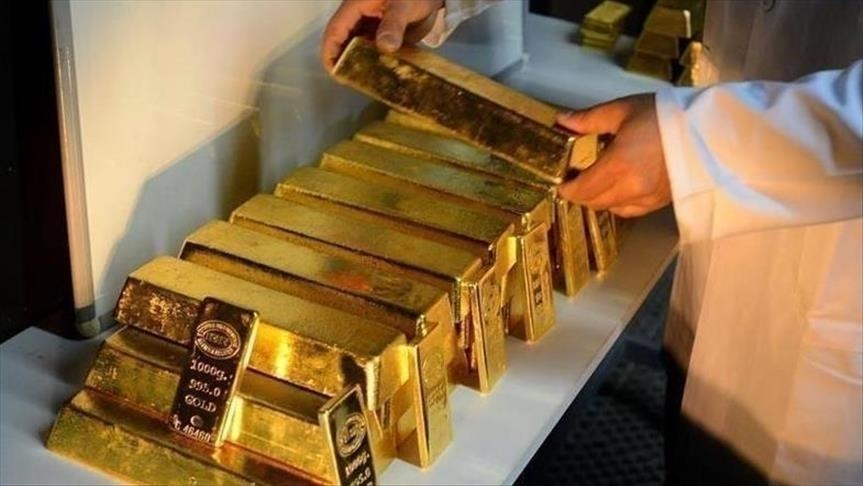
The question becomes sharper when the focus moves from ports to gold. A SWISSAID study covering 54 African countries estimated that no less than 435 tonnes of gold left the continent without authorization in 2022 alone, worth nearly $31 billion; more than a tonne per day, while gold smuggling from Africa more than doubled between 2012 and 2022.

The larger figure concerns the destination that received a major share of these flows. Between 2012 and 2022, the United Arab Emirates imported around 2,569 tonnes of African gold that were not recorded as exports in the original African countries, valued at approximately $115.3 billion. In 2022 alone, the UAE took 47% of the African gold exported abroad, compared with 21% for Switzerland and 12% for India.

The trend has not slowed since then: in 2024 the UAE imported about 748 tonnes of African gold, an 18% increase in one year, including 29 tonnes directly from Sudan, 18 tonnes from Chad and 9 tonnes from Libya. Its total global gold imports that year reached 1,392 tonnes, worth $105.4 billion.

Tebboune Warned Two Years Ago… Billions for Ruin and Mercenaries for Bloodshed: Investigations Reveal the True Face of the Evil Statelet in Africa

The UAE, for its part, says it has developed strict rules for responsible gold sourcing and anti-money laundering, and affirms that its trade is subject to oversight and international standards. Yet the data reported by SWISSAID continue to raise an economically critical question for the continent concerning the volume of revenues, taxes, and hard currency that producing countries lose when wealth leaves official channels, while links of added value, refining, trade, and re-export shift to centers outside Africa.

From this angle, the vision defended by President Abdelmadjid Tebboune regarding retention of sovereignty over resources appears more closely tied to the actual figures. Natural wealth does not achieve economic sovereignty merely by existing underground; it does so when the state can control its extraction, marketing, and collection of revenues, and retain a larger share of the value it generates.

From Ports to Battlefields

On August 15th, the Financial Times moved to a more sensitive level when it published an investigation into a network it said had delivered around 2,000 Colombian fighters to Sudan to fight alongside the Rapid Support Forces. The investigation was based on interviews with seven fighters, travel records, flight lists, photos, videos, and device- and communications-tracking data. The fighters said the entity that brought them into the network was Global Security Services Group, based in the UAE. The company, according to the newspaper, did not respond to requests for comment.

Tebboune Warned Two Years Ago… Billions for Ruin and Mercenaries for Bloodshed: Investigations Reveal the True Face of the Evil Statelet in Africa

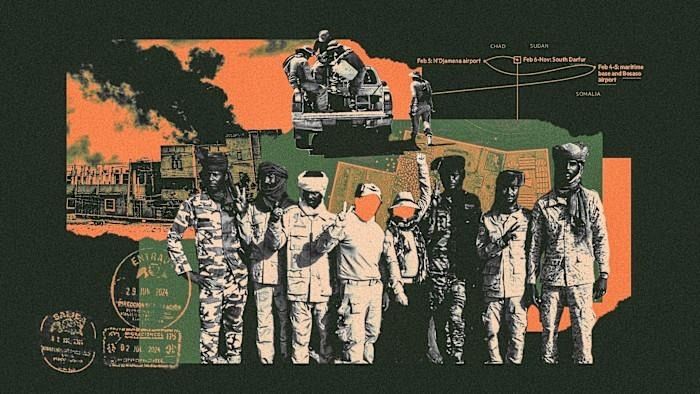
The journalistic investigation was not the first to raise the issue. In May 2026, Human Rights Watch published an 83-page investigation concluding that hundreds of Colombian military contractors had been recruited since 2024 by private companies and had passed through military facilities in Ghayathi and Al Wathba in Abu Dhabi before moving to Sudan via a network that includes eastern Libya, Bosaso in Somalia, and N’Djamena in Chad.

The organization relied on interviews with former contractors, a former GSSG employee, witnesses from El Fasher, company documents, official licenses, and geolocated photos and videos. It concluded in its assessment that the use of Emirati government facilities and the company’s ties to high levels of authority point to a state-backed operation. The UAE rejects this conclusion and denies providing military or financial support to the Rapid Support Forces.

According to the Financial Times investigation, the first Colombian battalion arrived in October 2024 and contributed to establishing a supply corridor through eastern Libya toward Darfur, while another contingent passed through the Bosaso base. One fighter said around 300 specialists received training between January and October 2025 on drones and air defense inside the UAE before being sent to Sudan. The newspaper also supported this pathway with a digital analysis by Conflict Insights Group of device data that appeared in the UAE, then Bosaso, Nyala, and El Fasher.

Here President Tebboune’s warnings return to the heart of the scene. Without attributing to him what he did not say or claiming that the investigations proved the identity of the state he meant, it remains clear that the president placed, as early as 2024, the danger of external money transferring into conflict zones among the priorities of his reading of the African situation; before financing, recruitment, and military transport networks later became documented international files.

2,000 Fighters… Investigations Go Beyond the Limits of Journalism

By the end of 2025, the file was no longer confined to journalism and human-rights organizations. On December 9th, the U.S. Treasury Department’s Office of Foreign Assets Control imposed sanctions on four individuals and four companies it said formed a cross-border network for recruiting former Colombian military personnel on behalf of the Rapid Support Forces, covering infantry, artillery, drone and vehicle operations, and training. The Treasury identified Álvaro Andrés Quijano Becerra, a retired Colombian officer residing in the UAE, as a central figure in the recruitment and deployment process, before sanctions expanded during 2026 to include other figures and entities linked to the network.

Tebboune Warned Two Years Ago… Billions for Ruin and Mercenaries for Bloodshed: Investigations Reveal the True Face of the Evil Statelet in Africa

On July 9th,2026, the file moved to a European political level when the European Parliament adopted a resolution on Sudan by 476 votes to 28 with 96 abstentions, calling for sanctions on those responsible for attacks on civilians and on external facilitators, naming Global Security Services Group, and calling for the addition of the Rapid Support Forces to the European Union’s list of terrorist organizations. It remains necessary to distinguish between the call and the actual measure, as the resolution was not an announcement of an already completed listing but a political demand for it to be taken.

In contrast, the UAE categorically rejects the accusations related to supporting the Rapid Support Forces and affirms that it has not provided weapons or military financing to any party in the Sudanese war, while stressing its support for a permanent ceasefire and a civilian-led political process. The Financial Times also reported an Emirati response stating that the authorities had conducted investigations into GSSG and concluded that it was not involved in mercenary activity in Sudan, and that Abu Dhabi denies facilitating the transit of foreign fighters or providing weapons to any party.

Tebboune Knew About  the Danger Before Its Features Became Clear

Amid this sequence, President Abdelmadjid Tebboune’s statements of March 2024 acquire a different weight. They came more than two years before the latest Financial Times investigation, before the detailed Human Rights Watch report, and before the expansion of the U.S. sanctions network and the political movement inside the European Parliament. This does not journalistically permit saying that a later investigation proved the identity of the state the president meant, because he did not name it officially. Yet it reveals that his early diagnosis of the danger of external money interweaving with conflicts preceded the appearance of a large body of data that later made the subject a matter of broad international follow-up.

Here lies the strength of President Tebboune’s forward-looking vision. He viewed African sovereignty as a single system in which security cannot be separated from the economy, nor political decision-making from resources, ports, and corridors. A state that loses control over the source of its wealth, the route of its exports, or its security decision may gradually lose part of its capacity to shape its policies freely, even without traditional military occupation or direct intervention.

From this standpoint, the Algerian line has remained based on rejecting external interference and pushing toward African solutions for African crises; an approach that prioritizes the survival of the national state, its institutions, and its ability to manage its resources away from interlocking networks of interests.

Tebboune Warned Two Years Ago… Billions for Ruin and Mercenaries for Bloodshed: Investigations Reveal the True Face of the Evil Statelet in Africa

Sovereignty First… The Algerian Vision for Africa

The significance of this approach increases when the figures are placed side by side. There are $168 billion in announced investments in Africa since 2017, $115.3 billion of unrecorded African gold upon export that reached the UAE over a decade, 748 tons of African gold imported by the UAE in 2024, alongside around 2,000 Colombian fighters discussed in the Financial Times investigation.

These figures alone do not prove the existence of a single scheme linking all the files, and the UAE denies the accusations related to supporting parties to the war in Sudan. Yet they reveal the scale of the space in which capital, resources, logistics, and security now move on the continent itself; making the question of sovereignty more urgent than a mere calculation of the volume of incoming investment.

Here the Algerian vision led by President Abdelmadjid Tebboune advances as a reading based on the premise that Africa needs investments and partnerships, but at the same time needs to ensure that its need for financing does not turn into a surrender of decision-making or resources. The investment most beneficial to the continent is the one that builds factories, ports, and infrastructure, generates jobs, and transfers technology, while keeping the state the final decision-maker over its resources and economic pathways.

Thus, President Tebboune’s position toward external interventions was not merely a diplomatic reservation linked to a political moment, but part of a broader conception of the continent’s future based on linking political independence, economic sovereignty, and control over resources. This is what makes his earlier warnings more significant when read today alongside what international institutions reveal about networks of gold, ports, and fighters.

Algeria did not wait for recruitment networks to become sanctions lists, nor for tons of unrecorded gold to become the subject of international studies, before placing the issues of sovereignty and non-interference at the heart of its African discourse. President Tebboune warned of the danger when a large part of its details was still far from the surface of international debate.

More than two years later, the picture taking shape from journalistic investigations, human-rights organizations, sanctions, and political decisions appears closer to the essence of what Algeria warned about early on: the continent needs not only to attract money, but to possess the capacity to set its terms, protect its wealth, control its corridors, and prevent conflicts from turning into open markets for financing, weapons, and fighters.

From this stems the broader forward-looking dimension of President Abdelmadjid Tebboune’s vision: Africa’s coming battle may not revolve around who holds the largest quantity of resources, but around who retains the decision when those resources turn into money, ports, logistics networks, and cross-border interests. In this equation, Algeria places sovereignty at the beginning, not at the end of the calculation.

#President tebboune#UAE
Author
Lys Iwannughen
View my articles
Algeria
Share this post

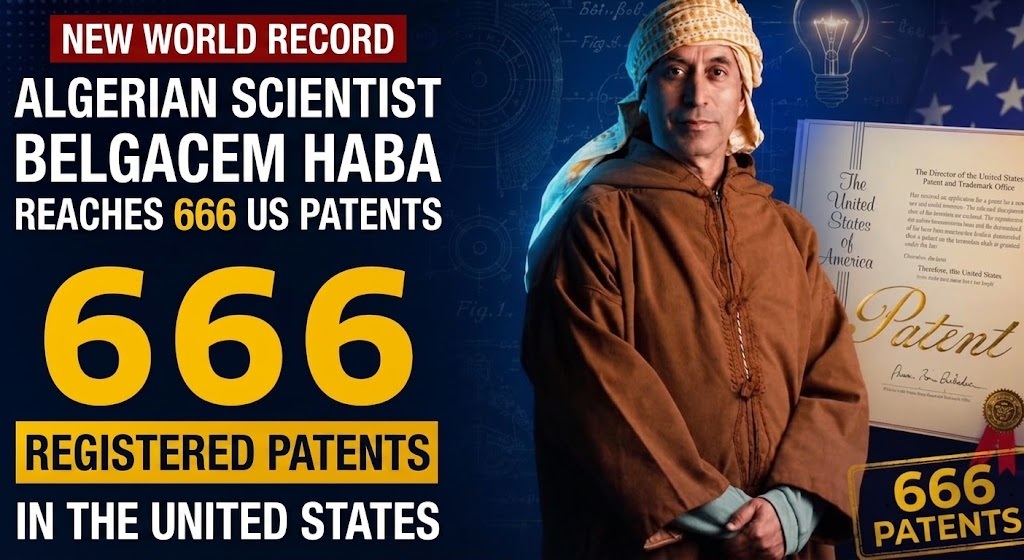
New World Record: Algerian Scientist Belgacem Haba Reaches 666 US Patents

New World Record: Algerian Scientist Belgacem Haba Reaches 666 US Patents

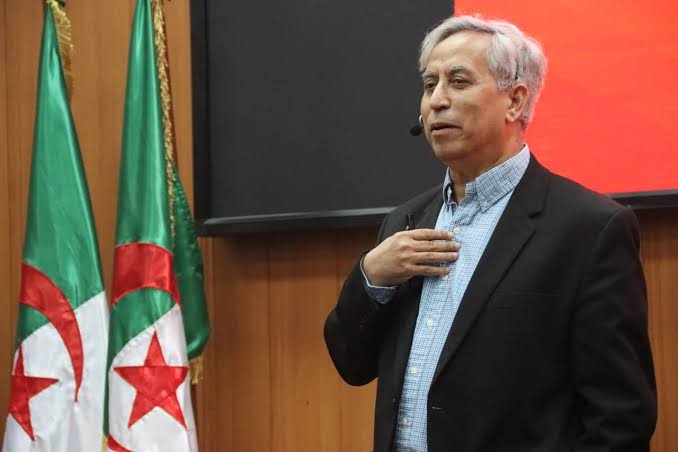
Algeria Gate: Algerian scientist and researcher Belgacem Haba has set a new milestone in his distinguished scientific career. The number of patents registered under his name in the United States has now reached 666, underscoring his leading presence in advanced technology and semiconductor innovation.

https://twitter.com/algatedzEng/status/2089033123421979130?s=20

The latest patent builds on Haba’s specialized work in developing advanced conductors and ultra-miniature magnetic coils embedded within semiconductors. These technologies are designed to boost the performance of electronic chips, especially by accelerating data transfer speeds and improving data handling inside smart chips.

New World Record: Algerian Scientist Belgacem Haba Reaches 666 US Patents

Haba’s innovations also prioritize greater efficiency in electronic components. By significantly reducing power consumption and heat generation within chips, his work supports the creation of more energy-efficient, high-performance technologies critical for next-generation electronics.

New World Record: Algerian Scientist Belgacem Haba Reaches 666 US Patents

Renowned for his research in microelectronics, semiconductors, and artificial intelligence, Belgacem Haba continues to strengthen Algeria’s footprint in the global innovation ecosystem. His extensive research career has already produced hundreds of US patents, placing him among the most prolific inventors in these cutting-edge fields.

Author
Lys Iwannughen
View my articles
Algeria
Share this post

Tebboune Dismisses Secretary-General of Algeria’s Ministry of Communication

Tebboune Dismisses Secretary-General of Algeria’s Ministry of Communication

Algeria Gate: President of the Republic, Abdelmadjid Tebboune has terminated the duties of the Secretary-General of the Ministry of Communication, Ilyas Bouriche.

https://twitter.com/algatedzEng/status/2089028201590763589?s=20

According to a statement from the El Mouradia Presidential Palace: “Today, The President of the Republic, Commander-in-Chief of the Armed Forces, and Minister of National Defense, Abdelmadjid Tebboune, has signed a presidential decree terminating the functions of Ilyas Bouriche, Secretary General of the Ministry of Communication.

#Algeria#President tebboune
Author
Lys Iwannughen
View my articles