

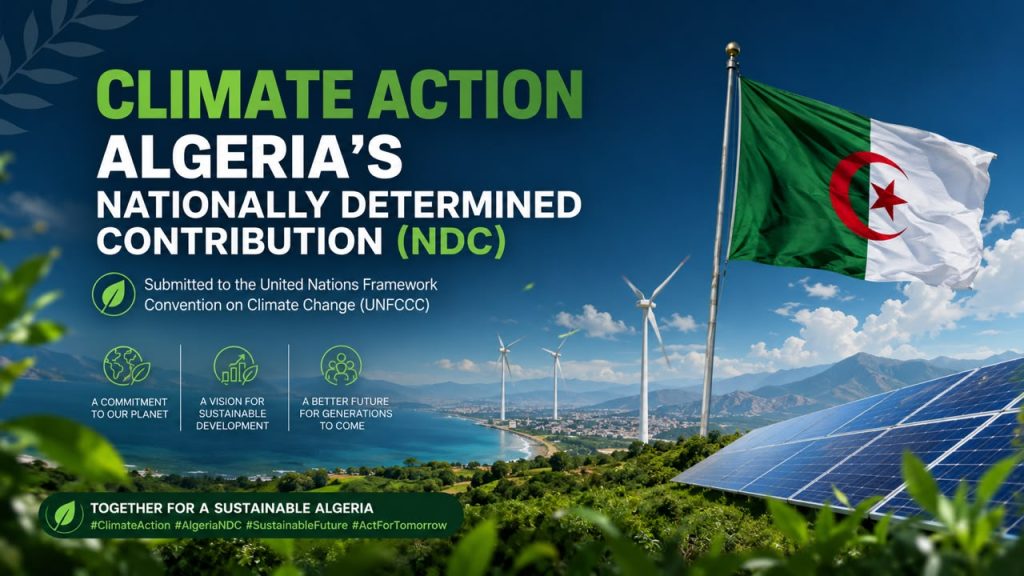
In a significant step reflecting its continued commitment to addressing climate change, Algeria has officially submitted its updated Nationally Determined Contribution (NDC) to the United Nations Framework Convention on Climate Change (UNFCCC), in line with its obligations under the Paris Agreement.
The announcement was welcomed by the European Union Delegation to Algeria and the German Agency for International Cooperation (GIZ), which described the submission as a major milestone in implementing Algeria’s climate commitments and advancing international cooperation on environmental protection.
The Nationally Determined Contribution is the official document through which countries outline their targets and strategies to reduce greenhouse gas emissions, strengthen climate resilience, and adapt to the impacts of climate change, with regular updates reflecting evolving national priorities and global climate objectives.
Algeria’s updated climate strategy focuses on several key priorities, including reducing greenhouse gas emissions, enhancing climate adaptation, improving sustainable water resource management, protecting forests and biodiversity, and accelerating the transition toward renewable energy and green hydrogen.
The submission builds on a series of reforms and initiatives launched by Algeria in recent years to promote sustainable development. These include expanding solar energy capacity, developing green hydrogen projects, improving energy efficiency, combating desertification through reforestation programs, and supporting a more diversified, low-carbon economy.
As one of Africa’s leading energy producers, Algeria is increasingly positioning itself as a regional hub for clean energy while maintaining its role as a reliable supplier of natural gas. The country’s climate strategy reflects its ambition to balance economic growth with environmental responsibility and contribute to global efforts to combat climate change.
The European Union and GIZ’s recognition of Algeria’s submission highlights growing international confidence in the country’s environmental agenda and opens new opportunities for technical cooperation, climate finance, and sustainable development partnerships aimed at building a more resilient and environmentally responsible future.