Thursday, 5 November 2026 • 17:57 Algiers time
Algeria Gate
Share this post

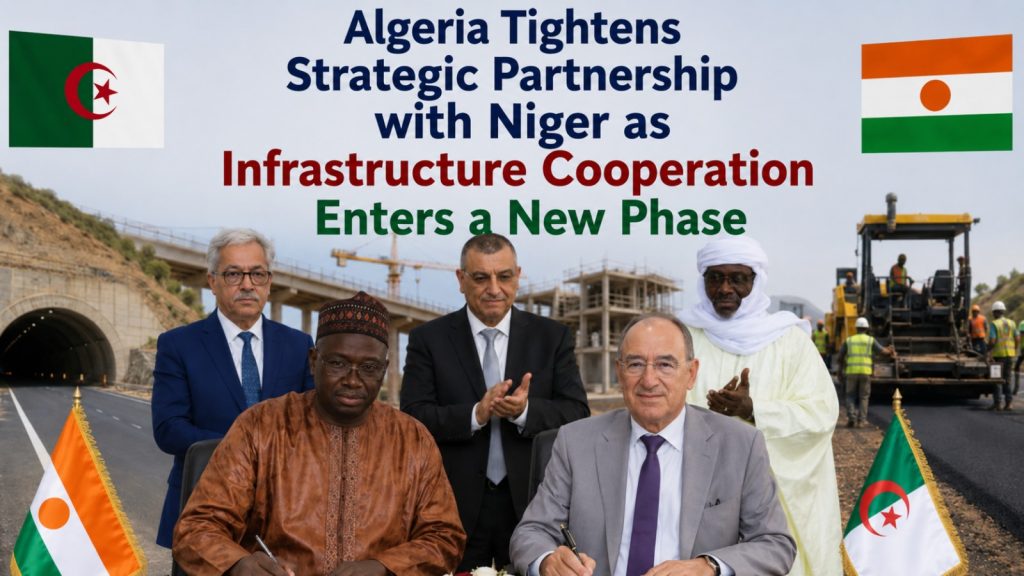
Algeria Tightens Strategic Partnership with Niger as Infrastructure Cooperation Enters a New Phase

• Author: Lys Iwannughen • 0 comments • 37 views
Algeria Tightens Strategic Partnership with Niger as Infrastructure Cooperation Enters a New Phase

Algeria Gate: Algeria and Niger are giving new momentum to their strategic partnership, this time through the public works and infrastructure sector, with a series of agreements and technical programmes designed to strengthen Niger’s institutional capabilities and expand the transfer of Algerian expertise.
Algeria Tightens Strategic Partnership with Niger as Infrastructure Cooperation Enters a New Phase

Far from being limited to routine technical cooperation, the latest developments reflect the broader dynamic taking shape between Algeria and its southern neighbour at a time when the Sahel is undergoing profound geopolitical and economic transformations.

The new push comes within the framework of implementing the outcomes of the second session of the Algerian–Nigerien Joint Great Commission, held in Niamey last March, and follows the commitments reached during the visit of Niger’s Minister of Equipment and Infrastructure, Salissou Mahaman Salissou, to Algeria last June.

Algeria and Niger translate political commitments into concrete projects

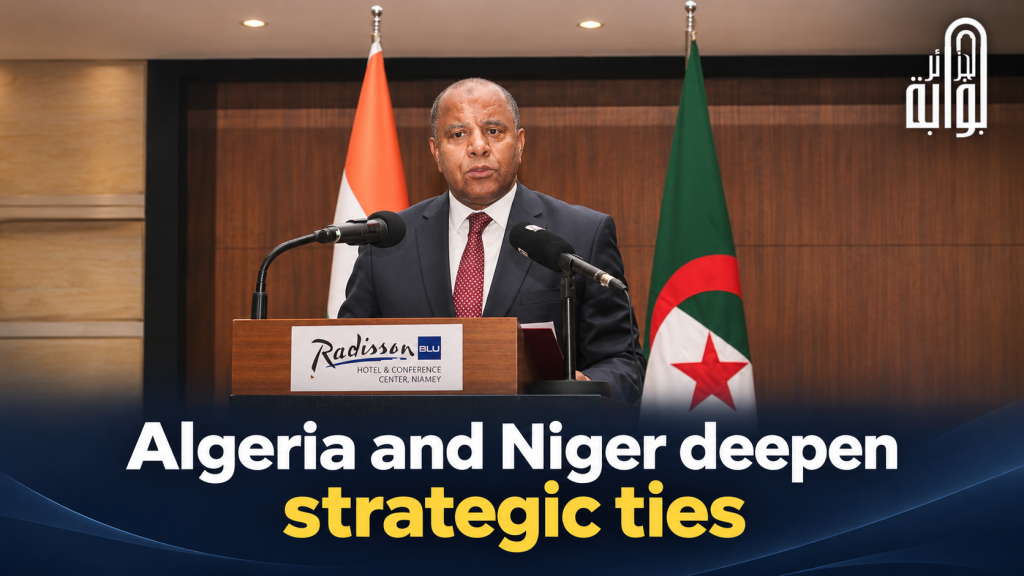
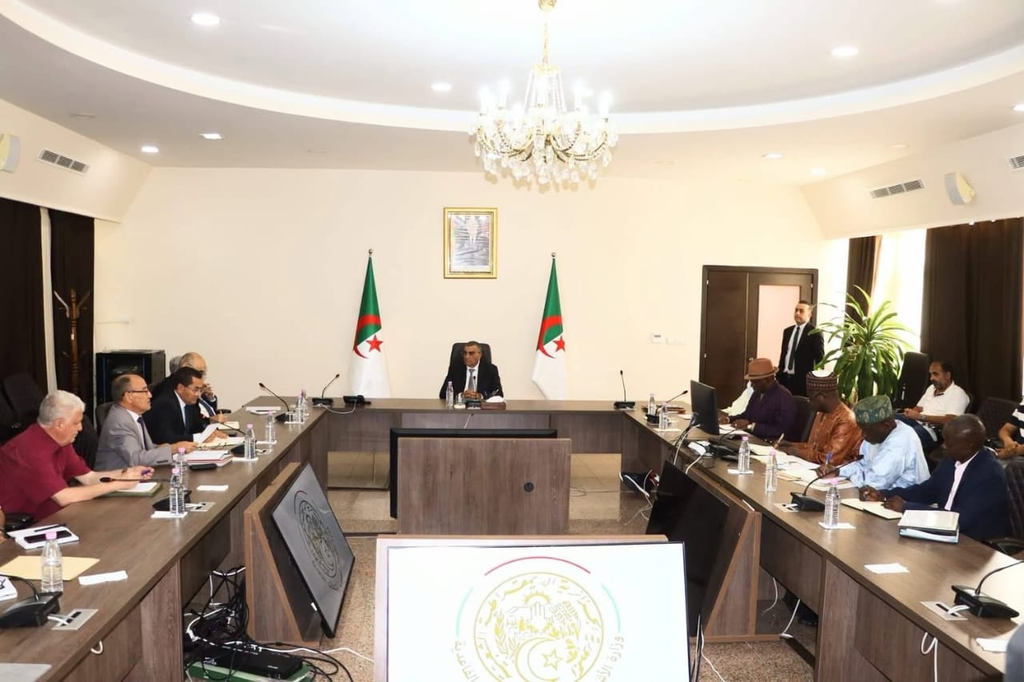
Against this backdrop, Abdelkader Djelawi, Minister of Public Works and Basic Infrastructure, received a high-level Nigerien delegation headed by Abdallah Ouma Ahmed, Secretary-General of Niger’s Ministry of Equipment and Infrastructure.

The delegation included senior officials and directors-general of laboratories within Niger’s equipment and infrastructure sector, underlining the increasingly technical and institutional dimension of the partnership between the two countries.
Algeria Tightens Strategic Partnership with Niger as Infrastructure Cooperation Enters a New Phase

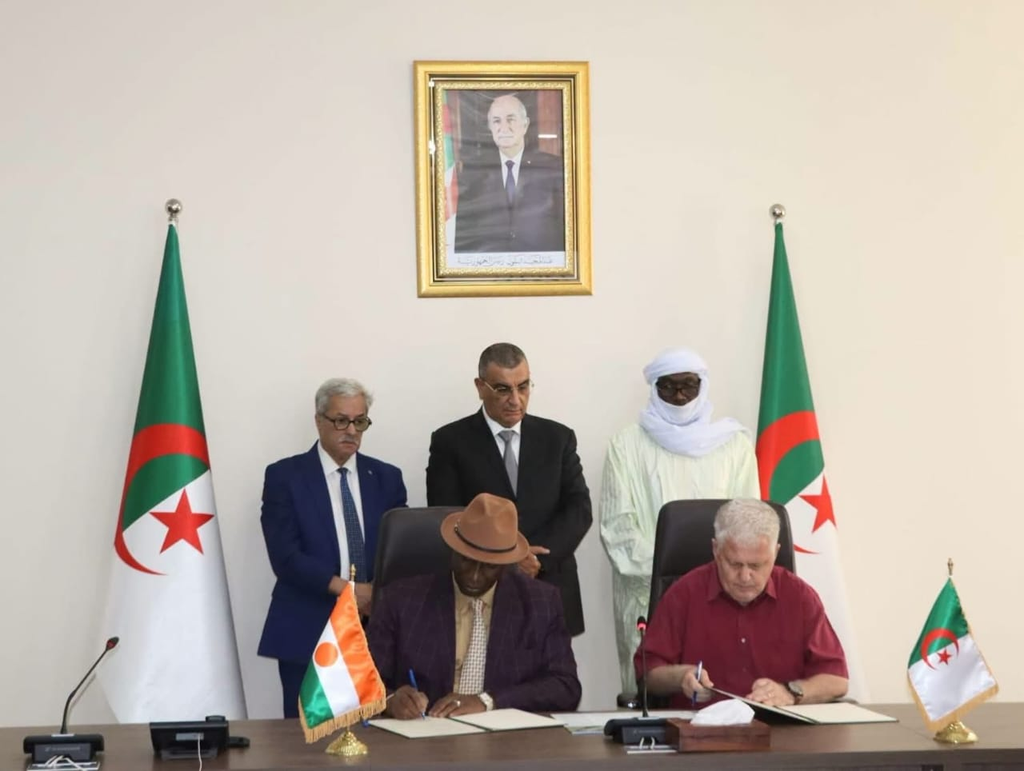
The discussions focused on translating the cooperation protocol signed in Niamey into concrete action, while reviewing the implementation of memoranda of understanding concluded between Algeria’s National Authority for Technical Control of Public Works (CTTP) and Central Public Works Laboratory (LCTP) and their Nigerien counterparts.

The objective is clear: move from political declarations to practical mechanisms capable of strengthening Niger’s infrastructure sector and building sustainable technical expertise.

Expertise transfer at the heart of Algeria’s approach

The two sides also examined prospects for expanding cooperation into new areas, with particular emphasis on technical training, institutional capacity-building and the exchange of expertise.

Several programmes were placed on the table, including a draft special agreement between the CTTP and Niger’s Public Works Quality Centre (CPTP), together with a joint action plan designed to structure and coordinate future cooperation.

A separate draft agreement was also discussed between Algeria’s Central Public Works Laboratory (LCTP) and Niger’s National Laboratory for Public Works and Construction (LNTPB), focusing on training and professional development.

In addition, the two countries examined a dedicated programme aimed at training Nigerien technical executives, reinforcing Algeria’s role as a partner in the development of specialized human resources and institutional expertise.

From the Sahel to infrastructure: a broader strategic equation

The consultations culminated in the signing of special agreements between the concerned laboratories and the adoption of the final version of the joint action plan.

Implementation has now moved onto the ground, particularly in areas involving the transfer of technical know-how, professional training and capacity-building across the public works and basic infrastructure sectors.

This shift from agreements to implementation is significant. For Niger, strengthening technical institutions and developing qualified personnel are essential components of its efforts to build resilient infrastructure and consolidate national development capabilities.

For Algeria, meanwhile, technical cooperation represents another avenue through which it can reinforce its ties with neighbouring Sahelian countries based on expertise, training and mutually beneficial development.

A partnership with regional implications

The growing Algerian–Nigerien cooperation comes at a particularly sensitive moment for the Sahel, where questions of sovereignty, infrastructure, economic development and regional partnerships have become increasingly intertwined.

Algeria has consistently advocated solutions centred on regional cooperation, development and the strengthening of the capacities of African states themselves. The expansion of cooperation with Niger in strategic technical sectors fits within this broader approach.

The latest agreements therefore carry significance beyond the laboratories and institutions directly involved. They contribute to building a deeper network of Algerian-Nigerien cooperation, extending from political dialogue to infrastructure, technical expertise and human-capacity development.

By placing knowledge transfer and institutional strengthening at the centre of the partnership, Algeria and Niger are laying another brick in a relationship increasingly shaped by shared strategic interests and the realities of the Sahel.

At a time when outside powers are competing for influence across the region, Algeria’s growing engagement with Niger sends a clear message: regional partnerships built on African expertise, sovereignty and long-term development remain central to Algiers’ vision for its southern neighbourhood.

#Algeria#Niger
Author
Lys Iwannughen
View my articles

Leave a comment

Your email address will not be published. Required fields are marked *

African coast
Share this post

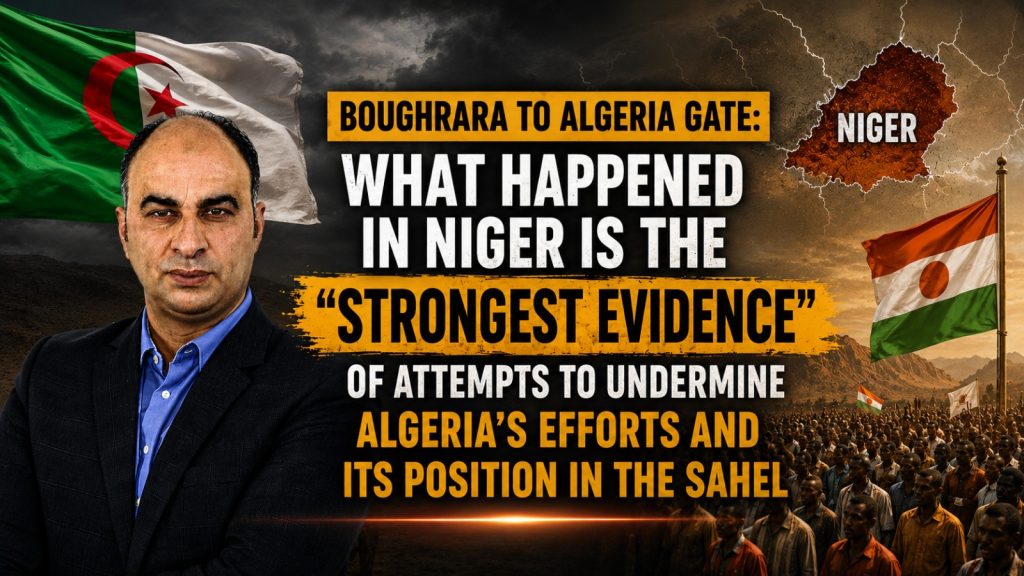
Boughrara to Algeria Gate: What Happened in Niger Is the “Strongest Evidence” of Attempts to Undermine Algeria’s Efforts and Its Position in the Sahel

Boughrara to Algeria Gate: What Happened in Niger Is the “Strongest Evidence” of Attempts to Undermine Algeria’s Efforts and Its Position in the Sahel

Algeria Gate: Political analyst Hakim Boughrara told Algeria Gate that France’s persistent efforts to keep the Sahel mired in chaos, while amplifying its own propaganda on counter-terrorism, reveal the true purpose of its military presence in the region: securing strategic positions across Sahelian states and protecting its economic interests.

These interests centre on “plundering uranium, gold and various rare minerals,” Boughrara explained.

He argued that the political awakening of Sahelian countries, the expulsion of French forces, and the massive popular demonstrations in Niger, Burkina Faso and Chad have significantly eroded French influence.

France consistently holds Algeria responsible for this decline, accusing Algiers of promoting the completion of African independence and the expulsion of colonial powers; a stance that, in Boughrara’s view, would enable Africans to reclaim and benefit from their own resources and wealth.

The analyst highlighted Algeria’s renewed engagement in the Sahel and the solid partnerships it has forged with Chad, Niger, Burkina Faso and Mali. France refuses to allow the region to break free from the stereotypical image it has long cultivated: a permanent zone of chaos dominated solely by terrorist groups, he added.

This narrative, according to Boughrara, serves one purpose: to “maintain ambiguity” so that France can continue acting as it pleases in the region.

Turning to the United Arab Emirates, Boughrara described it as a small state that has deeply penetrated North Africa and the Sahel. He accused Abu Dhabi of paying ransoms to terrorist groups and of systematically seeking to disrupt Algeria’s achievements and economic gains.

Algeria’s strong return to its Mediterranean and African neighbourhood, and especially to the Sahel, has alarmed what Boughrara termed the “axis of evil” linking “the Makhzen, the UAE and the Zionist entity.” This shared anxiety, he argued, has pushed these actors into a form of coordination aimed at “breaking Algeria’s efforts and its strategic positioning.”

What unfolded in Niger, he stressed, constitutes the “strongest evidence” of this campaign. The accusations levelled by the Nigerien authorities, he noted, rest on “a great deal of evidence.”

Boughrara concluded that this axis has no interest in seeing either the Sahel or Algeria grow stronger. Still less does it want the countries of the region to become robust and mutually integrated; a development that would expose those powers determined to keep the Sahel in a state of security, economic and social fragility, the better to plunder its wealth while paying nothing in return.

#Algeria#France#Niger#Sahel
Author
Lys Iwannughen
View my articles
African coast
Share this post

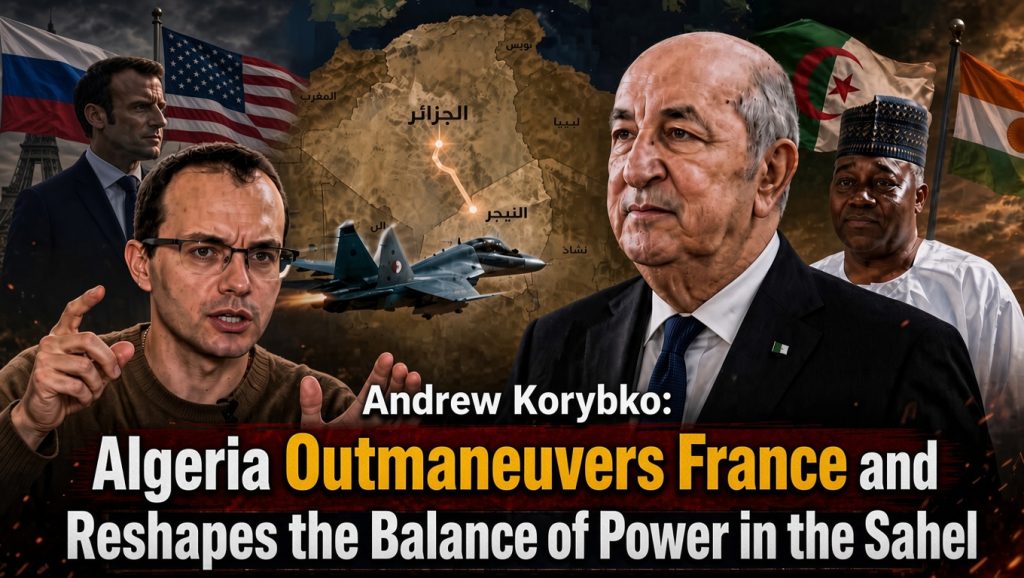
Andrew Korybko: “Algeria Outmaneuvers France and Reshapes the Balance of Power in the Sahel”

Andrew Korybko: “Algeria Outmaneuvers France and Reshapes the Balance of Power in the Sahel”

Algeria Gate: In an analysis devoted to geopolitical developments in the Sahel, the American strategic expert Andrew Korybko considers that the rapprochement between Algeria and Niger reflects a major evolution in the regional balance.

Andrew Korybko: “Algeria Outmaneuvers France and Reshapes the Balance of Power in the Sahel”

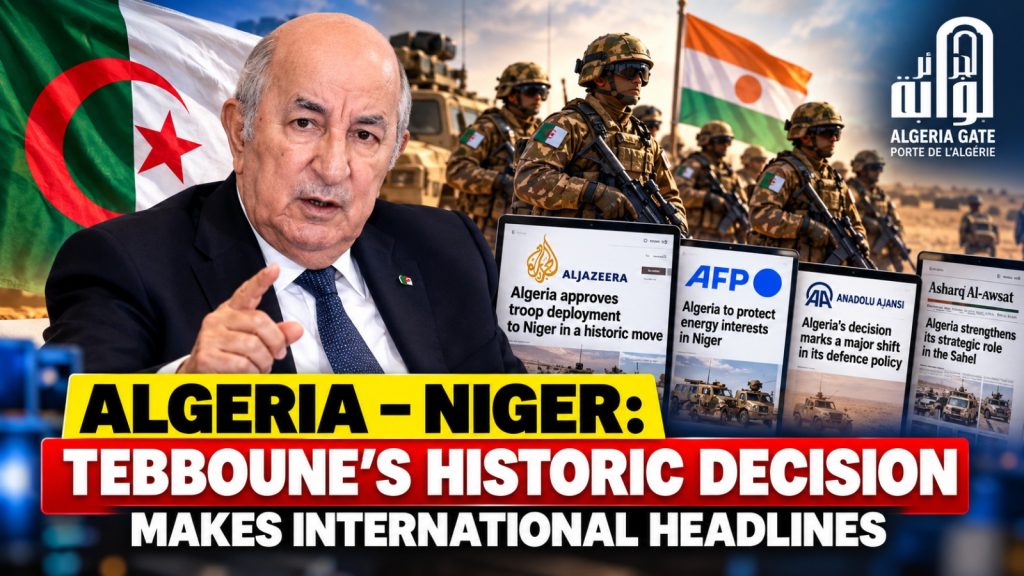
According to him, the dispatch of four Algerian Su-30 combat aircraft to Niamey, at the request of the Nigerien authorities, constitutes above all a message of deterrence addressed to France, which is seeking to preserve part of its influence in the region.

The expert also recalls that Algeria recently offered Niger four helicopters, including two Mi-24s and two Mi-171s. He regards the deployment of the Su-30s as particularly significant, presenting it as the first Algerian military deployment abroad in more than half a century.

Beyond the military dimension, Korybko believes this dynamic could lead to a new economic and security architecture in the Sahel, with greater cooperation between Algeria and the countries of the region, possibly with Russian support.

For the American analyst, the rapprochement between Algiers and the Sahel countries could thus help accelerate the rise of a multipolar order while reducing the possibilities of external pressure on the region.

#Algeria#Andrew Korybko#France
Author
Lys Iwannughen
View my articles
African coast
Share this post

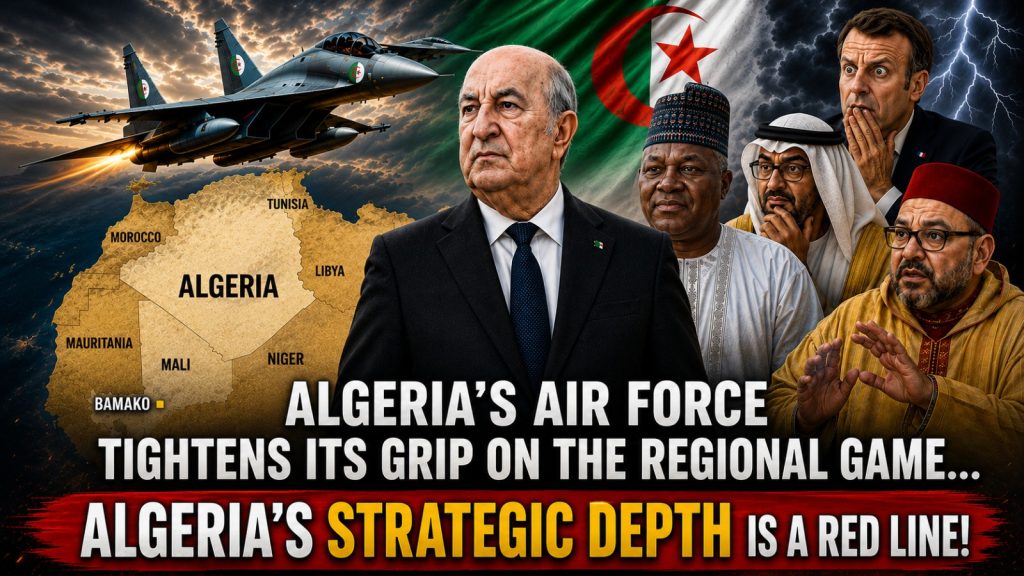
The Algerian Air Force tightens its grip on the rules of the regional game… Algeria’s strategic depth is a red line!

The Algerian Air Force tightens its grip on the rules of the regional game… Algeria’s strategic depth is a red line!

Algeria Gate: Algeria, in a pre-emptive deterrence message to the forces of evil that are lying in wait for the Republic, has demonstrated that the chess pieces in the region only move with a green light from Algeria. With a precise reading of the security situation in the Sahel region, Algeria, by decision of President of the Republic, Abdelmadjid Tebboune and at the request of Niger, has deployed Su-30 fighters in the skies of Niamey, to make the nest of wasps understand that the Republic is not a hostage to the repercussions of manoeuvres being managed on the borders of its strategic depth.

The time for play and games on Algeria’s borders is over. The country will not look at risks of destabilisation as a spectator, and will not wait until the crisis reaches its borders to act. Any security disturbance in neighbouring countries can quickly turn into a regional threat, especially as external powers seek to exploit political and security weaknesses in the Sahel region to strike at Algeria’s strategic interests.

Algeria has emerged as a key partner in regional security operations, intervening in neighbouring countries only at the explicit request of their governments and with full respect for their sovereignty.

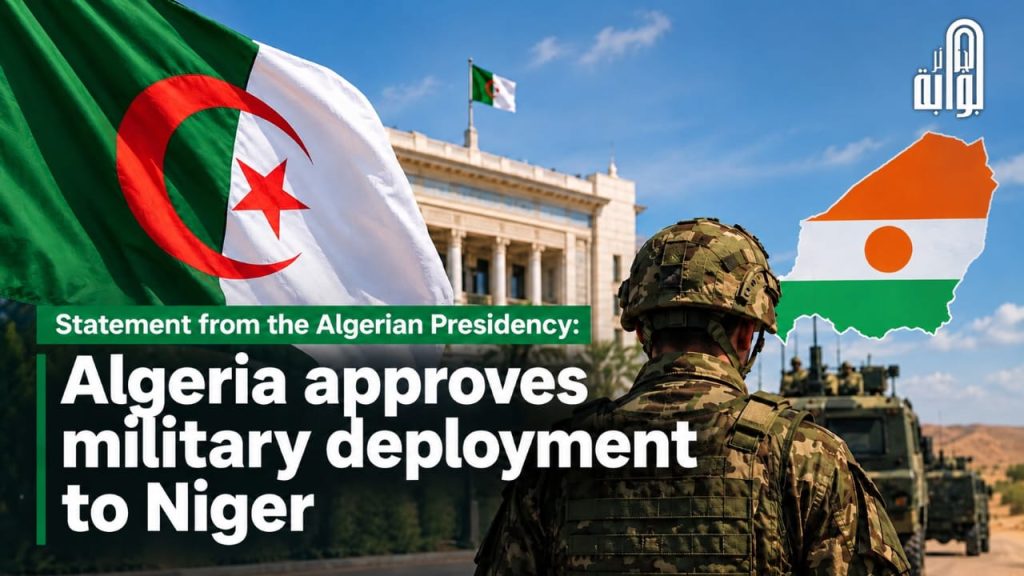
On 30 August, following a sovereign request from the State of Niger and on the instructions of President Abdelmadjid Tebboune, Chief of Staff of the People’s National Army Saïd Chengriha ordered the deployment of two patrols of Sukhoi Su-30 combat aircraft (four aircraft in total).

Algeria has emerged as a key partner in regional security operations, intervening in neighbouring countries only at the explicit request of their governments and with full respect for their sovereignty.

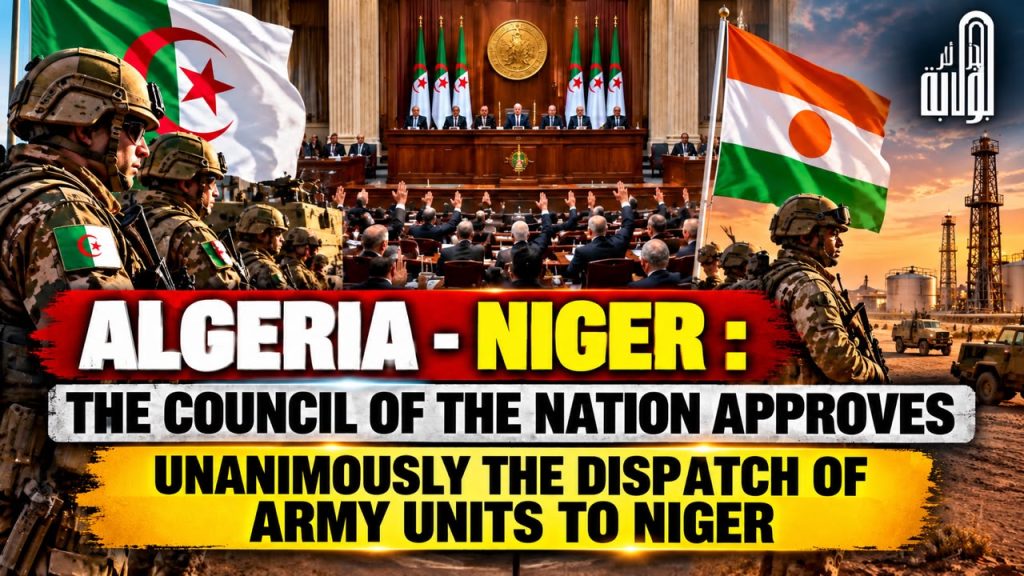
At the sovereign request of Niger, and on the instructions of President Abdelmadjid Tebboune, General Said Chengriha ordered on August 30th the deployment, for the first time in more than fifty years, of two patrols of Sukhoi Su-30 fighter jets (four aircraft in total). The aircraft were sent on a support mission to assist the Nigerien army in confronting an attempt to destabilise the country.

This followed a failed coup attempt in Niamey on August 29th, which Nigerien authorities successfully foiled and for which they have accused France and the United Arab Emirates of involvement.

Algeria had accurately anticipated developments in Niamey. On August10th, in accordance with the instructions of President Abdelmadjid Tebboune, Commander-in-Chief of the Armed Forces and Minister of National Defence, the Algerian Ministry of National Defence provided the Nigerien army with a gift of military equipment and helicopters to reinforce its air forces.

The donation consisted of four helicopters with all their accessories; specifically two Mi-24V and two Mi-171 aircraft, as well as additional military equipment. These were delivered by a military transport aircraft of the Algerian Air Force.

Morocco, for its part, must interpret these developments realistically and recalculate its position with care. Escalatory manoeuvres and shows of force, regardless of which external actors; Israel, France or the United Arab Emirates, may be behind or encouraging them, should not lead the Moroccan Makhzen regime to underestimate the consequences of any potential escalation. A confrontation with Algeria would not amount to a mere diplomatic gesture or display of strength; it would carry strategic and security repercussions far beyond immediate political calculations.

Algeria cuts off Paris’s path to exploiting the situation in Niger

The dispatch of Algerian fighters to Niger is also considered a deterrence message to Paris and its rear protectorate Rabat. According to Andrew Korybko, an American analyst based in Russia, in an exclusive statement to Algeria Gate, Paris’s recovery of its lost influence in Niger by exploiting disturbances in that country could exacerbate Algeria’s regional strategic situation. By sending its fighters to Niamey, Algeria is working to deter any potential intervention by French special forces or conventional intervention that might follow a new round of disturbances.

The Algerian Air Force tightens its grip on the rules of the regional game… Algeria’s strategic depth is a red line!

He also clarified that Algeria’s relations with the Alliance of Sahel States are in the process of improving after its rapprochement with Mali, and according to media reports Russia and Niger helped facilitate it. By providing tangible support to Niger in its hour of need, Algeria can win the confidence of Bamako and Burkina Faso and build a basis for partnership with everyone to secure its southern flank. It can then also benefit from its relations and experience in mediation in Mali to persuade the Azawad Liberation Front to abandon its allies in the Group for the Support of Islam and Muslims in preparation for a joint regional counter-terrorism campaign.

He also spoke of establishing a new regional economic and security system through a comprehensive strengthening of relations between Algeria and the Alliance of Sahel States, the ultimate goal of which is to ensure mutual security and prosperity. This would most likely take the form of formal agreements including regular joint exercises, and possibly the deployment of Algerian forces or at least a mechanism for requesting them in crises. The common Russian partner would also have a role in this new system.

Korybko noted that the hybrid warfare threats posed by France and its regional partners must be thwarted for the common good, and hence Algeria’s dispatch of fighters to Niger as a first step, which can be followed by other steps.

He confirmed that Algeria’s first external military move in more than fifty years goes far beyond merely protecting the state through which the Trans-Saharan gas pipeline from Nigeria will pass, adding that Algeria has more ambitious plans relating to ensuring security along its southern flank, not only in Niger but also in Mali and Burkina Faso, in order to accelerate multipolarity. Had Algeria and the Alliance of Sahel States remained at odds, they could have been divided and controlled, but that has now become far less likely.

#Algeria#Niger
Author
Lys Iwannughen
View my articles