

Algeria Gate: Algeria exported 4.47 million tons of liquefied natural gas (LNG) during the first half of 2026.
While European demand stayed strong, maintenance work at the Arzew and Skikda liquefaction complexes prevented Sonatrach from fully meeting this demand, resulting in a 6.5% decline compared to the same period in 2025.
The export map remains highly concentrated, with only five countries accounting for more than 90% of Algeria’s total LNG shipments. Turkey and France alone purchased nearly two-thirds of the volume, making Algerian LNG exports heavily dependent on a small number of European markets.
Despite recording one of the weakest first-half performances since 2013, the second quarter showed signs of recovery. Shipments increased to 2.43 million tons (from 2.04 million tons in Q1), and Sonatrach delivered its first direct LNG cargo to Germany in early July.
As the second half of 2026 begins, Algeria faces a clear challenge: improving liquefaction plant readiness, diversifying its customer base, and transforming strong European demand into stable, higher-volume exports.
Increased production not fully reflected in LNG exports
Algeria’s natural gas production continued to grow in early 2026. Output reached 29 billion cubic meters in the first quarter, up 1.14 billion cubic meters from Q1 2025. Production rose further in April by 7.1% year-on-year.
However, this production growth did not translate into higher LNG exports. The main bottleneck lies in the allocation of gas between the domestic market, pipeline exports (Medgas to Spain and Transmed to Italy), and liquefaction plants.
Key point: Higher field production does not automatically mean higher LNG exports unless liquefaction facilities operate at optimal capacity and sufficient feedstock is available.
Maintenance at Arzew and Skikda heavily impacts exports
Scheduled maintenance at the Arzew and Skikda complexes during the first four months of the year significantly reduced available volumes for export. January saw exports fall to just 440,000 tons, among the lowest monthly figures in recent years.
Monthly export performance was as follows:
- January: 440,000 tons
- February: 670,000 tons
- March: 940,000 tons
- April: 690,000 tons
- May: 1.03 million tons (highest in seven months)
- June: 710,000 tons
The large gap between peak and low months (590,000 tons) clearly shows how sensitive Algerian LNG exports are to maintenance schedules and plant availability.
Second quarter signals recovery
Although the overall first-half result was negative, Q2 exports rose 19.1% to 2.43 million tons compared to the first quarter. The year-on-year decline narrowed from 8.5% in Q1 to 4.7% in Q2, indicating gradual improvement in operational capacity.
Algeria loses 1.78 million tons over two years
Comparing multiple years reveals a deeper decline. First-half LNG exports dropped from 6.25 million tons in 2024 to 4.78 million tons in 2025, and further to 4.47 million tons in 2026; a cumulative loss of 1.78 million tons (28.5%).
Two markets buy nearly two-thirds of exports
Export concentration remains very high:
- Turkey: 1.55 million tons (34.7%)
- France: 1.31 million tons (29.3%)
Together, these two markets accounted for nearly 64% of Algeria’s total LNG exports in the first half of 2026.
Italy and Spain drop, UK Rises
- Italy: 520,000 tons (down 14.4%)
- Spain: 300,000 tons (down 50.8%)
- United Kingdom: 350,000 tons (up 29.6%)
The top five markets absorbed 90.2% of all Algerian LNG exports, leaving very little volume for other destinations.
All Algerian LNG shipments headed to Europe
Europe received 100% of Algeria’s LNG exports during the first half of 2026. Proximity, existing infrastructure, and long-term contracts make the European market the natural and most competitive destination.
Strong European demand expected in second half of 2026
Europe is expected to increase LNG imports by around 13% in 2026 to rebuild inventories before winter. Geopolitical risks around the Strait of Hormuz further enhance the strategic value of reliable suppliers like Algeria.
Germany becomes a new market for Algerian LNG
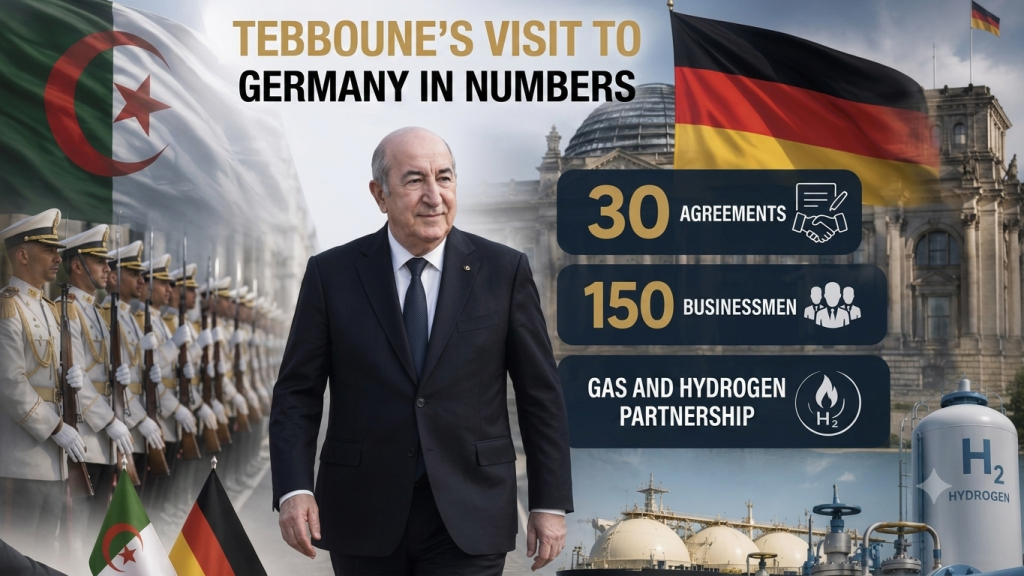
On July 2, 2026, Sonatrach delivered its first direct LNG shipment to Germany at the Wilhelmshaven 1 terminal. This delivery marks an important step in diversifying Algeria’s export destinations beyond traditional Mediterranean buyers.
Liquefaction capacity exists: the challenge is in full exploitation
Sonatrach operates four liquefaction complexes with a total annual capacity of up to 56 million cubic meters. However, actual performance is affected by maintenance, feedstock availability, and operational efficiency.
The real challenge is not capacity, but maximizing uptime and exploitation rates to meet European demand during high-price periods.
Three major tests for the second half of 2026
Algeria enters the second half facing three key tests:
- Sustaining high availability of liquefaction plants after maintenance.
- Stabilizing monthly exports at higher levels.
- Converting the first delivery to Germany into regular, long-term contracts.
The future of Algerian LNG exports will depend on operational improvements and market diversification, not just European demand.